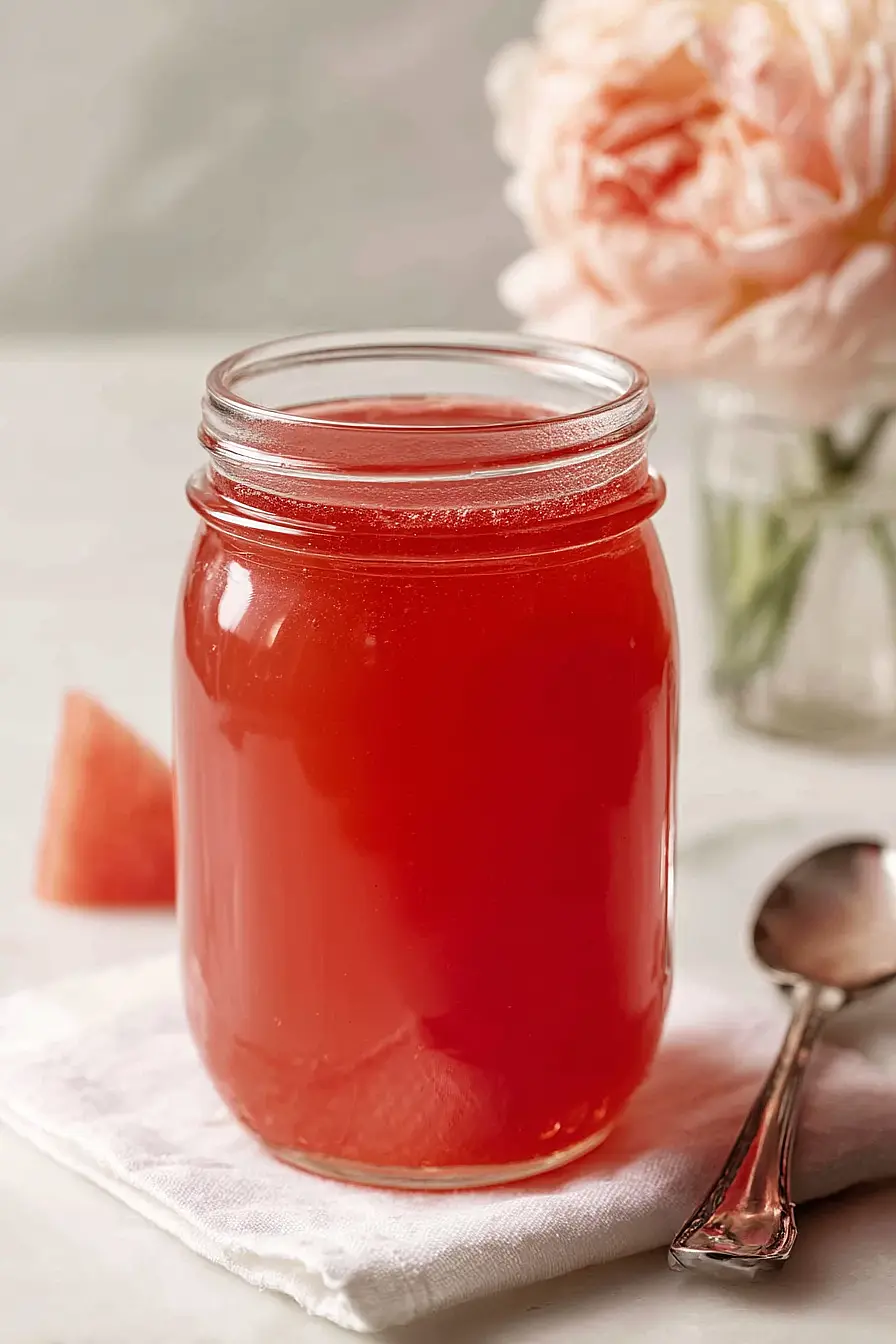
I was NOT planning to become a canning person this summer. And yet here we are. Eleven jars of jewel-toned watermelon jelly cooling on my counter and absolutely no regrets.
It sounds fancy, it sounds complicated, it sounds like something your great-aunt would hand you at Christmas in a basket with a bow. But honestly? It’s mostly just boiling, stirring, and waiting for that deeply satisfying POP of the lids.
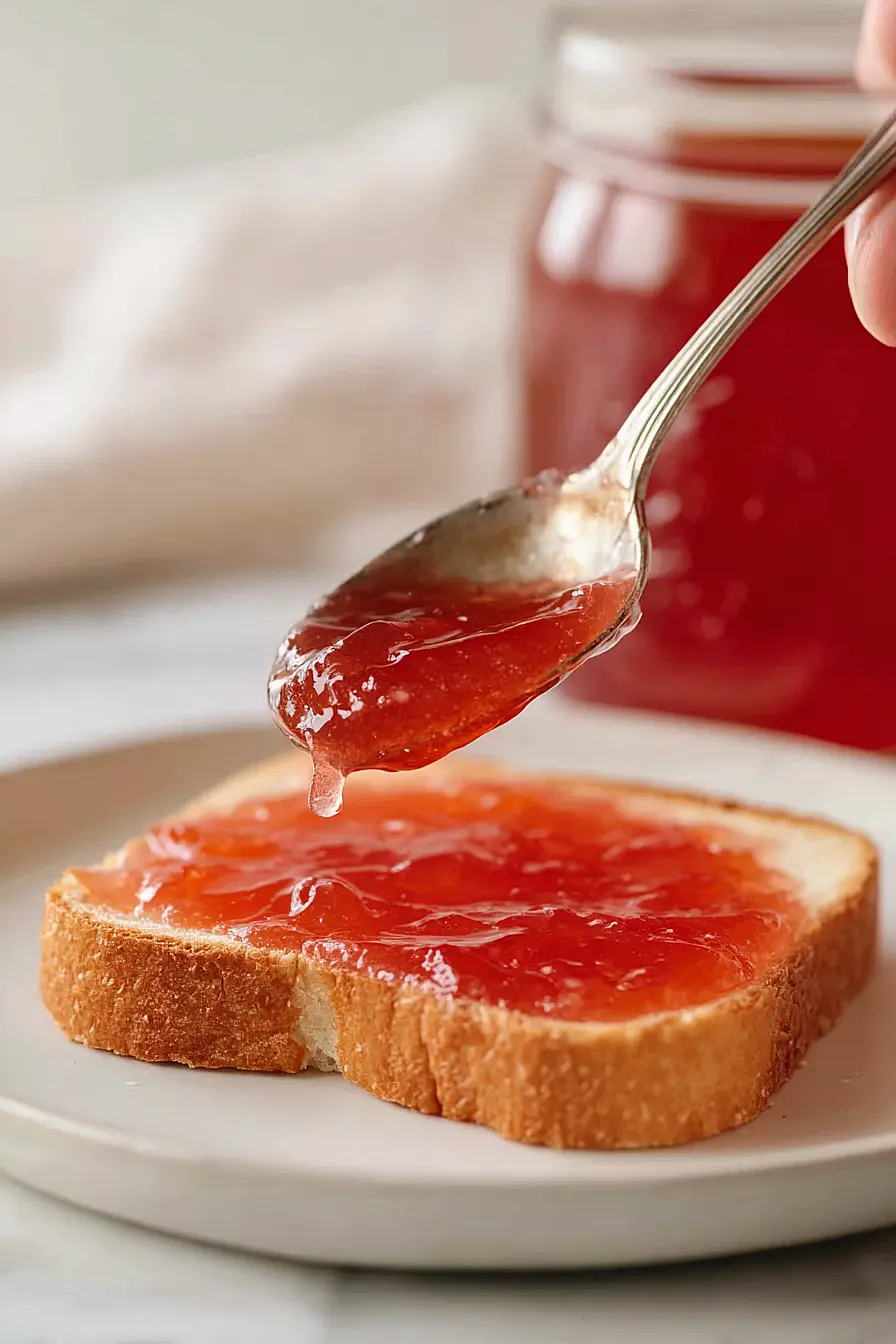
The result is this gorgeous pinkish-red spread that tastes like the essence of summer on toast. Or stirred into yogurt. Or straight off the spoon if no one’s watching (no one’s watching, right?).
Ten out of ten. Will absolutely make every August from now on.
How to Know When Your Jelly Has Set
Hit 220°F and you’re in the gel zone…. but numbers don’t seal jars, so trust the wrinkle test for the final word.
Spoon hot jelly onto a chilled plate, wait 30 seconds, then push with your finger. (stash that plate in your freezer before you start cooking). WRINKLES holding firm means it’s done! Liquid results need 2 more minutes of boiling before retesting.
How to Make Watermelon Juice
- Step 1: Cut watermelon into big chunks. Remove seeds if you want smoother juice, but honestly, straining will catch them. (It’s all good either way!) Get those pieces ready.
- Step 2: Throw the chunks into a blender and blend until super smooth. No chunks! EXACTLY like a silky puree. Keep it simple – blend hard.
- Step 3: Strain the juice through a fine mesh sieve. Press down with a spoon to squeeze out every drop. (Don’t waste anything!) Strain twice if you want it clear.
- Step 4: Measure the juice precisely. You need 5 1/2 cups for the jelly, so use a cup. No shortcuts! Be exact.
And there you go. Fresh watermelon juice, ready for jelly or sipping. Sweet and easy – enjoy it!
How Long Does Watermelon Jelly Last?
Properly sealed and processed watermelon jelly lasts 12 to 18 months in a cool, dark pantry (50-70°F hits the sweet spot). Pop that lid open though, and the timeline shrinks fast.
- Unopened, sealed jars: 12-18 months in your pantry
- Opened jars: 3 weeks in the fridge, lid snug
- Jars that failed to seal from your batch: Refrigerate immediately, eat within 3 weeks
- Long-term backup option: Freeze in rigid, leakproof containers for up to 6 months
Always scan for spoilage before spreading… cloudiness, funky odors, fuzzy growth, or any weeping liquid means it goes straight in the bin, no taste test required. When in doubt, throw it out!
If You Liked This, Try These
- Easy Apricot Jam
- Tasty Watermelon Jam
- Watermelon Ice Cream
- Homemade Apricot Fruit Leather
- Blueberry Butter Swim Biscuits
- Tasty Blueberry Biscuits
Estimated Nutrition
Estimated nutrition for the whole recipe (without optional ingredients):
- Calories: 4000-4300
- Protein: 2-4 g
- Fat: 0-1 g
- Carbohydrates: 1040-1080 g
Ingredients
- 5 cups sugar
- 6 tbsp pectin
- 5 1/2 cups watermelon juice (blended and strained)
- 7/8 cup lemon juice
- 1/4 teaspoon salt
- 1/2 teaspoon unsalted butter (to reduce foaming)
Step 1: Sterilize Jars and Measure Ingredients
- 5 cups sugar
- 6 tbsp pectin
- 5 1/2 cups watermelon juice
- 7/8 cup lemon juice
- 1/4 teaspoon salt
- 1/2 teaspoon unsalted butter
Sterilize five half-pint jars with their lids by running them through a hot dishwasher cycle or boiling them in water for 10 minutes—this prevents contamination and ensures your jelly sets properly.
While jars are sterilizing, measure out all your ingredients: the sugar, pectin, strained watermelon juice, lemon juice, salt, and butter.
Having everything ready before you start cooking is essential for jam-making, where timing is critical.
Step 2: Whisk Sugar and Pectin
- 5 cups sugar
- 6 tbsp pectin
In a small bowl, whisk together the sugar and pectin until well combined.
This step is crucial because it prevents the pectin from clumping when it hits the hot liquid—the sugar helps distribute the pectin evenly throughout the mixture, which ensures consistent gelling across your entire batch.
Step 3: Heat the Liquid Base
- 5 1/2 cups watermelon juice
- 7/8 cup lemon juice
- 1/4 teaspoon salt
- 1/2 teaspoon unsalted butter
- dry pectin mixture from Step 2
Pour the watermelon juice and lemon juice into a large, heavy-bottomed pot (at least 8-quart capacity to prevent boil-overs).
Add the salt and butter, then stir in the sugar-pectin mixture from Step 2, stirring constantly until fully dissolved.
Bring the mixture to a rolling boil over high heat, stirring occasionally.
I like to add the butter at the beginning because it significantly reduces the foam that forms during cooking, making the final jelly clearer and easier to skim.
Step 4: Boil and Test the Gel
- cooking mixture from Step 3
Maintain a vigorous rolling boil and monitor the temperature with a candy or instant-read thermometer.
Cook for 15-30 minutes until the mixture reaches exactly 220°F (104°C)—this is the critical temperature where the sugar content and pectin reach the proper balance to gel.
Before removing from heat, perform the wrinkle test: place a small spoonful of hot jelly on a chilled plate, let it cool for a moment, then push it with your finger.
If it wrinkles and doesn’t flow back together, it’s ready; if it’s still liquid, cook for another 2-3 minutes and test again.
Step 5: Ladle Into Jars
- hot jelly from Step 4
- sterilized jars from Step 1
Remove the pot from heat and skim off any foam from the surface using a clean spoon.
Working quickly while the jelly is still hot, ladle it into your sterilized jars from Step 1, leaving 1/4 inch of headspace at the top.
Wipe the rim of each jar with a clean, damp cloth to remove any drips, then place the lids on top and screw the bands until finger-tight (snug but not overly tight).
Immediately place the filled jars into a boiling water canner and process for 10 minutes to create a proper seal.
Step 6: Cool and Seal
Carefully remove the jars from the water canner using jar tongs and place them upright on a clean towel or cooling rack, spacing them a few inches apart so air can circulate around them.
As they cool, you’ll hear a gentle ‘pop’ sound—this is the lids sealing as the contents contract, which is exactly what you want.
Let the jars sit undisturbed at room temperature for at least 12 hours (preferably overnight) before testing the seals.
Any jars that don’t seal properly should be refrigerated and used within 3 weeks.
Simple Watermelon Jelly
Ingredients
Method
- Sterilize five half-pint jars with their lids by running them through a hot dishwasher cycle or boiling them in water for 10 minutes—this prevents contamination and ensures your jelly sets properly. While jars are sterilizing, measure out all your ingredients: the sugar, pectin, strained watermelon juice, lemon juice, salt, and butter. Having everything ready before you start cooking is essential for jam-making, where timing is critical.
- In a small bowl, whisk together the sugar and pectin until well combined. This step is crucial because it prevents the pectin from clumping when it hits the hot liquid—the sugar helps distribute the pectin evenly throughout the mixture, which ensures consistent gelling across your entire batch.
- Pour the watermelon juice and lemon juice into a large, heavy-bottomed pot (at least 8-quart capacity to prevent boil-overs). Add the salt and butter, then stir in the sugar-pectin mixture from Step 2, stirring constantly until fully dissolved. Bring the mixture to a rolling boil over high heat, stirring occasionally. I like to add the butter at the beginning because it significantly reduces the foam that forms during cooking, making the final jelly clearer and easier to skim.
- Maintain a vigorous rolling boil and monitor the temperature with a candy or instant-read thermometer. Cook for 15-30 minutes until the mixture reaches exactly 220°F (104°C)—this is the critical temperature where the sugar content and pectin reach the proper balance to gel. Before removing from heat, perform the wrinkle test: place a small spoonful of hot jelly on a chilled plate, let it cool for a moment, then push it with your finger. If it wrinkles and doesn't flow back together, it's ready; if it's still liquid, cook for another 2-3 minutes and test again.
- Remove the pot from heat and skim off any foam from the surface using a clean spoon. Working quickly while the jelly is still hot, ladle it into your sterilized jars from Step 1, leaving 1/4 inch of headspace at the top. Wipe the rim of each jar with a clean, damp cloth to remove any drips, then place the lids on top and screw the bands until finger-tight (snug but not overly tight). Immediately place the filled jars into a boiling water canner and process for 10 minutes to create a proper seal.
- Carefully remove the jars from the water canner using jar tongs and place them upright on a clean towel or cooling rack, spacing them a few inches apart so air can circulate around them. As they cool, you'll hear a gentle 'pop' sound—this is the lids sealing as the contents contract, which is exactly what you want. Let the jars sit undisturbed at room temperature for at least 12 hours (preferably overnight) before testing the seals. Any jars that don't seal properly should be refrigerated and used within 3 weeks.