Hold up, watermelon jam? I KNOW. Sounds like something a craft blogger invented during a heat wave, sounds like a way to waste perfectly good summer fruit
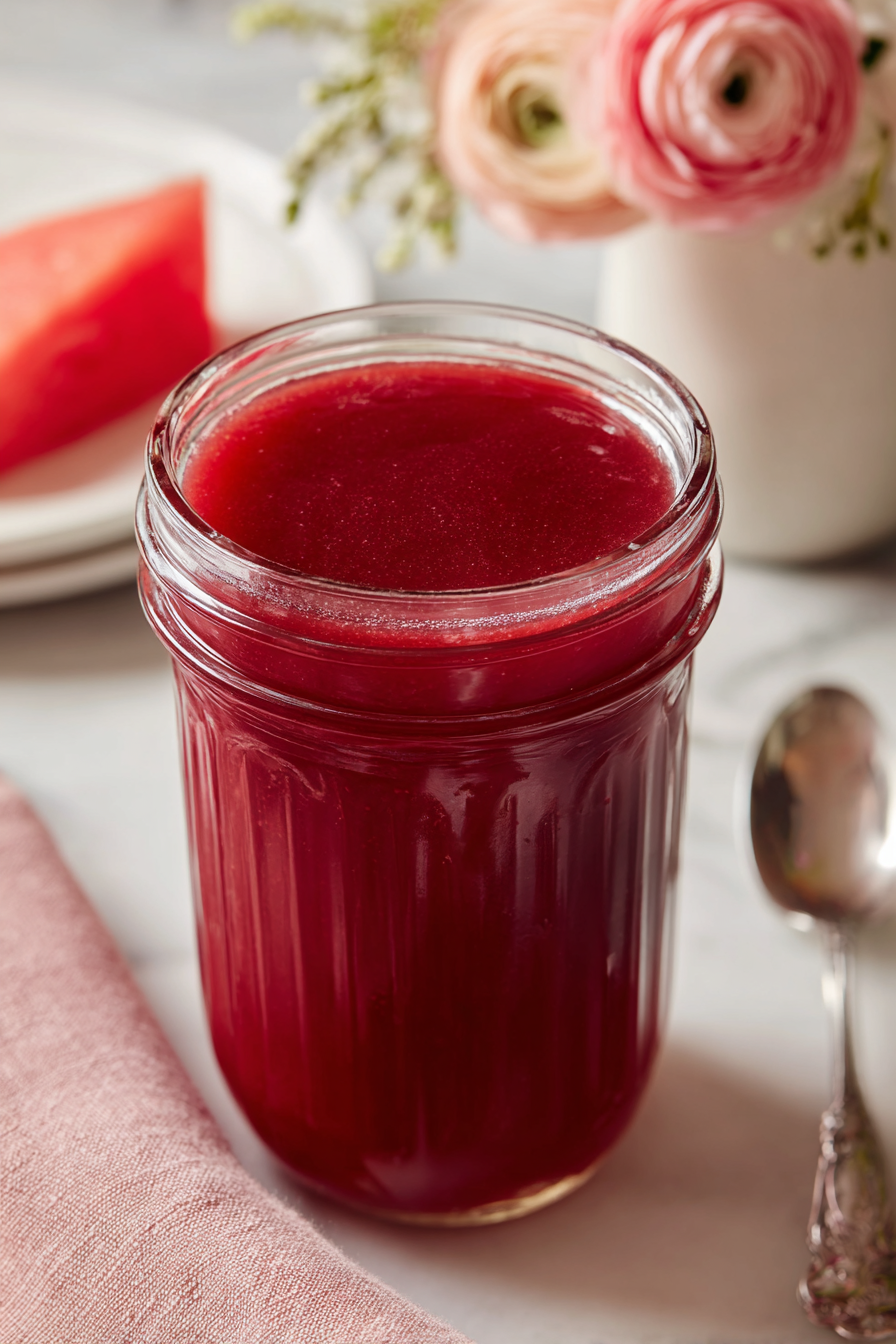
But here I am with jars stacked on my counter, spooning this onto buttered sourdough like it’s my whole personality right now. It’s bright, a little floral, sweet-tart, and the texture is EVERYTHING. Silky with tiny jewel-like chunks of melon suspended throughout. A sprinkle of flaky salt on top and it’s a whole moment. Honestly?? I might give these away for the holidays
Why Watermelon Jam Is Tricky to Set
Watermelon is LOW in natural pectin (almost zero, actually), so added pectin isn’t optional or you’ll end up with syrup. The lemon juice matters here… that acid helps pectin activate and set properly.
Water content runs around 92%, meaning you’re fighting dilution the whole cook. Hit that rolling boil for the full minute, then simmer the full 20. Undercook it and you get fruit soup. Overcook it and you lose fresh flavor.
How to Test If Your Jam Has Set
Step 1: Drop a spoonful on a chilled plate (freeze it first), wait 30 seconds, push with your finger. Wrinkles mean it’s set. Otherwise, simmer 2 more minutes and retest.
Step 2: Dip a cool metal spoon and tilt sideways. The jam should drip in slow, thick sheets, NOT run like water.
Step 3: Hit EXACTLY 220°F on a candy thermometer if the wrinkle test feels iffy.
Reminder: jam firms up while cooling, so a slightly soft warm test is fine. Tomorrow’s texture will be PERFECT!
How to Store Watermelon Jam
Transfer cooled jam into airtight containers (*sterilized glass jars win every time!*) and refrigerate for up to 3 weeks. For long-term storage, process sealed jars in a boiling water bath for 10 minutes, then tuck them into a cool, dark pantry for 6-12 months. ALWAYS check those seals before digging in.
More Recipes You’ll Enjoy
- Easy Apricot Jam
- Simple Watermelon Jelly
- Apricot Fruit Leather
- 2-Ingredient Apricot Glaze
- Quick Watermelon Salad
- Watermelon Ice Cream
Estimated Nutrition
Estimated nutrition for the whole recipe (without optional ingredients):
- Calories: 900-1000
- Protein: 1-2 g
- Fat: 0-1 g
- Carbohydrates: 225-250 g
Ingredients
- 2 cups watermelon (finely diced into 1/4-inch pieces with seeds removed)
- 2.5 oz lemon juice (I prefer ReaLemon for consistent acidity levels)
- 1 3/4 cups sugar
- 6 tbsp pectin (I use Ball RealFruit Classic Pectin for the best set)
- 1/4 teaspoon salt
- 1/2 teaspoon fresh lemon zest
Step 1: Chop and Measure Ingredients
- 2 cups watermelon
- 2.5 oz lemon juice
- 1 3/4 cups sugar
- 6 tbsp pectin
- 1/4 teaspoon salt
- 1/2 teaspoon fresh lemon zest
Dice the watermelon into 1/4-inch pieces, making sure to remove all seeds as you go—this prevents any unwanted texture in your finished jam.
Measure out all remaining ingredients and have them ready near your cooking station.
This mise en place approach means you won’t be scrambling to find ingredients once the mixture starts heating and thickening.
Step 2: Heat the Sweetened Base
- 2 cups watermelon
- 1 3/4 cups sugar
- 2.5 oz lemon juice
In a large heavy-bottomed pot (at least 4-5 quart capacity), combine the diced watermelon, sugar, and lemon juice.
Stir well to combine, then bring the mixture to a rolling boil over medium-high heat, stirring occasionally to prevent sticking.
This initial boiling helps the watermelon release its juices and allows the sugar to dissolve evenly, creating a more cohesive jam.
Step 3: Incorporate the Pectin
- boiling watermelon mixture from Step 2
- 6 tbsp pectin
- 1/4 teaspoon salt
- 1/2 teaspoon fresh lemon zest
Once the mixture reaches a rolling boil, reduce the heat slightly to medium and sprinkle the pectin over the surface while stirring constantly for about 1-2 minutes until it’s completely dissolved and no lumps remain.
I find that stirring continuously prevents the pectin from clumping and ensures even distribution throughout the jam.
Once the pectin is fully incorporated, return the mixture to a full rolling boil and stir in the salt and lemon zest.
Step 4: Thicken the Mixture
- jam mixture from Step 3
Maintain a full, rolling boil for exactly 1 minute, stirring constantly—this brief intense heat activates the pectin’s gelling properties.
Then reduce the heat to medium-low and simmer gently for 20 minutes, stirring frequently to prevent the bottom from scorching and to encourage even cooking.
The jam should darken slightly and become more viscous during this time.
To test if it’s ready, place a small spoonful on a cold plate; it should wrinkle slightly when you push it with your finger, indicating proper set.
Step 5: Jar and Seal
- cooked jam from Step 4
Remove the pot from heat and let the jam rest for 2-3 minutes to allow any foam to settle.
Carefully pour the hot jam into clean, sterilized jars, leaving about 1/4 inch of headspace.
Wipe the rims clean, seal with lids, and let the jars cool completely at room temperature for at least 6-8 hours before moving them.
The jam will continue to set as it cools, reaching its final texture by the next day.
Tasty Watermelon Jam
Ingredients
Method
- Dice the watermelon into 1/4-inch pieces, making sure to remove all seeds as you go—this prevents any unwanted texture in your finished jam. Measure out all remaining ingredients and have them ready near your cooking station. This mise en place approach means you won't be scrambling to find ingredients once the mixture starts heating and thickening.
- In a large heavy-bottomed pot (at least 4-5 quart capacity), combine the diced watermelon, sugar, and lemon juice. Stir well to combine, then bring the mixture to a rolling boil over medium-high heat, stirring occasionally to prevent sticking. This initial boiling helps the watermelon release its juices and allows the sugar to dissolve evenly, creating a more cohesive jam.
- Once the mixture reaches a rolling boil, reduce the heat slightly to medium and sprinkle the pectin over the surface while stirring constantly for about 1-2 minutes until it's completely dissolved and no lumps remain. I find that stirring continuously prevents the pectin from clumping and ensures even distribution throughout the jam. Once the pectin is fully incorporated, return the mixture to a full rolling boil and stir in the salt and lemon zest.
- Maintain a full, rolling boil for exactly 1 minute, stirring constantly—this brief intense heat activates the pectin's gelling properties. Then reduce the heat to medium-low and simmer gently for 20 minutes, stirring frequently to prevent the bottom from scorching and to encourage even cooking. The jam should darken slightly and become more viscous during this time. To test if it's ready, place a small spoonful on a cold plate; it should wrinkle slightly when you push it with your finger, indicating proper set.
- Remove the pot from heat and let the jam rest for 2-3 minutes to allow any foam to settle. Carefully pour the hot jam into clean, sterilized jars, leaving about 1/4 inch of headspace. Wipe the rims clean, seal with lids, and let the jars cool completely at room temperature for at least 6-8 hours before moving them. The jam will continue to set as it cools, reaching its final texture by the next day.
Can you water bath this? If so, how long – 10 Minutes? Is water bath necessary when using pectin? I just made a couple batches of Watermelon Rind Preserves, and would like to try making jam too.