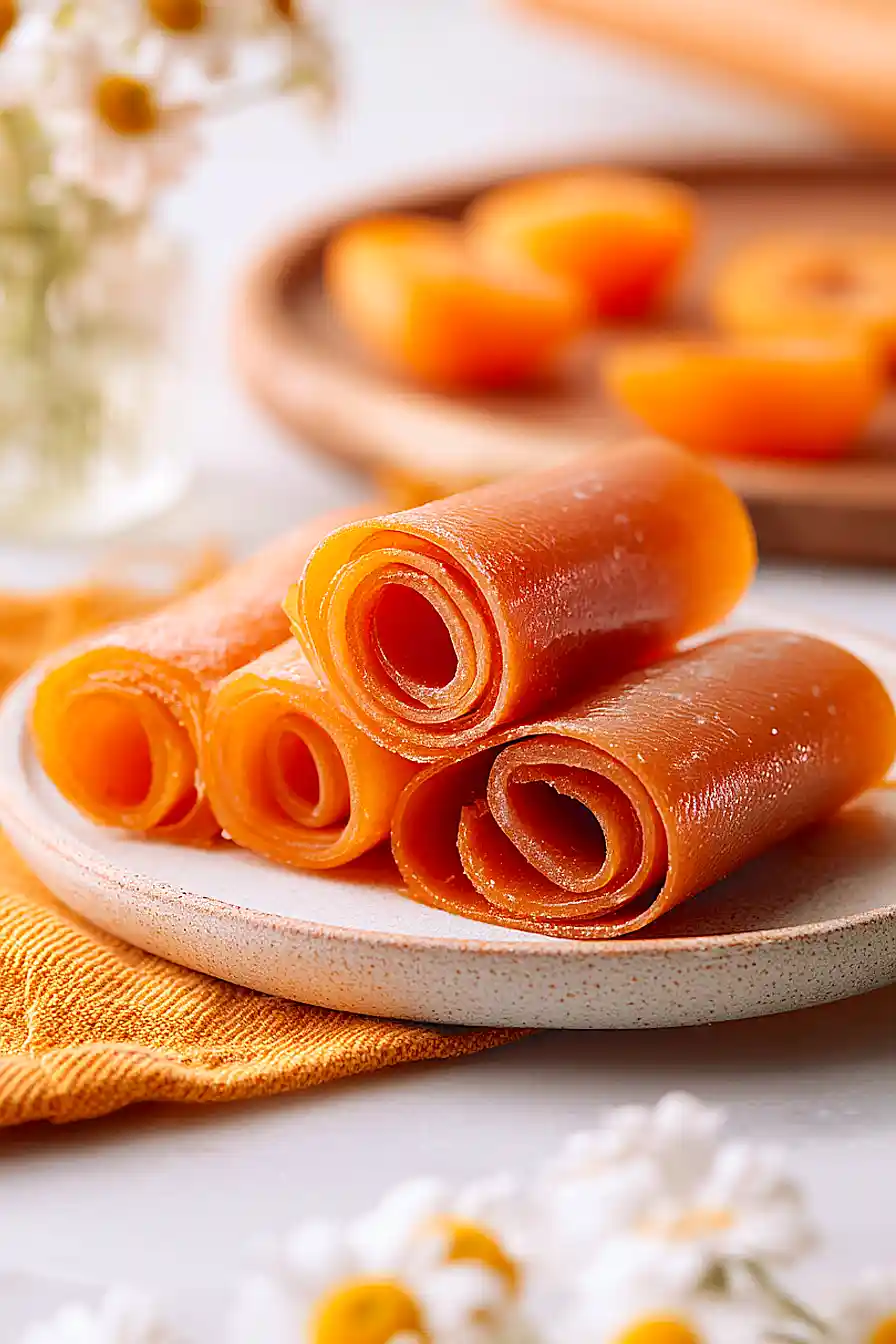
Pure fruit. Chewy. Tangy-sweet. No weird ingredients, no sticky store-bought texture. Just apricots, sugar, and a little patience.
This is the kind of thing I wish I’d known about years ago. Five pounds of apricots go in, a few hours later, you’ve got rolls of homemade fruit leather that absolutely destroy the packaged stuff.
How to Pick the Best Apricots
- FRAGRANCE tells you everything…. a ripe apricot smells sweet and floral right at the stem end.
- GENTLE PRESS the flesh. It should yield slightly but bounce back, never feel mushy.
- SKIN COLOR should be golden-orange with a rosy blush (not pale or greenish near the stem).
- SKIP rock-hard fruits… they won’t sweeten properly once they’re off the tree.
- INSPECT for bruises and soft spots before buying. These damaged bits will ruin your leather!
Oven vs. Sun-Drying Method
OVEN METHOD (200°F for 3 to 3.5 hours) gives you CONSISTENT results regardless of weather, humidity, or season. It’s reliable, faster, and you can run it overnight without worrying about insects or sudden rain ruining your batch.
Sun-drying (6 to 12 hours) works beautifully in hot, dry climates above 85°F with low humidity…. but it’s unpredictable. You’ll need to flip the leather occasionally, protect it from bugs with cheesecloth, and pray no afternoon storm rolls in.
For most home cooks? The oven wins on CONTROL and CONVENIENCE every single time.
How to Tell When It’s Done
- Touch the surface. DRY and tacky wins, sticky loses.
- Press the center. Finger pulls up wet puree or leaves a deep dent? Keep drying.
- Peel a corner from the parchment. Should release CLEANLY, no wet streaks behind.
- Color deepens as moisture leaves. Dull surface = ready, glossy = still wet. (yes, this matters!)
- Cracking at the edges means OVERDRIED. You want leather that BENDS, not snaps.
The flex test never lies. Properly done leather bends without cracking….too dry and it snaps like a chip, too wet and it squishes like jam.
How to Store Fruit Leather
- COOL COMPLETELY first (warm fruit traps moisture, and moisture is the enemy)
- ROLL TIGHTLY in parchment paper, otherwise layers fuse into a sad clump
- STORE in an airtight container at room temperature for up to 2 weeks
- REFRIGERATE for up to 1 month when you need extra time
- FREEZE in zip-top bags for 6 months of future snacking
- KEEP away from sunlight and heat, which destroy color and flavor fast
- LABEL with the date, because guessing games with expiration dates are no fun
Similar Recipes
- Homemade Apricot Fruit Leather
- Easy Apricot Jam
- Simple Watermelon Jelly
- Tasty Watermelon Jam
- Tangy Raspberry Frozen Yogurt Bites
- Easy Fig Bars
Estimated Nutrition
Estimated nutrition for the whole recipe (without optional ingredients):
- Calories: 1000-1200
- Protein: 10-15 g
- Fat: 0-2 g
- Carbohydrates: 260-300 g
Ingredients
- 5 lb apricots (halved and pitted, removing all bruised spots)
- 2/3 cup C&H cane sugar
- 1 tablespoon fresh lemon juice
- 1/8 teaspoon fine sea salt
Step 1: Roast the Halved Apricots
- 5 lb apricots
Wash the apricots thoroughly under cool water, then halve each one and remove the pit, carefully inspecting and discarding any bruised or damaged spots—these will negatively impact the final flavor and texture of your leather.
Arrange the halved apricots cut-side up on a baking sheet and roast at 400°F for 15 minutes until they soften and begin to release their juices.
This roasting step concentrates the fruit’s natural sugars and makes them easier to blend into a smooth puree.
Allow the roasted apricots to cool for about 5 minutes before blending.
Step 2: Puree and Sweeten
- roasted apricots from Step 1
- 2/3 cup C&H cane sugar
- 1 tablespoon fresh lemon juice
- 1/8 teaspoon fine sea salt
Transfer the cooled roasted apricots to a blender and pulse until completely smooth, working in batches if necessary to avoid overfilling.
Pour the puree into a large bowl and stir in the cane sugar, fresh lemon juice, and fine sea salt until well combined.
The lemon juice adds brightness and helps preserve the fruit leather, while the salt enhances the apricot flavor without making it taste salty.
I find that tasting the mixture at this point helps you adjust sweetness if needed—apricots vary in natural sweetness depending on ripeness.
Step 3: Spread the Puree Evenly
- fruit puree from Step 2
Line a baking sheet with parchment paper and pour the seasoned puree onto it, using an offset spatula or the back of a spoon to spread it evenly to a thickness of 1/8 to 1/4 inch—thinner leather dries faster and more evenly, while thicker leather takes longer but has a chewier texture.
If you have sunny, dry weather, you can dry the leather in direct sunlight for 6-12 hours until it’s no longer sticky to the touch, turning it occasionally.
Alternatively, bake at 200°F for 3 to 3.5 hours, checking periodically—I prefer the oven method for consistency and shorter timing.
The leather is ready when it feels dry on the surface but still has a slight pliability; if it becomes too brittle, it was overdried.
Step 4: Slice and Roll
Remove the fruit leather from the heat source and let it cool completely to room temperature on the baking sheet—this takes about 30 minutes.
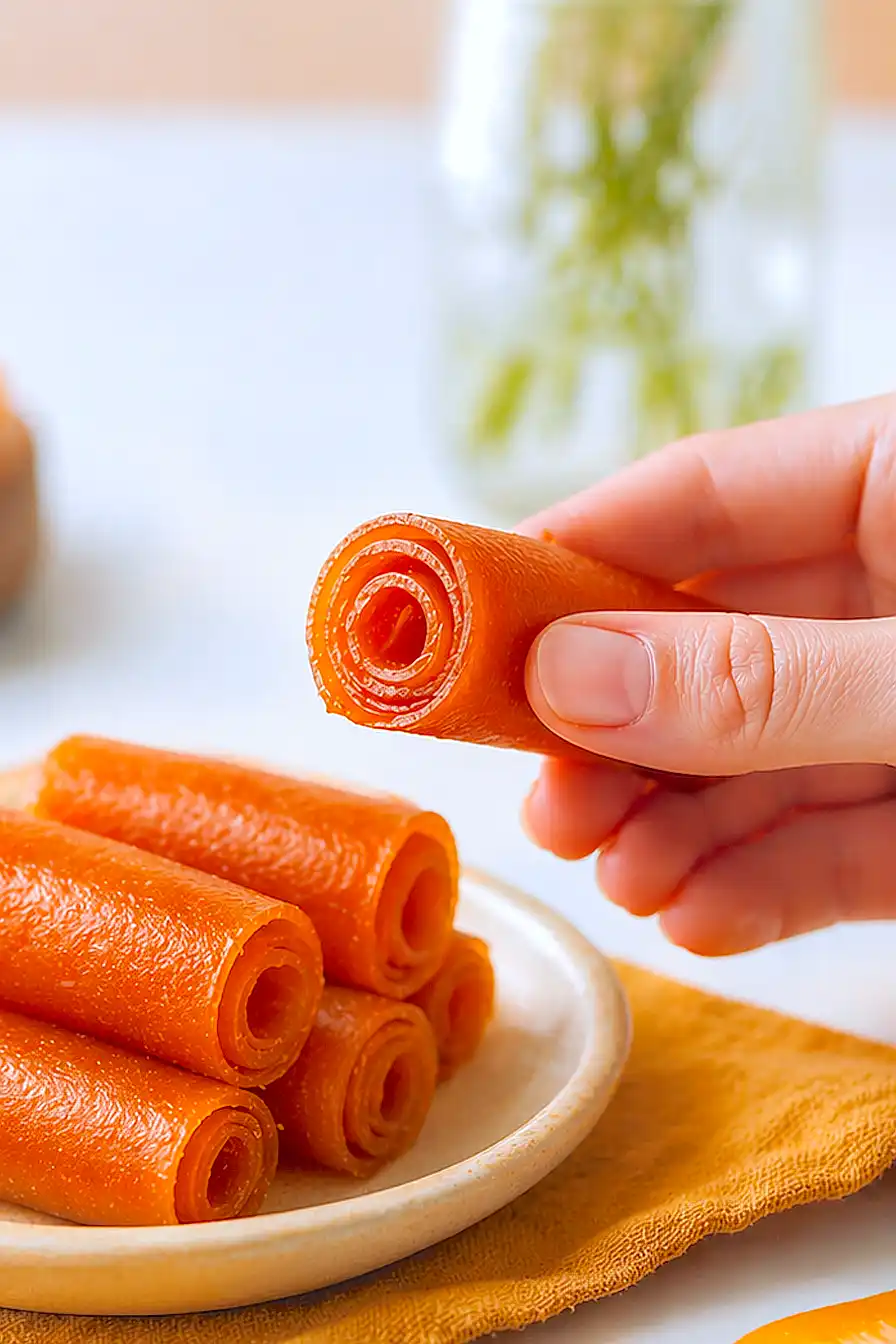
Once cooled, gently peel the leather away from the parchment paper, then roll it tightly into a cylinder or cut it into strips, using additional parchment paper between layers to prevent sticking.
Store the rolled fruit leather in an airtight container at room temperature for up to 2 weeks, or refrigerate for longer storage.
Homemade Apricot Fruit Leather
Ingredients
Method
- Wash the apricots thoroughly under cool water, then halve each one and remove the pit, carefully inspecting and discarding any bruised or damaged spots—these will negatively impact the final flavor and texture of your leather. Arrange the halved apricots cut-side up on a baking sheet and roast at 400°F for 15 minutes until they soften and begin to release their juices. This roasting step concentrates the fruit's natural sugars and makes them easier to blend into a smooth puree. Allow the roasted apricots to cool for about 5 minutes before blending.
- Transfer the cooled roasted apricots to a blender and pulse until completely smooth, working in batches if necessary to avoid overfilling. Pour the puree into a large bowl and stir in the cane sugar, fresh lemon juice, and fine sea salt until well combined. The lemon juice adds brightness and helps preserve the fruit leather, while the salt enhances the apricot flavor without making it taste salty. I find that tasting the mixture at this point helps you adjust sweetness if needed—apricots vary in natural sweetness depending on ripeness.
- Line a baking sheet with parchment paper and pour the seasoned puree onto it, using an offset spatula or the back of a spoon to spread it evenly to a thickness of 1/8 to 1/4 inch—thinner leather dries faster and more evenly, while thicker leather takes longer but has a chewier texture. If you have sunny, dry weather, you can dry the leather in direct sunlight for 6-12 hours until it's no longer sticky to the touch, turning it occasionally. Alternatively, bake at 200°F for 3 to 3.5 hours, checking periodically—I prefer the oven method for consistency and shorter timing. The leather is ready when it feels dry on the surface but still has a slight pliability; if it becomes too brittle, it was overdried.
- Remove the fruit leather from the heat source and let it cool completely to room temperature on the baking sheet—this takes about 30 minutes. Once cooled, gently peel the leather away from the parchment paper, then roll it tightly into a cylinder or cut it into strips, using additional parchment paper between layers to prevent sticking. Store the rolled fruit leather in an airtight container at room temperature for up to 2 weeks, or refrigerate for longer storage.