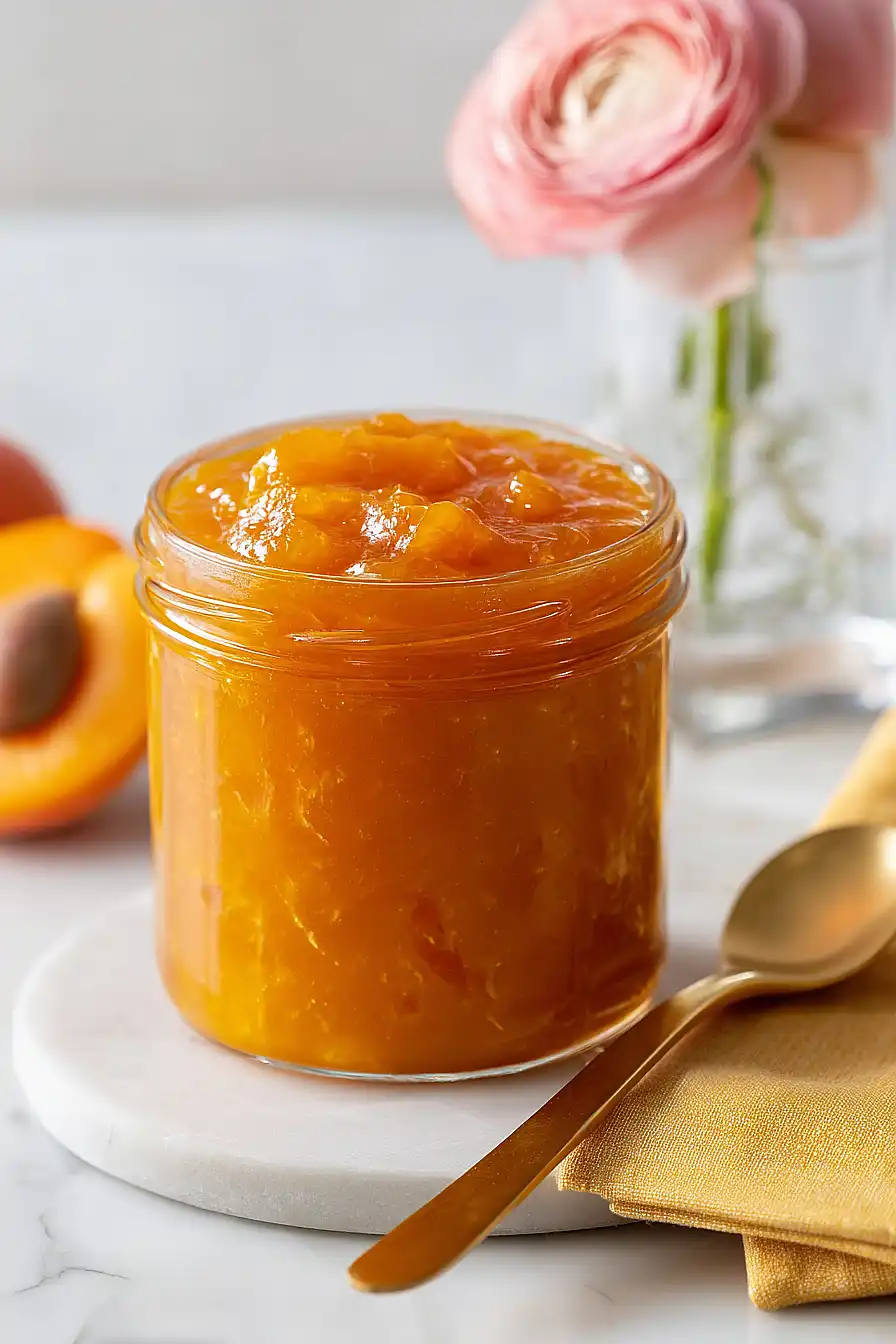
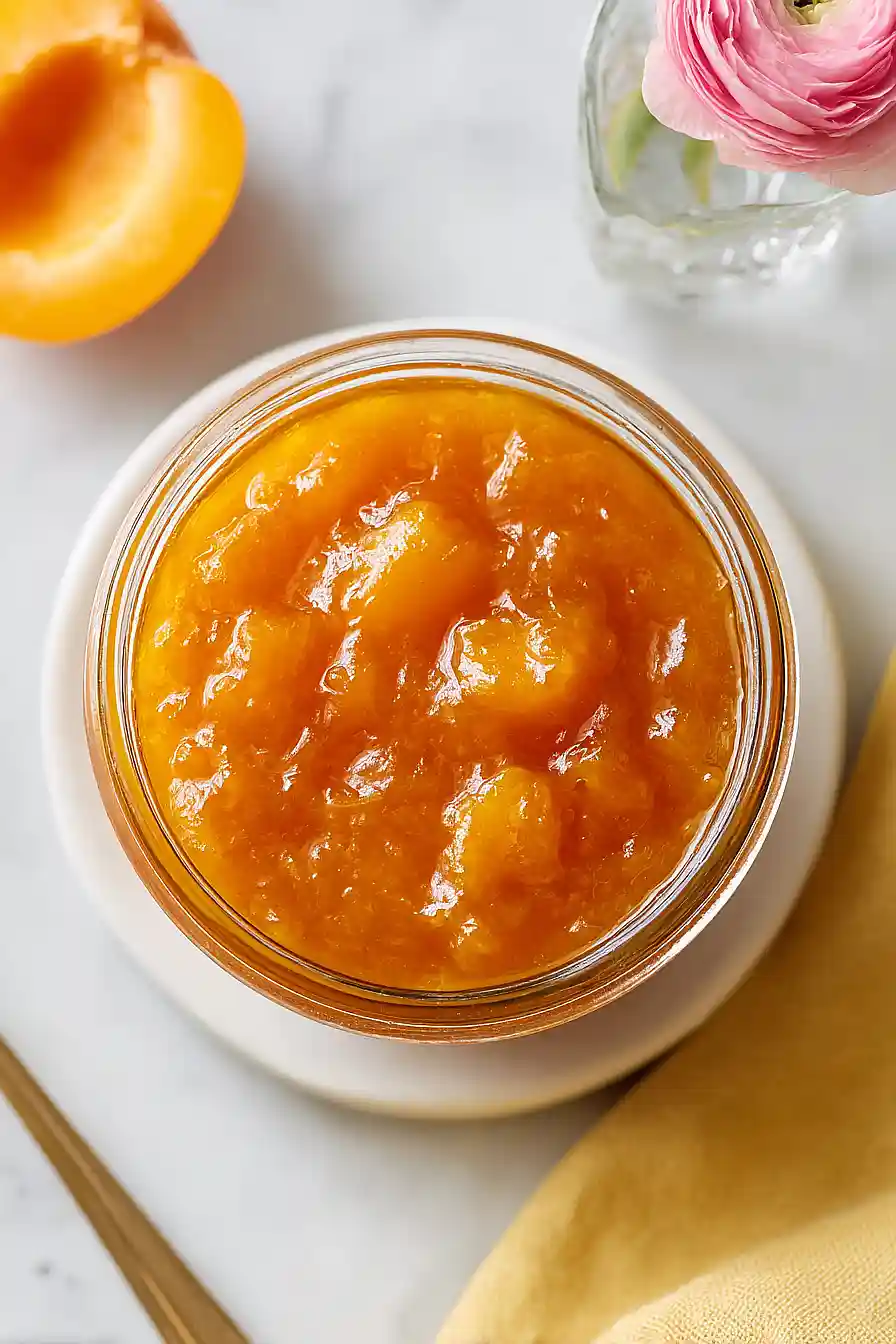
Here’s the thing about homemade jam: it’s WAY easier than people think. Like, embarrassingly easy.
Five ingredients (apricots, sugar, lemon juice, vanilla, salt), one heavy pot, a rolling boil for about ten minutes, and you’ve got jars of golden sticky stuff that’ll ruin you for the store-bought stuff. Forever.
The smell while it’s bubbling on the stove is genuinely distracting. I kept stopping what I was doing to just stand there and inhale. Multiple times.
How to Tell When Your Jam Has Set
Forget guessing… your jam will TELL you when it’s ready, IF you know what to look for.
- The FROZEN PLATE test is your best friend. Pop a plate in the freezer before you start cooking, then drop a small spoonful of jam on it. Wait 30 seconds, push it with your finger. Wrinkles forming? You’re golden. Runs back together? Keep cooking another minute or two.
- Hit 220°F (105°C) on a candy thermometer and you’re basically DONE. This temperature is the sweet spot for proper gel formation with most fruits.
- The SPOON TEST works in a pinch. Dip a cool metal spoon into the jam, tilt it sideways. The jam should sheet off slowly and cling together rather than dripping right off.
- Watch the FOAM. When the bubbling calms down and gets thicker, that’s pectin doing its job. The mixture darkens slightly too… don’t panic, that’s flavor developing!
How to Sterilize Jars Properly
Wash jars in HOT, soapy water and rinse them well. Skip the soap film… your jam will not thank you!
Submerge jars in boiling water for 10 MINUTES, or run them through a hot dishwasher cycle (right before filling). Lids get the same treatment!
Keep those sterilized jars HOT until pouring time. Cold glass plus hot jam equals CRACKED containers and sadness….
Storage & Shelf Life
- Sealed jars last up to ONE YEAR stored in a cool, dark pantry. The lid should stay concave and not flex when pressed.
- Once opened, refrigerate immediately and consume within 3-4 weeks. (Spoiled jam smells funky and may grow mold…. toss it!)
- Unsealed jars go straight to the fridge and must be used within 2-3 weeks max.
- Label every jar with the date so you always know its age. No guessing games!?
- Store away from direct sunlight and heat to preserve color and flavor. Your apricot jam deserves better!
Estimated Nutrition
Estimated nutrition for the whole recipe (without optional ingredients):
- Calories: 700-800
- Protein: 4-6 g
- Fat: 0-1 g
- Carbohydrates: 180-200 g
Ingredients
- 1.54 lb apricots (pitted and halved)
- 1 1/4 cups sugar
- 2 tbsp lemon juice (preferably ReaLemon)
- 1/4 tsp vanilla extract
- 1 pinch salt
Step 1: Mix and Heat Ingredients
- 1.54 lb apricots
- 1 1/4 cups sugar
- 2 tbsp lemon juice
- 1/4 tsp vanilla extract
- 1 pinch salt
Add the pitted and halved apricots, sugar, lemon juice, vanilla extract, and salt to a large heavy-bottomed pot or jam pan.
Stir well to combine, breaking down some of the apricots slightly as you mix.
This helps the sugar dissolve evenly and start extracting the apricot juices.
Place the pot over high heat and bring the mixture to a rolling boil, stirring occasionally to prevent sticking on the bottom.
Step 2: Boil to Thicken
- jam mixture from Step 1
Once boiling, maintain a vigorous rolling boil and stir frequently for 8-10 minutes.
The jam will foam and bubble—this is normal as water evaporates.
I like to use a wooden spoon and scrape the bottom of the pot often to prevent scorching, which can give the jam a bitter flavor.
Watch for the mixture to thicken noticeably and darken slightly in color, which indicates pectin development and proper gel formation.
Step 3: Perform the Plate Test
- jam mixture from Step 2
Remove the pot from heat and place a drop of jam on a frozen plate (place a small plate in the freezer before starting).
Let it cool for 30 seconds, then push the jam gently with your finger—it should wrinkle and hold its shape rather than run back together.
If it’s still too runny, return to heat for another 1-2 minutes and test again.
The jam should reach approximately 105°C (220°F) on a candy thermometer for proper setting.
Step 4: Fill the Sterilized Jars
- cooked jam from Step 3
While the jam is still hot, carefully pour it into sterilized glass jars, leaving about 2 cm (3/4 inch) of headspace at the top.
Wipe the rims clean with a damp cloth to remove any jam residue, then place sterilized lids on top and screw the bands on finger-tight.
I find that working quickly while the jam is hot helps the lids seal better, so don’t delay between cooking and jarring.
Step 5: Boil in Water Bath
- sealed jars from Step 4
Place a rack or folded towel in the bottom of a large pot and fill it with enough water to cover the jars by about 1-2 inches.
Gently place the filled jars on the rack, ensuring they don’t touch each other.
Bring the water to a rolling boil and maintain the boil for 10 minutes to create a proper vacuum seal.
This step kills any remaining bacteria and ensures your jam will keep safely for months.
Step 6: Cool and Check Seals
Carefully remove the jars from the boiling water using a jar lifter and place them upright on a clean kitchen towel or wooden surface to cool completely—do not move them for at least 12 hours.
As they cool, you’ll hear a satisfying ‘pop’ sound as the lids seal.
Once fully cooled, press the center of each lid; it should be slightly concave and not flex.
Store the sealed jars in a cool, dark place for up to one year.
Easy Apricot Jam
Ingredients
Method
- Add the pitted and halved apricots, sugar, lemon juice, vanilla extract, and salt to a large heavy-bottomed pot or jam pan. Stir well to combine, breaking down some of the apricots slightly as you mix. This helps the sugar dissolve evenly and start extracting the apricot juices. Place the pot over high heat and bring the mixture to a rolling boil, stirring occasionally to prevent sticking on the bottom.
- Once boiling, maintain a vigorous rolling boil and stir frequently for 8-10 minutes. The jam will foam and bubble—this is normal as water evaporates. I like to use a wooden spoon and scrape the bottom of the pot often to prevent scorching, which can give the jam a bitter flavor. Watch for the mixture to thicken noticeably and darken slightly in color, which indicates pectin development and proper gel formation.
- Remove the pot from heat and place a drop of jam on a frozen plate (place a small plate in the freezer before starting). Let it cool for 30 seconds, then push the jam gently with your finger—it should wrinkle and hold its shape rather than run back together. If it's still too runny, return to heat for another 1-2 minutes and test again. The jam should reach approximately 105°C (220°F) on a candy thermometer for proper setting.
- While the jam is still hot, carefully pour it into sterilized glass jars, leaving about 2 cm (3/4 inch) of headspace at the top. Wipe the rims clean with a damp cloth to remove any jam residue, then place sterilized lids on top and screw the bands on finger-tight. I find that working quickly while the jam is hot helps the lids seal better, so don't delay between cooking and jarring.
- Place a rack or folded towel in the bottom of a large pot and fill it with enough water to cover the jars by about 1-2 inches. Gently place the filled jars on the rack, ensuring they don't touch each other. Bring the water to a rolling boil and maintain the boil for 10 minutes to create a proper vacuum seal. This step kills any remaining bacteria and ensures your jam will keep safely for months.
- Carefully remove the jars from the boiling water using a jar lifter and place them upright on a clean kitchen towel or wooden surface to cool completely—do not move them for at least 12 hours. As they cool, you'll hear a satisfying 'pop' sound as the lids seal. Once fully cooled, press the center of each lid; it should be slightly concave and not flex. Store the sealed jars in a cool, dark place for up to one year.