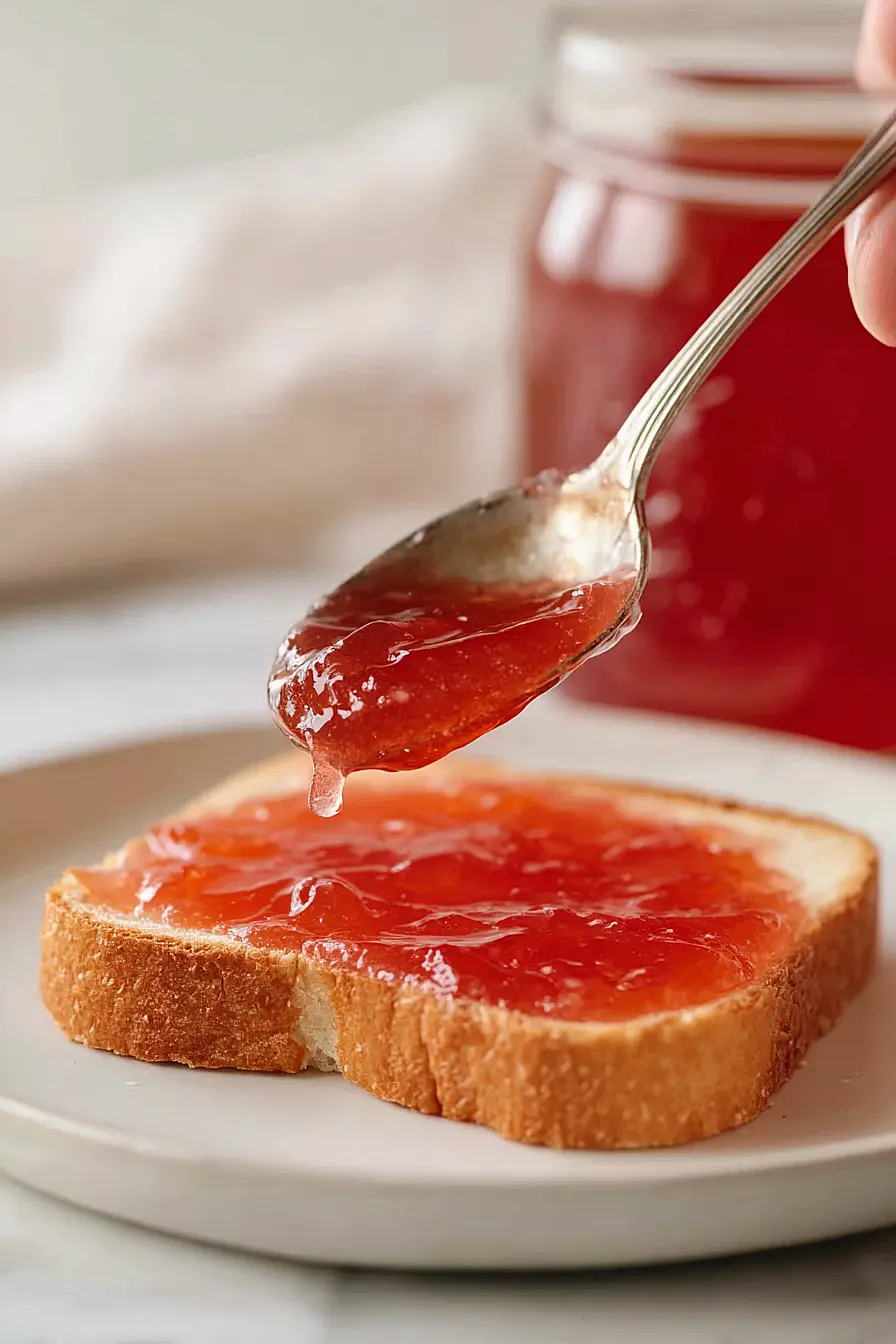
Sterilize five half-pint jars with their lids by running them through a hot dishwasher cycle or boiling them in water for 10 minutes—this prevents contamination and ensures your jelly sets properly. While jars are sterilizing, measure out all your ingredients: the sugar, pectin, strained watermelon juice, lemon juice, salt, and butter. Having everything ready before you start cooking is essential for jam-making, where timing is critical.
In a small bowl, whisk together the sugar and pectin until well combined. This step is crucial because it prevents the pectin from clumping when it hits the hot liquid—the sugar helps distribute the pectin evenly throughout the mixture, which ensures consistent gelling across your entire batch.
Pour the watermelon juice and lemon juice into a large, heavy-bottomed pot (at least 8-quart capacity to prevent boil-overs). Add the salt and butter, then stir in the sugar-pectin mixture from Step 2, stirring constantly until fully dissolved. Bring the mixture to a rolling boil over high heat, stirring occasionally. I like to add the butter at the beginning because it significantly reduces the foam that forms during cooking, making the final jelly clearer and easier to skim.
Maintain a vigorous rolling boil and monitor the temperature with a candy or instant-read thermometer. Cook for 15-30 minutes until the mixture reaches exactly 220°F (104°C)—this is the critical temperature where the sugar content and pectin reach the proper balance to gel. Before removing from heat, perform the wrinkle test: place a small spoonful of hot jelly on a chilled plate, let it cool for a moment, then push it with your finger. If it wrinkles and doesn't flow back together, it's ready; if it's still liquid, cook for another 2-3 minutes and test again.
Remove the pot from heat and skim off any foam from the surface using a clean spoon. Working quickly while the jelly is still hot, ladle it into your sterilized jars from Step 1, leaving 1/4 inch of headspace at the top. Wipe the rim of each jar with a clean, damp cloth to remove any drips, then place the lids on top and screw the bands until finger-tight (snug but not overly tight). Immediately place the filled jars into a boiling water canner and process for 10 minutes to create a proper seal.
Carefully remove the jars from the water canner using jar tongs and place them upright on a clean towel or cooling rack, spacing them a few inches apart so air can circulate around them. As they cool, you'll hear a gentle 'pop' sound—this is the lids sealing as the contents contract, which is exactly what you want. Let the jars sit undisturbed at room temperature for at least 12 hours (preferably overnight) before testing the seals. Any jars that don't seal properly should be refrigerated and used within 3 weeks.