You know that breakfast where you open the fridge, see some eggs, a few lonely peppers, leftover ham, and you’re like… frittata? Yeah. This is THAT frittata, but actually dialed in.
Sharp white cheddar (Cabot, the good stuff), butter in the cast iron, and a spice blend that punches way above its weight. Garlic powder, onion powder, paprika, parsley, red pepper flakes, the whole lineup.
Eggs whisked with milk, poured right over the sautéed veggies and ham, more cheese on top, into a 375 oven. Twenty minutes later, golden, puffy, perfect. Slice it right in the skillet. Serve it with hot sauce or don’t, I’m not your mom. The proportions here are exactly right for two people and leftovers are overrated anyway.

The Best Pan for a Small Frittata
A 10-inch cast iron skillet is your BEST bet. It holds heat evenly, goes straight from stovetop to oven, and delivers crispy edges that beat flimsy versions every time
Size actually matters! Go too big and your frittata spreads thin and floppy. Too small and you’ve got overflow drama. The 10-inch pan hits the sweet spot for a proper 1-inch thick frittata that holds its shape when sliced
(Always check that handle first) If you’re not using cast iron, confirm the handle is oven-safe. A plastic handle at 375°F is a melted disaster waiting to happen. Bare stainless instead? Butter it generously or you’ll be scraping your frittata out in sad pieces
How to Tell When Your Frittata Is Done
- Watch the CENTER. It should jiggle like set gelatin, not slosh like liquid. If it ripples when you tap the pan, it needs more time…. give it another 2-3 minutes.
- Look for the EDGES to pull away from the skillet slightly. This signals the eggs have set and are contracting as they firm up.
- The TOP should look matte and set, not shiny or wet. A little golden color on the cheese is great…. too brown means it’s overdone.
- Stick a KNIFE into the center about 1 inch deep. If it comes out with just a tiny bit of moist egg (not runny), it’s ready. Clean means overcooked!
- Internal TEMPERATURE of 160°F in the center is the safe zone if you want to be precise about it.
Trust your eyes and that gentle jiggle… the residual heat finishes the job during those 2-3 minutes of resting, so pull it out when it looks almost done and let time do the rest. Overbaking is the #1 frittata killer. Don’t do it!
Filling Swaps & Variations
- Ham out? Swap in crispy bacon, breakfast sausage, diced chorizo, or smoked salmon. Smoked salmon needs zero pre-cooking… just flake it in raw.
- Red onion can become shallots (sweeter, milder), leeks, or even sliced green onions thrown in at the end.
- Bell peppers are totally flexible. Use whatever color you have, or try poblanos for a smoky kick, or diced jalapeño if you want heat.
- No white cheddar? Gruyere melts beautifully, pepper jack adds spice, and feta crumbled on top brings a salty punch.
- Vegetarian version: skip the ham and double the veggies. Mushrooms, spinach (wilt it first), and asparagus all work great.
- Cheese timing matters: mix half INTO the eggs, save half for topping so you get that golden crust.
Storing & Reheating Leftovers
STORE your frittata in an airtight container in the fridge for up to 3 days. Beyond that, the eggs turn rubbery and the peppers get weirdly soggy (genuinely not appetizing, you deserve better).
REHEAT in a 300°F oven for 8-10 minutes to keep things tender and avoid overcooking the eggs. The microwave works in a pinch with a damp paper towel on top, though heating gets uneven (a cold slice is also fair game, basically a quiche situation at that point).
FREEZING works for longer storage if you wrap individual slices in plastic, then foil, and use within 2 months. Reheat from frozen at 325°F for 15 minutes (texture won’t be as fluffy, but it gets the job done).
More From the Kitchen
- Jalapeño Popper Quiche
- Frittata for One
- Frittata for a Crowd
- Classic Mushroom Frittata
- Mouthwatering Croissant Quiche
- Greek Salad Omelette
Estimated Nutrition
Estimated nutrition for the whole recipe (without optional ingredients):
- Calories: 420-480
- Protein: 27-32 g
- Fat: 32-37 g
- Carbohydrates: 10-14 g
Ingredients
- 1.5 tbsp butter (I like Kerrygold unsalted butter for this)
- 1/2 red onion
- 1/2 red bell pepper
- 1/2 green pepper (diced into 1/2-inch pieces)
- 3 slices ham
- 4 eggs (room temperature, about 70°F for better rise)
- 1/3 cup milk
- 1/8 tsp garlic powder
- 1/8 tsp onion powder
- 1/4 tsp paprika
- 1/2 tsp parsley
- 1/2 tsp black pepper
- 1/4 tsp salt
- 1/4 tsp red pepper flakes
- 1/3 cup white cheddar cheese (I prefer Cabot extra sharp for more flavor)
Step 1: Chop and Preheat
- 1/2 red onion, diced
- 1/2 red bell pepper, diced
- 1/2 green pepper, diced into 1/2-inch pieces
- 3 slices ham, cut into bite-sized pieces
Preheat your oven to 375°F.
While it heats, prepare your mise en place by dicing the red onion and red bell pepper into 1/2-inch pieces, dicing the green pepper to the same size, and cutting the ham into bite-sized pieces.
This prep work ensures everything is ready before you start cooking.
I like to use room temperature eggs here—they’ll incorporate more smoothly into the custard and give you a better rise.
Step 2: Sauté the Mix-ins
- 1.5 tbsp butter
- 1/2 red onion, diced
- 1/2 red bell pepper, diced
- 1/2 green pepper, diced into 1/2-inch pieces
- 3 slices ham, cut into bite-sized pieces
Melt the butter in a 10-inch cast iron or oven-safe skillet over medium heat.
Add the diced onions and peppers, cooking for about 5 minutes until they begin to soften and release their aromatics—you want them slightly tender but still with a bit of texture.
Push the vegetables to the side of the skillet, then add the ham pieces and cook for 2-3 minutes until they’re slightly caramelized and flavorful.
The vegetables will continue cooking in the oven, so don’t worry about them being fully tender.
Step 3: Whisk the Seasoned Eggs
- 4 eggs
- 1/3 cup milk
- 1/8 tsp garlic powder
- 1/8 tsp onion powder
- 1/4 tsp paprika
- 1/2 tsp parsley
- 1/2 tsp black pepper
- 1/4 tsp salt
- 1/4 tsp red pepper flakes
- 1/3 cup white cheddar cheese
In a bowl, crack the eggs and whisk them together with the milk until well combined and slightly frothy.
Add the garlic powder, onion powder, paprika, parsley, black pepper, salt, and red pepper flakes, whisking until all spices are evenly distributed.
I prefer to use Cabot extra sharp white cheddar for this recipe—it has more punch than mild cheddar and adds real flavor to every bite.
Measure out 1/3 cup of the cheese and stir it into the egg mixture, reserving the remaining cheese for topping.
Step 4: Assemble and Bake
- egg custard mixture from Step 3
- sautéed vegetables and ham from Step 2
- reserved cheese for topping
Pour the egg custard mixture from Step 3 over the sautéed vegetables and ham in the skillet, distributing everything evenly.
Sprinkle the reserved cheese over the top so it gets golden and melty during baking.
Transfer the skillet to the preheated 375°F oven and bake for 15-18 minutes, until the eggs are set around the edges but still slightly jiggly in the very center—the residual heat will continue cooking it as it cools.
Step 5: Cool and Slice
Remove the frittata from the oven and let it rest for 2-3 minutes before slicing.
This brief rest allows the proteins to set fully and keeps the frittata from falling apart when you cut into it.
Slice into wedges and serve warm directly from the skillet for a rustic presentation.
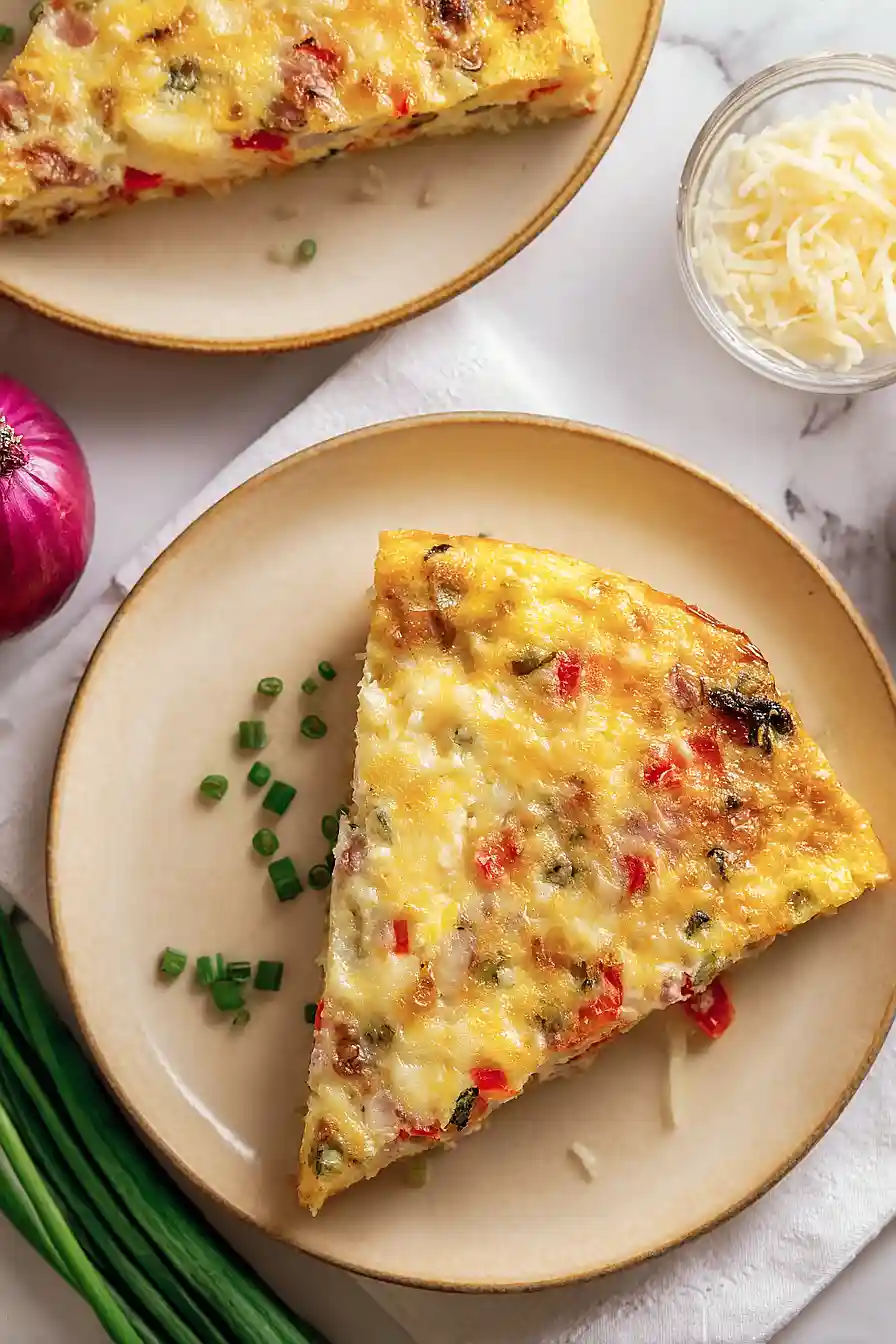
Homemade Frittata for Two
Ingredients
Method
- Preheat your oven to 375°F. While it heats, prepare your mise en place by dicing the red onion and red bell pepper into 1/2-inch pieces, dicing the green pepper to the same size, and cutting the ham into bite-sized pieces. This prep work ensures everything is ready before you start cooking. I like to use room temperature eggs here—they'll incorporate more smoothly into the custard and give you a better rise.
- Melt the butter in a 10-inch cast iron or oven-safe skillet over medium heat. Add the diced onions and peppers, cooking for about 5 minutes until they begin to soften and release their aromatics—you want them slightly tender but still with a bit of texture. Push the vegetables to the side of the skillet, then add the ham pieces and cook for 2-3 minutes until they're slightly caramelized and flavorful. The vegetables will continue cooking in the oven, so don't worry about them being fully tender.
- In a bowl, crack the eggs and whisk them together with the milk until well combined and slightly frothy. Add the garlic powder, onion powder, paprika, parsley, black pepper, salt, and red pepper flakes, whisking until all spices are evenly distributed. I prefer to use Cabot extra sharp white cheddar for this recipe—it has more punch than mild cheddar and adds real flavor to every bite. Measure out 1/3 cup of the cheese and stir it into the egg mixture, reserving the remaining cheese for topping.
- Pour the egg custard mixture from Step 3 over the sautéed vegetables and ham in the skillet, distributing everything evenly. Sprinkle the reserved cheese over the top so it gets golden and melty during baking. Transfer the skillet to the preheated 375°F oven and bake for 15-18 minutes, until the eggs are set around the edges but still slightly jiggly in the very center—the residual heat will continue cooking it as it cools.
- Remove the frittata from the oven and let it rest for 2-3 minutes before slicing. This brief rest allows the proteins to set fully and keeps the frittata from falling apart when you cut into it. Slice into wedges and serve warm directly from the skillet for a rustic presentation.
This recipe is so delicious and so versatile!! Made it for the second weekend in a row today! Thank you for sharing!
I really liked this although I didn’t let it rest enough when it came out of the oven. Love and learn! I used all red peppers. It’s an easy breakfast or dinner.