What happens when you take a Greek salad and stuff it inside an omelette? You get THIS. An absolute unit of a breakfast (and let’s be honest, lunch and dinner too).
I’m not pretending this is a quick weekday morning situation. It’s a slow Saturday, coffee-in-hand, feeding-people kind of meal. Twelve eggs (yes, TWELVE, this serves a crowd), salty feta in big chunks, briny kalamata olives, sweet ripe tomatoes, red onion, parsley. Oregano throughout because we’re going full Greek here.
The move: cook the veg right in the skillet, pour the eggs over, finish it under the broiler so the top gets golden and the feta just barely softens.
It’s basically a Greek salad and a frittata had a baby. And that baby is DELICIOUS.
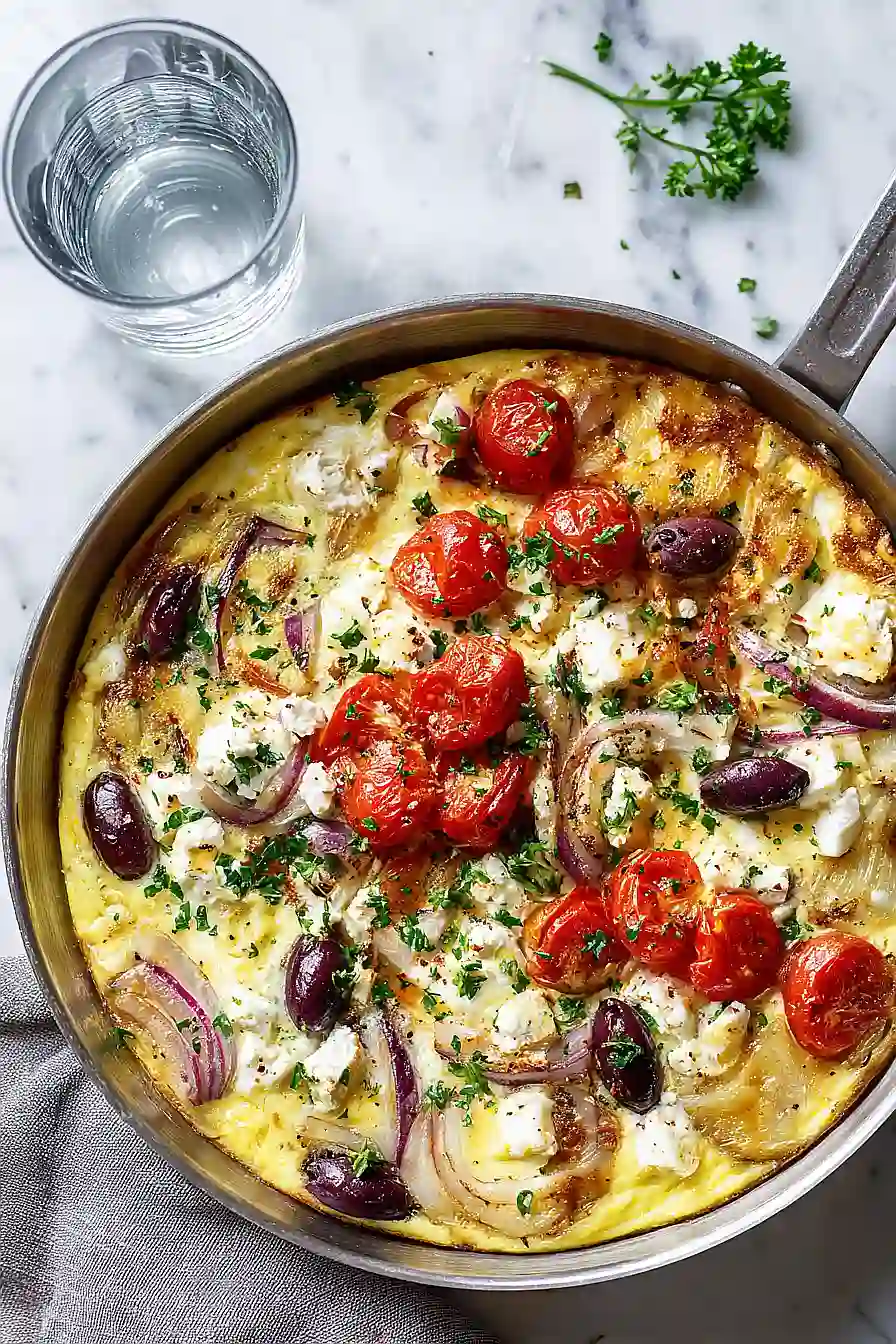
Frittata vs. Omelette: What’s the Difference?
Let’s get one thing straight. A frittata and an omelette are NOT the same thing, even if some recipes blur the lines (looking at you, Greek Salad Omelette that gets broiled and sliced into wedges….).
Omelettes cook FAST on the stovetop only. Frittatas start on the stove and finish in the oven or under the broiler!
Fillings tell the real story. Omelettes get fillings placed on one side BEFORE folding in half, while frittatas MIX them directly into the eggs.
Texture differs too. Frittatas come out denser and get cut into wedges, while omelettes stay lighter and fold into a half-moon.
This recipe leans frittata in technique. The broiler finish and wedge slicing give it away!
We are calling it an omelette anyway, and that is FINE. Feta chunks deserve the spotlight either way.
Tips for Fluffy, Non-Rubbery Eggs
- Whisk eggs THOROUGHLY until uniform and slightly frothy. Air = lift. Skip this and you’ll get dense eggs, period.
- Room temp eggs whip better. Pull them out 20 minutes before cooking.
- Stick with MEDIUM heat. High heat is the enemy of tender eggs.
- Use the push-and-tilt method (move cooked egg to center, tilt pan so raw egg flows to the edges). This builds soft layers instead of one rubbery slab.
- Pull when the top is still slightly wet. Carryover heat finishes the job under the broiler….that’s the whole point of the broil.
- LET IT REST 1-2 minutes after broiling. The eggs keep cooking out of the oven!
Nail these and you’ll get tender, fluffy eggs every time. Rubbery omelettes, officially defeated.
What to Serve with Greek Omelette
Pair this with SIDES that complement the feta and olives.
- Warm pita bread or pita chips (scooping essential)
- Tzatziki or plain Greek yogurt with olive oil
- Fresh fruit like watermelon, grapes, or peaches
- Roasted baby potatoes with lemon and oregano
- Cucumber salad with olive oil and vinegar
- Hot coffee or fresh-squeezed orange juice
The salty feta craves something cool and creamy alongside it (tzatziki wins every time), while pita gives you a way to chase every last cheese chunk. Simple, satisfying, done!
Storing & Reheating Leftovers
FRIDGE STORAGE: Cool completely, then transfer to an airtight container or wrap wedges in foil. Keeps up to 2 DAYS. Don’t leave it out longer than 2 hours since eggs are high-risk.
REHEATING: Microwave on a plate covered with a damp paper towel in 30-SECOND bursts. For better texture, use a nonstick skillet over LOW heat with a splash of water and a lid. Skip the oven (it dries the eggs and turns feta rubbery).
WHAT TO EXPECT: Tomatoes release liquid overnight, so expect a wetter omelette. Feta loses its chunky texture but keeps flavor. Real talk: this dish shines FRESH from the skillet, so leftovers are a bonus, not a plan. Freezing isn’t worth it.
Recipes Like This One
- Ham Frittata for a Crowd
- Juicy Chicken and Spinach Omelette
- Homemade Frittata for Two
- Quick Frittata for One
- Healthy Frittata for Baby
- Classic Mushroom Frittata
Estimated Nutrition
Estimated nutrition for the whole recipe (without optional ingredients):
- Calories: 1000-1150
- Protein: 55-65 g
- Fat: 75-85 g
- Carbohydrates: 30-40 g
Ingredients
For the egg mixture:
- 12 large eggs
- 1 handful fresh parsley, finely chopped
- pinch of salt
- freshly ground black pepper
- 1/2 teaspoon dried oregano
For the filling:
- 2 tbsp olive oil
- 1 red onion, thinly sliced into half-moons
- 3 ripe tomatoes, seeded and diced into 1/2-inch pieces
- 1 handful Kalamata olives, pitted and halved
- 4.5 oz feta cheese, crumbled into large chunks
Step 1: Whisk the Egg Mixture
- 12 large eggs
- 1 handful fresh parsley, finely chopped
- pinch of salt
- freshly ground black pepper
- 1/2 teaspoon dried oregano
Finely chop the fresh parsley and set aside.
Crack all 12 eggs into a bowl and whisk together with the parsley, salt, pepper, and dried oregano until the mixture is well combined and uniform in color.
This allows the herbs and seasonings to distribute evenly throughout the eggs rather than creating pockets of flavor.
Step 2: Sauté the Greek Vegetables
- 2 tbsp olive oil
- 1 red onion, thinly sliced into half-moons
- 3 ripe tomatoes, seeded and diced into 1/2-inch pieces
- 1 handful Kalamata olives, pitted and halved
Heat 2 tablespoons of olive oil in a large oven-safe skillet over medium-high heat.
Add the thinly sliced red onion and cook for 4 minutes, stirring occasionally, until it begins to soften and develop some color.
Add the seeded and diced tomatoes along with the halved Kalamata olives, then cook for another 1-2 minutes just until the tomatoes begin to release their juices.
This quick cooking preserves the tomatoes’ freshness while allowing the flavors to meld.
Step 3: Set the Eggs in skillet
- egg mixture from Step 1
- vegetable and olive mixture from Step 2
Pour the egg mixture from Step 1 directly over the vegetables in the skillet.
Reduce the heat to medium and let the eggs begin to set on the bottom, about 2 minutes.
Using a spatula, gently push the cooked eggs toward the center while tilting the pan to allow uncooked egg to flow to the edges—continue for about 2 minutes until the eggs are mostly set but still slightly wet on top.
I like to use a silicone spatula here because it won’t scratch your pan and gives you more control over the eggs as they cook.
Step 4: Broil with Feta Cheese
- 4.5 oz feta cheese, crumbled into large chunks
Distribute the crumbled feta cheese in large chunks evenly over the top of the partially cooked omelette.
Set your oven to broil on high (or preheat to 450°F if you don’t have a broil setting).
Place the skillet under the broiler for 5-6 minutes until the eggs are completely set and the top is lightly golden and the feta begins to warm.
The residual heat will finish cooking the eggs gently while keeping them moist, and the feta will soften slightly without fully melting—preserving those nice chunks of cheese.
Step 5: Portion and Plate
Remove the omelette from the broiler and let it rest in the pan for 1-2 minutes.
Using a sharp knife or spatula, cut the omelette into wedges directly in the pan, then transfer to a serving platter or individual plates while still warm.
The Greek salad omelette is best served immediately to enjoy the contrast of warm eggs and cheese against the fresh vegetables and olives.
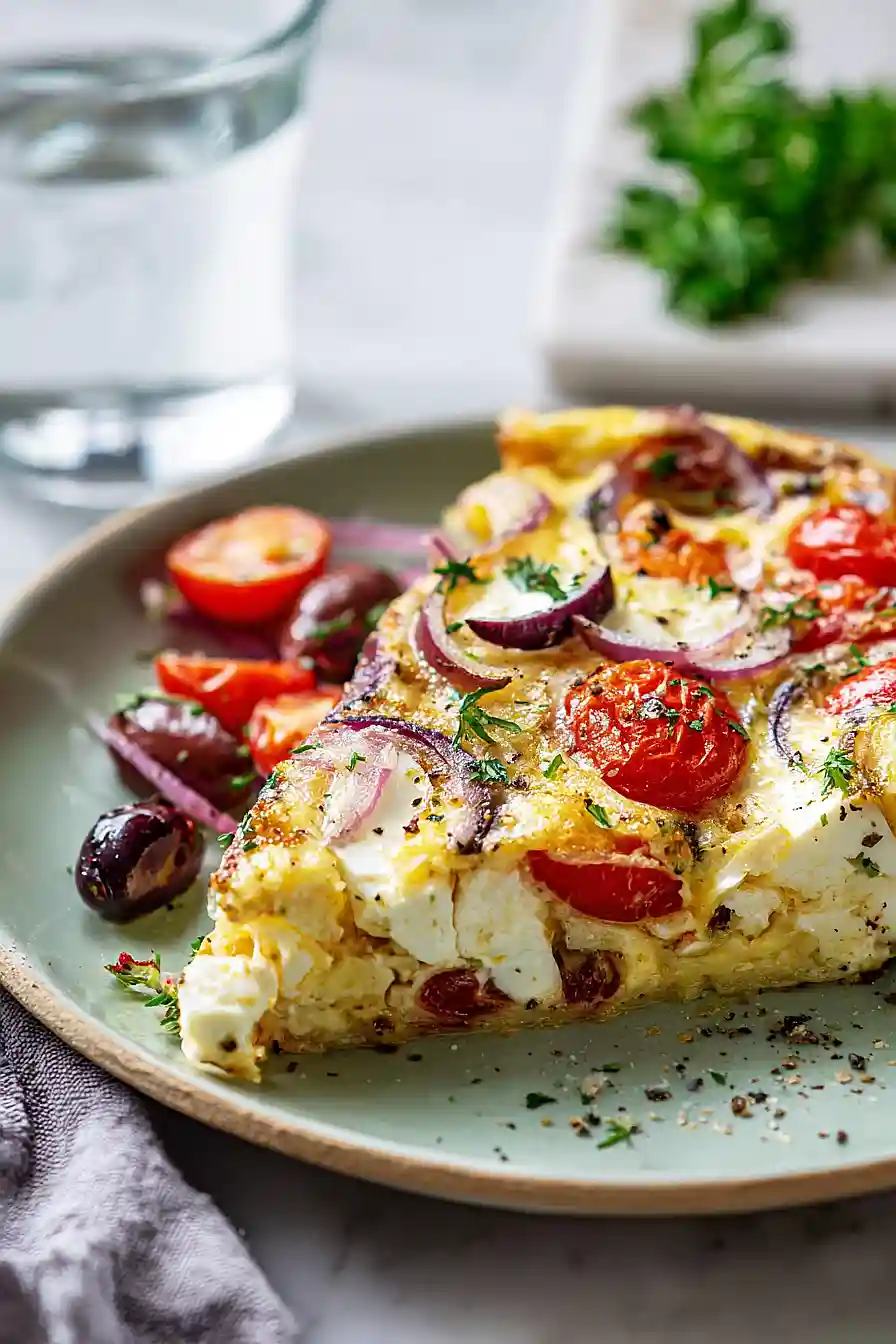
Vegetarian Greek Salad Omelette
Ingredients
Method
- Finely chop the fresh parsley and set aside. Crack all 12 eggs into a bowl and whisk together with the parsley, salt, pepper, and dried oregano until the mixture is well combined and uniform in color. This allows the herbs and seasonings to distribute evenly throughout the eggs rather than creating pockets of flavor.
- Heat 2 tablespoons of olive oil in a large oven-safe skillet over medium-high heat. Add the thinly sliced red onion and cook for 4 minutes, stirring occasionally, until it begins to soften and develop some color. Add the seeded and diced tomatoes along with the halved Kalamata olives, then cook for another 1-2 minutes just until the tomatoes begin to release their juices. This quick cooking preserves the tomatoes' freshness while allowing the flavors to meld.
- Pour the egg mixture from Step 1 directly over the vegetables in the skillet. Reduce the heat to medium and let the eggs begin to set on the bottom, about 2 minutes. Using a spatula, gently push the cooked eggs toward the center while tilting the pan to allow uncooked egg to flow to the edges—continue for about 2 minutes until the eggs are mostly set but still slightly wet on top. I like to use a silicone spatula here because it won't scratch your pan and gives you more control over the eggs as they cook.
- Distribute the crumbled feta cheese in large chunks evenly over the top of the partially cooked omelette. Set your oven to broil on high (or preheat to 450°F if you don't have a broil setting). Place the skillet under the broiler for 5-6 minutes until the eggs are completely set and the top is lightly golden and the feta begins to warm. The residual heat will finish cooking the eggs gently while keeping them moist, and the feta will soften slightly without fully melting—preserving those nice chunks of cheese.
- Remove the omelette from the broiler and let it rest in the pan for 1-2 minutes. Using a sharp knife or spatula, cut the omelette into wedges directly in the pan, then transfer to a serving platter or individual plates while still warm. The Greek salad omelette is best served immediately to enjoy the contrast of warm eggs and cheese against the fresh vegetables and olives.