Quick breads don’t get enough credit. They’re the underdog of the baking world, sandwiched between fancy layer cakes and yeasted loaves that take ALL day. And honestly? Most of them are kind of boring.
But THIS one. Fig bread loaded with warm spices, toasted walnuts, and a honey-orange glaze brushed on while it’s still warm? Different story entirely.
Your kitchen is going to smell unhinged. Cinnamon, nutmeg, cardamom, cloves, plus a little orange zest cutting through all that spice…. it’s giving fancy holiday bakery but you made it in your pajamas at 9pm on a Tuesday (no judgment, this is exactly when I test recipes).
The figs go jammy. The walnuts stay crunchy. The glaze sinks in and makes the top slightly sticky and shiny. It is GOOD.
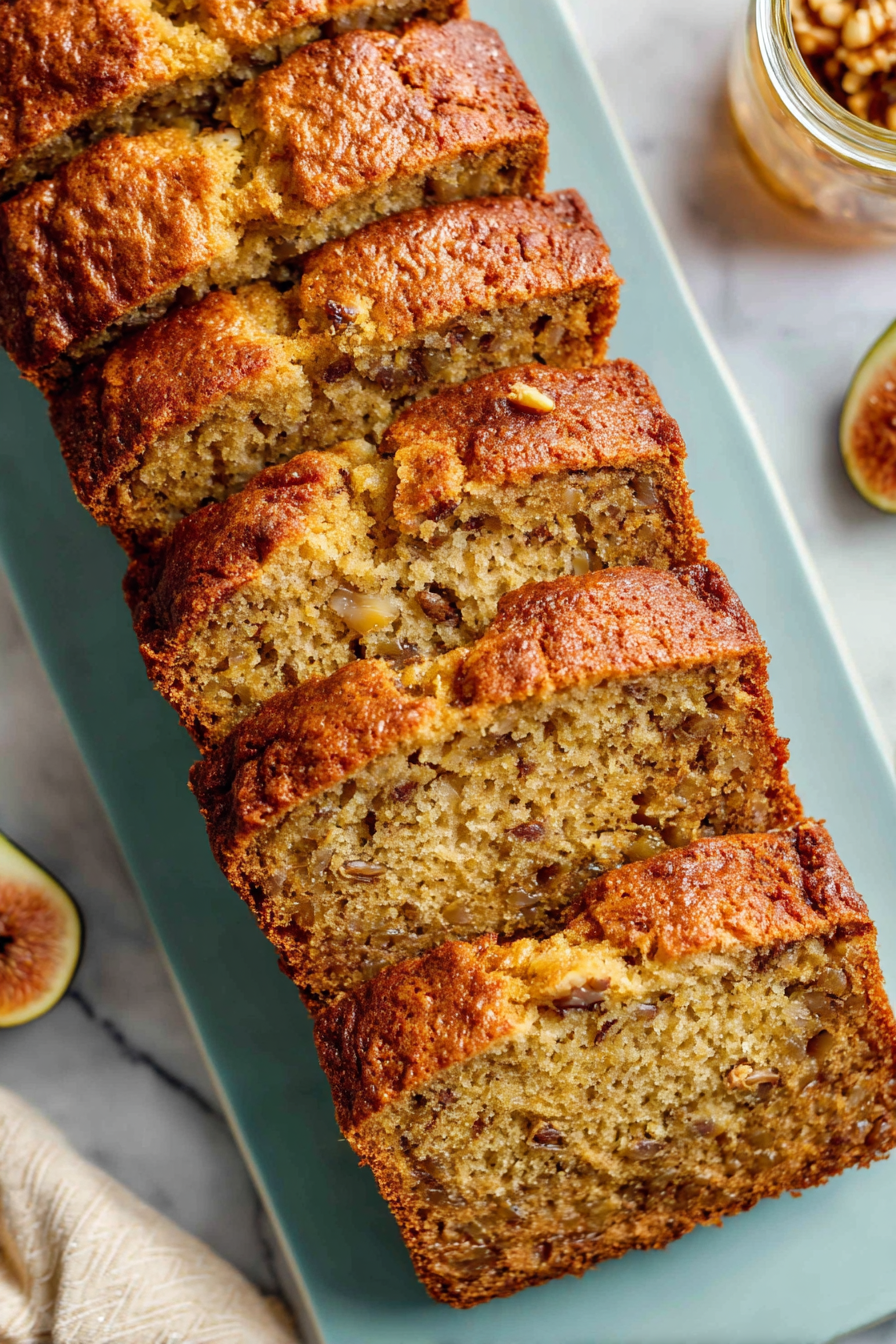
Fresh vs. Dried Figs: Does It Matter?
DRIED figs only, friends. Fresh figs release too much moisture and turn your crumb gummy. Stem them first, dice into 1/4-inch pieces, then toss in the wet mix BEFORE folding into dry. That coating stops them from sinking to the bottom (seriously, don’t skip it!).
How to Keep Figs from Sinking
- Toss diced figs with 1 tablespoon of flour from your dry mix FIRST. The coating gives them grip so they stop sinking.
- Fold the floured figs into the WET mixture. The oily coating creates a heavier surface that resists oven gravity.
- Keep your batter THICK. Don’t overmix! Runny batter lets figs slide down, while a sturdy one holds them suspended (yes, this matters).
- Let the batter rest 5 minutes after mixing. Flour hydrates and thickens, trapping figs in place.
- Pour into the prepped pan IMMEDIATELY. Lingering means figs settle before the heat sets things.
Even figs throughout the loaf, no dense fig layer at the base. That’s the goal!
If You Liked This, Try These
- Mouthwatering Fig Cake
- Tasty Blueberry Cream Cheese Bread
- Sweet Carrot Apple Zucchini Bread
- Moist Carrot Apple Zucchini Bread
- Lemon Glazed Blueberry Bread
- Blueberry Banana Bread
Estimated Nutrition
Estimated nutrition for the whole recipe (without optional ingredients):
- Calories: 3000-3200
- Protein: 45-50 g
- Fat: 120-130 g
- Carbohydrates: 440-470 g
Ingredients
For the dry mix:
- 2 cups all-purpose flour
- 1 1/3 cups sugar
- 1 tsp baking soda
- 1 tsp baking powder
- 1/2 tsp ground cloves
- 1/2 tsp ground nutmeg
- 1/2 tsp ground cardamom
- 1 tsp ground cinnamon
- 1/2 tsp sea salt
- 1/2 cup walnuts, crushed
For the wet mix:
- 2/3 cup vegetable oil
- 1/2 cup milk
- 3 large eggs, room temperature
- 1 tsp vanilla extract
- 1 cup dried figs, stems removed and diced
- 1 tbsp unsalted butter, melted
- 1 tbsp honey
- 1 tsp fresh orange zest
Step 1: Whisk the Dry Base
- 2 cups all-purpose flour
- 1 1/3 cups sugar
- 1 tsp baking soda
- 1 tsp baking powder
- 1/2 tsp ground cloves
- 1/2 tsp ground nutmeg
- 1/2 tsp ground cardamom
- 1 tsp ground cinnamon
- 1/2 tsp sea salt
- 1/2 cup walnuts, crushed
Preheat your oven to 350°F.
While it heats, combine the all-purpose flour, sugar, baking soda, baking powder, ground cloves, ground nutmeg, ground cardamom, ground cinnamon, and sea salt in a large mixing bowl.
Whisk these together thoroughly to distribute the leavening agents and spices evenly—this ensures consistent rise and flavor throughout the bread.
Crush the walnuts into varied sizes (some larger pieces, some finer) and fold them into the dry mixture.
Step 2: Blend Wet Ingredients and Chop Figs
- 2/3 cup vegetable oil
- 1/2 cup milk
- 3 large eggs, room temperature
- 1 tsp vanilla extract
- 1 cup dried figs, stems removed and diced
In a separate bowl, whisk together the vegetable oil, milk, room temperature eggs, and vanilla extract until well combined and slightly emulsified.
The room temperature eggs are important here—they blend more smoothly and create a more tender crumb.
Dice the dried figs (removing their stems first) into roughly 1/4-inch pieces, then fold them into the wet mixture.
I like to coat the figs lightly in the wet mixture to prevent them from sinking to the bottom of the bread during baking.
Step 3: Fold Batter and Prep Pan
- dry ingredient mixture from Step 1
- wet ingredient mixture from Step 2
Pour the wet ingredient mixture from Step 2 into the dry ingredient mixture from Step 1.
Fold them together gently using a spatula or wooden spoon—don’t overmix, as this can develop gluten and make the bread tough.
A few lumps are fine; stop folding as soon as you don’t see dry flour.
Grease your baking pan (either a bundt pan or loaf pans) with butter or cooking spray, then pour the batter in, smoothing the top gently with a spatula.
Step 4: Bake Until Golden Brown
Bake the bread in your preheated oven for 1 hour if using a bundt pan, or 45 minutes if using loaf pans, until a toothpick inserted in the center comes out clean or with just a few moist crumbs.
The bread should be golden brown on top and spring back lightly when touched.
Baking times can vary based on your oven, so start checking around 40 minutes for loaf pans.
Step 5: Rest Bread and Mix Glaze
- 1 tbsp unsalted butter, melted
- 1 tbsp honey
- 1 tsp fresh orange zest
Remove the bread from the oven and let it cool in the pan for 10 minutes—this allows the structure to set enough to handle without falling apart.
While the bread cools, whisk together the melted butter, honey, and fresh orange zest in a small bowl to create a light glaze.
Step 6: Glaze and Cool Completely
- glaze from Step 5
Turn the bread out of the pan onto a wire cooling rack.
While the top is still warm, brush the butter-honey-orange glaze over the surface—the warmth helps the glaze absorb into the bread, adding subtle citrus flavor and a light sheen.
Allow the bread to cool completely on the rack before slicing, which usually takes about 30 minutes.
I find that letting the bread cool fully helps it hold together better when sliced, preventing crumbling.
Ingredients
Method
- Preheat your oven to 350°F. While it heats, combine the all-purpose flour, sugar, baking soda, baking powder, ground cloves, ground nutmeg, ground cardamom, ground cinnamon, and sea salt in a large mixing bowl. Whisk these together thoroughly to distribute the leavening agents and spices evenly—this ensures consistent rise and flavor throughout the bread. Crush the walnuts into varied sizes (some larger pieces, some finer) and fold them into the dry mixture.
- In a separate bowl, whisk together the vegetable oil, milk, room temperature eggs, and vanilla extract until well combined and slightly emulsified. The room temperature eggs are important here—they blend more smoothly and create a more tender crumb. Dice the dried figs (removing their stems first) into roughly 1/4-inch pieces, then fold them into the wet mixture. I like to coat the figs lightly in the wet mixture to prevent them from sinking to the bottom of the bread during baking.
- Pour the wet ingredient mixture from Step 2 into the dry ingredient mixture from Step 1. Fold them together gently using a spatula or wooden spoon—don't overmix, as this can develop gluten and make the bread tough. A few lumps are fine; stop folding as soon as you don't see dry flour. Grease your baking pan (either a bundt pan or loaf pans) with butter or cooking spray, then pour the batter in, smoothing the top gently with a spatula.
- Bake the bread in your preheated oven for 1 hour if using a bundt pan, or 45 minutes if using loaf pans, until a toothpick inserted in the center comes out clean or with just a few moist crumbs. The bread should be golden brown on top and spring back lightly when touched. Baking times can vary based on your oven, so start checking around 40 minutes for loaf pans.
- Remove the bread from the oven and let it cool in the pan for 10 minutes—this allows the structure to set enough to handle without falling apart. While the bread cools, whisk together the melted butter, honey, and fresh orange zest in a small bowl to create a light glaze.
- Turn the bread out of the pan onto a wire cooling rack. While the top is still warm, brush the butter-honey-orange glaze over the surface—the warmth helps the glaze absorb into the bread, adding subtle citrus flavor and a light sheen. Allow the bread to cool completely on the rack before slicing, which usually takes about 30 minutes. I find that letting the bread cool fully helps it hold together better when sliced, preventing crumbling.