That CRUNCH though. You know exactly what I mean. The bite where the coating on the fish just SHATTERS and then you hit the flaky, tender inside and everything is right in the world? Yeah. We’re doing that today.
The tartar sauce is sharp and briny, the chips are golden and ridiculous, and honestly? Better than most pub versions I’ve ever had. Fight me.
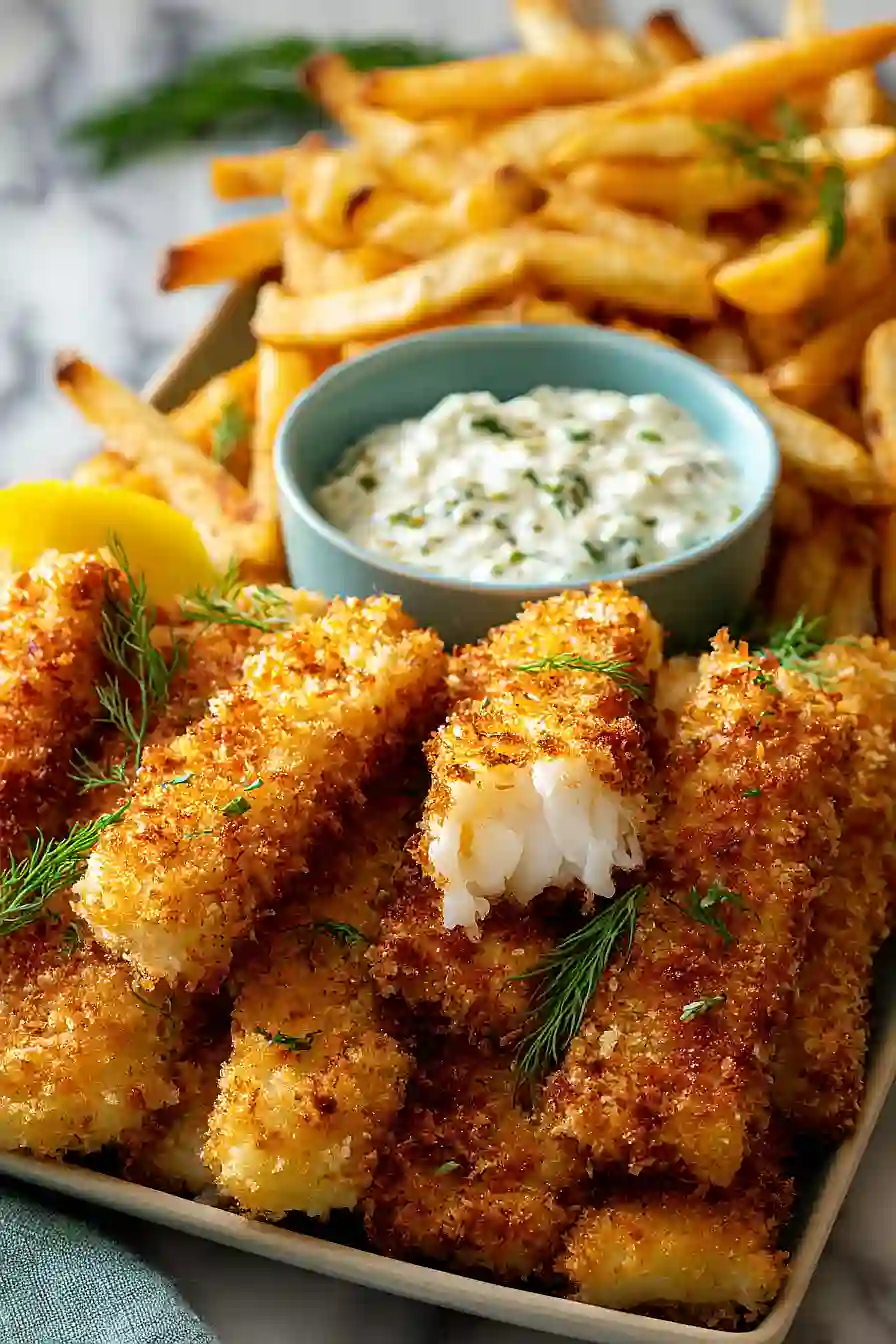
The Secret to Extra-Crispy Batter
RICE FLOUR is doing the heavy lifting here. The blend of all-purpose flour, rice flour, and cornstarch creates a shattering crust that plain flour alone cannot touch.
Keep everything ICE COLD. The soda water, the egg, even the mixing bowl. Cold batter hitting hot oil creates steam, and steam puffs the coating into bubbly, crackly perfection. See lumps in your batter? Leave them. Overmixing develops gluten and turns your crust rubbery instead of light.
Dredge each fillet in rice flour before the wet batter dip. This gives the batter something to grip, so it clings thick and even instead of sliding into the oil. Fry at a steady 375°F in small batches. Crowded oil drops the temperature, and cold oil makes greasy, soggy batter (the worst).
How to Get Perfect Chips Every Time
Chips are the backbone of this dish…. and they deserve your full attention. Here’s how to nail them every single time.
- Cut six large Russet potatoes into 1/2-inch batons and soak in cold water for 15 minutes to pull out the starch (this is the secret to crispiness, not grease).
- Heat peanut oil to 325°F in a deep pot.
- Fry the batons in small batches for 2-3 minutes until pale and tender. Remove and drain on paper towels. Do NOT walk away here…. you’re not done.
- Crank the oil up to 375°F. Fry those same chips again for 3-4 minutes until they turn deep golden and audibly crunchy.
- Drain on fresh paper towels and season IMMEDIATELY with Maldon sea salt while the surface is still hot (the salt needs that heat to stick).
- Hold in a 170-200°F oven to stay crisp while you fry the fish. Never cover them (steam is the enemy).
Best Fish for Fish and Chips
Cod and haddock are the CLASSIC picks for solid reason. Their firm, flaky flesh holds up under batter without going mushy.
Pacific cod is widely available; Atlantic cod often arrives frozen (genuinely fresher than most “fresh” fish, since it’s flash-frozen at sea). Pollock is the budget-friendly option that works just as well.
Halibut is INCREDIBLE if you can justify the cost, thick and meaty with a clean bite. AVOID oily fish like salmon, mackerel, or bluefish…. they turn greasy and batter won’t cling.
Thickness matters MORE than species. Aim for 1/2 to 3/4 inch fillets: thinner overcooks before the batter crisps, thicker stays raw.
Skin-off makes dredging easier, but skin-on crisps up nicely. Pat fillets bone-dry before battering, water is the enemy of crisp!
Estimated Nutrition
Estimated nutrition for the whole recipe (without optional ingredients):
- Calories: 3000-3400
- Protein: 100-120 g
- Fat: 180-210 g
- Carbohydrates: 300-340 g
Ingredients
For the fish:
- 4 white fish fillets (patted dry)
- 1/2 cup rice flour (for dredging)
- 1 cup all-purpose flour
- 1 cup rice flour
- 1/4 cup cornstarch
- 1 1/2 tbsp baking powder
- 1 tsp onion powder
- 1/2 tsp garlic powder
- 1/2 tsp celery seed
- 1 1/2 tsp sea salt
- 3/4 tsp cracked black pepper
- 12 oz ice-cold soda water
- 1 large egg
- 2 dashes hot sauce
- Peanut or vegetable oil for frying
- 4 lemons (cut into wedges)
For the potatoes:
- 6 large Russet potatoes (cut into 1/2-inch batons)
- Peanut oil for deep frying
- Maldon sea salt for finishing
For the tartar sauce:
- 1 cup mayonnaise
- 1 1/2 tsp fresh lemon juice
- 1/2 tsp mustard powder
- 1 tbsp capers (rinsed and finely chopped)
- 2 tbsp dill pickles (finely minced)
- 1 tbsp fresh dill (finely chopped)
- 1/4 tsp black pepper
Step 1: Whisk the Tartar Sauce
- 1 cup mayonnaise
- 1 1/2 tsp fresh lemon juice
- 1/2 tsp mustard powder
- 1 tbsp capers
- 2 tbsp dill pickles
- 1 tbsp fresh dill
- 1/4 tsp black pepper
- 4 white fish fillets
- 6 large Russet potatoes
While your oil heats, make the tartar sauce by combining mayonnaise, fresh lemon juice, mustard powder, chopped capers, minced dill pickles, fresh dill, and black pepper in a small bowl.
Stir until well combined and set aside.
Pat the fish fillets dry with paper towels if not already done, and cut the potatoes into 1/2-inch batons.
I like to soak the cut potatoes in cold water for 15 minutes before frying—this removes excess starch and gives you crispier chips with less greasiness.
Step 2: Par-Fry the Potatoes
- Peanut or vegetable oil for frying
- 6 large Russet potatoes
- Maldon sea salt for finishing
Heat peanut or vegetable oil to 325°F in a deep pot or fryer.
Working in batches to avoid crowding, fry the potato batons for 2-3 minutes until they’re pale and cooked through but not yet golden.
Remove with a slotted spoon and drain on paper towels.
This first cook renders the potato while the second cook will create the crispy exterior.
Increase the oil temperature to 375°F and fry the potatoes again for 3-4 minutes until they’re golden brown and crispy.
Transfer to a paper towel-lined plate, immediately season generously with Maldon sea salt, and keep warm in a 170-200°F oven while you prepare the fish.
Step 3: Whisk the Crispy Batter
- 1 cup all-purpose flour
- 1 cup rice flour
- 1/4 cup cornstarch
- 1 1/2 tbsp baking powder
- 1 tsp onion powder
- 1/2 tsp garlic powder
- 1/2 tsp celery seed
- 1 1/2 tsp sea salt
- 3/4 tsp cracked black pepper
- 12 oz ice-cold soda water
- 1 large egg
- 2 dashes hot sauce
In a large bowl, whisk together all-purpose flour, 1 cup rice flour, cornstarch, baking powder, onion powder, garlic powder, celery seed, sea salt, and cracked black pepper.
Create a well in the center and pour in the ice-cold soda water, egg, and hot sauce.
Gently whisk until just combined—the batter should be slightly lumpy and thick like pancake batter.
Don’t overmix, as this can develop gluten and make the coating tough instead of light and crispy.
Keep the batter cold until you’re ready to use it.
Step 4: Dredge and Fry Fish
- 1/2 cup rice flour
- Peanut or vegetable oil for deep frying
- 4 white fish fillets
- fish batter from Step 3
- Sea salt for finishing
Heat peanut or vegetable oil to 375°F in a deep pot or fryer.
Set up a dredging station: place the 1/2 cup rice flour in one shallow bowl and the batter from Step 3 in another.
Working with one fillet at a time, coat it lightly in rice flour, then dip it completely into the batter, letting excess drip off.
Carefully place the battered fish into the hot oil and fry for 4-5 minutes until the coating is golden brown and crispy.
I always fry fish in smaller batches to keep the oil temperature consistent—overcrowding drops the temperature and results in greasy, soggy batter.
Remove each fillet with a slotted spoon and drain on paper towels, then season immediately with sea salt.
Step 5: Assemble with Lemon Wedges
- 4 white fish fillets
- crispy chips from Step 2
- tartar sauce from Step 1
- 4 lemons
Divide the golden fish fillets and crispy chips between serving plates.
Serve with the tartar sauce from Step 1 on the side or spread lightly on the fish.
Place a lemon wedge on each plate for squeezing over everything just before eating.
Serve immediately while the fish is still hot and the chips are at their crispiest.

Classic Fish and Chips with Tartar Sauce
Ingredients
Method
- While your oil heats, make the tartar sauce by combining mayonnaise, fresh lemon juice, mustard powder, chopped capers, minced dill pickles, fresh dill, and black pepper in a small bowl. Stir until well combined and set aside. Pat the fish fillets dry with paper towels if not already done, and cut the potatoes into 1/2-inch batons. I like to soak the cut potatoes in cold water for 15 minutes before frying—this removes excess starch and gives you crispier chips with less greasiness.
- Heat peanut or vegetable oil to 325°F in a deep pot or fryer. Working in batches to avoid crowding, fry the potato batons for 2-3 minutes until they're pale and cooked through but not yet golden. Remove with a slotted spoon and drain on paper towels. This first cook renders the potato while the second cook will create the crispy exterior. Increase the oil temperature to 375°F and fry the potatoes again for 3-4 minutes until they're golden brown and crispy. Transfer to a paper towel-lined plate, immediately season generously with Maldon sea salt, and keep warm in a 170-200°F oven while you prepare the fish.
- In a large bowl, whisk together all-purpose flour, 1 cup rice flour, cornstarch, baking powder, onion powder, garlic powder, celery seed, sea salt, and cracked black pepper. Create a well in the center and pour in the ice-cold soda water, egg, and hot sauce. Gently whisk until just combined—the batter should be slightly lumpy and thick like pancake batter. Don't overmix, as this can develop gluten and make the coating tough instead of light and crispy. Keep the batter cold until you're ready to use it.
- Heat peanut or vegetable oil to 375°F in a deep pot or fryer. Set up a dredging station: place the 1/2 cup rice flour in one shallow bowl and the batter from Step 3 in another. Working with one fillet at a time, coat it lightly in rice flour, then dip it completely into the batter, letting excess drip off. Carefully place the battered fish into the hot oil and fry for 4-5 minutes until the coating is golden brown and crispy. I always fry fish in smaller batches to keep the oil temperature consistent—overcrowding drops the temperature and results in greasy, soggy batter. Remove each fillet with a slotted spoon and drain on paper towels, then season immediately with sea salt.
- Divide the golden fish fillets and crispy chips between serving plates. Serve with the tartar sauce from Step 1 on the side or spread lightly on the fish. Place a lemon wedge on each plate for squeezing over everything just before eating. Serve immediately while the fish is still hot and the chips are at their crispiest.