The pear is the move here. Grated right into the soy sauce with gochugaru and ginger and a hit of sesame oil? It tenderizes the meat AND adds this quiet sweetness that makes everyone go “what IS that?” Nobody ever guesses pear.
Twenty-four hour marinade, four minutes of actual cooking, done. You will feel like an absolute genius and your kitchen will smell INCREDIBLE.
Flanken-Style vs. English-Cut Ribs
- Flanken-style cuts ACROSS the bone in 1/4-inch strips, several bone rounds per piece. English-cut runs parallel between bones for thick slabs. NOT interchangeable (you’ll regret it).
- Asian markets label it flanken or kalbi, pre-sliced to spec. At a regular butcher, ASK for flanken-style cut 1/4-inch across the bone.
- Pass on grayish meat or pooled liquid. Bright red with visible marbling, every time.
How Long to Marinate (Without Overdoing It)
24 hours is the prime window. Any longer and the pear enzymes will start turning your short ribs into mush instead of tender, flavorful bites.
Flip the ribs in the bag halfway through. This ensures every piece gets equal love from the marinade, giving you consistent flavor in every single bite.
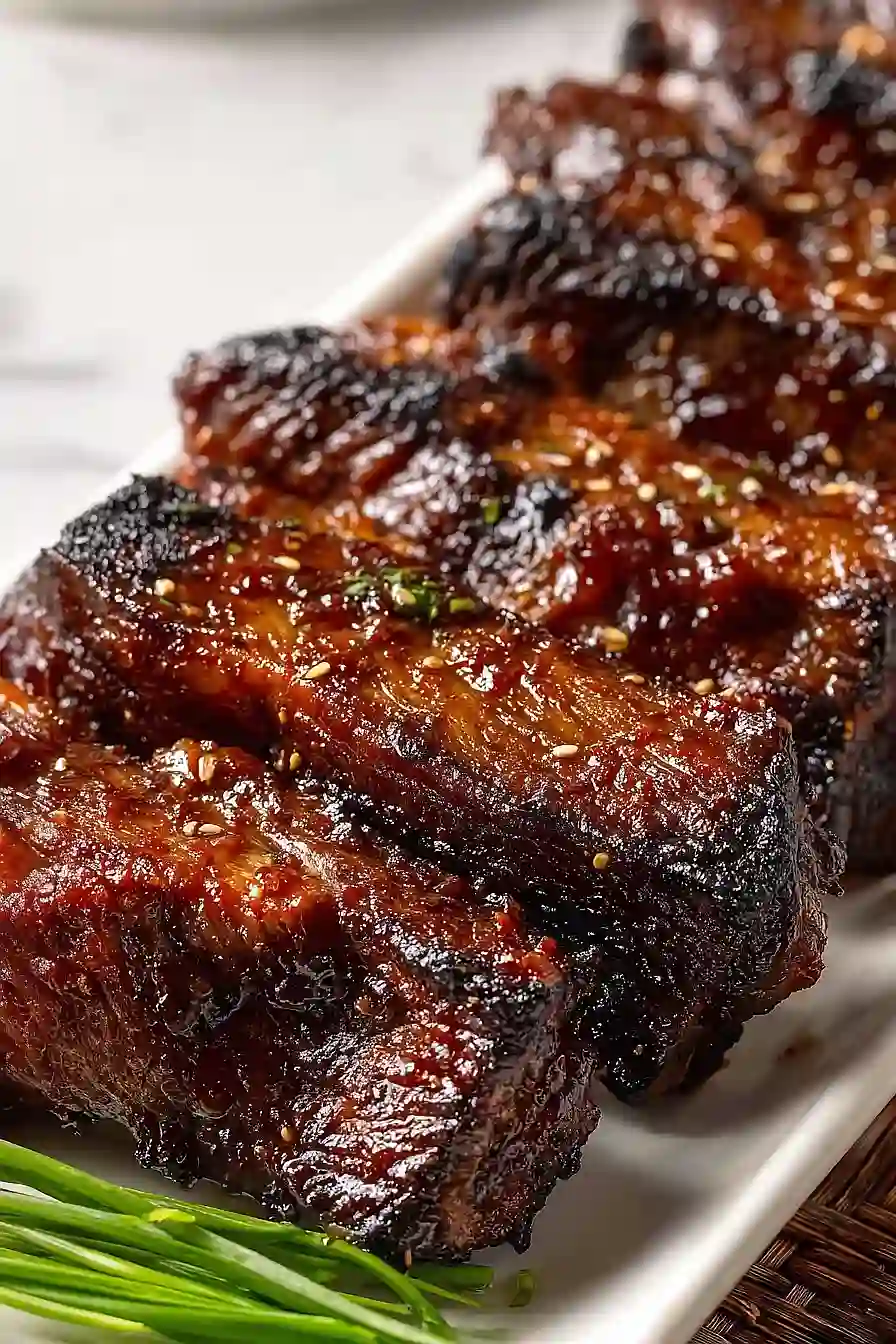
Getting That Perfect Caramelized Crust
- Pat ribs DRY first. (Moisture kills browning!)
- Heat cast-iron until SMOKING, then add oil.
- Lay ribs FLAT and DON’T TOUCH for 2 minutes per side.
- Cook in BATCHES. Crowding creates steam, and steam RUINS your crust.
- REST briefly before plating… crispy sear, every time.
Hot pan. Dry meat. Zero patience. Done.
More Recipes You’ll Enjoy
- Asian Pork Chop Marinade
- Mouthwatering Honey Soy Sauce Steak Marinade
- Hawaiian Chicken Katsu
- Hawaiian Huli Huli Chicken
- Best Ginger Steak Marinade
- Instant Pot Hawaiian Chicken
Estimated Nutrition
Estimated nutrition for the whole recipe (without optional ingredients):
- Calories: 3200-3500
- Protein: 185-210 g
- Fat: 220-250 g
- Carbohydrates: 70-85 g
Ingredients
For the marinade:
- 1/2 cup soy sauce
- 1/3 cup sugar
- 2 tbsp mirin
- 1 tbsp rice vinegar
- 1/4 cup onion (grated into a fine pulp)
- 1/3 cup pear (grated into 1/8-inch shreds)
- 1 tbsp minced garlic
- 1 tbsp grated ginger
- 2 tbsp water
- 1 1/2 tbsp sesame oil
- 1 tsp black pepper
- 1/2 tsp gochugaru (Korean chili flakes)
For the beef and cooking:
- 2 lb short ribs (flanken-style cut, 1/4-inch thick)
- 1 tbsp vegetable oil
For serving and garnish:
- 2 scallions (thinly sliced on a bias)
- 2 tsp toasted sesame seeds
- 1 sprig coriander
- 1 cup kimchi fried rice
- 1 cup cucumbers (sliced into 1/4-inch rounds)
Step 1: Whisk the Marinade Base
- 1/2 cup soy sauce
- 1/3 cup sugar
- 2 tbsp mirin
- 1 tbsp rice vinegar
- 1/4 cup onion
- 1/3 cup pear
- 1 tbsp minced garlic
- 1 tbsp grated ginger
- 2 tbsp water
- 1 1/2 tbsp sesame oil
- 1 tsp black pepper
- 1/2 tsp gochugaru
In a medium bowl, whisk together the soy sauce, sugar, mirin, and rice vinegar until the sugar is fully dissolved.
This creates the flavor foundation for your marinade.
Add the grated onion and pear shreds—the enzymes in the pear will help tenderize the meat while adding subtle sweetness.
Stir in the minced garlic, grated ginger, water, sesame oil, black pepper, and gochugaru, mixing until completely combined.
Taste the marinade and adjust seasoning if needed; it should be balanced between savory, sweet, and a hint of heat.
Step 2: Coat and Chill the Meat
- 2 lb short ribs
- marinade from Step 1
Pat the flanken-style short ribs dry with paper towels—this helps the marinade adhere better.
Place the ribs in a container or resealable bag and pour the marinade from Step 1 over them, ensuring each piece is well coated.
Cover and refrigerate for at least 24 hours, turning the meat halfway through if possible.
I find that overnight marinating is the sweet spot; it’s long enough for flavor to develop but short enough that the meat doesn’t become mushy from the pear enzymes.
Step 3: Chop and Prep the Sides
- 2 scallions
- 1 cup cucumbers
- 1 cup kimchi fried rice
- 2 tsp toasted sesame seeds
- 1 sprig coriander
While the ribs are marinating or shortly before cooking, slice the scallions on a bias and set aside.
Arrange the cucumber slices on a serving plate or platter.
Prepare the kimchi fried rice according to package directions or your preferred method, keeping it warm.
Have the toasted sesame seeds, coriander sprig, and all garnishes ready near your cooking station so you can work quickly once the ribs start cooking.
Step 4: Sear in a Hot Skillet
- 1 tbsp vegetable oil
- marinated short ribs from Step 2
Remove the ribs from the refrigerator about 15 minutes before cooking to bring them closer to room temperature.
Heat a cast-iron skillet or grill pan over high heat until it’s smoking hot, then add the vegetable oil.
Working in batches if needed to avoid crowding, place the ribs on the hot surface and sear for 2 minutes on each side without moving them—this creates a caramelized crust while keeping the interior tender.
I always make sure my pan is properly preheated; if the surface isn’t hot enough, the meat won’t brown properly and will steam instead.
Step 5: Garnish and Serve Hot
- seared short ribs from Step 4
- 2 tsp toasted sesame seeds
- 2 scallions
- 1 cup kimchi fried rice
- 1 cup cucumbers
- 1 sprig coriander
Transfer the seared short ribs to a serving platter immediately.
While the meat is still hot, sprinkle generously with the toasted sesame seeds and scattered sliced scallions from Step 3.
Arrange the kimchi fried rice and cucumber slices on the plate as sides.
Garnish with the coriander sprig for a fresh herbal note.
Serve immediately while the ribs are still hot and the crust is crispy.
Authentic Korean BBQ Beef Short Ribs
Ingredients
Method
- In a medium bowl, whisk together the soy sauce, sugar, mirin, and rice vinegar until the sugar is fully dissolved. This creates the flavor foundation for your marinade. Add the grated onion and pear shreds—the enzymes in the pear will help tenderize the meat while adding subtle sweetness. Stir in the minced garlic, grated ginger, water, sesame oil, black pepper, and gochugaru, mixing until completely combined. Taste the marinade and adjust seasoning if needed; it should be balanced between savory, sweet, and a hint of heat.
- Pat the flanken-style short ribs dry with paper towels—this helps the marinade adhere better. Place the ribs in a container or resealable bag and pour the marinade from Step 1 over them, ensuring each piece is well coated. Cover and refrigerate for at least 24 hours, turning the meat halfway through if possible. I find that overnight marinating is the sweet spot; it’s long enough for flavor to develop but short enough that the meat doesn’t become mushy from the pear enzymes.
- While the ribs are marinating or shortly before cooking, slice the scallions on a bias and set aside. Arrange the cucumber slices on a serving plate or platter. Prepare the kimchi fried rice according to package directions or your preferred method, keeping it warm. Have the toasted sesame seeds, coriander sprig, and all garnishes ready near your cooking station so you can work quickly once the ribs start cooking.
- Remove the ribs from the refrigerator about 15 minutes before cooking to bring them closer to room temperature. Heat a cast-iron skillet or grill pan over high heat until it’s smoking hot, then add the vegetable oil. Working in batches if needed to avoid crowding, place the ribs on the hot surface and sear for 2 minutes on each side without moving them—this creates a caramelized crust while keeping the interior tender. I always make sure my pan is properly preheated; if the surface isn’t hot enough, the meat won’t brown properly and will steam instead.
- Transfer the seared short ribs to a serving platter immediately. While the meat is still hot, sprinkle generously with the toasted sesame seeds and scattered sliced scallions from Step 3. Arrange the kimchi fried rice and cucumber slices on the plate as sides. Garnish with the coriander sprig for a fresh herbal note. Serve immediately while the ribs are still hot and the crust is crispy.