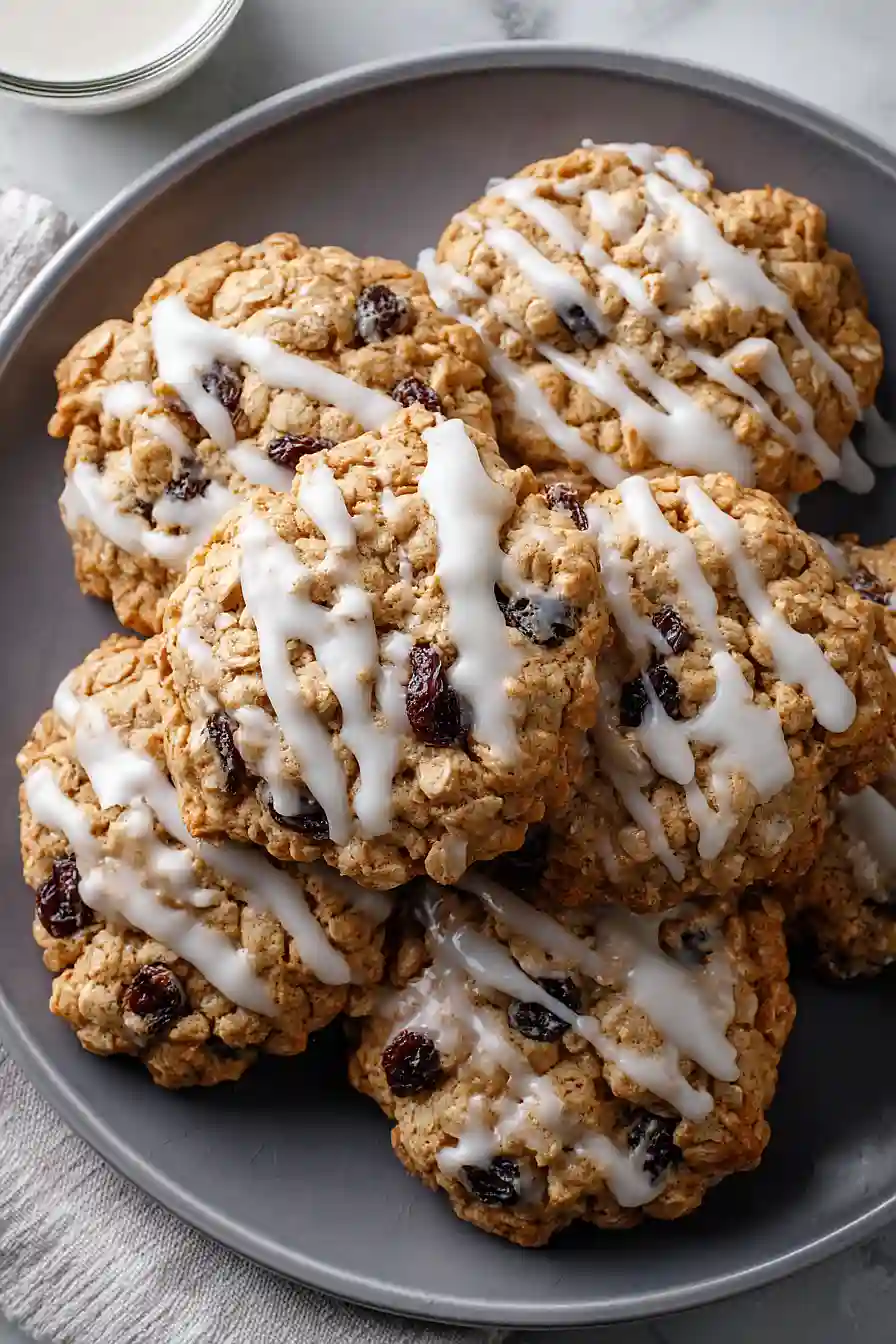
Soft, chewy, nubbly with oats, and topped with that crackly white icing that hardens just enough to shatter when you bite in. Yeah. THESE are the cookies
I went on a bit of a cookie bender this year (research purposes, obviously), and these kept winning every single time. The cinnamon and brown sugar do the warm-spiced heavy lifting, the raisins add little jammy pops, and that icing on top makes them feel like straight-up bakery cookies without any of the work
Just a heads up: they do not last. Bake accordingly
Old-Fashioned Oats vs. Instant Oats
Use OLD-FASHIONED OATS, not instant. The recipe calls for 2.5 cups of rolled oats, and this is non-negotiable for texture. Old-fashioned oats are less processed, keeping their distinct shape and chewy bite. They provide the hearty, substantial cookie base you want.
Instant oats are pre-cooked and ground finer. They will absorb moisture differently, resulting in a softer, more uniform, and often mushier cookie. Measure them by spooning into the cup and leveling, don’t pack them down. Trust me on this one, the texture difference is huge.
How to Get the Icing Just Right
- Sift your powdered sugar… lumps WILL clog your drizzle!
- Add milk gradually… start with one tablespoon and adjust from there?
- The consistency test… it should ribbon off a fork in a slow, steady stream (think thick honey, not water)
- Drizzle ONLY on completely cooled cookies, or the icing melts into a sad puddle!
- Let the icing set for 10-15 minutes before stacking or serving.
That’s it. Smooth, glossy icing every single time….
Tips for Chewy (Not Cakey) Cookies
Pull cookies when centers look underdone…. residual heat finishes the job, giving you a chewy middle instead of dry and cakey.
Spoon and level that flour because too much is the #1 cakey culprit. Mix on LOW once flour goes in, gluten development equals tough, bready cookies (texture nightmare).
Brown sugar is the moisture MVP here…. it keeps cookies soft-chewy for DAYS. Keep butter at 70°F, melted butter makes greasy pucks.
Storage & Freezing Tips
Keep these cookies fresh and ready to eat with the right storage. Their icing can get sticky.
- Place cooled cookies in an airtight container in a SINGLE LAYER. Separate layers with parchment paper.
- Store at room temperature for up to 5 days. For longer storage, refrigerate for up to a week.
- For freezing, place baked cookies in a freezer-safe bag for up to 3 months. Thaw at room temperature.
- You can also freeze the DOUGH balls. Bake from frozen, adding 1-2 minutes to the bake time.
More Recipes You’ll Enjoy
- Honey Oatmeal Raisin Cookies
- Soft Oatmeal Raisin Lactation Cookies
- Pecan Fig Cookies
- Quick Blueberry Muffin Cookies
- Easy Fig Bars
- Kentucky Derby Pie
Estimated Nutrition
Estimated nutrition for the whole recipe (without optional ingredients):
- Calories: 3300-3500
- Protein: 35-40 g
- Fat: 130-140 g
- Carbohydrates: 500-520 g
Ingredients
For the cookies:
- 1 tsp ground cinnamon (freshly ground preferred)
- 1 tsp baking soda
- 1/2 cup raisins (plump and moist)
- 2.5 cups rolled oats (old-fashioned oats, not instant)
- 1 tsp vanilla extract (I use Madagascar vanilla for best flavor)
- 1/2 cup brown sugar (packed)
- 1/2 cup granulated sugar
- 1.5 cups all-purpose flour (I use King Arthur all-purpose flour)
- 1 cup unsalted butter (softened to room temperature, about 70°F)
- 1/4 tsp salt
- 1 egg (room temperature)
For the icing glaze:
- 1.5 tbsp milk (whole milk works best)
- 1 cup powdered sugar (sifted to remove lumps)
Step 1: Preheat Oven and Prep Ingredients
- 1 cup powdered sugar
- 1.5 cups all-purpose flour
- 2.5 cups rolled oats
- 1 tsp ground cinnamon
- 1 tsp baking soda
- 1/4 tsp salt
Preheat your oven to 350°F and position a rack in the center.
While the oven heats, sift the powdered sugar into a small bowl to remove any lumps—this ensures your icing will be smooth and drizzle-able later.
Measure out all your dry ingredients (flour, oats, cinnamon, baking soda, salt) into one bowl and set aside.
This prep work ensures everything is ready when you need it, preventing rushed mixing and uneven baking.
Step 2: Beat the Butter and Sugars
- 1 cup unsalted butter
- 1/2 cup brown sugar
- 1/2 cup granulated sugar
In a large mixing bowl, combine the softened butter with both the brown sugar and granulated sugar.
Using an electric mixer or vigorous hand mixing, beat for 2-3 minutes until the mixture becomes light, fluffy, and noticeably pale.
This creaming process incorporates air into the dough, which helps the cookies rise and achieve a tender crumb.
I always use room temperature butter because cold butter won’t cream properly and warm butter will make the dough greasy.
Step 3: Incorporate Egg and Vanilla
- 1 egg
- 1 tsp vanilla extract
Add the room temperature egg and vanilla extract to your creamed butter mixture.
Mix on medium speed for about 1 minute until everything is well combined and the mixture looks smooth.
The room temperature egg incorporates more easily and creates better emulsification with the butter base.
I find that using Madagascar vanilla instead of regular vanilla really elevates these cookies with a richer, more complex flavor.
Step 4: Form the Cookie Dough
- dry ingredient mixture from Step 1
- 1.5 tbsp milk
Add the dry ingredient mixture from Step 1 to your wet mixture from Step 3, then stir until just combined.
Mix on low speed to avoid overworking the dough, which can lead to tough cookies.
Once the flour is mostly incorporated, add the milk and continue mixing until you have a cohesive dough.
The milk adds just enough moisture to help bind everything while keeping the dough tender.
Step 5: Fold in Raisins and Portion
- 1/2 cup raisins
- dough from Step 4
Gently fold the plump raisins into the dough using a spatula or wooden spoon, being careful not to overmix.
Once the raisins are evenly distributed, drop rounded tablespoons of dough onto your prepared baking sheets, spacing them about 2 inches apart to allow for spreading.
I like to use a cookie scoop here for consistent sizing, which helps all the cookies bake evenly.
Step 6: Bake Until Golden
Bake the cookies at 350°F for 8-10 minutes, until the edges are lightly golden but the centers still look slightly underdone.
Remove from the oven and let the cookies cool on the baking sheet for 2-3 minutes (they’ll continue to cook slightly from residual heat), then transfer them to a wire cooling rack.
Baking them slightly underdone ensures they stay chewy in the center; they’ll firm up as they cool completely.
Step 7: Whisk and Drizzle Icing
- 1 cup powdered sugar
- 1.5 tbsp milk
While the cookies cool, whisk together the sifted powdered sugar from Step 1 and milk until you reach a smooth, pourable consistency.
Drizzle the icing over the cooled cookies using a fork or squeeze bottle, then let it set for 10-15 minutes before serving.
The icing should be thin enough to drizzle but thick enough to stay on the cookies.
Cinnamon Iced Oatmeal Raisin Cookies
Ingredients
Method
- Preheat your oven to 350°F and position a rack in the center. While the oven heats, sift the powdered sugar into a small bowl to remove any lumps—this ensures your icing will be smooth and drizzle-able later. Measure out all your dry ingredients (flour, oats, cinnamon, baking soda, salt) into one bowl and set aside. This prep work ensures everything is ready when you need it, preventing rushed mixing and uneven baking.
- In a large mixing bowl, combine the softened butter with both the brown sugar and granulated sugar. Using an electric mixer or vigorous hand mixing, beat for 2-3 minutes until the mixture becomes light, fluffy, and noticeably pale. This creaming process incorporates air into the dough, which helps the cookies rise and achieve a tender crumb. I always use room temperature butter because cold butter won't cream properly and warm butter will make the dough greasy.
- Add the room temperature egg and vanilla extract to your creamed butter mixture. Mix on medium speed for about 1 minute until everything is well combined and the mixture looks smooth. The room temperature egg incorporates more easily and creates better emulsification with the butter base. I find that using Madagascar vanilla instead of regular vanilla really elevates these cookies with a richer, more complex flavor.
- Add the dry ingredient mixture from Step 1 to your wet mixture from Step 3, then stir until just combined. Mix on low speed to avoid overworking the dough, which can lead to tough cookies. Once the flour is mostly incorporated, add the milk and continue mixing until you have a cohesive dough. The milk adds just enough moisture to help bind everything while keeping the dough tender.
- Gently fold the plump raisins into the dough using a spatula or wooden spoon, being careful not to overmix. Once the raisins are evenly distributed, drop rounded tablespoons of dough onto your prepared baking sheets, spacing them about 2 inches apart to allow for spreading. I like to use a cookie scoop here for consistent sizing, which helps all the cookies bake evenly.
- Bake the cookies at 350°F for 8-10 minutes, until the edges are lightly golden but the centers still look slightly underdone. Remove from the oven and let the cookies cool on the baking sheet for 2-3 minutes (they'll continue to cook slightly from residual heat), then transfer them to a wire cooling rack. Baking them slightly underdone ensures they stay chewy in the center; they'll firm up as they cool completely.
- While the cookies cool, whisk together the sifted powdered sugar from Step 1 and milk until you reach a smooth, pourable consistency. Drizzle the icing over the cooled cookies using a fork or squeeze bottle, then let it set for 10-15 minutes before serving. The icing should be thin enough to drizzle but thick enough to stay on the cookies.