Real talk. I was a bakery bagel snob for YEARS. The dense chew, that crackly shiny crust, the way they toast up? I was NOT going to try to compete with that. Then blueberry season hit, I got ambitious, and now I have a problem.
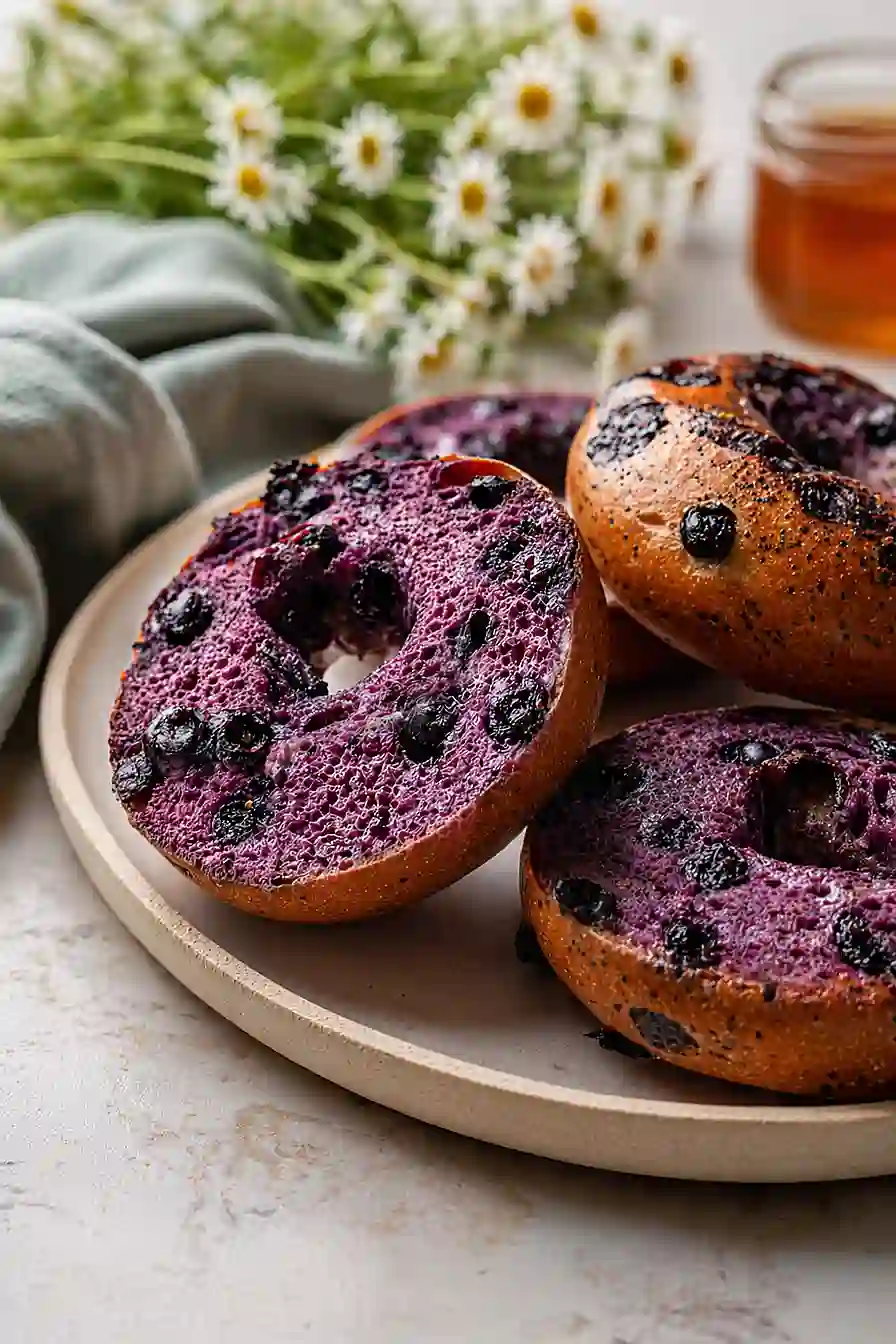
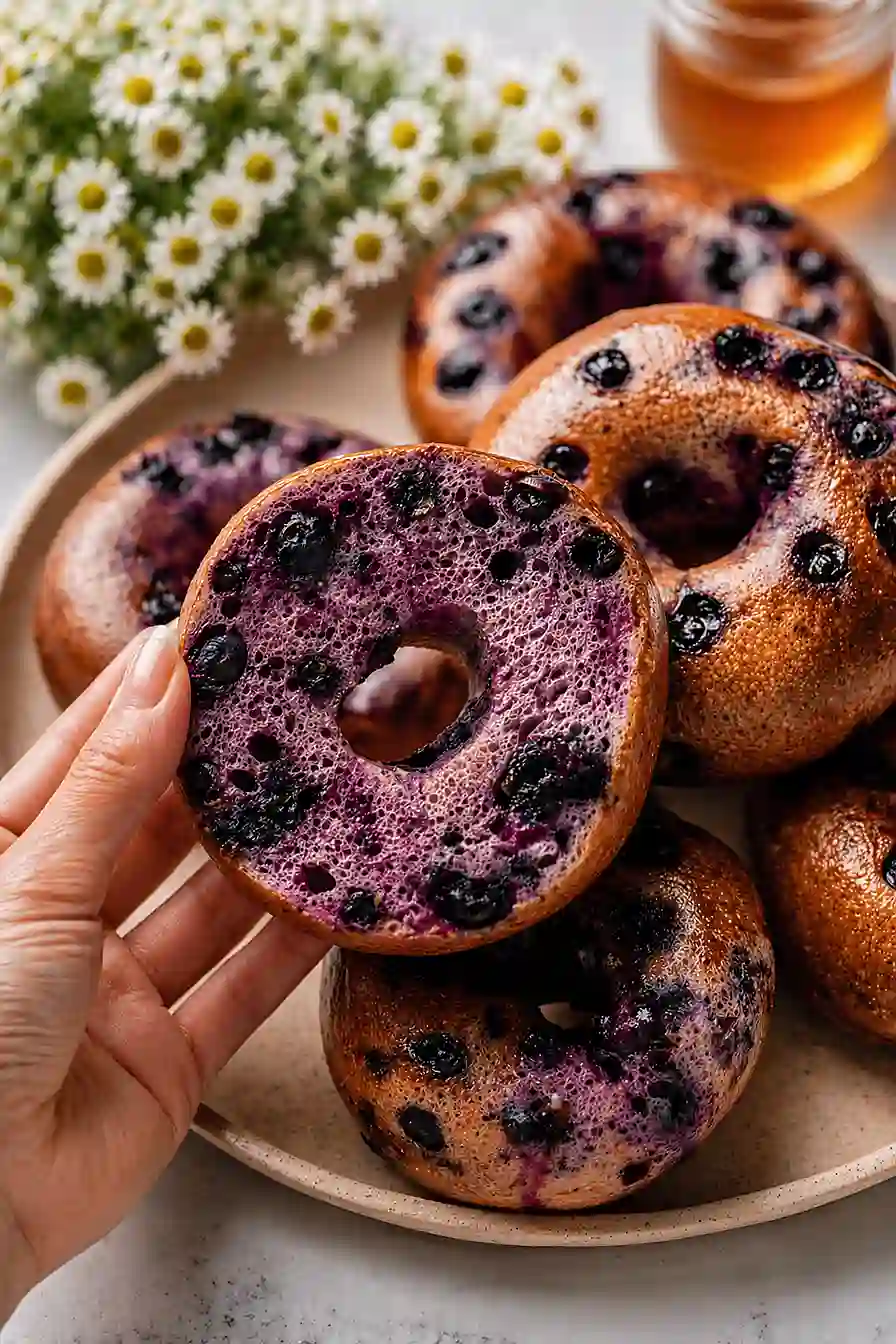
Homemade blueberry bagels with dried berries swirled RIGHT INTO the dough, a quick stovetop blueberry sauce for slathering on top, and that signature chew from the honey-malt water bath? It’s giving bakery. It’s giving BETTER than bakery. I’m sorry, I’m not sorry.
Why Two Types of Blueberries?
- Fresh/frozen blueberries cook down into SAUCE that dyes your dough purple and delivers bright, juicy flavor (the secret to bakery-style color)
- Dried blueberries pack concentrated berry punch WITHOUT flooding the dough with liquid (wet fruit = gummy bagels)
- Together they layer flavor…. sauce for moisture and color, dried ones for chewy bites in every slice
- Skip one and you lose dimension. Sauce-only = flat. Dried-only = one-note
How to Shape Bagels Like a Pro
Divide dough into 8 equal pieces with a bench scraper. Roll each into a tight, smooth ball (surface tension is everything). Poke your thumb through the center, then stretch the hole to 2-3 inches wide. Looks too big? GOOD. It should. Rest them 5-10 minutes before boiling.
Honey vs. Barley Malt Syrup
Both work at 1/3 cup in the boiling water, but they deliver VERY different results. Here’s the breakdown.
- Honey brings lighter sweetness and a subtle floral note. Boils clean (won’t darken the crust much).
- Barley malt is the classic (deep, toasty, slightly bitter) and gives authentic bagel shop flavor. Use the same amount, no adjustments.
- Brown rice syrup works in a pinch (less sweet, milder). A tablespoon of dark molasses diluted in the water also works, but it goes HEAVY on the bitterness, so go easy!
How to Store & Freeze Bagels
- STORE at room temperature in a paper bag for 1-2 days max (plastic turns them soggy fast).
- SLICE before freezing so you can grab just what you need without thawing the whole bagel.
- WRAP each bagel tightly in plastic wrap, then foil, then stash in a freezer bag for up to 3 months.
- THAW on the counter or toast straight from frozen (works like a charm, no thawing required).
- SKIP the fridge entirely, it dries them out quicker than leaving them out.
You May Also Like
- Tasty Blueberry Biscuits
- 5-Ingredient Greek Yogurt Bagels
- Blueberry Butter Swim Biscuits
- Lemon Blueberry Cream Cheese Pastry
- Blueberry Banana Bread
- Sweet Cherry Cinnamon Rolls
Estimated Nutrition
Estimated nutrition for the whole recipe (without optional ingredients):
- Calories: 2100-2250
- Protein: 50-55 g
- Fat: 6-9 g
- Carbohydrates: 445-465 g
Ingredients
For the blueberry sauce:
- 1.5 cups blueberries (fresh or frozen)
- 2 tablespoons granulated sugar
- 1/2 teaspoon lemon zest
For the dough:
- 1 cup warm water (105°F-110°F)
- 2 1/4 teaspoons active dry yeast
- 3 tablespoons granulated sugar
- 1.5 teaspoons vanilla extract
- 3/4 cup dried blueberries
- 4 cups bread flour (plus extra for dusting)
- 2.5 teaspoons salt
- 2 teaspoons melted butter
- 1/2 teaspoon ground cinnamon
For the water bath and egg wash:
- 2 quarts water
- 1/3 cup honey or barley malt syrup
- 1 large egg white
- 1 tablespoon water
Step 1: Simmer Blueberries and Start Yeast
- 1.5 cups blueberries
- 2 tablespoons granulated sugar
- 1/2 teaspoon lemon zest
- 1 cup warm water
- 2 1/4 teaspoons active dry yeast
- 3 tablespoons granulated sugar
In a small saucepan, combine the fresh or frozen blueberries with 2 tablespoons of granulated sugar and lemon zest.
Cook over medium heat for about 10 minutes, stirring occasionally, until the blueberries break down and release their juices into a sauce-like consistency.
Remove from heat and let cool to 110°F (about 5-10 minutes).
While the blueberry sauce cools, pour the warm water (105°F-110°F) into a large mixing bowl and add the remaining 3 tablespoons of granulated sugar.
Sprinkle the active dry yeast over the water and sugar, stir gently, and let it sit for 5-10 minutes until foamy—this bloom confirms your yeast is active and ready to go.
Step 2: Combine Ingredients for Dough Base
- 1/2 cup blueberry sauce from Step 1
- 1.5 teaspoons vanilla extract
- 3/4 cup dried blueberries
- 4 cups bread flour
- 2.5 teaspoons salt
To the foamy yeast mixture, add 1/2 cup of the cooled blueberry sauce from Step 1 (reserve any remaining sauce for serving), vanilla extract, dried blueberries, and 1 cup of bread flour along with the salt.
Stir this mixture together until combined, then gradually add the remaining 3 cups of bread flour, 1/2 cup at a time, mixing with a sturdy spoon or wooden spoon until the dough becomes shaggy and pulls away from the sides of the bowl—this should take about 2 minutes.
I like to reserve a pinch of flour nearby to dust my hands as I transition to kneading, which prevents sticking without overworking the dough.
Step 3: Knead and Proof the Dough
- dough from Step 2
- extra flour for dusting
Turn the dough from Step 2 onto a lightly floured work surface and knead for 6-8 minutes until smooth and elastic, occasionally dusting with flour if needed.
The dough should be slightly tacky but not sticky—resist adding too much flour as bagel dough should be firmer than sandwich bread.
Once kneaded, place the dough in a lightly oiled bowl, cover with a damp kitchen towel or plastic wrap, and let it rise in a warm, draft-free spot for about 2 hours until doubled in size.
I find that turning off the oven light and closing the oven door creates the perfect warm environment for rising without any draft.
Step 4: Portion and Form Bagel Rounds
- risen dough from Step 3
After the dough has risen, gently turn it out onto a clean work surface and divide it into 8 equal pieces using a bench scraper or knife.
Roll each piece into a tight ball, then use your thumb or fingers to poke a hole in the center of each ball, gently stretching and widening the hole until you have a bagel shape with a 2-3 inch hole in the center—the hole should be large enough that it won’t close up during boiling and baking.
Place each shaped bagel on a parchment-lined baking sheet, cover loosely with a towel, and let them rest for 5-10 minutes to relax the gluten before boiling.
Step 5: Heat Oven and Sweetened Water
- 2 quarts water
- 1/3 cup honey or barley malt syrup
- 1 large egg white
- 1 tablespoon water
While the bagels are resting, preheat your oven to 425°F and prepare your boiling station.
In a large pot, bring 2 quarts of water to a rolling boil, then stir in the honey or barley malt syrup until fully dissolved—the malt adds a subtle sweetness and helps develop the chewy bagel crust.
In a small bowl, whisk together the egg white with 1 tablespoon of water to create your egg wash, and have it ready near your oven for brushing after boiling.
Step 6: Water-Bath Boil and Coat
- shaped bagels from Step 4
- boiling water mixture from Step 5
- egg wash from Step 5
Working in batches to avoid overcrowding, gently place each bagel into the boiling water and boil for exactly 1 minute per side (flip halfway through)—this boiling creates the chewy, dense interior that defines a bagel while keeping the exterior from being too tough.
Using a slotted spoon, remove each bagel and place it back on the parchment-lined baking sheet.
Once all bagels are boiled and arranged on the sheet, brush the top of each bagel with the egg wash from Step 5 for a shiny, golden finish.
Step 7: Bake Until Golden and Cool
- egg-washed bagels from Step 6
- 1/2 teaspoon ground cinnamon
Transfer the baking sheet with the egg-washed bagels to the preheated 425°F oven and bake for 26-30 minutes until the bagels are golden brown on top and sound hollow when tapped on the bottom.
Remove from the oven and let the bagels cool on the baking sheet for at least 20 minutes before transferring to a wire rack or serving—this cooling time allows the interior to set properly and makes them easier to handle.
For a finishing touch, I like to dust the warm bagels with a light sprinkle of cinnamon mixed with a bit of sugar if serving them as a sweet treat.
Best Blueberry Bagels
Ingredients
Method
- In a small saucepan, combine the fresh or frozen blueberries with 2 tablespoons of granulated sugar and lemon zest. Cook over medium heat for about 10 minutes, stirring occasionally, until the blueberries break down and release their juices into a sauce-like consistency. Remove from heat and let cool to 110°F (about 5-10 minutes). While the blueberry sauce cools, pour the warm water (105°F-110°F) into a large mixing bowl and add the remaining 3 tablespoons of granulated sugar. Sprinkle the active dry yeast over the water and sugar, stir gently, and let it sit for 5-10 minutes until foamy—this bloom confirms your yeast is active and ready to go.
- To the foamy yeast mixture, add 1/2 cup of the cooled blueberry sauce from Step 1 (reserve any remaining sauce for serving), vanilla extract, dried blueberries, and 1 cup of bread flour along with the salt. Stir this mixture together until combined, then gradually add the remaining 3 cups of bread flour, 1/2 cup at a time, mixing with a sturdy spoon or wooden spoon until the dough becomes shaggy and pulls away from the sides of the bowl—this should take about 2 minutes. I like to reserve a pinch of flour nearby to dust my hands as I transition to kneading, which prevents sticking without overworking the dough.
- Turn the dough from Step 2 onto a lightly floured work surface and knead for 6-8 minutes until smooth and elastic, occasionally dusting with flour if needed. The dough should be slightly tacky but not sticky—resist adding too much flour as bagel dough should be firmer than sandwich bread. Once kneaded, place the dough in a lightly oiled bowl, cover with a damp kitchen towel or plastic wrap, and let it rise in a warm, draft-free spot for about 2 hours until doubled in size. I find that turning off the oven light and closing the oven door creates the perfect warm environment for rising without any draft.
- After the dough has risen, gently turn it out onto a clean work surface and divide it into 8 equal pieces using a bench scraper or knife. Roll each piece into a tight ball, then use your thumb or fingers to poke a hole in the center of each ball, gently stretching and widening the hole until you have a bagel shape with a 2-3 inch hole in the center—the hole should be large enough that it won't close up during boiling and baking. Place each shaped bagel on a parchment-lined baking sheet, cover loosely with a towel, and let them rest for 5-10 minutes to relax the gluten before boiling.
- While the bagels are resting, preheat your oven to 425°F and prepare your boiling station. In a large pot, bring 2 quarts of water to a rolling boil, then stir in the honey or barley malt syrup until fully dissolved—the malt adds a subtle sweetness and helps develop the chewy bagel crust. In a small bowl, whisk together the egg white with 1 tablespoon of water to create your egg wash, and have it ready near your oven for brushing after boiling.
- Working in batches to avoid overcrowding, gently place each bagel into the boiling water and boil for exactly 1 minute per side (flip halfway through)—this boiling creates the chewy, dense interior that defines a bagel while keeping the exterior from being too tough. Using a slotted spoon, remove each bagel and place it back on the parchment-lined baking sheet. Once all bagels are boiled and arranged on the sheet, brush the top of each bagel with the egg wash from Step 5 for a shiny, golden finish.
- Transfer the baking sheet with the egg-washed bagels to the preheated 425°F oven and bake for 26-30 minutes until the bagels are golden brown on top and sound hollow when tapped on the bottom. Remove from the oven and let the bagels cool on the baking sheet for at least 20 minutes before transferring to a wire rack or serving—this cooling time allows the interior to set properly and makes them easier to handle. For a finishing touch, I like to dust the warm bagels with a light sprinkle of cinnamon mixed with a bit of sugar if serving them as a sweet treat.