Combine flour, sugar, and salt in a food processor and pulse to combine. Cut the cold butter into small cubes and add to the flour mixture, pulsing until the mixture resembles coarse breadcrumbs with some pea-sized butter pieces remaining—this creates a flaky crust. Add the ice water and vinegar, pulsing just until the dough comes together without overworking it. Shape into a disk, wrap in plastic wrap, and refrigerate for at least 2 hours, or freeze for 1 hour if you're short on time. I find that chilling the dough thoroughly prevents shrinkage during baking and makes it much easier to work with.
While the dough chills, prepare your fruit. Peel the peaches (blanch in boiling water for 30 seconds if the skin doesn't slip off easily) and slice into 1/2-inch wedges. Trim the rhubarb and cut into 1/2-inch pieces. In a bowl, whisk together both sugars, cornstarch, and salt. Add the vanilla extract and lemon zest to the dry mixture, then gently fold in the prepared peaches and rhubarb until evenly coated. Let this sit while you finish preparing—the rhubarb will start releasing its juice, which the cornstarch will thicken.
Whisk together the egg and water in a small bowl until well combined. Set this egg wash aside. Preheat your oven to 400°F, making sure the racks are positioned so a baking sheet will fit comfortably in the center.
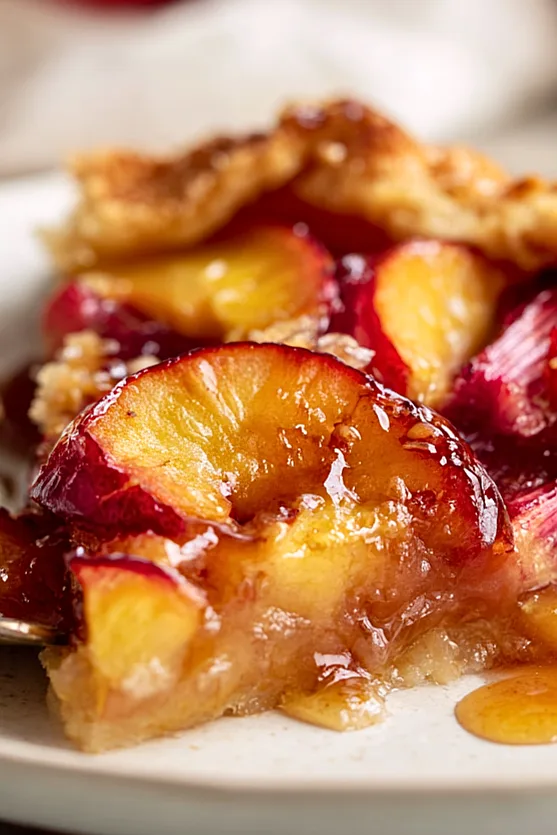
Remove the chilled dough from the refrigerator and let it sit at room temperature for 5 minutes to become slightly pliable. Place a sheet of parchment paper on your work surface and roll the dough into a 10-12 inch circle about 1/4 inch thick, working from the center outward. If the dough cracks, simply press it back together. Transfer the rolled dough (still on parchment) to a baking sheet. Mound the fruit filling from Step 2 in the center, leaving about a 2-inch border of dough around the edges. Fold the dough edges up and over the fruit, creasing and overlapping slightly as you work your way around—it's meant to look rustic and natural. I like to leave some fruit peeking through the center rather than trying to enclose it completely, which keeps the galette authentic and charming.
Brush the exposed dough edges with the egg wash from Step 3, working carefully to coat all the crust without letting it pool on the parchment. Sprinkle the sanding sugar evenly over the egg-washed dough (the regular granulated sugar from the filling won't give you that nice sparkle and crunch). Place the baking sheet in the preheated 400°F oven and bake for 45 minutes, until the crust is golden brown and the fruit filling is bubbling around the edges. The filling may release some juice that bubbles out onto the parchment—this is normal and actually means your fruit is properly cooked.
Remove the galette from the oven and let it cool on the baking sheet for at least 15-20 minutes before cutting. This cooling time allows the filling to set slightly so it won't run all over the plate when you serve it. Slide the entire galette onto a cutting board or serve directly from the parchment. Cut into wedges and serve warm or at room temperature, optionally with whipped cream or vanilla ice cream.