Rhubarb season is SHORT and I treat it like a personal emergency every year. Not even joking.
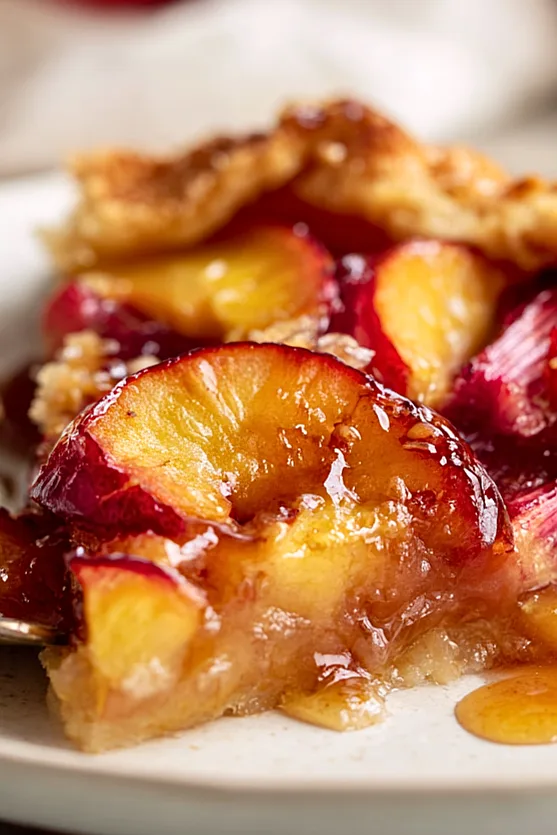
This galette is my move. Peaches get tossed in too because rhubarb + peaches?? One of the best pairings of all time. Tart, sweet, jammy filling under that flaky buttery crust with sanding sugar sprinkled on top.
It sparkles. It crunches. People will absolutely assume you bought it from a bakery.
How to Get a Flaky Galette Crust
Keep everything ICE COLD. Butter, water, even your flour if your kitchen runs warm. Pop butter cubes in the freezer 10 minutes before pulsing, and those flaky layers practically build themselves.
Stop the food processor the second you see pea-sized chunks. Those irregular pieces aren’t mistakes, they’re the whole point. Overworked dough equals tough crust, no negotiation.
Don’t skip the VINEGAR. Acid tenderizes gluten without weakening structure, costs you nothing. Two hours of chilling is mandatory… rushing guarantees shrinkage and sad cracking.
Roll from center outward on parchment, rotating as you go. Tears? Patch them. (She won’t judge, neither should you.)
Bake at 400°F the entire time. High heat creates rapid steam, rapid steam creates lift. Lowering the temp “to prevent browning” kills the flake every single time….
Fresh vs. Frozen Rhubarb & Peaches
- FRESH RHUBARB wins for color and snap. Pink and firm is the target. Frozen works too…. don’t thaw it, toss in still icy (yes, really).
- FRESH PEACHES are best in season, fruit that gives slightly when squeezed. Frozen needs full thawing and patting dry, or hello soggy bottom.
- MIX AND MATCH freely. Frozen rhubarb plus fresh peaches is a solid combo. Keep your cornstarch ratio unchanged.
How to Prevent a Soggy Bottom
Let’s talk soggy bottom prevention, because nobody wants a mushy crust under all that beautiful fruit.
Toss your sliced peaches and rhubarb with the sugars and cornstarch, then LET IT SIT for 10 minutes. Drain off that excess liquid (this is where cornstarch gets overwhelmed, FYI) before piling onto your dough. Bake on a preheated baking sheet positioned on the lower-middle rack so the bottom gets direct heat from the start.
How to Store & Reheat Leftovers
- Store at ROOM TEMP up to 2 days, loosely covered with foil, or in the FRIDGE for 4 days max (the crust will soften a bit, but it still tastes great cold straight from the fridge, honestly).
- Reheat in a 350°F oven for 8 to 10 minutes to bring back that CRISP, buttery crust. Skip the microwave unless you enjoy sad, soggy pastry… and nobody enjoys that.
- Freeze wedges wrapped tightly in plastic wrap, then foil, for up to 2 months. Reheat straight from frozen at 350°F for 12 to 15 minutes, no thawing needed.
More Recipes to Try
- Strawberry Rhubarb Galette with Puff Pastry
- Rhubarb Cheesecake with Sour Cream Topping
- Tasty Peach Crisp
- Kentucky Derby Pie
- Derby Pie Bars
- Strawberry Rhubarb Mini Cheesecake
Estimated Nutrition
Estimated nutrition for the whole recipe (without optional ingredients):
- Calories: 2100-2300
- Protein: 23-27 g
- Fat: 70-80 g
- Carbohydrates: 370-410 g
Ingredients
For the crust:
- 1 1/2 cups King Arthur all-purpose flour
- 1 tablespoon sugar
- 1 teaspoon salt
- 10 tablespoons cold Kerrygold unsalted butter
- 3 tablespoons ice cold water
- 1/2 tablespoon vinegar
For the filling:
- 3 cups peaches (peeled and sliced into 1/2-inch wedges)
- 3 cups rhubarb (trimmed and cut into 1/2-inch pieces)
- 1/2 cup brown sugar
- 1/2 cup granulated sugar
- 1/3 cup cornstarch
- 1/4 teaspoon salt
- 1 teaspoon vanilla extract
- 1 teaspoon lemon zest
For the finish:
- 1 egg
- 1 tablespoon water
- 2 tablespoons sanding sugar
Step 1: Mix and Chill Pastry Dough
- 1 1/2 cups King Arthur all-purpose flour
- 1 tablespoon sugar
- 1 teaspoon salt
- 10 tablespoons cold Kerrygold unsalted butter
- 3 tablespoons ice cold water
- 1/2 tablespoon vinegar
Combine flour, sugar, and salt in a food processor and pulse to combine.
Cut the cold butter into small cubes and add to the flour mixture, pulsing until the mixture resembles coarse breadcrumbs with some pea-sized butter pieces remaining—this creates a flaky crust.
Add the ice water and vinegar, pulsing just until the dough comes together without overworking it.
Shape into a disk, wrap in plastic wrap, and refrigerate for at least 2 hours, or freeze for 1 hour if you’re short on time.
I find that chilling the dough thoroughly prevents shrinkage during baking and makes it much easier to work with.
Step 2: Macerate the Fruit Filling
- 3 cups peaches
- 3 cups rhubarb
- 1/2 cup brown sugar
- 1/2 cup granulated sugar
- 1/3 cup cornstarch
- 1/4 teaspoon salt
- 1 teaspoon vanilla extract
- 1 teaspoon lemon zest
While the dough chills, prepare your fruit.
Peel the peaches (blanch in boiling water for 30 seconds if the skin doesn’t slip off easily) and slice into 1/2-inch wedges.
Trim the rhubarb and cut into 1/2-inch pieces.
In a bowl, whisk together both sugars, cornstarch, and salt.
Add the vanilla extract and lemon zest to the dry mixture, then gently fold in the prepared peaches and rhubarb until evenly coated.
Let this sit while you finish preparing—the rhubarb will start releasing its juice, which the cornstarch will thicken.
Step 3: Whisk Glaze and Heat Oven
- 1 egg
- 1 tablespoon water
Whisk together the egg and water in a small bowl until well combined.
Set this egg wash aside.
Preheat your oven to 400°F, making sure the racks are positioned so a baking sheet will fit comfortably in the center.
Step 4: Roll Pastry and Arrange Fruit
- pie dough from Step 1
- fruit filling from Step 2
Remove the chilled dough from the refrigerator and let it sit at room temperature for 5 minutes to become slightly pliable.
Place a sheet of parchment paper on your work surface and roll the dough into a 10-12 inch circle about 1/4 inch thick, working from the center outward.
If the dough cracks, simply press it back together.
Transfer the rolled dough (still on parchment) to a baking sheet.
Mound the fruit filling from Step 2 in the center, leaving about a 2-inch border of dough around the edges.
Fold the dough edges up and over the fruit, creasing and overlapping slightly as you work your way around—it’s meant to look rustic and natural.
I like to leave some fruit peeking through the center rather than trying to enclose it completely, which keeps the galette authentic and charming.
Step 5: Sugar the Crust and Bake
- egg wash from Step 3
- 2 tablespoons sanding sugar
Brush the exposed dough edges with the egg wash from Step 3, working carefully to coat all the crust without letting it pool on the parchment.
Sprinkle the sanding sugar evenly over the egg-washed dough (the regular granulated sugar from the filling won’t give you that nice sparkle and crunch).
Place the baking sheet in the preheated 400°F oven and bake for 45 minutes, until the crust is golden brown and the fruit filling is bubbling around the edges.
The filling may release some juice that bubbles out onto the parchment—this is normal and actually means your fruit is properly cooked.
Step 6: Cool, Slice, and Serve
Remove the galette from the oven and let it cool on the baking sheet for at least 15-20 minutes before cutting.
This cooling time allows the filling to set slightly so it won’t run all over the plate when you serve it.
Slide the entire galette onto a cutting board or serve directly from the parchment.
Cut into wedges and serve warm or at room temperature, optionally with whipped cream or vanilla ice cream.
Golden Rhubarb Galette with Peaches
Ingredients
Method
- Combine flour, sugar, and salt in a food processor and pulse to combine. Cut the cold butter into small cubes and add to the flour mixture, pulsing until the mixture resembles coarse breadcrumbs with some pea-sized butter pieces remaining—this creates a flaky crust. Add the ice water and vinegar, pulsing just until the dough comes together without overworking it. Shape into a disk, wrap in plastic wrap, and refrigerate for at least 2 hours, or freeze for 1 hour if you're short on time. I find that chilling the dough thoroughly prevents shrinkage during baking and makes it much easier to work with.
- While the dough chills, prepare your fruit. Peel the peaches (blanch in boiling water for 30 seconds if the skin doesn't slip off easily) and slice into 1/2-inch wedges. Trim the rhubarb and cut into 1/2-inch pieces. In a bowl, whisk together both sugars, cornstarch, and salt. Add the vanilla extract and lemon zest to the dry mixture, then gently fold in the prepared peaches and rhubarb until evenly coated. Let this sit while you finish preparing—the rhubarb will start releasing its juice, which the cornstarch will thicken.
- Whisk together the egg and water in a small bowl until well combined. Set this egg wash aside. Preheat your oven to 400°F, making sure the racks are positioned so a baking sheet will fit comfortably in the center.
- Remove the chilled dough from the refrigerator and let it sit at room temperature for 5 minutes to become slightly pliable. Place a sheet of parchment paper on your work surface and roll the dough into a 10-12 inch circle about 1/4 inch thick, working from the center outward. If the dough cracks, simply press it back together. Transfer the rolled dough (still on parchment) to a baking sheet. Mound the fruit filling from Step 2 in the center, leaving about a 2-inch border of dough around the edges. Fold the dough edges up and over the fruit, creasing and overlapping slightly as you work your way around—it's meant to look rustic and natural. I like to leave some fruit peeking through the center rather than trying to enclose it completely, which keeps the galette authentic and charming.
- Brush the exposed dough edges with the egg wash from Step 3, working carefully to coat all the crust without letting it pool on the parchment. Sprinkle the sanding sugar evenly over the egg-washed dough (the regular granulated sugar from the filling won't give you that nice sparkle and crunch). Place the baking sheet in the preheated 400°F oven and bake for 45 minutes, until the crust is golden brown and the fruit filling is bubbling around the edges. The filling may release some juice that bubbles out onto the parchment—this is normal and actually means your fruit is properly cooked.
- Remove the galette from the oven and let it cool on the baking sheet for at least 15-20 minutes before cutting. This cooling time allows the filling to set slightly so it won't run all over the plate when you serve it. Slide the entire galette onto a cutting board or serve directly from the parchment. Cut into wedges and serve warm or at room temperature, optionally with whipped cream or vanilla ice cream.
This recipe needs a “cook Mode” button