Preheat your oven to 350°F. Lightly oil a 9x13 inch baking dish and set aside. In a large mixing bowl, combine the cake mix, room temperature eggs, club soda, oil, and orange zest. Mix on medium speed for about 2 minutes until the batter is smooth and well combined. The club soda adds a subtle fizz that keeps the cake extra moist and tender, while the orange zest brings a fresh citrus note that complements the orange gelatin beautifully.
Pour the batter into the prepared baking dish and smooth the top with a spatula. Bake for 28-32 minutes, until a toothpick inserted in the center comes out clean or with just a few moist crumbs. The cake should be golden brown and spring back when lightly touched. Remove from the oven and let it cool on a wire rack or countertop for exactly 1 hour—this cooling time is crucial so the cake is cool enough to absorb the gelatin without melting it.
While the cake cools, prepare the orange gelatin. Pour the boiling water into a medium bowl and add the orange gelatin, stirring constantly for about 2 minutes until completely dissolved. Once dissolved, add the cold water and stir to combine. Set the gelatin aside at room temperature—you want it to cool slightly but remain liquid so it can be poured over the cake.
Once the cake has cooled for 1 hour, use a fork or wooden skewer to poke holes all over the surface, spacing them about 2 inches apart. I like to poke all the way through to the bottom of the cake to ensure the gelatin soaks in deeply and creates those signature pockets of flavor. Slowly pour the orange gelatin mixture evenly over the entire cake, letting it seep into all the holes. Work methodically so the gelatin distributes evenly rather than pooling in one area.
Transfer the cake to the refrigerator and chill for 2-3 hours until the gelatin is completely set and firm to the touch. This chilling time allows the gelatin to gel properly and the flavors to meld together. The cake should be cold and the top slightly firm when you press it gently.
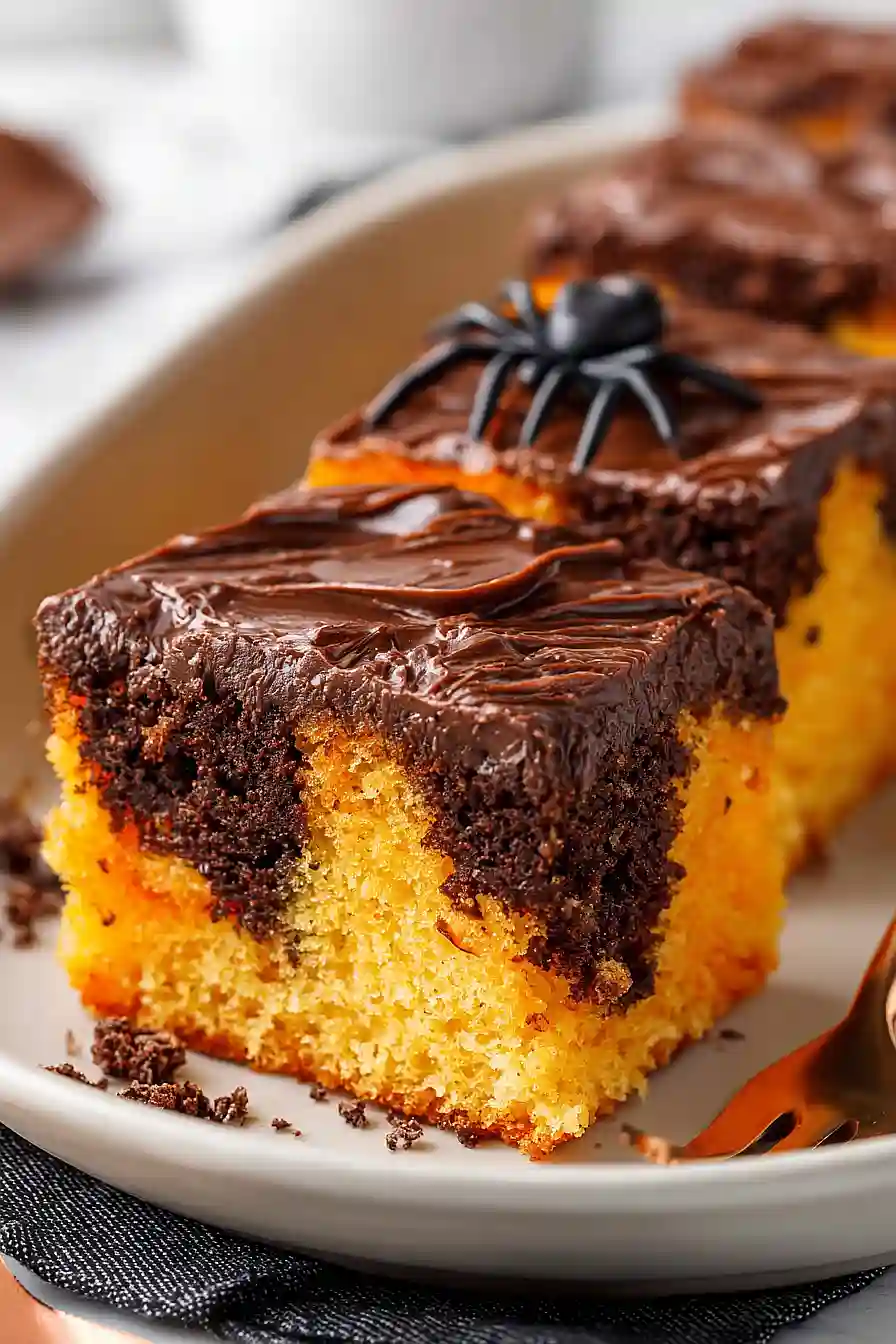
Remove the chilled cake from the refrigerator. Spread the chocolate frosting evenly over the top of the cake using an offset spatula or butter knife, creating swirls for a festive Halloween look. I find that frosting a cold cake helps keep the frosting smooth and prevents it from sinking into the cake. Cut the cake into squares and serve—it's best enjoyed cold straight from the fridge, where the contrast between the cool gelatin layer and rich chocolate frosting really shines.