Preheat your oven to 350°F. While it heats, line three 8-inch round cake pans with parchment paper, ensuring the paper covers the bottom completely. Separate your eggs carefully, making sure no yolk gets into the whites—even a tiny amount of yolk will prevent the whites from whipping properly. Measure out all your dry ingredients (flour and baking powder) and sift them together into a small bowl to remove any lumps; sifting aerates the flour and ensures even distribution of the baking powder. Have your milk, oil, and vanilla measured and ready. This preparation ensures everything moves smoothly once you begin mixing.
In a large, completely clean and dry bowl, combine the 5 room-temperature egg whites with the cream of tartar. Using an electric mixer on high speed, beat the whites until they become foamy and opaque, about 1-2 minutes. Gradually add the 3.5 oz sugar in small increments while continuing to beat, allowing each addition to incorporate fully before adding more. This slow addition of sugar stabilizes the foam and helps create glossy, stiff peaks. Continue beating until the whites hold firm, shiny peaks that don't collapse when you lift the beaters—this usually takes 4-6 minutes total. I like to test the peaks by turning the bowl at an angle; if the whites don't slide, they're ready.
In a separate medium bowl, whisk together the 5 egg yolks with the 0.9 oz sugar until the mixture becomes pale yellow and slightly thickened, about 2-3 minutes of whisking. Add the milk, oil, and vanilla, whisking until fully combined and smooth. Pour the sifted dry ingredient mixture from Step 1 into the yolk mixture and fold or stir gently until no flour streaks remain and the batter is smooth. The wet ingredients will hydrate the flour and create a light, smooth base for the chiffon cake.
Pour the yolk batter into the bowl with the whipped egg whites. Using a spatula, gently fold the batter together by cutting down the middle, sweeping across the bottom, and folding up and over the top—rotate the bowl as you go. Fold just until no white streaks remain; overfolding deflates the foam and creates a denser cake. Divide the batter evenly among the three prepared pans. Bake in your preheated 350°F oven for 23-25 minutes until a toothpick inserted in the center comes out clean and the tops are lightly golden.
Remove the baked cakes from the oven and immediately invert the pans onto a cooling rack or onto the rim of glasses positioned to support the sides (this keeps the cakes inverted). Let them cool completely in this position for at least 30 minutes—this upside-down cooling prevents the delicate structure from collapsing under its own weight. Once fully cooled, gently run a thin knife around the edges of each cake and remove them from the pans, carefully peeling away the parchment paper.
Pour the 16 oz chilled heavy cream into a clean, cold bowl. Using an electric mixer on medium-high speed, begin whipping the cream. When soft peaks start to form (about 1-2 minutes), add the powdered sugar and strawberry extract. Continue whipping until medium-stiff peaks form—the cream should hold its shape but still be spreadable. I prefer to stop just before stiff peaks to keep the cream smooth and prevent overwhipping into a grainy texture. Gently fold in the diced fresh strawberries by hand so they're evenly distributed without getting crushed.
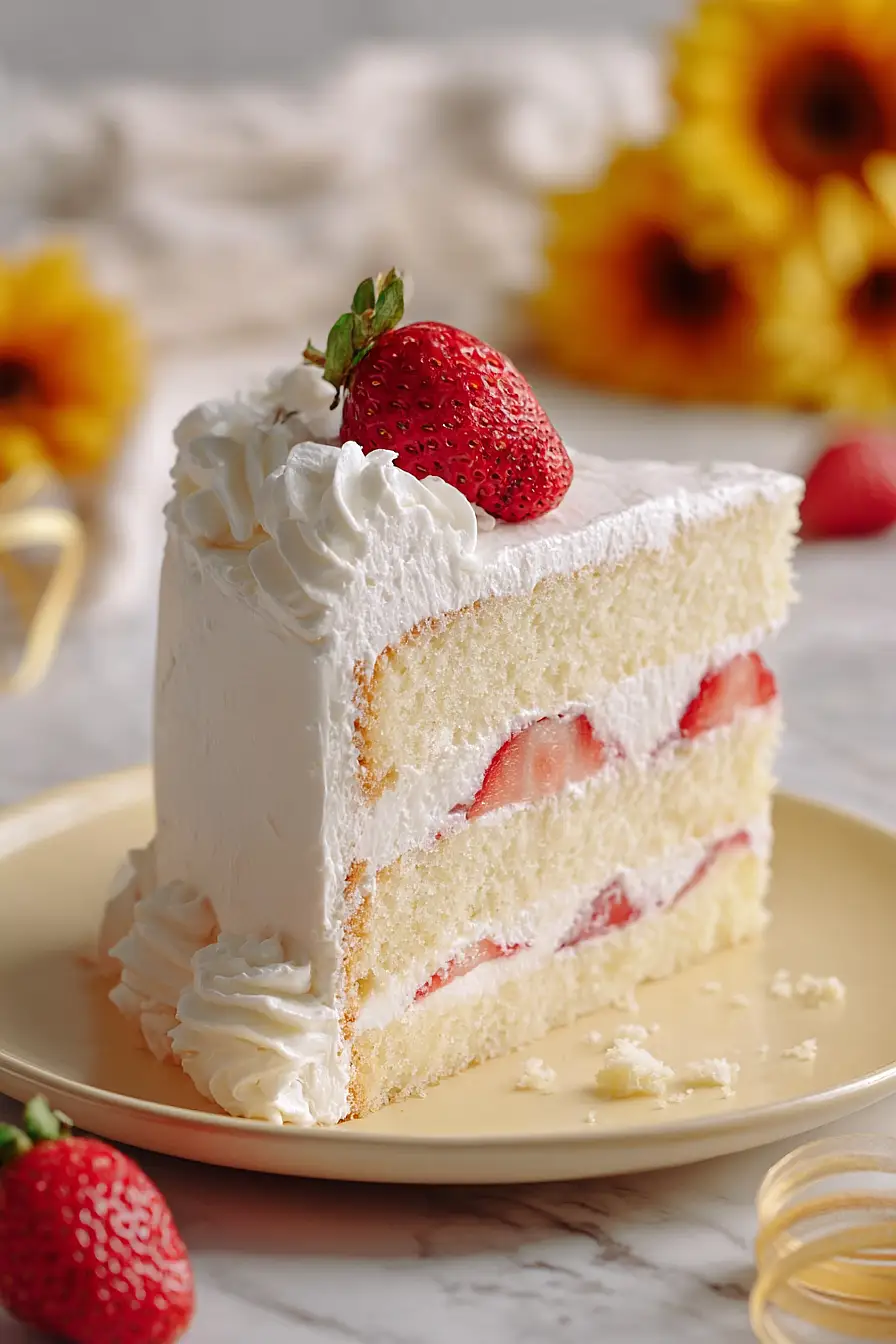
Place the first cake layer on your serving plate. Spread a generous layer of strawberry whipped cream from Step 6 on top, then add the second cake layer. Repeat with another layer of cream and the third cake layer. Apply a thin "crumb coat" layer of cream over the entire cake—this seals in any loose crumbs before the final frosting. Refrigerate for 15 minutes to set this layer. Apply the final, thicker layer of cream to the top and sides of the cake, creating an even, smooth finish. Chill the finished cake for at least 1 hour before serving, which allows the cream to fully set and makes slicing cleaner. Top with additional fresh strawberries just before serving for the best appearance.