Start by preheating your oven to 350°F and lining a baking sheet with parchment paper. While the oven heats, zest your fresh lemons finely (you'll need about 1.5 teaspoons) and squeeze the lemon juice (about 1 tablespoon). Measure out all your dry ingredients and wet ingredients separately so everything is ready when you need it. I always zest the lemon before juicing it because the zester can slip on a wet lemon—this small step prevents frustration and ensures you get the full aromatic zest.
In a medium bowl, whisk together the flour, baking powder, salt, baking soda, and cream of tartar. Whisking these together incorporates air into the dry ingredients and distributes the leavening agents evenly, which gives you more consistent rise and texture throughout your cookies. Set this bowl aside until you're ready to combine it with the wet ingredients.
In a large bowl, beat the softened butter and 3/4 cup sugar together for 2-3 minutes until the mixture is light, fluffy, and pale. This creaming process incorporates tiny air bubbles that help your cookies spread and bake evenly. Add the lemon zest and continue beating for another 30 seconds to release the oils and distribute the lemon flavor throughout. I find that creaming longer than necessary doesn't hurt—the texture becomes noticeably lighter and airier, which makes a better cookie in the end.
Add the room-temperature egg and vanilla extract to the butter mixture and beat for 1-2 minutes until well combined. Then add the fresh lemon juice and mix briefly until the ingredients are incorporated. The mixture may look slightly curdled—this is normal and will smooth out once you add the dry ingredients. Be careful not to overmix at this stage since you'll be mixing again in the next step.
Add the dry ingredient mixture from Step 2 to the wet ingredients and mix on low speed until a soft dough just forms—stop mixing as soon as you don't see any dry flour streaks. Overmixing develops gluten, which makes cookies tough and dense instead of tender. Pour the 3 tablespoons of sugar (for coating) into a small shallow bowl and set it nearby, then let your dough rest at room temperature for about 5 minutes so it's easier to handle and scoop.
Using a cookie scoop or spoon, portion the dough into 1-inch balls and roll each one in the sugar coating until it's evenly covered. Place each sugar-coated ball on your prepared baking sheet, spacing them about 2 inches apart to allow for spreading during baking. Work quickly but gently—the dough is delicate, and you want to keep those air bubbles you created in the creaming step intact.
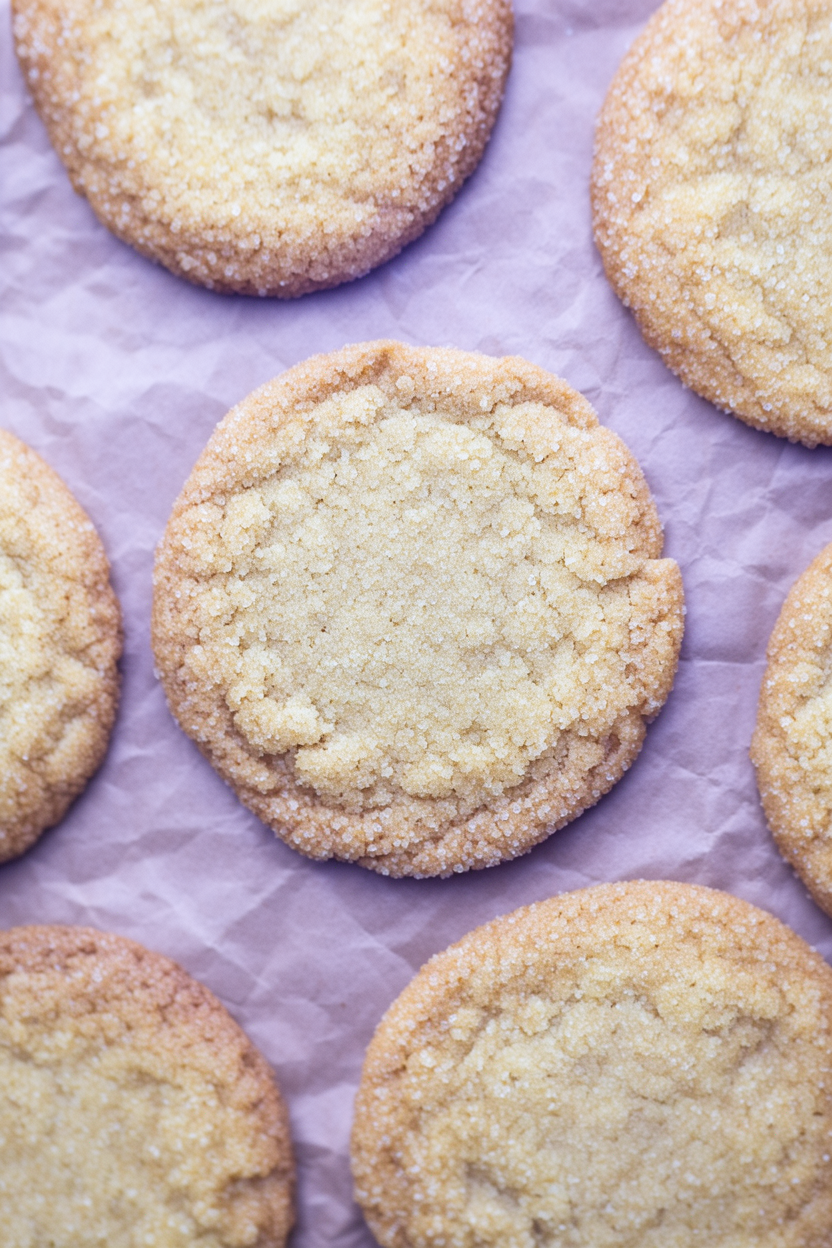
Bake at 350°F for 11-12 minutes, until the edges are set but the centers still look slightly underbaked—they'll continue cooking on the hot pan. Remove from the oven and let the cookies rest on the baking sheet for 1-2 minutes before transferring them to a cooling rack. I find that this brief rest makes the cookies much easier to move without breaking them, and they continue to firm up as they cool.