My husband texted from work asking what smelled so good in the house. He wasn’t even HOME. I was three cookies deep by the time he walked through the door.
Buttery, soft, crackly sugar top, sneaky little lemon hit in every single bite. These snickerdoodles are the dangerous kind. Gone in two days. Tops.
Why Cream of Tartar Matters Here
- This is what makes a SNICKERDOODLE a snickerdoodle. Skip it and you’ve got sugar cookies. Missed the whole point.
- It activates baking soda for crackly tops and tender chew. No cream of tartar = flat, dense cookies.
- Substituting lemon juice works 1:1, but you’re already adding lemon here, so bump the zest to keep that tang.
- Old jars clump and lose potency. Quick test: ½ tsp cream of tartar + 1 tsp baking soda in warm water. Fizzes? Still good. Silent? Toss it.
How to Know When They’re Done Baking
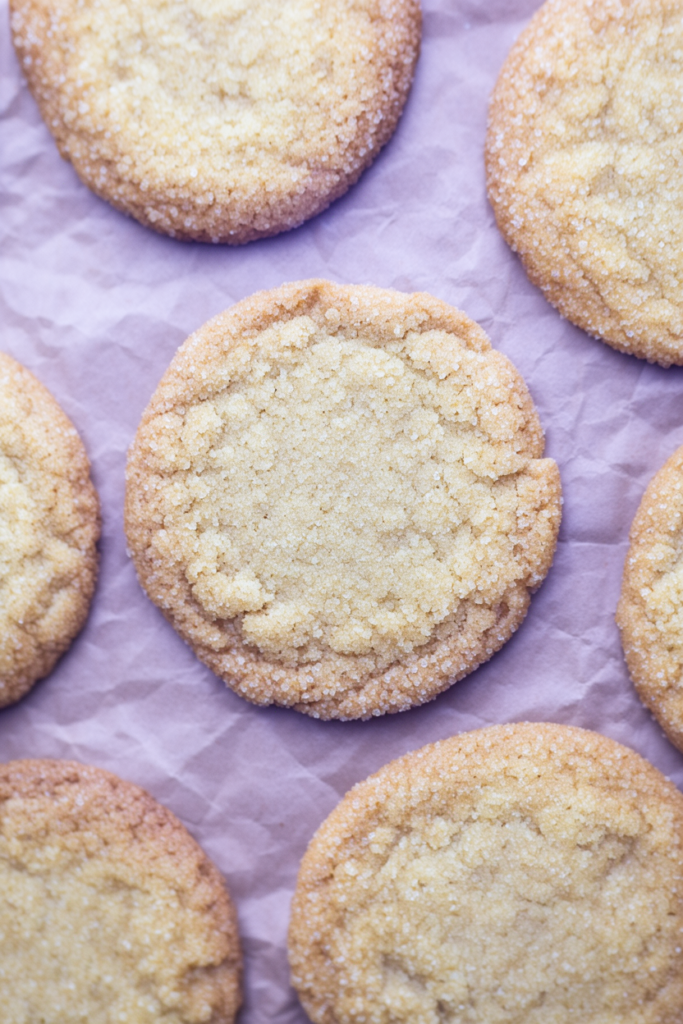
- Look for SET EDGES with slightly puffy middles that still look soft. If the whole cookie appears uniformly golden, you overshot it.
- Centers should look UNDERBAKED and almost glossy when you pull them…. they firm up on the pan during that resting time.
- 11 minutes is your baseline at 350°F. Go 12 if you want a crispier edge, but never push past 13 or you’ll lose that tender middle.
- Give one a gentle poke. If it springs back with just a tiny indent, you’re golden (literally).
- Lift one with a spatula and peek underneath. The bottom should be JUST barely golden. Pale means more time, deep brown means overdone.
- The 1-2 minute rest on the pan is NON-NEGOTIABLE. Move them too early and you’ll be eating crumbles.
Trust the carryover cooking. These cookies finish setting on the hot sheet, so pulling them when they look slightly undone is exactly the move.
Watch How to Make These Lemon Snickerdoodles
Preheat your oven to 350°F and line a baking sheet with parchment.
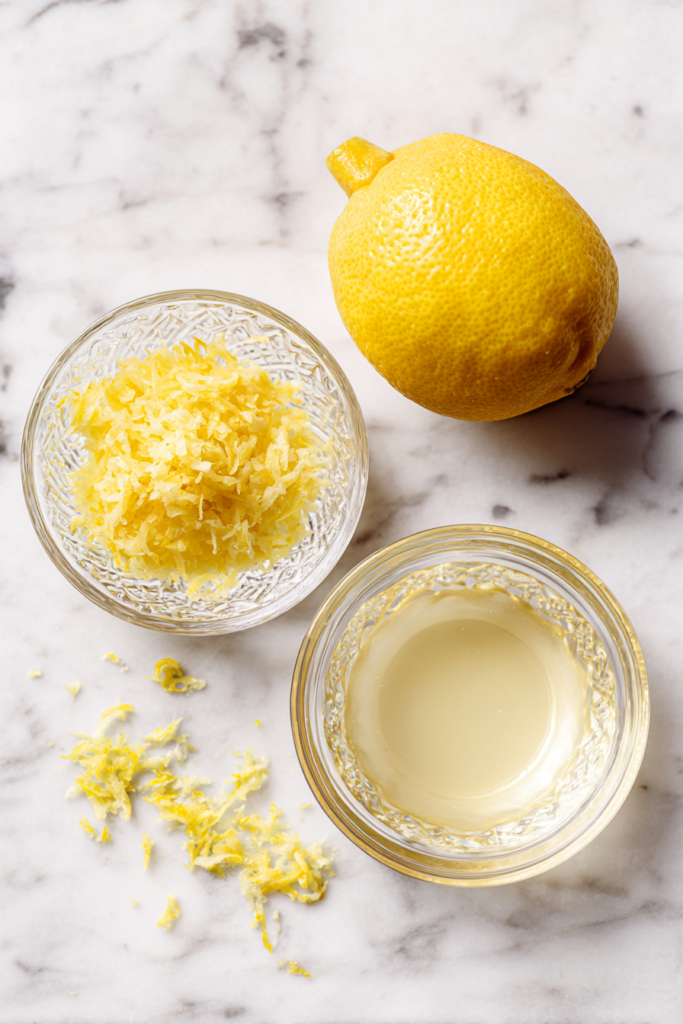
Zest and juice your lemons first (always zest before juicing—zesters slip on wet lemons, ask me how I know), and get all your dry and wet ingredients measured and ready to go. Future you will be grateful.
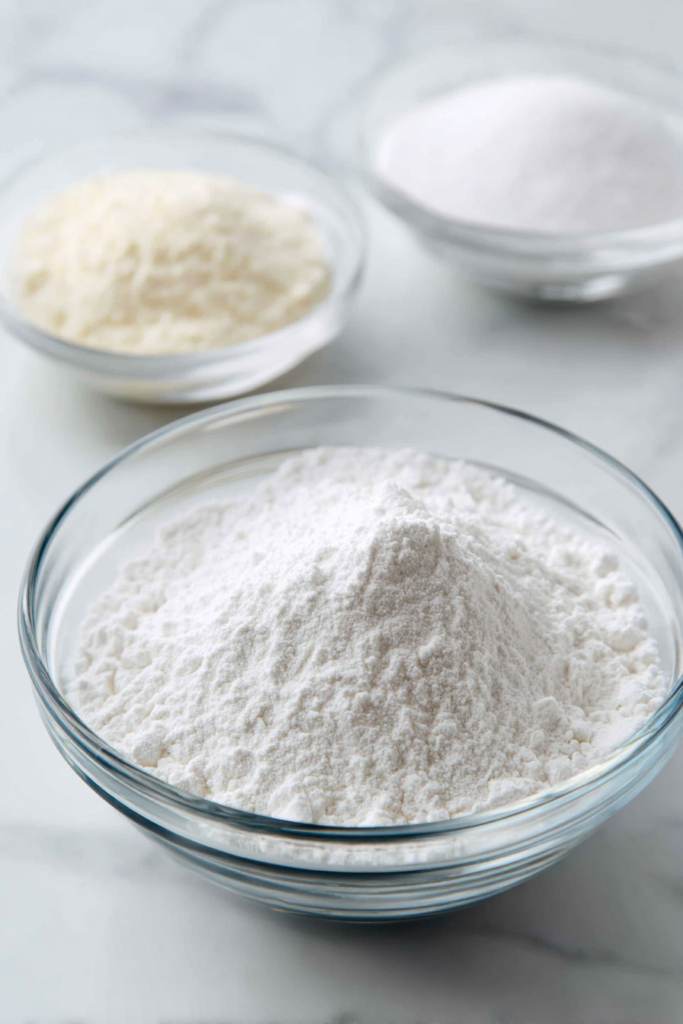
Whisk together the dry stuff—flour, baking powder, salt, baking soda, cream of tartar—and set it aside.
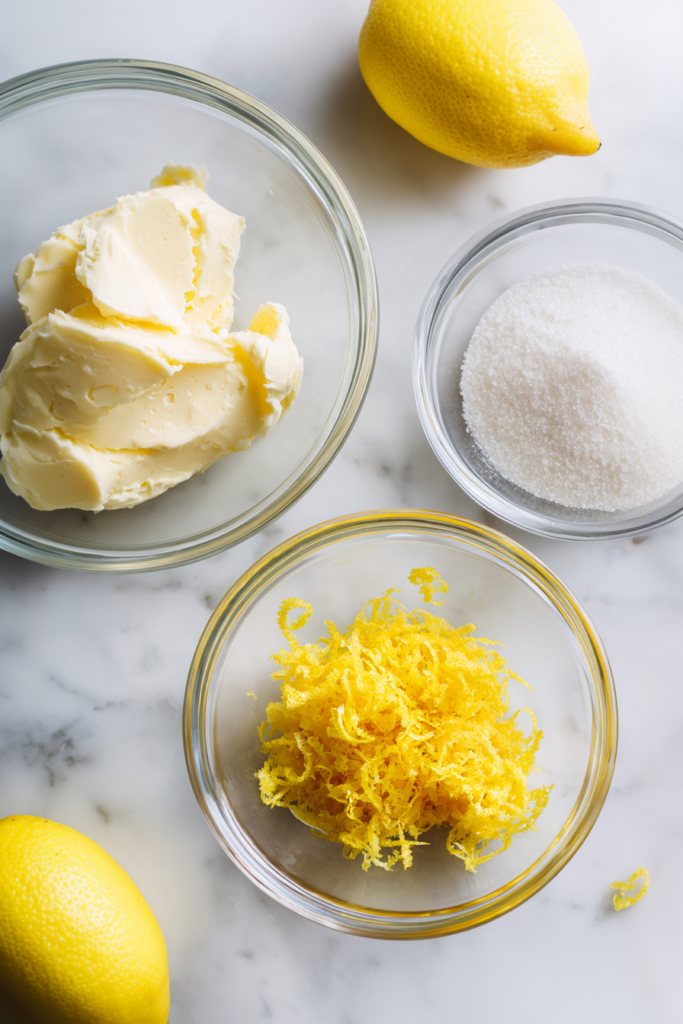
In a big bowl, beat the butter and sugar for 2–3 minutes until light and fluffy, then add the lemon zest and beat another 30 seconds to wake up those oils.
Add the egg and vanilla, beat until combined, then mix in the lemon juice. (It might look a little curdled—totally normal, don’t panic.)
Add the dry mixture and mix on low just until the flour disappears. Overmixing = tough cookies, and we don’t want that.
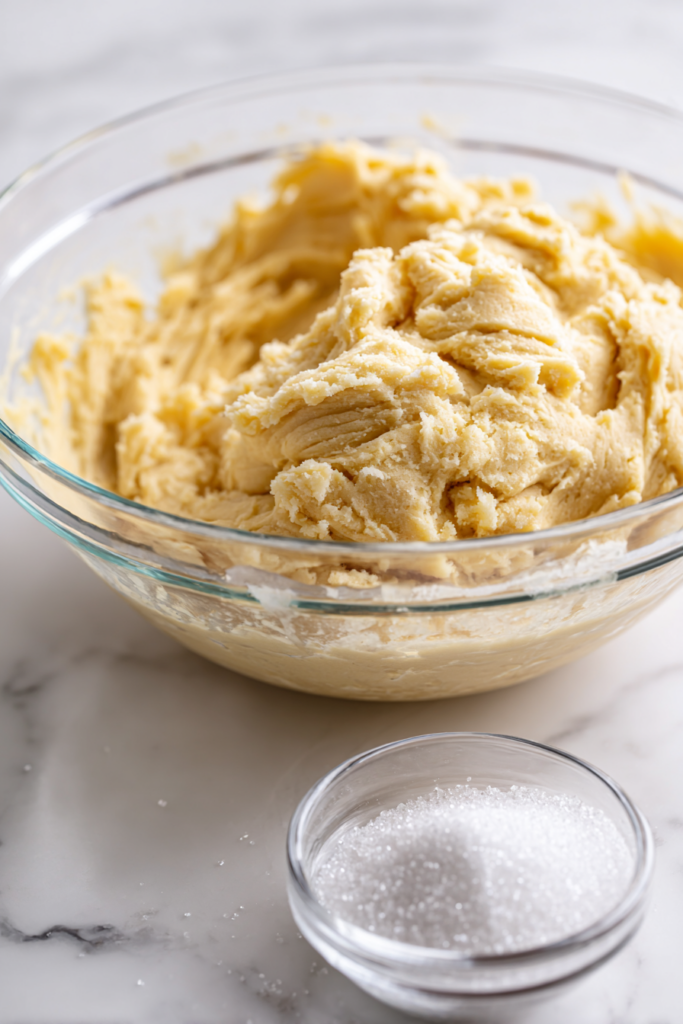
Let the dough rest for 5 minutes, then roll it into 1-inch balls and coat each one in sugar. Place them on your baking sheet about 2 inches apart.
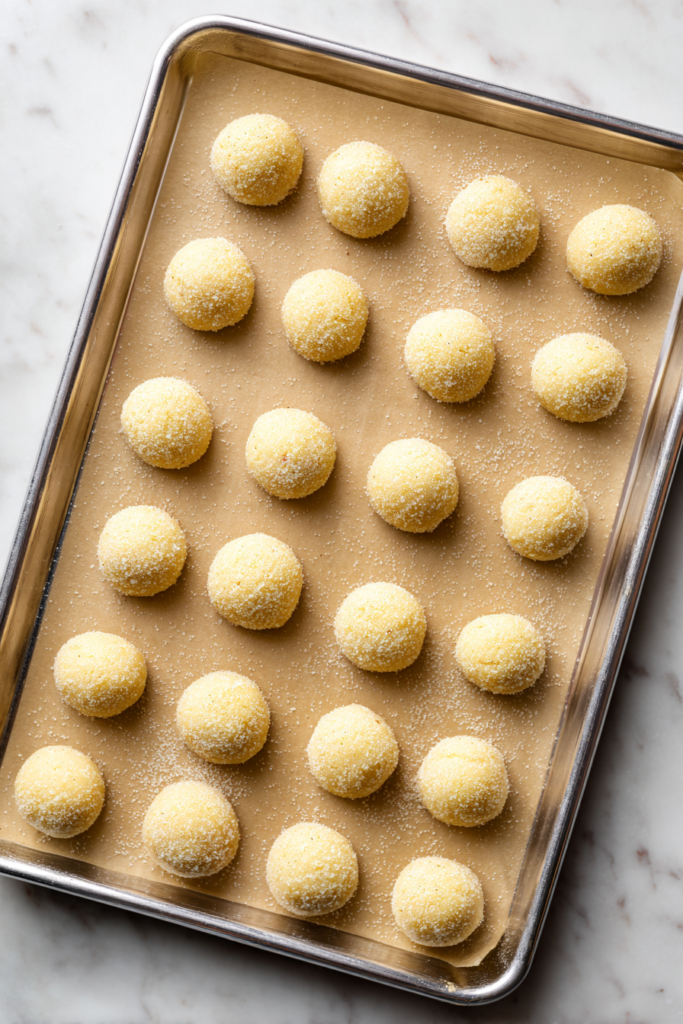
Bake for 11–12 minutes until the edges are set but the centers still look a touch underbaked. Let them hang out on the pan for a minute or two before moving them to a cooling rack. Trust the process—they’ll firm up as they cool.
How to Store Lemon Snickerdoodles
Store cooled cookies in an airtight container at room temperature for up to 5 DAYS…. layer them with parchment paper to prevent sticking (the sugar coating gets tacky, especially in humid kitchens).
For longer keeping, freeze baked cookies in a zip-top bag for up to 2 MONTHS! Thaw 15 minutes before serving. Or freeze the raw, sugar-coated dough balls and bake straight from frozen, adding 1-2 extra minutes.
FAQ: Your Snickerdoodle Questions, Answered
Why are my cookies flat or didn’t spread?
Flat means butter was too warm, no chill. No spread means butter was too cold, your soda is dead. Room-temp butter (small dent when pressed) is the sweet spot.
Can I make these gluten-free?
Yes! Swap AP flour for a 1:1 GF blend (King Arthur works great). Rest dough 5 extra min so the flour hydrates. Texture is slightly more delicate, still chewy.
Can I add mix-ins like white chocolate or blueberries?
Absolutely. Fold in 1/2 cup mix-ins at the end. White chocolate + blueberry is INSANE with the lemon. Don’t go over 3/4 cup total or the dough gets too wet.
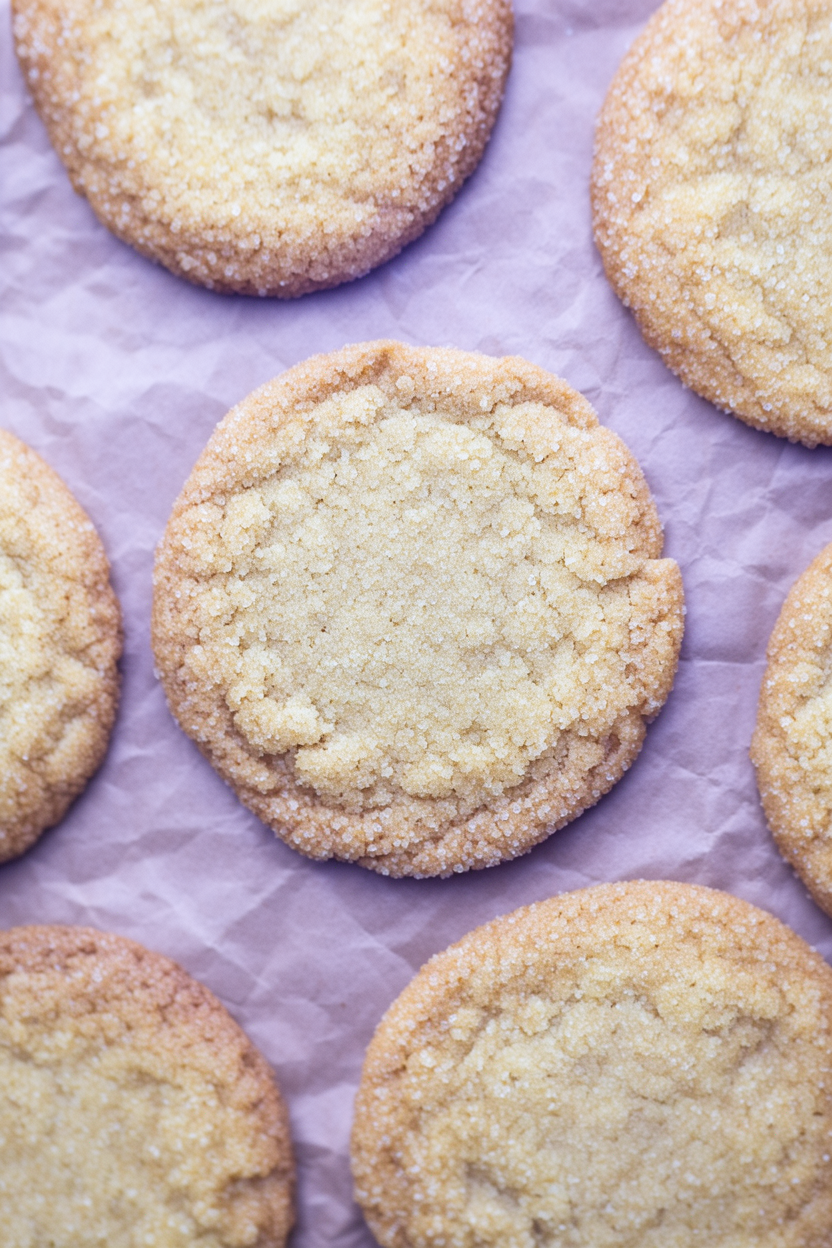
Buttery Lemon Snickerdoodles
Ingredients
Method
- Start by preheating your oven to 350°F and lining a baking sheet with parchment paper. While the oven heats, zest your fresh lemons finely (you’ll need about 1.5 teaspoons) and squeeze the lemon juice (about 1 tablespoon). Measure out all your dry ingredients and wet ingredients separately so everything is ready when you need it. I always zest the lemon before juicing it because the zester can slip on a wet lemon—this small step prevents frustration and ensures you get the full aromatic zest.
- In a medium bowl, whisk together the flour, baking powder, salt, baking soda, and cream of tartar. Whisking these together incorporates air into the dry ingredients and distributes the leavening agents evenly, which gives you more consistent rise and texture throughout your cookies. Set this bowl aside until you’re ready to combine it with the wet ingredients.
- In a large bowl, beat the softened butter and 3/4 cup sugar together for 2-3 minutes until the mixture is light, fluffy, and pale. This creaming process incorporates tiny air bubbles that help your cookies spread and bake evenly. Add the lemon zest and continue beating for another 30 seconds to release the oils and distribute the lemon flavor throughout. I find that creaming longer than necessary doesn’t hurt—the texture becomes noticeably lighter and airier, which makes a better cookie in the end.
- Add the room-temperature egg and vanilla extract to the butter mixture and beat for 1-2 minutes until well combined. Then add the fresh lemon juice and mix briefly until the ingredients are incorporated. The mixture may look slightly curdled—this is normal and will smooth out once you add the dry ingredients. Be careful not to overmix at this stage since you’ll be mixing again in the next step.
- Add the dry ingredient mixture from Step 2 to the wet ingredients and mix on low speed until a soft dough just forms—stop mixing as soon as you don’t see any dry flour streaks. Overmixing develops gluten, which makes cookies tough and dense instead of tender. Pour the 3 tablespoons of sugar (for coating) into a small shallow bowl and set it nearby, then let your dough rest at room temperature for about 5 minutes so it’s easier to handle and scoop.
- Using a cookie scoop or spoon, portion the dough into 1-inch balls and roll each one in the sugar coating until it’s evenly covered. Place each sugar-coated ball on your prepared baking sheet, spacing them about 2 inches apart to allow for spreading during baking. Work quickly but gently—the dough is delicate, and you want to keep those air bubbles you created in the creaming step intact.
- Bake at 350°F for 11-12 minutes, until the edges are set but the centers still look slightly underbaked—they’ll continue cooking on the hot pan. Remove from the oven and let the cookies rest on the baking sheet for 1-2 minutes before transferring them to a cooling rack. I find that this brief rest makes the cookies much easier to move without breaking them, and they continue to firm up as they cool.
Really good recipe that’s makes exactly 12 cookies! I doubled the vanilla (as I do in every recipe that calls for it) – so delicious!
Finding recipes to use my Meyer Lemons. These cookies are excellent!
These are delicious and turned out perfectly! I made 3.5 doz (I used the smallest scoop).
Thank you for the recipe.
This looks delicious, but I notice you only recommend sugar for rolling cookies before baking. Did you forget to add cinnamon? It shows a little cinnamon in the picture & it’s not snickerdoodles without cinnamon. I’ll be adding cinnamon to my sugar. Can’t want to try this. Looks amazing! 🤩
please tell me how your cookies turned out. also I agree with you about cinnamon
My entire family enjoys lemon cookies. Who knew? This recipe is absolutely amazing! My family is now asking me to make them as a permanent cookie for Christmas.
Thank you!
Deb