You know that chicken at a backyard cookout that makes you close your eyes on the first bite? THAT’S what we’re making today. Smoky, a little spicy, kissed with lemon, the kind of thing where you take one bite and immediately wonder why you ever bothered with plain grilled chicken.
The marinade is dead simple. Olive oil, fresh lemon juice, a parade of spices (smoked paprika doing the HEAVY lifting, cayenne for that sneaky heat), and a generous amount of garlic because garlic makes everything better. That’s just science.
Whisk it all together, smother your chicken in it, walk away for an hour or two. Grill it hot and fast. Boom. Best chicken of the summer and you barely had to think about it.
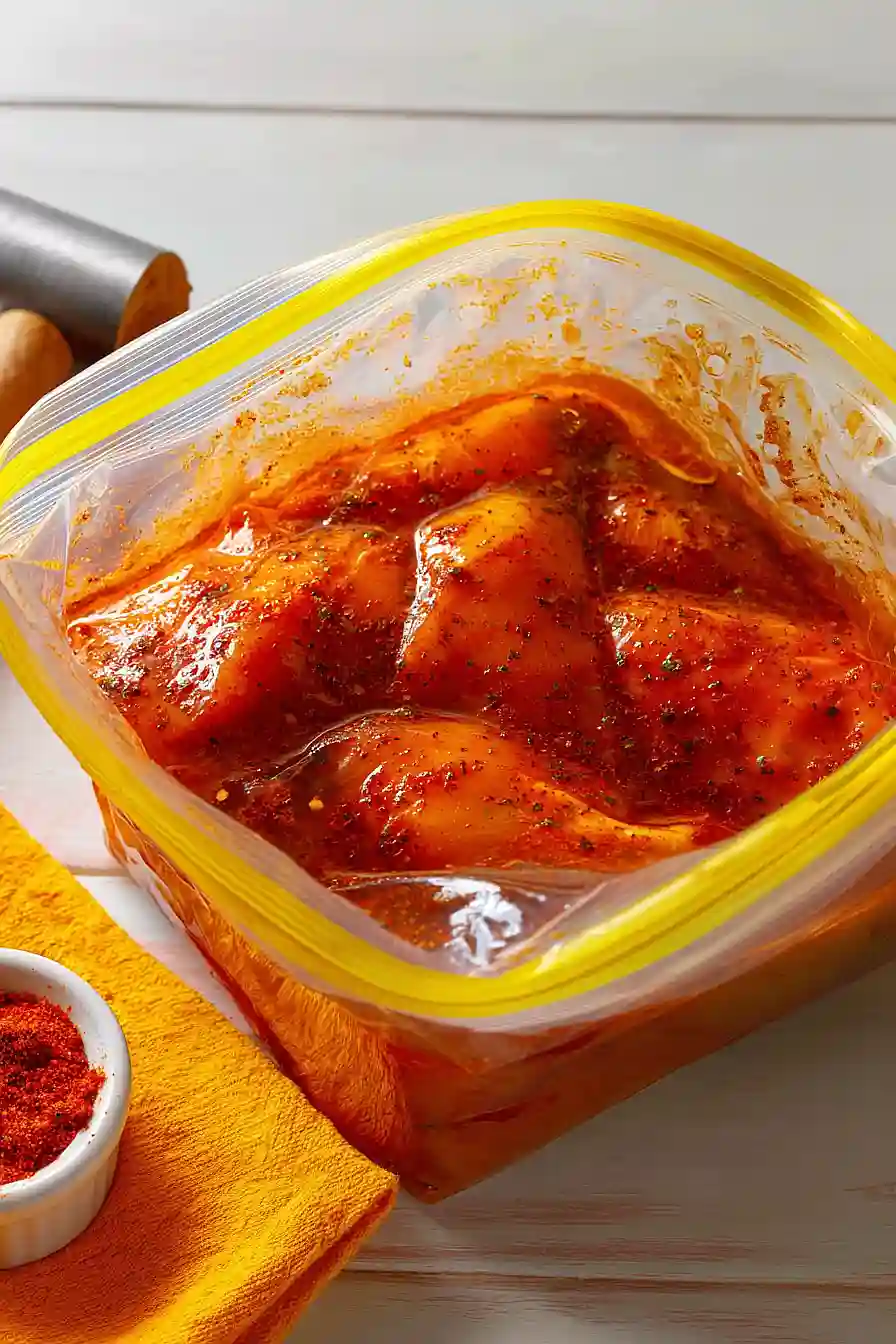
How Long to Marinate Cajun Chicken
Marinating time is where the magic (or mush) happens. Too short and flavor stays on the surface, too long and lemon juice obliterates your chicken texture
- Hit at LEAST 1 hour, but 2 hours is the sweet spot for proper Cajun flavor
- NEVER exceed 4 hours – acid breaks down proteins and you’ll get mushy, mealy chicken
- That even 1/2-inch thickness helps marinade absorb uniformly across the whole breast
- Keep it refrigerated the entire time (bacteria loves raw chicken sitting out
- Flip halfway through if you’re using a dish instead of a sealed bag
Grilling vs. Pan-Searing This Chicken
Grilling gives smoky char, but pan-searing delivers a killer crust in less time. Pick your fighter based on weather, equipment, and cleanup tolerance.
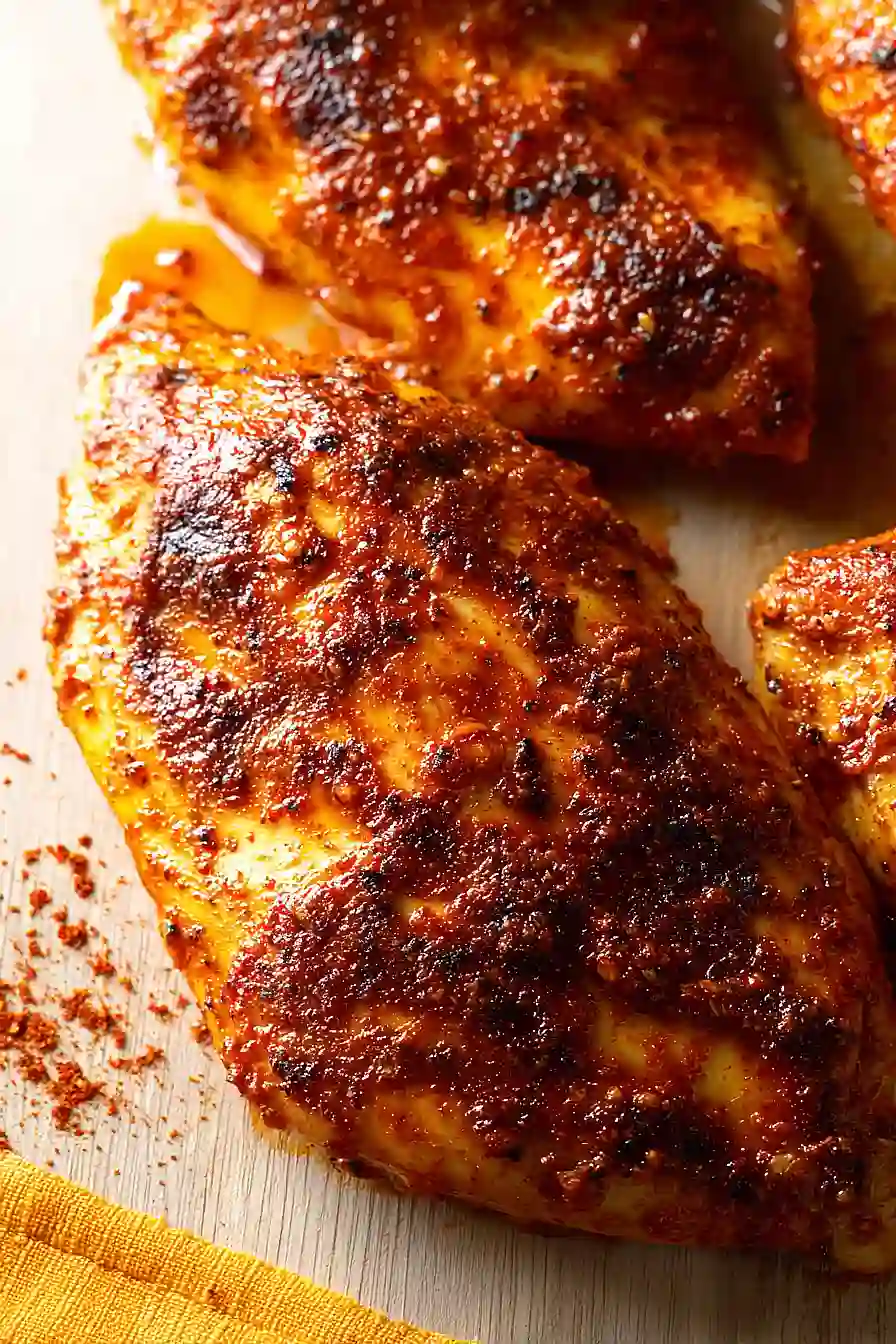
For GRILLING, oil the grates first with a soaked paper towel (held with tongs), and resist flipping more than once! The paprika and cayenne blacken fast, so medium-high heat around 400°F keeps things controlled.
Watch for flare-ups when oil hits flames…. 5-6 minutes per side does it. A meat thermometer reading 165°F is non-negotiable either way.
PAN-SEARING in cast iron honestly builds an even better crust. Get the pan SCREAMING hot, lay the chicken away from you, and press flat for full contact. 4 minutes per side nails it
Bonus: drippings become instant sauce gold with a splash of broth. Smoky flavor demands the grill, while weeknight speed calls for cast iron.
How to Pound Chicken to Even Thickness
Step 1: Place your chicken breast between two sheets of plastic wrap. This prevents tearing and keeps your workspace clean.
Step 2: Using the flat side of a meat mallet (or a heavy pan), pound firmly starting from the CENTER and working OUTWARD. Use even, controlled strokes to spread the meat to an even thickness.
Step 3: Lift the plastic and check. You’re aiming for a UNIFORM 1/2-inch thickness across the entire breast. This ensures EVERY piece grills at the same speed.
Now your chicken is primed for that Cajun marinade, ready to soak up flavor and cook evenly on the grill.
What to Serve with Cajun Chicken
Cajun chicken demands SIDES that can handle the heat without getting steamrolled. You need contrast: something creamy, something crisp, something starchy. The spice on this chicken is bold and smoky, so your plates should balance or complement without competing.
- Creamy grits (they cool the palate AND soak up those juices!)
- Charred corn on the cob brushed with lime butter
- Dirty rice or seasoned black beans for a heartier plate
- Vinegar-based coleslaw to cut through the richness
- Roasted sweet potato wedges with a sprinkle of smoked salt
- Buttery cornbread muffins (non-negotiable if you ask me)
Pick TWO or THREE from this list, and you’ve got a Louisiana-style plate that hits every texture and flavor note…. without overcomplicating your evening!
Storing & Reheating Leftover Chicken
Pop leftover chicken in an airtight container once it’s cooled. It’ll keep in the fridge 3-4 days. Freezing works too… use a freezer-safe bag with air pressed out for up to 3 months.
Skip the microwave on full power (rubber city, population: you). Warm slices in a covered skillet over medium-low heat with a splash of broth to keep things moist. Oven at 350°F works… just cover with foil, heat 10 minutes, until internal temp hits 165°F.
Slice the chicken BEFORE storing. It cools faster, reheats evenly, and you can toss cold pieces into salads or grain bowls. Bonus: spices deepen overnight, so day-two Cajun chicken hits different.
Estimated Nutrition
Estimated nutrition for the whole recipe (without optional ingredients):
- Calories: 350-400
- Protein: 40-48 g
- Fat: 18-22 g
- Carbohydrates: 2-4 g
Ingredients
For the marinade:
- 2 tbsp extra virgin olive oil
- 3 garlic cloves, freshly minced
- 3/4 tbsp smoked paprika
- 1/2 tsp dried oregano
- 1/2 tsp salt
- 1/2 tsp onion powder
- 1/4 tsp paprika
- 1/2 tsp freshly ground black pepper
- 1/4 tsp cayenne pepper
- 1 tbsp fresh lemon juice
For the chicken:
- 8 oz chicken breast, pounded to an even 1/2-inch thickness
Step 1: Mix the Spice Base
- 3 garlic cloves, freshly minced
- 3/4 tbsp smoked paprika
- 1/2 tsp dried oregano
- 1/2 tsp salt
- 1/2 tsp onion powder
- 1/4 tsp paprika
- 1/2 tsp freshly ground black pepper
- 1/4 tsp cayenne pepper
- 1 tbsp fresh lemon juice
- 2 tbsp extra virgin olive oil
In a small bowl, combine the minced garlic, smoked paprika, dried oregano, salt, onion powder, paprika, black pepper, and cayenne pepper.
Whisk these dry and aromatic ingredients together to distribute the spices evenly, which ensures consistent flavor throughout the marinade.
Add the fresh lemon juice and extra virgin olive oil, stirring until you have a cohesive, well-combined paste.
I find that mixing the spices with the lemon juice before adding the oil helps them dissolve better and prevents clumping.
Step 2: Infuse the Meat
- 8 oz chicken breast, pounded to an even 1/2-inch thickness
- marinade from Step 1
Place the pounded chicken breast into a resealable plastic bag or shallow dish.
Pour the prepared marinade from Step 1 over the chicken, making sure every surface is thoroughly coated with the spice mixture.
Seal the bag or cover the dish and refrigerate for at least 1 hour—this allows the flavors to penetrate the meat and the acid from the lemon juice to begin tenderizing it.
I recommend marinating for closer to 2 hours if you have the time, as it develops deeper Cajun flavor without over-marinating.
Step 3: Sear to Perfection
- marinated chicken from Step 2
Remove the chicken from the refrigerator about 10 minutes before grilling to bring it closer to room temperature for more even cooking.
Heat your grill to medium-high heat (around 400°F).
Place the chicken on the grill and cook for approximately 5-6 minutes per side until the internal temperature reaches 165°F when measured with a meat thermometer in the thickest part.
The even thickness you pounded earlier ensures both sides cook at the same rate, giving you a nicely charred exterior while keeping the interior moist.
Simple Cajun Chicken Marinade
Ingredients
Method
- In a small bowl, combine the minced garlic, smoked paprika, dried oregano, salt, onion powder, paprika, black pepper, and cayenne pepper. Whisk these dry and aromatic ingredients together to distribute the spices evenly, which ensures consistent flavor throughout the marinade. Add the fresh lemon juice and extra virgin olive oil, stirring until you have a cohesive, well-combined paste. I find that mixing the spices with the lemon juice before adding the oil helps them dissolve better and prevents clumping.
- Place the pounded chicken breast into a resealable plastic bag or shallow dish. Pour the prepared marinade from Step 1 over the chicken, making sure every surface is thoroughly coated with the spice mixture. Seal the bag or cover the dish and refrigerate for at least 1 hour—this allows the flavors to penetrate the meat and the acid from the lemon juice to begin tenderizing it. I recommend marinating for closer to 2 hours if you have the time, as it develops deeper Cajun flavor without over-marinating.
- Remove the chicken from the refrigerator about 10 minutes before grilling to bring it closer to room temperature for more even cooking. Heat your grill to medium-high heat (around 400°F). Place the chicken on the grill and cook for approximately 5-6 minutes per side until the internal temperature reaches 165°F when measured with a meat thermometer in the thickest part. The even thickness you pounded earlier ensures both sides cook at the same rate, giving you a nicely charred exterior while keeping the interior moist.