Okay so I have been on a serious chicken breast kick lately and this marinade? It is THE one. The only one. I’m done trying others (for now).
It’s sweet, it’s savory, it’s got a little sass from the sriracha, and the cornstarch trick is what makes it actually cling to the chicken instead of sliding off into the pan like a sad pool of liquid. That glossy, sticky, caramelized situation? Yes please.
I usually do an overnight marinade because I’m a planner, but even 1 hour gets you good results. Air fry it, grill it, bake it, whatever. It is going to be SO good.

How Long to Marinate the Chicken
The sweet spot? At least 1 hour, but 8-12 hours is the magic window. That overnight soak lets the soy, garlic, and ginger work their way deep into the meat….and the acid won’t turn your chicken into mush (that’s what vinegar and rice wine do gently, not aggressively).
NEVER skip the halfway shake (it redistributes the marinade so every piece gets equal love). Cutting chicken into 1-inch pieces means faster flavor absorption….go bigger and you’ll be waiting forever for the center to taste like anything.
Best Cooking Methods for This Marinade
- SKEWERS first. 1-inch pieces fall through grates mid-cook without them.
- Two-zone grill = control. Hot side for color, cool side when honey scorches (it will).
- BAKING at 400°F? Parchment only. The cornstarch glaze bonds aggressively to bare pans.
- AIR FRYER 380°F, 8-10 minutes. Shake the basket once.
- Broiler? WATCH IT. Honey burns in literal seconds.
- Pull at 160°F. Carryover heat takes it to 165°F.
Pick your method. Just respect the honey….it burns when you blink.
Can You Freeze the Marinade?
Absolutely yes! This marinade freezes beautifully because there’s nothing dairy-based or finicky in the mix. Pour it into a freezer-safe container or zip-top bag, leaving about an inch of headspace for expansion
It’ll stay good in the freezer for up to 3 months. Pro tip: freeze the marinade WITH the raw chicken already coated in it so the chicken absorbs flavor while thawing overnight in the fridge
One note… cornstarch can settle or change texture after freezing. Give the thawed marinade a vigorous whisk before cooking and it’ll return to that glossy, glaze-ready consistency. (Honestly, it usually looks fine right after thawing too.)
If You Liked This, Try These
- Chipotle Chicken Marinade
- Irresistible Curry Chicken Marinade
- Best Ginger Steak Marinade
- Simple Cajun Chicken Marinade
- Mouthwatering Asian Pork Chop Marinade
- High Protein Greek Chicken Marinade with Yogurt
Estimated Nutrition
Estimated nutrition for the whole recipe (without optional ingredients):
- Calories: 1300-2100
- Protein: 150-250 g
- Fat: 15-30 g
- Carbohydrates: 90-110 g
Ingredients
For the marinade:
- 1/2 cup soy sauce
- 7 tbsp honey
- 3 tbsp rice vinegar
- 3 tbsp rice wine
- 4 garlic cloves, freshly minced
- 1 tbsp ginger, grated
- 1 tsp sriracha
- 1 tsp toasted sesame oil (optional for depth)
- 1/2 tsp cornstarch (to help glaze adhere)
For the chicken:
- 3 lb chicken, cut into 1-inch pieces
Step 1: Whisk the Liquid Base
- 1/2 cup soy sauce
- 7 tbsp honey
- 3 tbsp rice vinegar
- 3 tbsp rice wine
In a mixing bowl, combine soy sauce, honey, rice vinegar, and rice wine, whisking until the honey is fully dissolved and the mixture is smooth.
This creates a well-balanced sweet and savory foundation.
The vinegar and wine add acidity and depth that will help tenderize the chicken while developing complex flavors.
Step 2: Incorporate Aromatics and Binder
- 4 garlic cloves, freshly minced
- 1 tbsp ginger, grated
- 1 tsp sriracha
- 1 tsp toasted sesame oil
- 1/2 tsp cornstarch
- marinade base from Step 1
Add the minced garlic, grated ginger, sriracha, sesame oil (if using), and cornstarch to the marinade base from Step 1, stirring well to combine.
The cornstarch acts as a thickening agent that will help the marinade adhere to the chicken and create a glossy glaze during cooking.
I find that whisking vigorously for about 30 seconds ensures the cornstarch is evenly distributed and won’t clump.
Step 3: Coat and Chill Meat
- 3 lb chicken, cut into 1-inch pieces
- complete marinade from Step 2
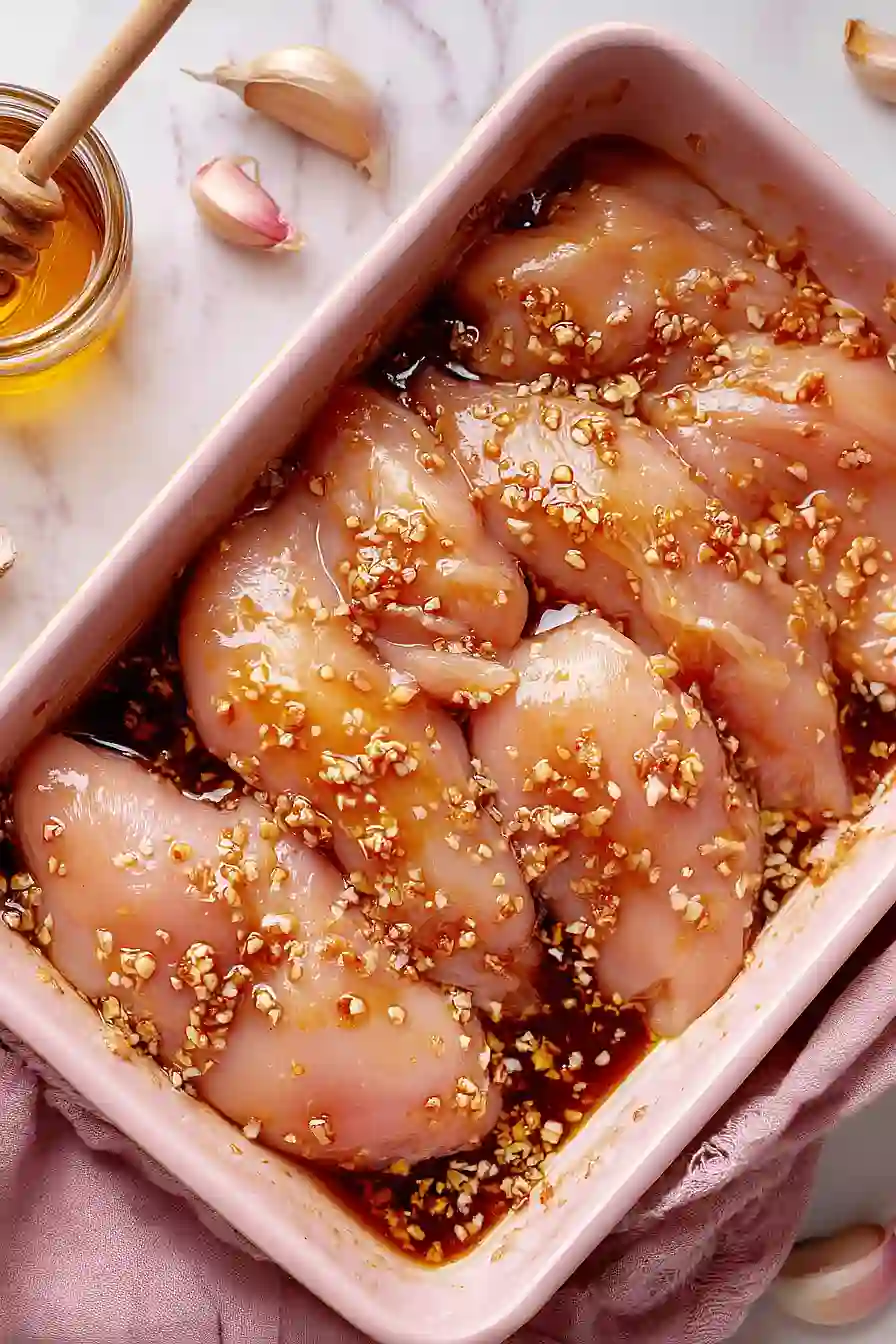
Place the chicken pieces in a large container or zip-top bag and pour the marinade from Step 2 over it, ensuring all pieces are evenly coated.
Refrigerate for at least 1 hour, but ideally overnight—this extended marinating time allows the soy, garlic, and ginger to penetrate the chicken while the acid in the vinegar and wine gently tenderizes the meat.
I like to give the container a gentle shake halfway through marinating to redistribute the flavors.
Step 4: Sear and Caramelize
- marinated chicken from Step 3
Remove the chicken from the refrigerator and let it sit at room temperature for 15 minutes before cooking.
This helps ensure even cooking throughout.
Cook the chicken using your preferred method—grilling over medium-high heat, baking at 400°F, broiling, or air-frying at 380°F—until the internal temperature reaches 165°F and the exterior is caramelized and sticky from the glaze.
The cornstarch from Step 2 will help create that desirable glossy coating as the marinade reduces and caramelizes during cooking.
Quick Honey Soy Chicken Marinade
Ingredients
Method
- In a mixing bowl, combine soy sauce, honey, rice vinegar, and rice wine, whisking until the honey is fully dissolved and the mixture is smooth. This creates a well-balanced sweet and savory foundation. The vinegar and wine add acidity and depth that will help tenderize the chicken while developing complex flavors.
- Add the minced garlic, grated ginger, sriracha, sesame oil (if using), and cornstarch to the marinade base from Step 1, stirring well to combine. The cornstarch acts as a thickening agent that will help the marinade adhere to the chicken and create a glossy glaze during cooking. I find that whisking vigorously for about 30 seconds ensures the cornstarch is evenly distributed and won't clump.
- Place the chicken pieces in a large container or zip-top bag and pour the marinade from Step 2 over it, ensuring all pieces are evenly coated. Refrigerate for at least 1 hour, but ideally overnight—this extended marinating time allows the soy, garlic, and ginger to penetrate the chicken while the acid in the vinegar and wine gently tenderizes the meat. I like to give the container a gentle shake halfway through marinating to redistribute the flavors.
- Remove the chicken from the refrigerator and let it sit at room temperature for 15 minutes before cooking. This helps ensure even cooking throughout. Cook the chicken using your preferred method—grilling over medium-high heat, baking at 400°F, broiling, or air-frying at 380°F—until the internal temperature reaches 165°F and the exterior is caramelized and sticky from the glaze. The cornstarch from Step 2 will help create that desirable glossy coating as the marinade reduces and caramelizes during cooking.