Risotto gets a bad rap for being fussy. But honestly? It’s just rice, butter, and a little patience. Stir for 20 minutes and you’ve got something that tastes like you ordered it at a fancy Italian restaurant.
Shrimp, asparagus, white wine, a ridiculous amount of parmesan. This is the kind of dinner that makes me feel like I have my life together… even when I absolutely do not.
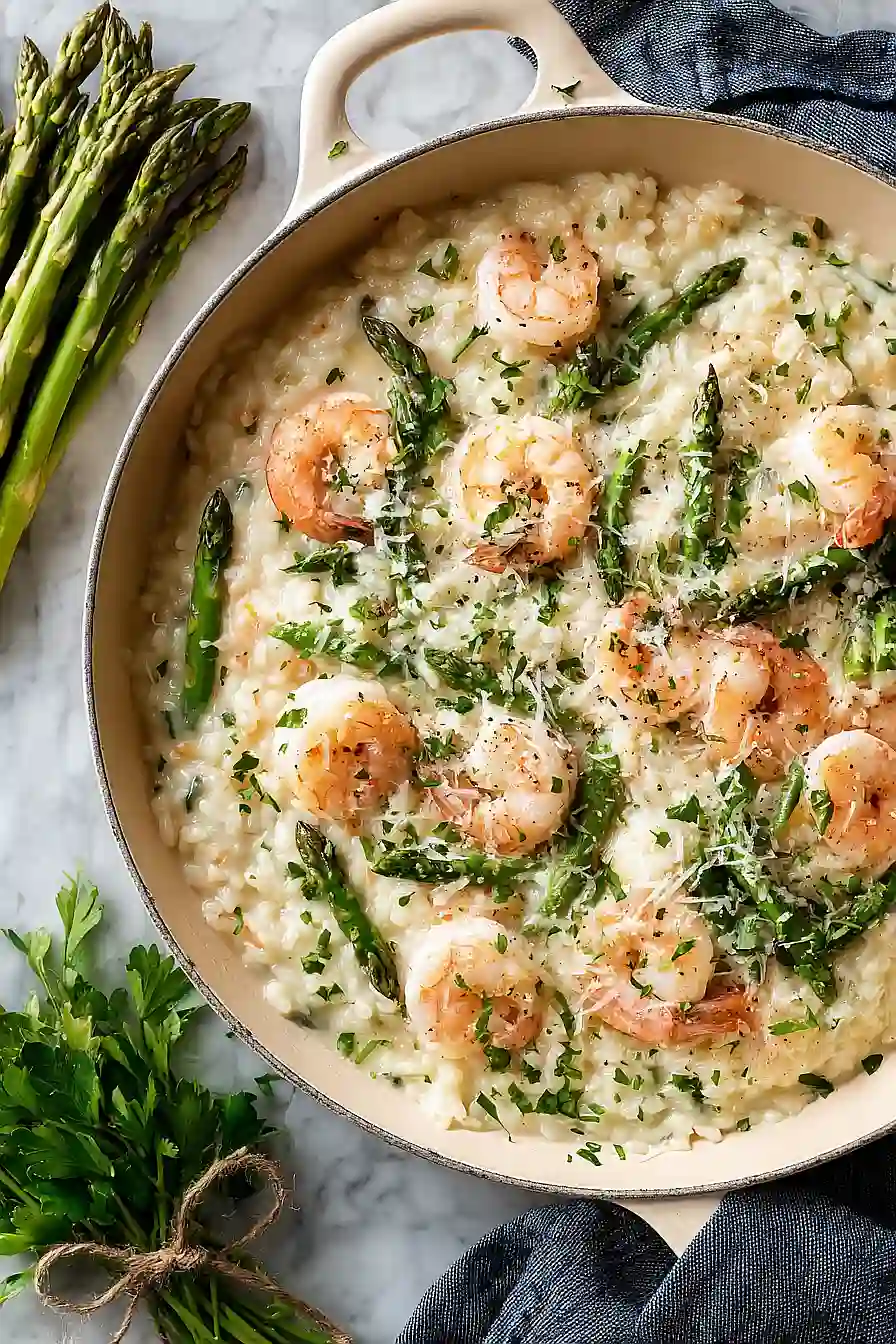
The Secret to Creamy Risotto
Keep stock SCORCHING…. cold liquid halts starch release, and THAT’S your creaminess. Add HALF-CUP increments, stirring between pours (not obsessively, you want risotto, not paste).
Toast Arborio in butter FIRST to seal the grains. Pull off heat slightly early, then stir in cold butter and parmesan. They finish the dish glossy and rich.
How to Avoid Rubbery Shrimp
- Pat those shrimp DRY before cooking (moisture steams them into rubber, which is exactly what we’re avoiding here).
- Add them LATE. Final 3-4 minutes, tops. Residual heat keeps cooking them after you remove the pan, so err on the early side!
- Pull the SECOND they turn pink and opaque. Once that happens, done means done. Overcooked is forever, sadly.
- Use medium shrimp (31-40 count) so they cook through evenly in that tiny window without the outsides turning tough before the centers firm up.
- Stir gently… aggressive stirring mashes them into sad little shreds nobody wants to eat.
Shrimp go from perfect to tragic in about 60 seconds flat. Stay close, stay alert, and pull them the moment they blush pink!
Can You Make Risotto Ahead?
Risotto is NOT a make-ahead dish! That creamy texture comes from active stirring and fresh starch release….and it firms up within minutes of leaving the heat (the shrimp will turn rubbery if pre-cooked). Best bet? Cook the rice base 90% through, then finish with asparagus, shrimp, butter, and parmesan when you’re ready to serve!
You May Also Like
- Parmesan Shrimp and Asparagus Risotto
- Angel Hair with Shrimp and Asparagus
- Chicken and Asparagus Risotto
- Lemon Orzo Salad with Shrimp
- Creamy Asparagus Orzo
- Asparagus Risotto with Scallops
Estimated Nutrition
Estimated nutrition for the whole recipe (without optional ingredients):
- Calories: 1850-2050
- Protein: 100-115 g
- Fat: 60-70 g
- Carbohydrates: 190-210 g
Ingredients
- 6.5 cups chicken stock
- 5 tbsp butter
- 1 large shallot
- 5 cloves garlic
- 1.5 cups rice (Arborio recommended)
- 0.5 cup dry white wine
- 1 cup asparagus (cut into 1-inch diagonal pieces)
- 1 lb shrimp
- 1 cup freshly grated parmesan cheese
- 1/4 cup fresh parsley, chopped
- salt to taste
- freshly ground black pepper to taste
Step 1: Warm the Chicken Stock
- 6.5 cups chicken stock
- 1 large shallot, minced
- 5 cloves garlic, minced
- 1 cup asparagus, cut into 1-inch diagonal pieces
- 1 lb shrimp, patted dry
While you’re gathering ingredients, bring the chicken stock to a boil in a separate pot, then reduce heat to low and cover to keep it hot throughout cooking—this ensures each addition of stock will be absorbed quickly into the rice without cooling it down.
Finely mince the shallot and garlic, cut the asparagus into 1-inch diagonal pieces, and pat the shrimp dry with paper towels.
Having everything prepped and ready (mise en place) makes the risotto process smooth and prevents the rice from overcooking while you’re still chopping.
Step 2: Sauté the Aromatics
- 3 tablespoons butter
- 1 large shallot, minced
- 5 cloves garlic, minced
Melt 3 tablespoons of butter in a large, heavy-bottomed pan over medium heat.
Add the minced shallot and cook for 2-3 minutes, stirring occasionally, until it becomes soft and translucent.
Add the minced garlic and cook for another minute until fragrant.
This slow, gentle cooking of aromatics in butter creates the foundation for the risotto’s flavor—rushing this step will result in harsh, raw garlic notes.
Step 3: Toast Rice and Pour Wine
- 1.5 cups rice
- 0.5 cup dry white wine
Add the Arborio rice to the pan and stir constantly for about 1 minute.
This toasting step coats each grain with butter and helps them maintain their structure during cooking.
Pour in the dry white wine and stir frequently until it’s mostly absorbed by the rice, about 1-2 minutes.
You’ll notice the rice beginning to look slightly translucent at the edges—this is exactly what you want.
Step 4: Simmer in Gradual Batches
- hot chicken stock from Step 1
Begin adding the hot stock from Step 1 in ½-cup increments, stirring frequently (about every 30 seconds) after each addition.
Wait until the liquid is mostly absorbed before adding the next portion—you should see the rice beginning to peek through the surface.
This gradual process, which takes about 18-20 minutes for roughly 5-6 stock additions, allows the rice to release its natural starches, creating that signature creamy risotto texture.
I find that constant but not obsessive stirring (you don’t need to stir every second, but check in regularly) gives the best results without overdeveloping gluten.
Step 5: Incorporate the Asparagus
- 1 cup asparagus from Step 1
- remaining hot chicken stock
When you have approximately 1 cup of stock remaining (this means you’ve made about 4-5 stock additions), add the asparagus pieces from Step 1 and stir to combine.
Continue adding stock in ½-cup increments as before, stirring frequently.
The asparagus will soften slightly while maintaining a pleasant tender-crisp texture—approximately 8-10 minutes of cooking time.
Step 6: Gently Fold in Shrimp
- 1 lb shrimp from Step 1
- final hot chicken stock
When only about ½ cup of stock remains, add the patted-dry shrimp from Step 1 and stir gently to distribute them throughout the risotto.
Add the final stock addition and continue stirring until the rice is creamy and tender and the shrimp are pink and cooked through, about 3-4 minutes.
The shrimp cook quickly, so don’t walk away—you want them just cooked through, not rubbery.
I like to add the shrimp at this late stage so they stay tender and don’t overcook in the residual heat.
Step 7: Enrich with Cheese and Butter
- 2 tablespoons butter
- 1 cup freshly grated parmesan cheese
- salt to taste
- freshly ground black pepper to taste
- 1/4 cup fresh parsley, chopped
Remove the pan from heat and immediately stir in the remaining 2 tablespoons of butter and the grated parmesan cheese until fully incorporated and creamy.
Taste and season with salt and freshly ground black pepper as needed.
Divide among serving bowls and garnish with fresh parsley.
Serve immediately while the risotto is hot and creamy—risotto waits for no one!
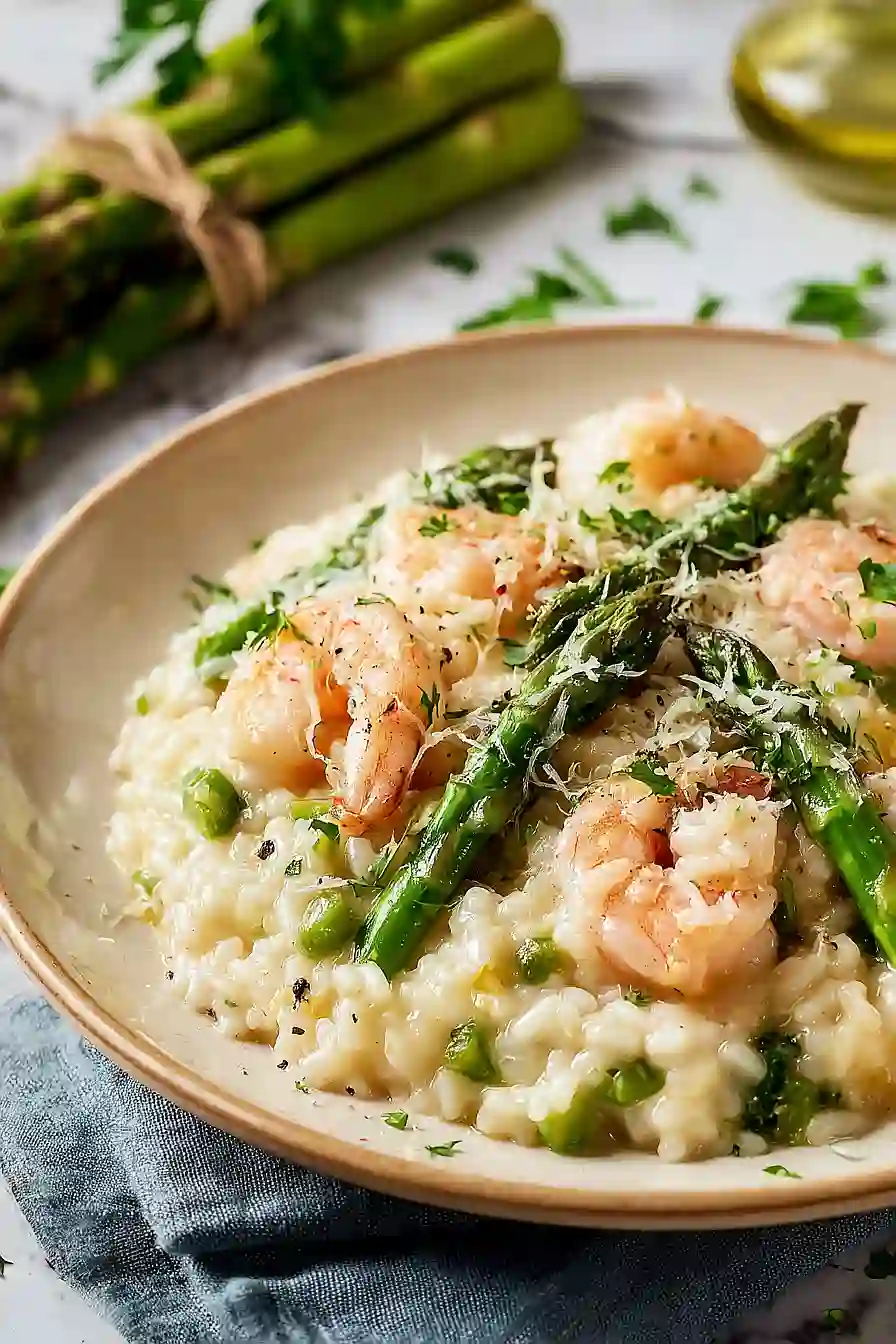
Parmesan Shrimp and Asparagus Risotto
Ingredients
Method
- While you're gathering ingredients, bring the chicken stock to a boil in a separate pot, then reduce heat to low and cover to keep it hot throughout cooking—this ensures each addition of stock will be absorbed quickly into the rice without cooling it down. Finely mince the shallot and garlic, cut the asparagus into 1-inch diagonal pieces, and pat the shrimp dry with paper towels. Having everything prepped and ready (mise en place) makes the risotto process smooth and prevents the rice from overcooking while you're still chopping.
- Melt 3 tablespoons of butter in a large, heavy-bottomed pan over medium heat. Add the minced shallot and cook for 2-3 minutes, stirring occasionally, until it becomes soft and translucent. Add the minced garlic and cook for another minute until fragrant. This slow, gentle cooking of aromatics in butter creates the foundation for the risotto's flavor—rushing this step will result in harsh, raw garlic notes.
- Add the Arborio rice to the pan and stir constantly for about 1 minute. This toasting step coats each grain with butter and helps them maintain their structure during cooking. Pour in the dry white wine and stir frequently until it's mostly absorbed by the rice, about 1-2 minutes. You'll notice the rice beginning to look slightly translucent at the edges—this is exactly what you want.
- Begin adding the hot stock from Step 1 in ½-cup increments, stirring frequently (about every 30 seconds) after each addition. Wait until the liquid is mostly absorbed before adding the next portion—you should see the rice beginning to peek through the surface. This gradual process, which takes about 18-20 minutes for roughly 5-6 stock additions, allows the rice to release its natural starches, creating that signature creamy risotto texture. I find that constant but not obsessive stirring (you don't need to stir every second, but check in regularly) gives the best results without overdeveloping gluten.
- When you have approximately 1 cup of stock remaining (this means you've made about 4-5 stock additions), add the asparagus pieces from Step 1 and stir to combine. Continue adding stock in ½-cup increments as before, stirring frequently. The asparagus will soften slightly while maintaining a pleasant tender-crisp texture—approximately 8-10 minutes of cooking time.
- When only about ½ cup of stock remains, add the patted-dry shrimp from Step 1 and stir gently to distribute them throughout the risotto. Add the final stock addition and continue stirring until the rice is creamy and tender and the shrimp are pink and cooked through, about 3-4 minutes. The shrimp cook quickly, so don't walk away—you want them just cooked through, not rubbery. I like to add the shrimp at this late stage so they stay tender and don't overcook in the residual heat.
- Remove the pan from heat and immediately stir in the remaining 2 tablespoons of butter and the grated parmesan cheese until fully incorporated and creamy. Taste and season with salt and freshly ground black pepper as needed. Divide among serving bowls and garnish with fresh parsley. Serve immediately while the risotto is hot and creamy—risotto waits for no one!