I keep a bag of pine nuts in my freezer at all times. This is exactly why.
Asparagus and orzo cook together in one pot (less dishes, more weeknight energy, you know the drill). Then comes the GOOD part: a lemon-parmesan dressing LOADED with fresh basil and dill, garlic, good olive oil, a little chili flake situation humming in the background. Butter gets stirred in while everything’s still hot so it melts into this silky, herby coat. Toasted pine nuts on top = mandatory crunch.
It tastes like a $24 side dish from that one restaurant we can’t afford right now. Takes 20 minutes. Spring has officially entered the chat.
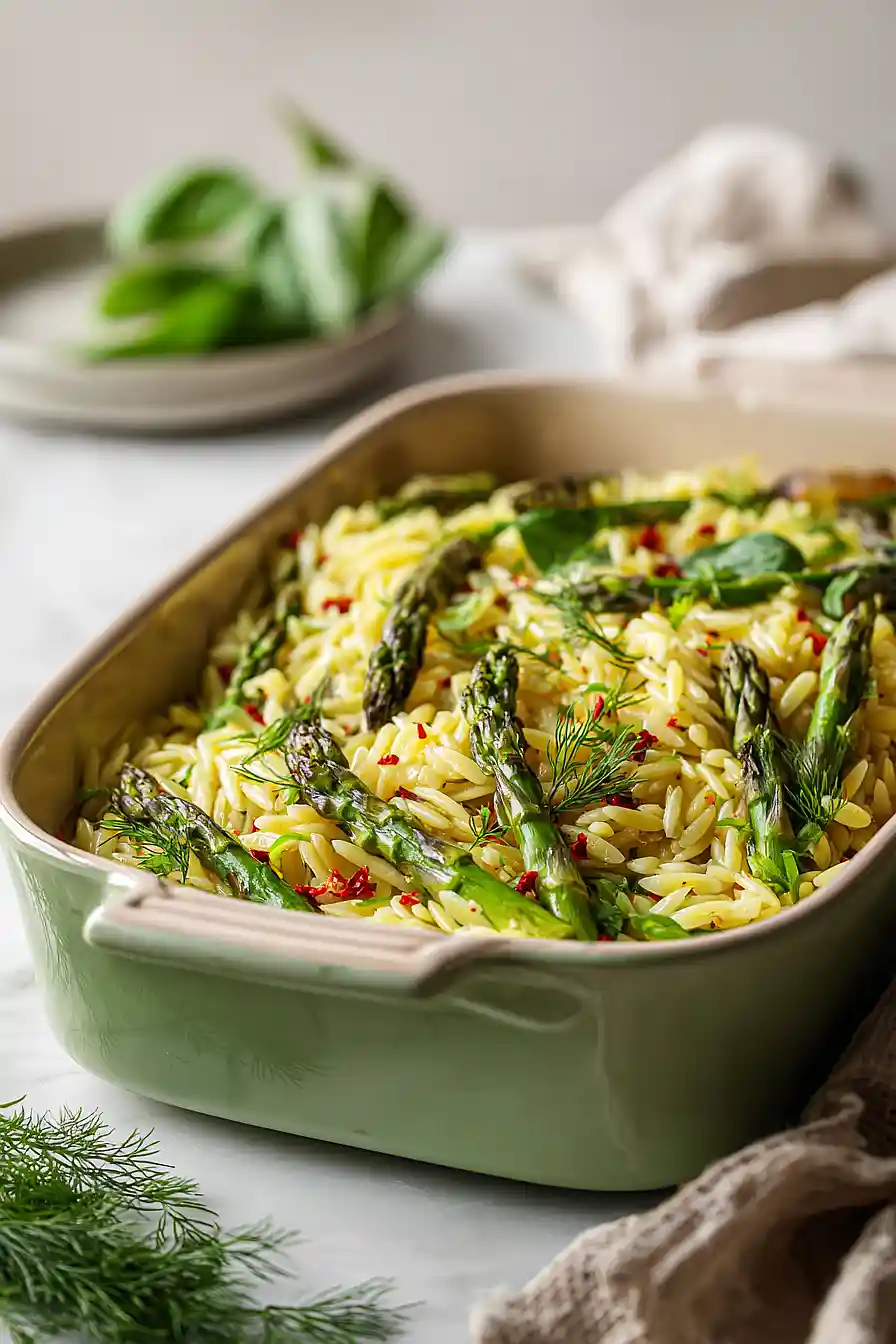
How to Pick and Prep Asparagus
Grab ASPARAGUS that’s FIRM with tightly closed tips and zero wrinkly stalks. Skip anything slimy or bendy (that’s old and sad). Thickness matters… pencil-thin spears cook fast and stay tender, while the chunky ones have more bite.
Snap off the woody ends by hand, or line them up and slice about an inch off the bottom. The natural breaking point tells you exactly where the tough part stops. Then cut the spears into 1-INCH DIAGONAL pieces for more surface area (and they look fancier, let’s be honest).
Rinse the pieces under cold water and pat them dry. They’ll go right into the pasta pot during the last 2 minutes of cooking, so no pre-blanching required!
Why You Shouldn’t Rinse the Orzo
Listen closely: rinsing orzo is a mistake. Don’t do it.
- Starch is the secret glue that makes the sauce cling, giving you that creamy texture.
- Wash it away, and you’re left with bland, slippery pasta that won’t absorb the dressing.
- The starch thickens the dish naturally, binding everything together beautifully.
- Skip the rinse, save the starch, and enjoy a far better result.
What to Serve with Creamy Asparagus Orzo
- PROTEIN PAIRING: Grilled chicken, seared salmon, or lemony shrimp turn this into a full meal (the citrus plays so well with that lemon zest in the orzo).
- SIMPLE GREEN SALAD: Peppery arugula with a sharp vinaigrette cuts the richness beautifully… skip heavy dressings here.
- CRUSTY BREAD: A warm baguette or focaccia for swiping up every drop of that herby sauce.
- ROASTED VEGGIES: Cherry tomatoes, zucchini, or blistered broccolini work as easy side acts.
- WINE MATCH: Crisp Sauvignon Blanc or Pinot Grigio…. don’t overthink it.
Storage & Reheating Tips
STORE SMART, REHEAT EVEN SMARTER. This dish shines FRESH, but leftovers absolutely work with the right moves…. if you know what you’re doing.
- Refrigerate in an airtight container for up to 2-3 days MAX
- Keep pine nuts SEPARATE on the side (storing them on top turns them into sad, chewy pebbles)
- Skip the freezer…. parmesan-based sauces do NOT freeze well, trust me
- Reheat gently on the stovetop with a splash of water or broth to loosen the orzo (it drinks up liquid fast overnight)
- Refresh with a fresh squeeze of lemon juice and torn herbs before serving
The herbs wilt and the lemon dulls in the fridge, so that quick flavor punch is NON-NEGOTIABLE. Brightness fades, but a few seconds of fresh additions brings it right back?! Close enough to the original.
Estimated Nutrition
Estimated nutrition for the whole recipe (without optional ingredients):
- Calories: 900-1050
- Protein: 30-36 g
- Fat: 48-56 g
- Carbohydrates: 90-105 g
Ingredients
For the base:
- 1 cup orzo (I use DeLallo for the best texture)
- 1 lb asparagus (trimmed and cut into 1-inch diagonal pieces)
- 2 1/2 tbsp butter (I like Kerrygold unsalted butter for this)
- salt to taste
- 2 tbsp toasted pine nuts
For the dressing:
- 3/4 cup parmesan
- 1/4 cup basil (freshly torn into small pieces for better aroma)
- 1/4 cup dill
- 4 tbsp olive oil (I prefer Bertolli extra virgin)
- 1 lemon (zested and juiced to add brightness)
- 2 garlic cloves, minced
- 1/4 tsp chili flakes (optional, adds a subtle background heat)
- 1/2 tsp salt
- 1/4 tsp freshly cracked black pepper
Step 1: Prep Aromatics and Toast Nuts
- 2 garlic cloves
- 1 lemon
- 1/4 cup basil
- 1/4 cup dill
- 3/4 cup parmesan
- 1/4 tsp chili flakes
- 1/2 tsp salt
- 1/4 tsp freshly cracked black pepper
- 2 tbsp toasted pine nuts
Mince your garlic cloves and set aside.
Zest the lemon, then cut it in half and juice both halves into a small bowl—set the juice aside.
Tear the basil into small pieces (I find tearing rather than chopping preserves the delicate aroma better).
Measure out the dill, parmesan, chili flakes, salt, and pepper into separate small bowls for easy access.
Toast the pine nuts in a dry skillet over medium heat for 2-3 minutes, shaking occasionally, until fragrant and lightly golden, then set aside on a plate.
Step 2: Boil Pasta and Greens
- 1 cup orzo
- 1 lb asparagus
- salt to taste
Bring a large pot of salted water to a boil over high heat.
Add the orzo and cook for about 8-10 minutes until just under al dente (it will finish cooking with the residual heat).
During the last 2 minutes, add the trimmed asparagus pieces to the same pot.
Drain everything in a colander, then set aside—don’t rinse, as the starch helps bind the dish.
Step 3: Whisk Herbaceous Dressing
- 4 tbsp olive oil
- 1 lemon juice
- 2 garlic cloves, minced
- 3/4 cup parmesan
- 1/4 cup basil
- 1/4 cup dill
- 1 lemon zest
- 1/4 tsp chili flakes
In a medium bowl, whisk together the olive oil, lemon juice, minced garlic, parmesan, basil, dill, lemon zest, and chili flakes.
This emulsion of oil, acid, and aromatics is where all the brightness and flavor live—I like to let it sit for a minute so the flavors can meld before using it.
Season with a small pinch of salt and pepper.
Step 4: Toss Everything Together
- orzo and asparagus from Step 2
- 2 1/2 tbsp butter
- sauce mixture from Step 3
Return the drained orzo and asparagus to the pot over low heat.
Add the butter and stir gently for about 1 minute until it melts and coats everything.
Remove from heat and pour in the sauce mixture from Step 3, stirring gently and continuously until everything is evenly coated and warmed through—about 1-2 minutes.
I like to keep the heat low at this point so the heat doesn’t wilt the fresh herbs or cook off the delicate lemon aroma.
Step 5: Season and Plate
- toasted pine nuts from Step 1
Taste the dish and add more salt, pepper, or chili flakes as needed—remember the pasta water was salted, so you may need less than expected.
Transfer to a serving bowl or plates and top with the toasted pine nuts from Step 1.
Serve immediately while warm and the herbs are still vibrant.
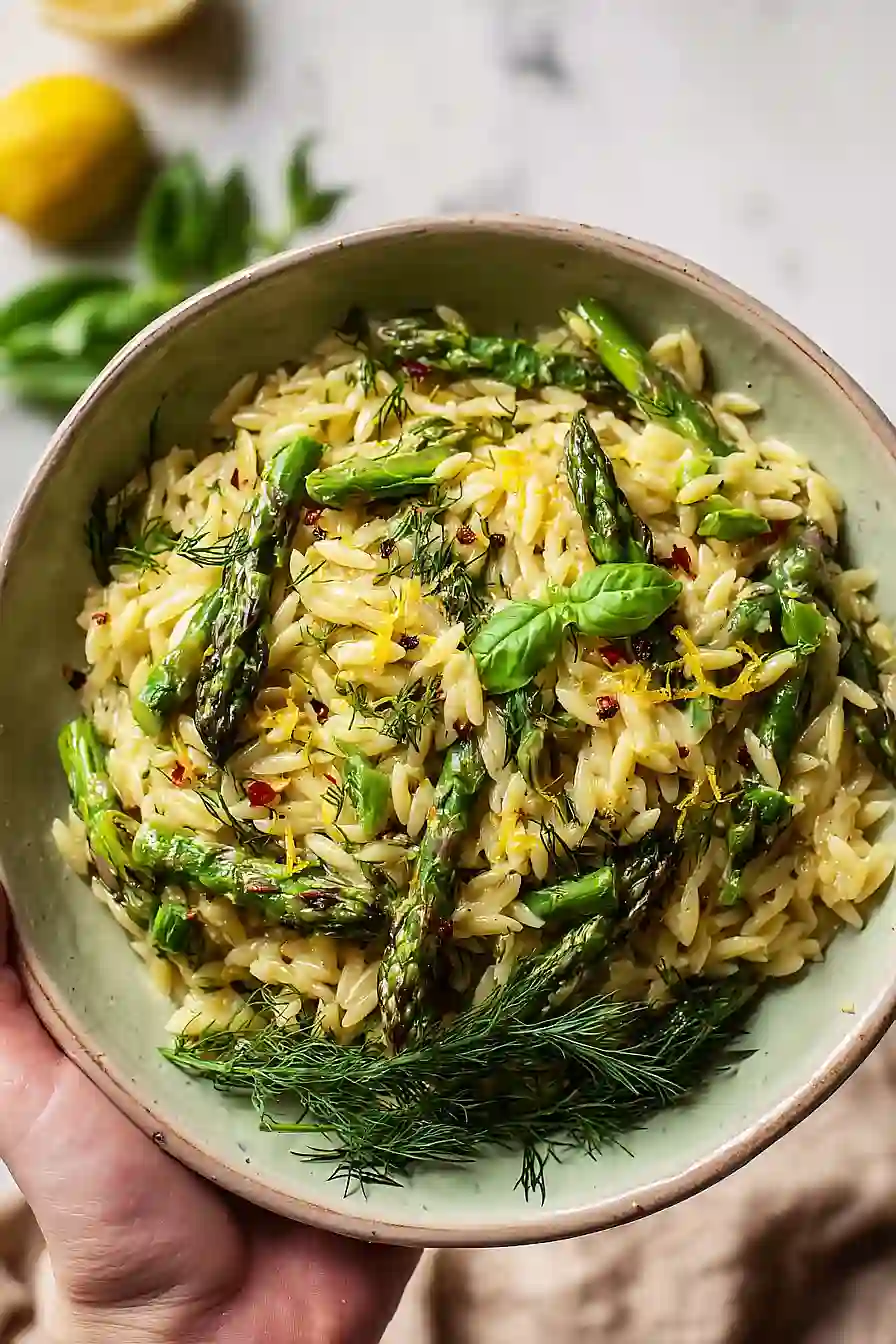
Creamy Asparagus Orzo
Ingredients
Method
- Mince your garlic cloves and set aside. Zest the lemon, then cut it in half and juice both halves into a small bowl—set the juice aside. Tear the basil into small pieces (I find tearing rather than chopping preserves the delicate aroma better). Measure out the dill, parmesan, chili flakes, salt, and pepper into separate small bowls for easy access. Toast the pine nuts in a dry skillet over medium heat for 2-3 minutes, shaking occasionally, until fragrant and lightly golden, then set aside on a plate.
- Bring a large pot of salted water to a boil over high heat. Add the orzo and cook for about 8-10 minutes until just under al dente (it will finish cooking with the residual heat). During the last 2 minutes, add the trimmed asparagus pieces to the same pot. Drain everything in a colander, then set aside—don't rinse, as the starch helps bind the dish.
- In a medium bowl, whisk together the olive oil, lemon juice, minced garlic, parmesan, basil, dill, lemon zest, and chili flakes. This emulsion of oil, acid, and aromatics is where all the brightness and flavor live—I like to let it sit for a minute so the flavors can meld before using it. Season with a small pinch of salt and pepper.
- Return the drained orzo and asparagus to the pot over low heat. Add the butter and stir gently for about 1 minute until it melts and coats everything. Remove from heat and pour in the sauce mixture from Step 3, stirring gently and continuously until everything is evenly coated and warmed through—about 1-2 minutes. I like to keep the heat low at this point so the heat doesn't wilt the fresh herbs or cook off the delicate lemon aroma.
- Taste the dish and add more salt, pepper, or chili flakes as needed—remember the pasta water was salted, so you may need less than expected. Transfer to a serving bowl or plates and top with the toasted pine nuts from Step 1. Serve immediately while warm and the herbs are still vibrant.