Here is my favorite rhubarb galette recipe, with a buttery, flaky homemade crust, and a filling that combines tart rhubarb with sweet peaches, brown sugar, and a hint of vanilla and lemon.
This rustic galette is perfect for spring and summer when rhubarb and peaches are in season. I love making it because it’s easier than pie—no need for a perfect crust or fancy crimping. Just fold the edges over and you’re done!
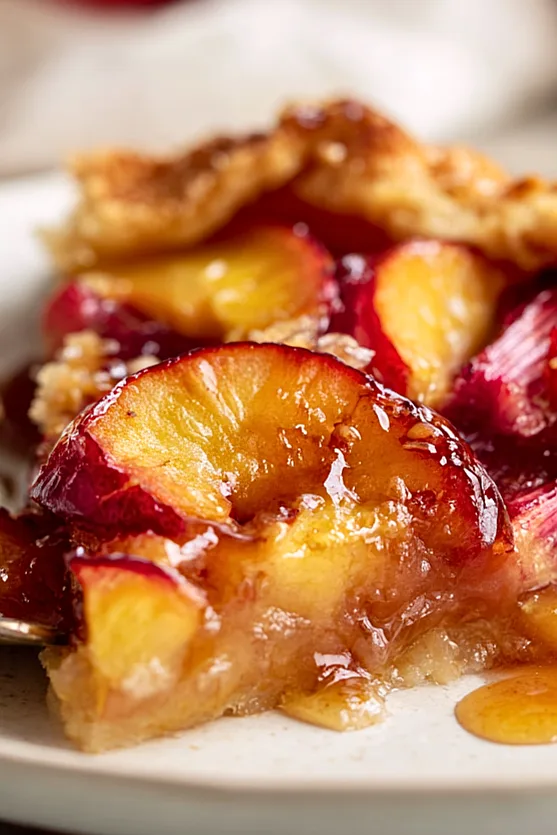
Why You’ll Love This Rhubarb Galette
- Rustic, beginner-friendly dessert – Galettes are much more forgiving than traditional pies since the free-form shape means you don’t need perfect crimping skills or a pie dish.
- Perfect balance of sweet and tart – The tangy rhubarb pairs beautifully with sweet peaches, creating a flavor combination that’s not too sugary but still satisfying.
- Impressive presentation – This galette looks like it came from a bakery, but it’s surprisingly simple to make at home with just a few basic ingredients.
- Great for using seasonal produce – When rhubarb and peaches are in season, this recipe is the perfect way to showcase their fresh flavors in a homemade dessert.
What Kind of Rhubarb Should I Use?
For this galette, you can use either red or green rhubarb – both will taste great, though the red variety will give you a prettier pink color in your filling. Look for stalks that are firm and crisp, avoiding any that feel soft or look dried out at the ends. Thinner stalks tend to be more tender than the thicker ones, but either will work just fine as long as you slice them thin. Just remember to trim off and discard the leaves if they’re still attached, since rhubarb leaves aren’t safe to eat – stick to using only the stalks for your galette.

Options for Substitutions
This galette is pretty forgiving when it comes to swaps, so here are some options if you need them:
- Peaches: If peaches aren’t in season, try nectarines, apricots, or even plums. You can also use frozen peaches – just thaw them completely and drain off any excess liquid before using.
- Rhubarb: Fresh rhubarb is best here since it holds its shape during baking. If you only have frozen rhubarb, thaw it first and pat it dry with paper towels to remove extra moisture, or your galette might get soggy.
- Apple cider vinegar: White vinegar or lemon juice work just as well in the dough. The acid helps make the crust flaky, so don’t skip it entirely.
- Cornstarch: You can use tapioca starch or arrowroot powder in the same amount. Regular flour works too, but use about 6 tablespoons instead of ¼ cup.
- Butter: For the crust, butter is really important for that flaky texture and rich flavor, so I’d recommend sticking with it if possible. In a pinch, you could use shortening, but the taste won’t be quite the same.
- Sanding sugar: Regular granulated sugar works fine for sprinkling on top. It won’t have that same sparkly crunch, but it’ll still give you a nice sweet finish.
Watch Out for These Mistakes While Baking
The biggest mistake when making a galette is working with warm butter in your dough, which leads to a tough, greasy crust instead of a flaky one – keep your butter cold and work quickly, or pop the dough back in the fridge if it starts to feel soft.
Rhubarb releases a lot of liquid as it bakes, so skipping the cornstarch or using too little will leave you with a watery filling that soaks through your crust, and make sure to slice your rhubarb thin so it cooks at the same rate as the peaches.
Don’t overfill the center or fold your edges too tightly, as the fruit needs room to bubble and the crust needs space to crisp up – leave that 2-inch border and give yourself some wiggle room.
Finally, resist the urge to slice into your galette right away, since letting it cool for at least 20 minutes allows the filling to set and prevents it from running all over your plate.
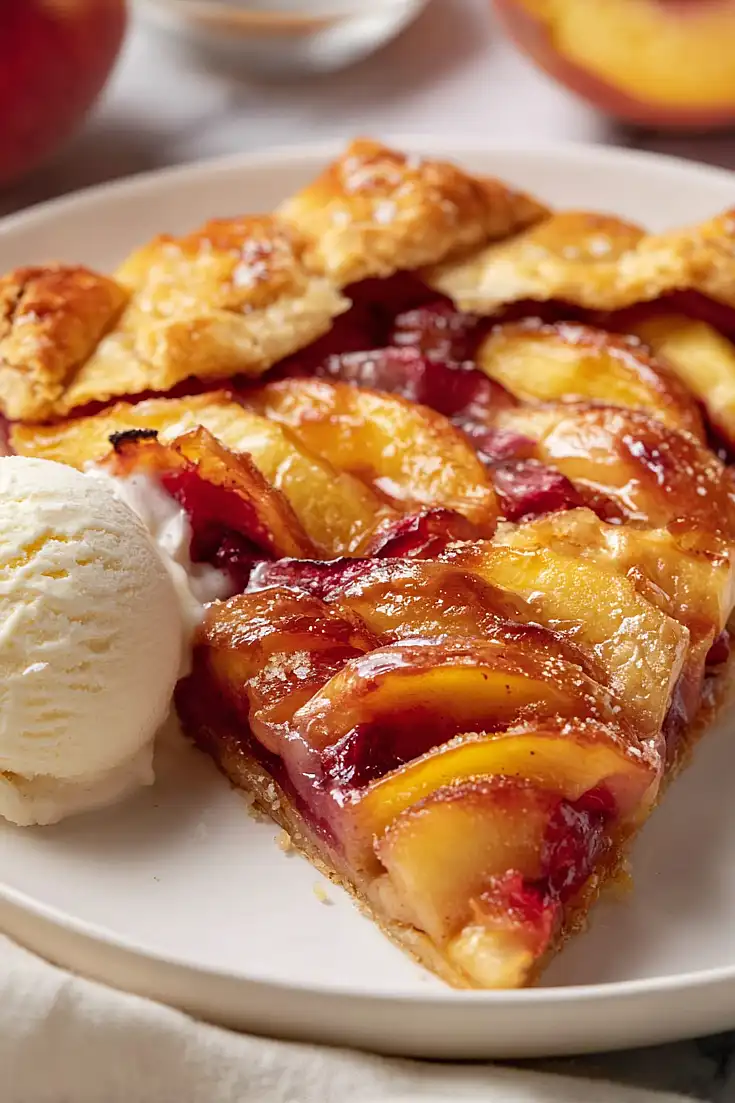
What to Serve With Rhubarb Galette?
A warm slice of rhubarb galette is absolutely perfect with a scoop of vanilla ice cream or some freshly whipped cream on top – the cold creaminess balances out the tart fruit filling so well. If you’re serving this for brunch, it pairs nicely with a hot cup of coffee or tea, and maybe some Greek yogurt on the side for a lighter option. For a fancier dessert spread, you could add some fresh berries alongside or even a drizzle of honey over the top. This galette also works great as part of a summer picnic spread with other fresh fruit and some cheese.
Storage Instructions
Store: This galette is best enjoyed the day it’s made, but you can keep leftovers covered loosely with foil at room temperature for up to 2 days. The crust might soften a bit, but it’ll still taste great with your morning coffee or as an afternoon snack.
Refrigerate: If you need to keep it longer, store the galette in the fridge in an airtight container for up to 4 days. The fruit filling stays fresh and juicy this way, though the crust will lose some of its crispness.
Warm Up: To bring back that fresh-baked taste, reheat slices in a 350°F oven for about 10 minutes. This helps crisp up the crust again and warms the filling nicely. You can also enjoy it cold straight from the fridge if you prefer!
| Preparation Time | 30-40 minutes |
| Cooking Time | 45-60 minutes |
| Total Time | 75-100 minutes |
| Level of Difficulty | Medium |
| Servings | 8 slices |
Estimated Nutrition
Estimated nutrition for the whole recipe (without optional ingredients):
- Calories: 2100-2300
- Protein: 23-27 g
- Fat: 70-80 g
- Carbohydrates: 370-410 g
Ingredients
For the crust:
- 1 1/2 cups King Arthur all-purpose flour
- 1 tablespoon sugar
- 1 teaspoon salt
- 10 tablespoons cold Kerrygold unsalted butter
- 3 tablespoons ice cold water
- 1/2 tablespoon vinegar
For the filling:
- 3 cups peaches (peeled and sliced into 1/2-inch wedges)
- 3 cups rhubarb (trimmed and cut into 1/2-inch pieces)
- 1/2 cup brown sugar
- 1/2 cup granulated sugar
- 1/3 cup cornstarch
- 1/4 teaspoon salt
- 1 teaspoon vanilla extract
- 1 teaspoon lemon zest
For the finish:
- 1 egg
- 1 tablespoon water
- 2 tablespoons sanding sugar
Step 1: Make and Chill the Pie Dough
- 1 1/2 cups King Arthur all-purpose flour
- 1 tablespoon sugar
- 1 teaspoon salt
- 10 tablespoons cold Kerrygold unsalted butter
- 3 tablespoons ice cold water
- 1/2 tablespoon vinegar
Combine flour, sugar, and salt in a food processor and pulse to combine.
Cut the cold butter into small cubes and add to the flour mixture, pulsing until the mixture resembles coarse breadcrumbs with some pea-sized butter pieces remaining—this creates a flaky crust.
Add the ice water and vinegar, pulsing just until the dough comes together without overworking it.
Shape into a disk, wrap in plastic wrap, and refrigerate for at least 2 hours, or freeze for 1 hour if you’re short on time.
I find that chilling the dough thoroughly prevents shrinkage during baking and makes it much easier to work with.
Step 2: Prepare the Fruit Filling
- 3 cups peaches
- 3 cups rhubarb
- 1/2 cup brown sugar
- 1/2 cup granulated sugar
- 1/3 cup cornstarch
- 1/4 teaspoon salt
- 1 teaspoon vanilla extract
- 1 teaspoon lemon zest
While the dough chills, prepare your fruit.
Peel the peaches (blanch in boiling water for 30 seconds if the skin doesn’t slip off easily) and slice into 1/2-inch wedges.
Trim the rhubarb and cut into 1/2-inch pieces.
In a bowl, whisk together both sugars, cornstarch, and salt.
Add the vanilla extract and lemon zest to the dry mixture, then gently fold in the prepared peaches and rhubarb until evenly coated.
Let this sit while you finish preparing—the rhubarb will start releasing its juice, which the cornstarch will thicken.
Step 3: Prepare Egg Wash and Preheat Oven
- 1 egg
- 1 tablespoon water
Whisk together the egg and water in a small bowl until well combined.
Set this egg wash aside.
Preheat your oven to 400°F, making sure the racks are positioned so a baking sheet will fit comfortably in the center.
Step 4: Roll Out and Assemble the Galette
- pie dough from Step 1
- fruit filling from Step 2
Remove the chilled dough from the refrigerator and let it sit at room temperature for 5 minutes to become slightly pliable.
Place a sheet of parchment paper on your work surface and roll the dough into a 10-12 inch circle about 1/4 inch thick, working from the center outward.
If the dough cracks, simply press it back together.
Transfer the rolled dough (still on parchment) to a baking sheet.
Mound the fruit filling from Step 2 in the center, leaving about a 2-inch border of dough around the edges.
Fold the dough edges up and over the fruit, creasing and overlapping slightly as you work your way around—it’s meant to look rustic and natural.
I like to leave some fruit peeking through the center rather than trying to enclose it completely, which keeps the galette authentic and charming.
Step 5: Finish and Bake the Galette
- egg wash from Step 3
- 2 tablespoons sanding sugar
Brush the exposed dough edges with the egg wash from Step 3, working carefully to coat all the crust without letting it pool on the parchment.
Sprinkle the sanding sugar evenly over the egg-washed dough (the regular granulated sugar from the filling won’t give you that nice sparkle and crunch).
Place the baking sheet in the preheated 400°F oven and bake for 45 minutes, until the crust is golden brown and the fruit filling is bubbling around the edges.
The filling may release some juice that bubbles out onto the parchment—this is normal and actually means your fruit is properly cooked.
Step 6: Cool and Serve
Remove the galette from the oven and let it cool on the baking sheet for at least 15-20 minutes before cutting.
This cooling time allows the filling to set slightly so it won’t run all over the plate when you serve it.
Slide the entire galette onto a cutting board or serve directly from the parchment.
Cut into wedges and serve warm or at room temperature, optionally with whipped cream or vanilla ice cream.
Golden Rhubarb Galette with Peaches
Ingredients
Method
- Combine flour, sugar, and salt in a food processor and pulse to combine. Cut the cold butter into small cubes and add to the flour mixture, pulsing until the mixture resembles coarse breadcrumbs with some pea-sized butter pieces remaining—this creates a flaky crust. Add the ice water and vinegar, pulsing just until the dough comes together without overworking it. Shape into a disk, wrap in plastic wrap, and refrigerate for at least 2 hours, or freeze for 1 hour if you're short on time. I find that chilling the dough thoroughly prevents shrinkage during baking and makes it much easier to work with.
- While the dough chills, prepare your fruit. Peel the peaches (blanch in boiling water for 30 seconds if the skin doesn't slip off easily) and slice into 1/2-inch wedges. Trim the rhubarb and cut into 1/2-inch pieces. In a bowl, whisk together both sugars, cornstarch, and salt. Add the vanilla extract and lemon zest to the dry mixture, then gently fold in the prepared peaches and rhubarb until evenly coated. Let this sit while you finish preparing—the rhubarb will start releasing its juice, which the cornstarch will thicken.
- Whisk together the egg and water in a small bowl until well combined. Set this egg wash aside. Preheat your oven to 400°F, making sure the racks are positioned so a baking sheet will fit comfortably in the center.
- Remove the chilled dough from the refrigerator and let it sit at room temperature for 5 minutes to become slightly pliable. Place a sheet of parchment paper on your work surface and roll the dough into a 10-12 inch circle about 1/4 inch thick, working from the center outward. If the dough cracks, simply press it back together. Transfer the rolled dough (still on parchment) to a baking sheet. Mound the fruit filling from Step 2 in the center, leaving about a 2-inch border of dough around the edges. Fold the dough edges up and over the fruit, creasing and overlapping slightly as you work your way around—it's meant to look rustic and natural. I like to leave some fruit peeking through the center rather than trying to enclose it completely, which keeps the galette authentic and charming.
- Brush the exposed dough edges with the egg wash from Step 3, working carefully to coat all the crust without letting it pool on the parchment. Sprinkle the sanding sugar evenly over the egg-washed dough (the regular granulated sugar from the filling won't give you that nice sparkle and crunch). Place the baking sheet in the preheated 400°F oven and bake for 45 minutes, until the crust is golden brown and the fruit filling is bubbling around the edges. The filling may release some juice that bubbles out onto the parchment—this is normal and actually means your fruit is properly cooked.
- Remove the galette from the oven and let it cool on the baking sheet for at least 15-20 minutes before cutting. This cooling time allows the filling to set slightly so it won't run all over the plate when you serve it. Slide the entire galette onto a cutting board or serve directly from the parchment. Cut into wedges and serve warm or at room temperature, optionally with whipped cream or vanilla ice cream.