Low and slow is the only way to do baked beans, and I’m not apologizing for the time commitment.
Soak the navy beans overnight. Parboil them the next morning. Then let the slow cooker do its thing for 6-8 hours while your house slowly fills with the smell of maple, molasses, and caramelizing onions. (It’s a good smell. Your neighbors will be jealous.)
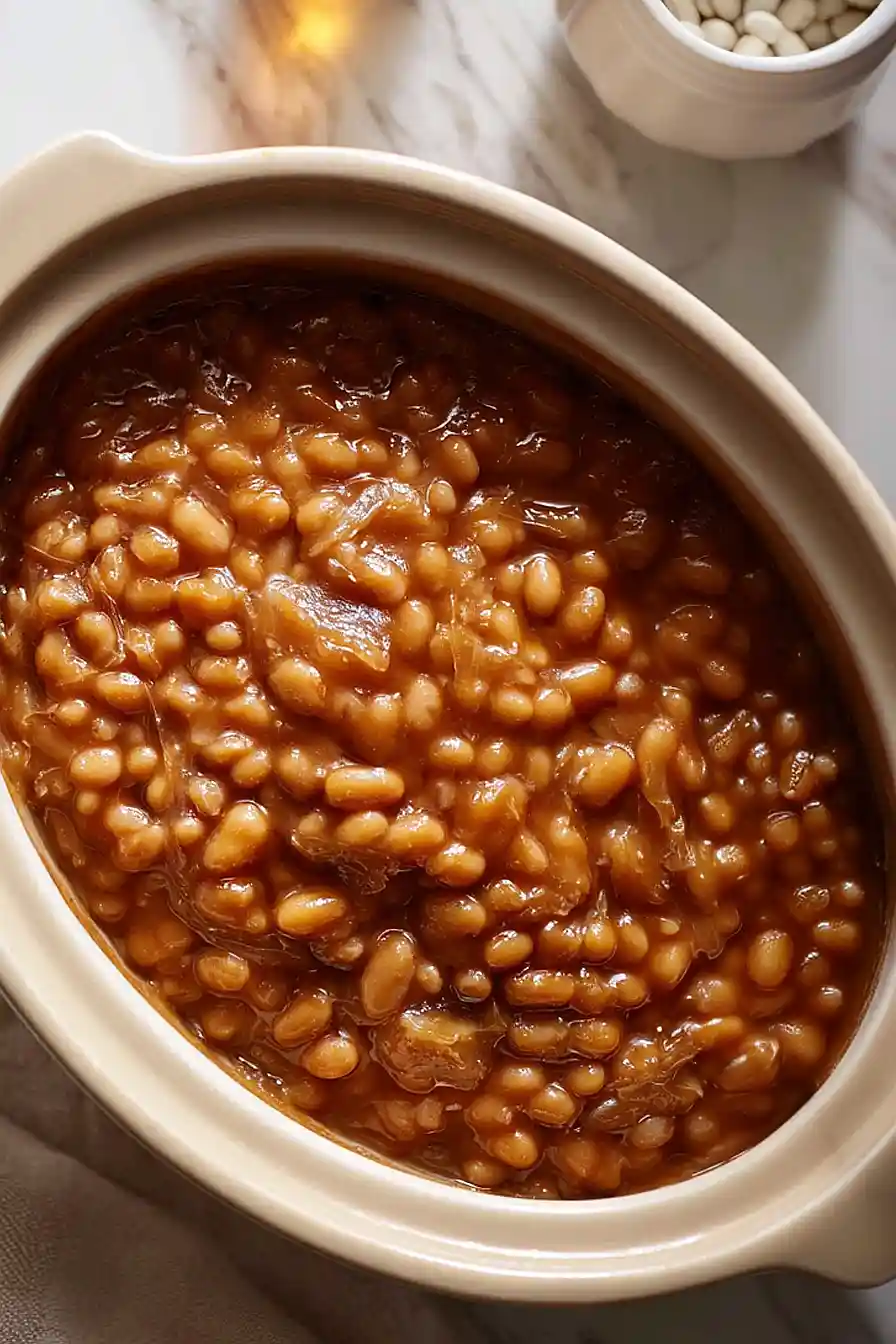
The result? Sweet, smoky, sticky, tangy, deeply savory beans that ruin every other baked bean recipe for you forever. Spooned over cornbread. Alongside BBQ chicken. Eaten at 9pm standing at the counter in your socks. All valid serving methods.
Dry Beans vs. Canned: Does It Matter?
Dry beans WIN here. Full stop.
Canned navy beans are already soft and will turn to mush during the 6-8 hour slow cook, leaving you with bean paste instead of distinct beans. Dry beans hold their shape AND soak up that maple-molasses sauce like little sponges.
The overnight soak isn’t optional busywork either. It cuts cook time AND removes those gas-producing compounds (you know exactly what I mean).
If you absolutely must use canned, rinse them well, drop cook time to 30-45 minutes, and accept thinner sauce since canned beans release water. Just plan ahead and do the dry version… it’s worth the wait.
Slow Cooker vs. Stovetop vs. Oven
Three methods work here, each with real tradeoffs. Pick based on your time, not on what sounds fanciest.
- SLOW COOKER: 6-8 hours on low. Hands-off, gentle heat, minimal evaporation. Start with 2.5 cups water instead of 3 (you won’t lose much to steam). Resist peeking…every lid lift adds cooking time. Yes, even a quick one.
- STOVETOP: 4 hours at a gentle simmer. FASTER overall but demands stirring every 30-45 minutes. Expect more liquid loss, so keep extra water nearby. A heavy-bottomed pot prevents scorching on the bottom.
- OVEN: Use ONLY for the finishing step (325°F, uncovered, 30 minutes). This concentrates the maple and molasses. Watch the EDGES so they darken but don’t burn. Skip this step and you’re leaving flavor behind.
How to Store & Reheat Baked Beans
STORE your leftover maple baked beans in an airtight container. They’ll keep in the fridge for UP TO 5 DAYS. For longer storage, freeze portions for up to 3 months.
REHEAT on the stovetop over medium-low heat, stirring occasionally until hot. Add a splash of water if needed to loosen the sauce. DO NOT MICROWAVE WITH LID ON… it can get messy.
Other Recipes You’ll Love
- Sugar Baked Beans with Bushes Baked Beans
- Loaded Baked Beans
- Best Molasses Baked Beans
- Cowboy Pasta Salad
- Cheesy BBQ Chicken Baked Potatoes
- Best Amish Potato Salad with Cooked Dressing
Estimated Nutrition
Estimated nutrition for the whole recipe (without optional ingredients):
- Calories: 1800-2000
- Protein: 85-95 g
- Fat: 3-5 g
- Carbohydrates: 370-410 g
Ingredients
For the beans:
- 1 lb dry navy beans (I always use Goya brand)
- water (enough to cover the beans by at least 2 inches)
For the seasoning:
- 1 large yellow onion (finely diced into 1/4-inch pieces)
- 1/3 cup maple syrup (Grade A Dark for robust flavor)
- 1/4 cup brown sugar (packed firmly)
- 2 tbsp molasses
- 3 tbsp tomato paste
- 2 tsp mustard powder
- 1 1/2 tsp salt
- 1/4 tsp ground black pepper
- 1/2 tsp smoked paprika
- 1 tbsp apple cider vinegar
- 3 cups water
Step 1: Soak the Navy Beans
- 1 lb dry navy beans
- water
Rinse the dry navy beans under cold water and pick through them to remove any debris or discolored beans.
Place the cleaned beans in a large pot and cover with water by at least 2 inches.
Let them soak for 8-12 hours (or overnight) to soften and reduce cooking time.
This soaking step is essential because it helps the beans cook evenly and reduces the gas-producing compounds that can cause digestive discomfort.
Step 2: Simmer Until Partially Tender
- soaked beans from Step 1
- water
Drain and rinse the soaked beans thoroughly.
Place them in a large pot, cover with fresh water, and bring to a boil over high heat.
Once boiling, reduce the heat and simmer for 45 minutes until the beans are partially cooked but still firm (they should not be fully tender yet).
This parboiling step removes excess starch and ensures the beans will have the right texture when finished cooking with the sauce.
Drain and rinse the beans again before proceeding.
Step 3: Whisk the Maple Sauce
- 1 large yellow onion
- 1/3 cup maple syrup
- 1/4 cup brown sugar
- 2 tbsp molasses
- 3 tbsp tomato paste
- 2 tsp mustard powder
- 1 1/2 tsp salt
- 1/4 tsp ground black pepper
- 1/2 tsp smoked paprika
- 1 tbsp apple cider vinegar
While the beans are parboiling, dice the onion into 1/4-inch pieces.
In a small bowl, whisk together the maple syrup, brown sugar, molasses, tomato paste, mustard powder, salt, black pepper, smoked paprika, and apple cider vinegar until well combined and smooth.
I like to make this flavor mixture in advance because it ensures the spices are evenly distributed and won’t create clumps when added to the beans.
Step 4: Simmer Low and Slow
- parboiled beans from Step 2
- diced onion from Step 3
- flavor mixture from Step 3
- 3 cups water
Transfer the parboiled beans from Step 2 to a slow cooker or heavy-bottomed pot.
Add the diced onion and the flavor mixture from Step 3, then add 3 cups of water and stir well to combine.
Cook on low in the slow cooker for 6-8 hours, or if using a stovetop pot, bring to a gentle simmer and cook for about 4 hours, stirring occasionally.
The beans should become very tender and the sauce should thicken slightly.
If the beans seem dry at any point, add a bit more water to keep them submerged.
Step 5: Bake for Rich Caramelization
- cooked beans from Step 4
If you prefer a more concentrated, caramelized flavor and a slightly thicker sauce, transfer the cooked beans to an oven-safe baking dish (9×13 inch or similar) and bake uncovered at 325°F for about 30 minutes.
This step is optional but adds depth and allows some of the liquid to reduce, intensifying the maple and molasses flavors.
Watch for the edges of the beans to slightly darken—this creates wonderful flavor complexity.
Easy Baked Beans with Maple Syrup
Ingredients
Method
- Rinse the dry navy beans under cold water and pick through them to remove any debris or discolored beans. Place the cleaned beans in a large pot and cover with water by at least 2 inches. Let them soak for 8-12 hours (or overnight) to soften and reduce cooking time. This soaking step is essential because it helps the beans cook evenly and reduces the gas-producing compounds that can cause digestive discomfort.
- Drain and rinse the soaked beans thoroughly. Place them in a large pot, cover with fresh water, and bring to a boil over high heat. Once boiling, reduce the heat and simmer for 45 minutes until the beans are partially cooked but still firm (they should not be fully tender yet). This parboiling step removes excess starch and ensures the beans will have the right texture when finished cooking with the sauce. Drain and rinse the beans again before proceeding.
- While the beans are parboiling, dice the onion into 1/4-inch pieces. In a small bowl, whisk together the maple syrup, brown sugar, molasses, tomato paste, mustard powder, salt, black pepper, smoked paprika, and apple cider vinegar until well combined and smooth. I like to make this flavor mixture in advance because it ensures the spices are evenly distributed and won’t create clumps when added to the beans.
- Transfer the parboiled beans from Step 2 to a slow cooker or heavy-bottomed pot. Add the diced onion and the flavor mixture from Step 3, then add 3 cups of water and stir well to combine. Cook on low in the slow cooker for 6-8 hours, or if using a stovetop pot, bring to a gentle simmer and cook for about 4 hours, stirring occasionally. The beans should become very tender and the sauce should thicken slightly. If the beans seem dry at any point, add a bit more water to keep them submerged.
- If you prefer a more concentrated, caramelized flavor and a slightly thicker sauce, transfer the cooked beans to an oven-safe baking dish (9×13 inch or similar) and bake uncovered at 325°F for about 30 minutes. This step is optional but adds depth and allows some of the liquid to reduce, intensifying the maple and molasses flavors. Watch for the edges of the beans to slightly darken—this creates wonderful flavor complexity.