EIGHT. HOURS. In the oven.
And I know what you’re thinking. For baked beans? But hear me out.
This is the original, slow-and-low, make-your-whole-house-smell-incredible method for beans so thick, glossy, and packed with smoky-sweet flavor that they ruin you for the canned stuff forever. It’s a weekend project, sure, but most of it is just… waiting.
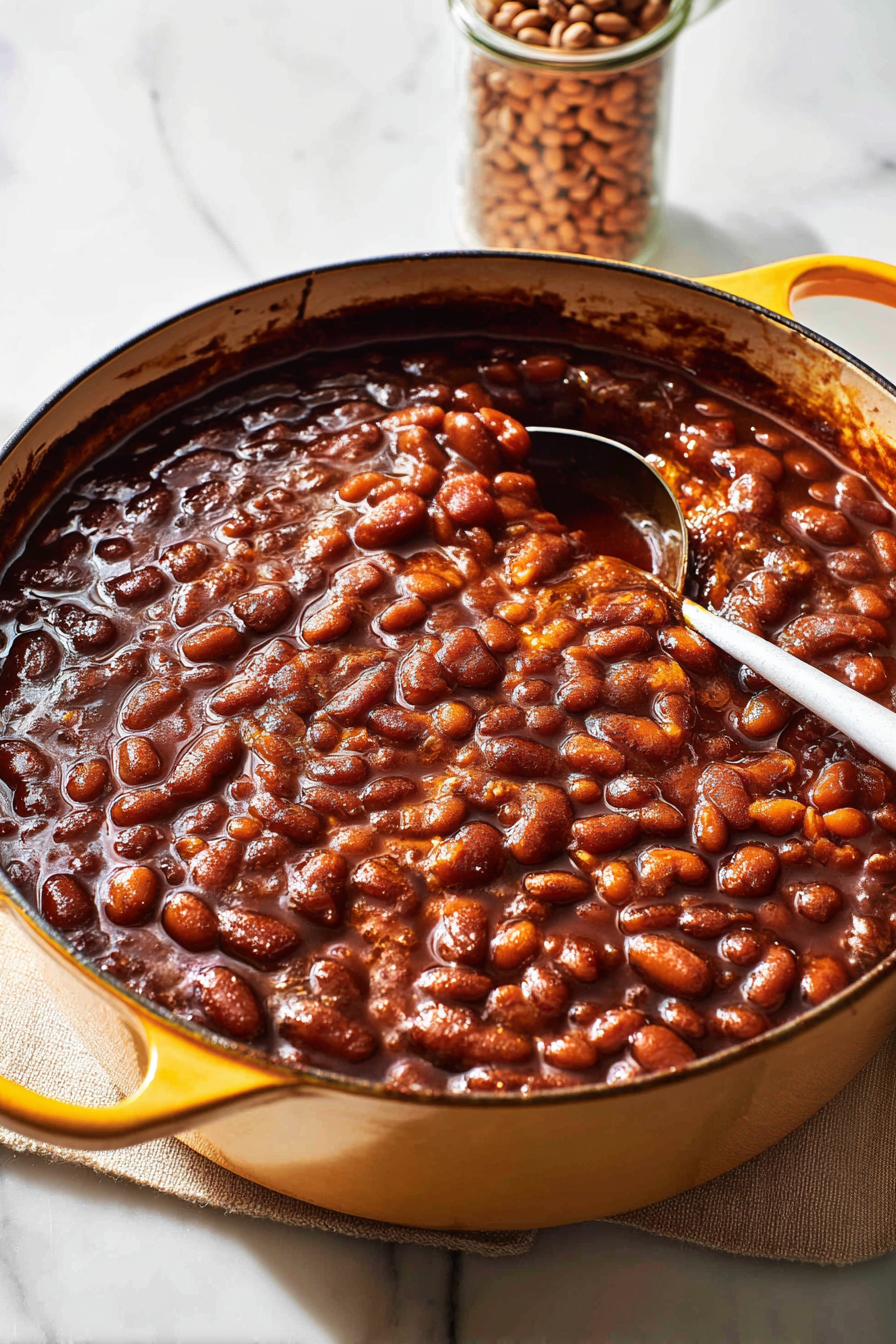
The payoff is beans that are tender, saucy, and deeply savory, with little bits of bacon and caramelized onion in every bite. It’s the kind of side dish that steals the show at a cookout and makes people ask for your “secret.” There is no secret, really. Just time and good, simple ingredients.
Why Bake Beans Low and Slow?
Low and slow is the entire secret to great baked beans. Rushing this process gives you tough beans and thin sauce.
- At 250°F, the gentle heat slowly breaks down the beans’ fibers until they’re creamy, not mushy.
- The long, slow simmer gives the molasses, bacon, and spices TIME to deeply penetrate each bean.
- Low heat allows the sauce to reduce and thicken naturally into a rich glaze, instead of just boiling away.
- Stirring every couple of hours prevents sticking and ensures every bean gets equal time in the flavorful sauce.
Storage & Reheating Tips
These beans actually taste BETTER the next day once the molasses and bacon have time to get cozy together. Transfer cooled beans to an airtight container and they keep in the fridge for up to 5 days
The sauce WILL thicken as it sits (starches doing their thing), so add a splash of water or stock before reheating. Stovetop on low heat wins here, just stir occasionally so the bottom doesn’t scorch
Microwave works in a pinch (cover loosely, stir every minute) but you get less control over texture. For longer storage, freeze in portion-sized containers for up to 3 months
Thaw overnight in the fridge before rewarming. Just skip the freezer if your pot is ceramic (thermal shock waiting to happen
Related Recipes
- Baked Beans with Maple Syrup
- Sugar Baked Beans with Bushes Baked Beans
- Loaded Baked Beans
- Gluten Free Macaroni Salad
- Potato Salad No Mayo
- Cowboy Pasta Salad
Estimated Nutrition
Estimated nutrition for the whole recipe (without optional ingredients):
- Calories: 2100-2300
- Protein: 85-95 g
- Fat: 50-60 g
- Carbohydrates: 340-370 g
Ingredients
For the beans:
- 2 cups navy beans (sorted and rinsed of debris)
- 6 cups water
- 1/2 tsp baking soda
For the sauce and aromatics:
- 1 cup ketchup (I use Heinz for the best balance of sweetness)
- 1/2 cup molasses (I prefer Grandma’s Original for deep flavor)
- 1 tablespoon cider vinegar
- 1/4 cup brown sugar
- 1 1/2 tsp mustard powder
- 1/2 tsp ground black pepper
- 1/2 tsp smoked paprika
- 1/2 tsp kosher salt
- 1 onion (finely diced into 1/4-inch pieces)
- 8 strips bacon (cut into 1-inch pieces before frying)
Step 1: Sort and Soften Beans
- 2 cups navy beans
- 6 cups water
- 1/2 tsp baking soda
Sort through the navy beans to remove any debris or discolored beans, then rinse them thoroughly under cold water.
Place the cleaned beans in a large pot and cover with 6 cups of water.
Bring to a boil over high heat, then add the baking soda—this helps soften the beans and reduces cooking time.
Cover the pot and reduce heat to maintain a gentle simmer for 30 minutes.
The baking soda will create some foam, which is normal.
After simmering, drain the beans in a colander and reserve 3½ cups of the cooking liquid (this starchy liquid helps create the sauce).
Rinse the beans briefly under cool water and set aside.
Step 2: Sauté Bacon and Aromatics
- 8 strips bacon
- 1 onion
While the beans simmer, cut the bacon into 1-inch pieces and cook in a large skillet over medium-high heat until crispy, about 8-10 minutes.
Remove the bacon with a slotted spoon and set aside, leaving about 2 tablespoons of bacon fat in the pan.
Add the finely diced onion to the same skillet and sauté in the bacon fat for 3-4 minutes, stirring occasionally, until softened and slightly translucent.
This builds a flavorful base for the beans.
I prefer to cook the bacon and onion together this way because the bacon fat adds incredible depth to the vegetables.
Step 3: Whisk the Sweet Glaze
- 1 cup ketchup
- 1/2 cup molasses
- 1 tablespoon cider vinegar
- 1/4 cup brown sugar
- 1 1/2 tsp mustard powder
- 1/2 tsp ground black pepper
- 1/2 tsp smoked paprika
- 1/2 tsp kosher salt
Preheat your oven to 250°F.
In a large pot or Dutch oven, combine the ketchup, molasses, cider vinegar, brown sugar, mustard powder, ground black pepper, smoked paprika, and kosher salt.
Stir well until all the dry spices are fully incorporated and the mixture is smooth.
This sauce base is where all the flavor lives—the molasses and ketchup create richness, the vinegar adds brightness, and the spices bring complexity.
Take a moment to taste the sauce base with a spoon to ensure the flavors are balanced before adding the beans.
Step 4: Assemble and Slow Bake
- parboiled beans from Step 1
- 3 1/2 cups reserved bean cooking liquid
- cooked bacon and onions from Step 2
- sauce base from Step 3
Add the parboiled beans from Step 1, the reserved 3½ cups of bean cooking liquid, the cooked bacon and onions from Step 2, and the sauce base from Step 3 into the pot or Dutch oven.
Stir everything together gently but thoroughly, ensuring the beans are evenly coated with the sauce and the liquid is well distributed.
Cover the pot with a lid (aluminum foil works if you don’t have one) and place it in the preheated 250°F oven.
Bake for 8 hours, stirring occasionally—I recommend checking and stirring every 2 hours to prevent sticking and ensure even cooking.
I like to keep the beans slightly soupy after 8 hours; if they look too dry at any point, add a bit more water to maintain a nice consistency.
Step 5: Thicken and Rest
After 8 hours of baking, remove the beans from the oven and stir well.
The beans should be very tender, and the sauce should be thick, rich, and coating each bean.
Taste and adjust seasoning if needed—you can add a pinch more salt or a splash of vinegar for brightness if desired.
Let the beans rest for 5-10 minutes before serving, which allows the flavors to meld and the sauce to set slightly.
Serve warm as a side dish with grilled meats, cornbread, or however you prefer.
Best Molasses Baked Beans
Ingredients
Method
- Sort through the navy beans to remove any debris or discolored beans, then rinse them thoroughly under cold water. Place the cleaned beans in a large pot and cover with 6 cups of water. Bring to a boil over high heat, then add the baking soda—this helps soften the beans and reduces cooking time. Cover the pot and reduce heat to maintain a gentle simmer for 30 minutes. The baking soda will create some foam, which is normal. After simmering, drain the beans in a colander and reserve 3½ cups of the cooking liquid (this starchy liquid helps create the sauce). Rinse the beans briefly under cool water and set aside.
- While the beans simmer, cut the bacon into 1-inch pieces and cook in a large skillet over medium-high heat until crispy, about 8-10 minutes. Remove the bacon with a slotted spoon and set aside, leaving about 2 tablespoons of bacon fat in the pan. Add the finely diced onion to the same skillet and sauté in the bacon fat for 3-4 minutes, stirring occasionally, until softened and slightly translucent. This builds a flavorful base for the beans. I prefer to cook the bacon and onion together this way because the bacon fat adds incredible depth to the vegetables.
- Preheat your oven to 250°F. In a large pot or Dutch oven, combine the ketchup, molasses, cider vinegar, brown sugar, mustard powder, ground black pepper, smoked paprika, and kosher salt. Stir well until all the dry spices are fully incorporated and the mixture is smooth. This sauce base is where all the flavor lives—the molasses and ketchup create richness, the vinegar adds brightness, and the spices bring complexity. Take a moment to taste the sauce base with a spoon to ensure the flavors are balanced before adding the beans.
- Add the parboiled beans from Step 1, the reserved 3½ cups of bean cooking liquid, the cooked bacon and onions from Step 2, and the sauce base from Step 3 into the pot or Dutch oven. Stir everything together gently but thoroughly, ensuring the beans are evenly coated with the sauce and the liquid is well distributed. Cover the pot with a lid (aluminum foil works if you don't have one) and place it in the preheated 250°F oven. Bake for 8 hours, stirring occasionally—I recommend checking and stirring every 2 hours to prevent sticking and ensure even cooking. I like to keep the beans slightly soupy after 8 hours; if they look too dry at any point, add a bit more water to maintain a nice consistency.
- After 8 hours of baking, remove the beans from the oven and stir well. The beans should be very tender, and the sauce should be thick, rich, and coating each bean. Taste and adjust seasoning if needed—you can add a pinch more salt or a splash of vinegar for brightness if desired. Let the beans rest for 5-10 minutes before serving, which allows the flavors to meld and the sauce to set slightly. Serve warm as a side dish with grilled meats, cornbread, or however you prefer.
Can I use a crockpot rather than the oven?