Finding a bakery-quality bagel that’s actually worth the price can feel impossible sometimes. And when you do find a good spot, those specialty flavors like blueberry are always sold out by mid-morning, or they cost nearly five dollars each. Plus, most store-bought versions are either loaded with artificial flavoring or just plain disappointing.
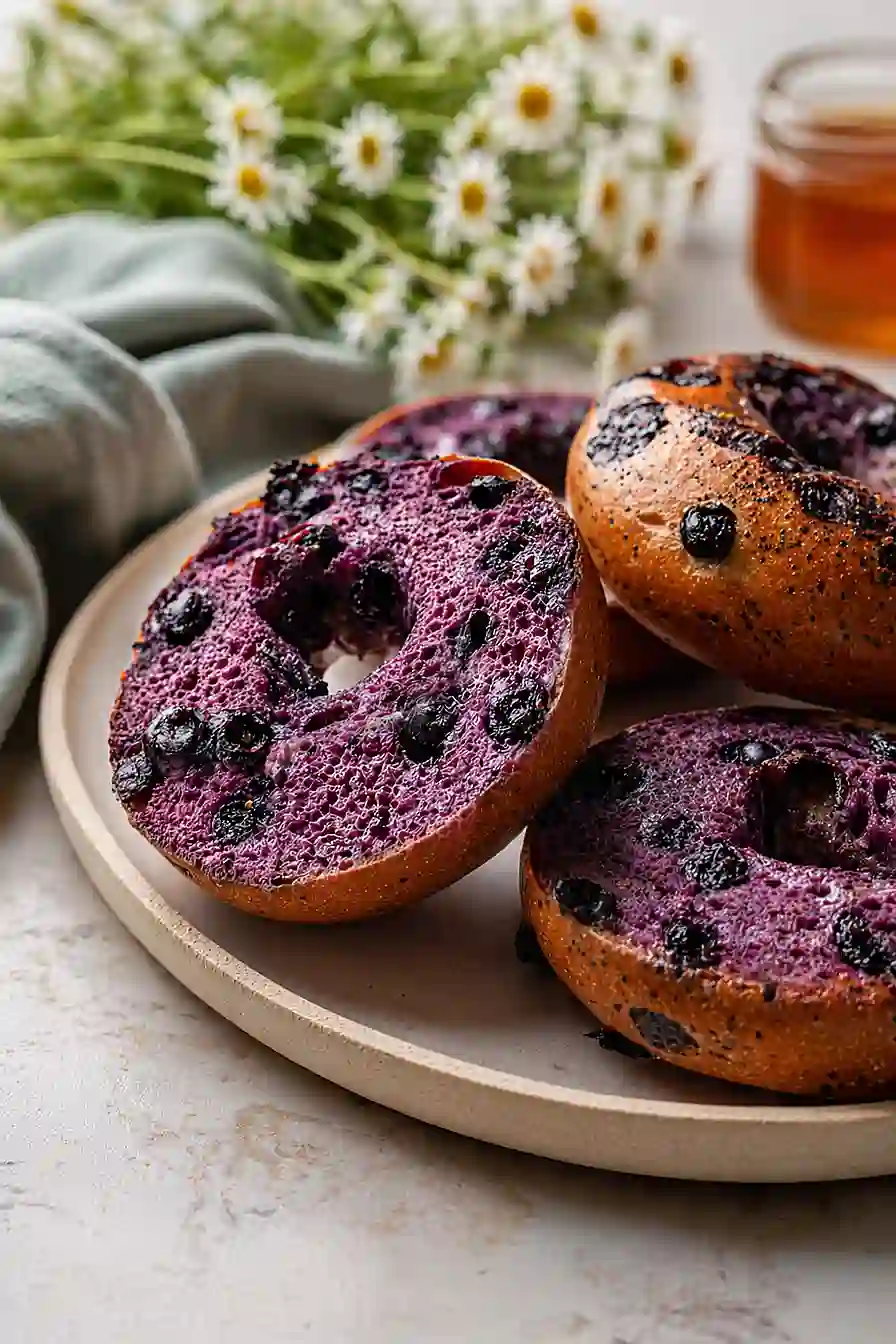
That’s where these homemade blueberry bagels come in: they’re packed with real blueberries (both fresh and dried), surprisingly straightforward to make once you get the hang of it, and cost a fraction of what you’d pay at a fancy bagel shop.
Why You’ll Love These Blueberry Bagels
- Homemade bagels are easier than you think – While they take a bit of time, the actual hands-on work is simple, and there’s nothing quite like pulling warm, fresh bagels out of your own oven.
- Double blueberry flavor – Using both fresh and dried blueberries gives you bursts of fruity sweetness in every bite, making these bagels perfect for breakfast or a snack.
- No special equipment needed – You don’t need a stand mixer or fancy tools—just a large pot for boiling and a baking sheet you already have in your kitchen.
- Freezer-friendly – Make a big batch and freeze them for quick breakfasts throughout the week. Just pop one in the toaster whenever you need it.
- Cheaper than the bakery – Store-bought bagels can add up, especially the fancy flavored ones, but making your own costs just a few dollars for a whole batch.
What Kind of Blueberries Should I Use?
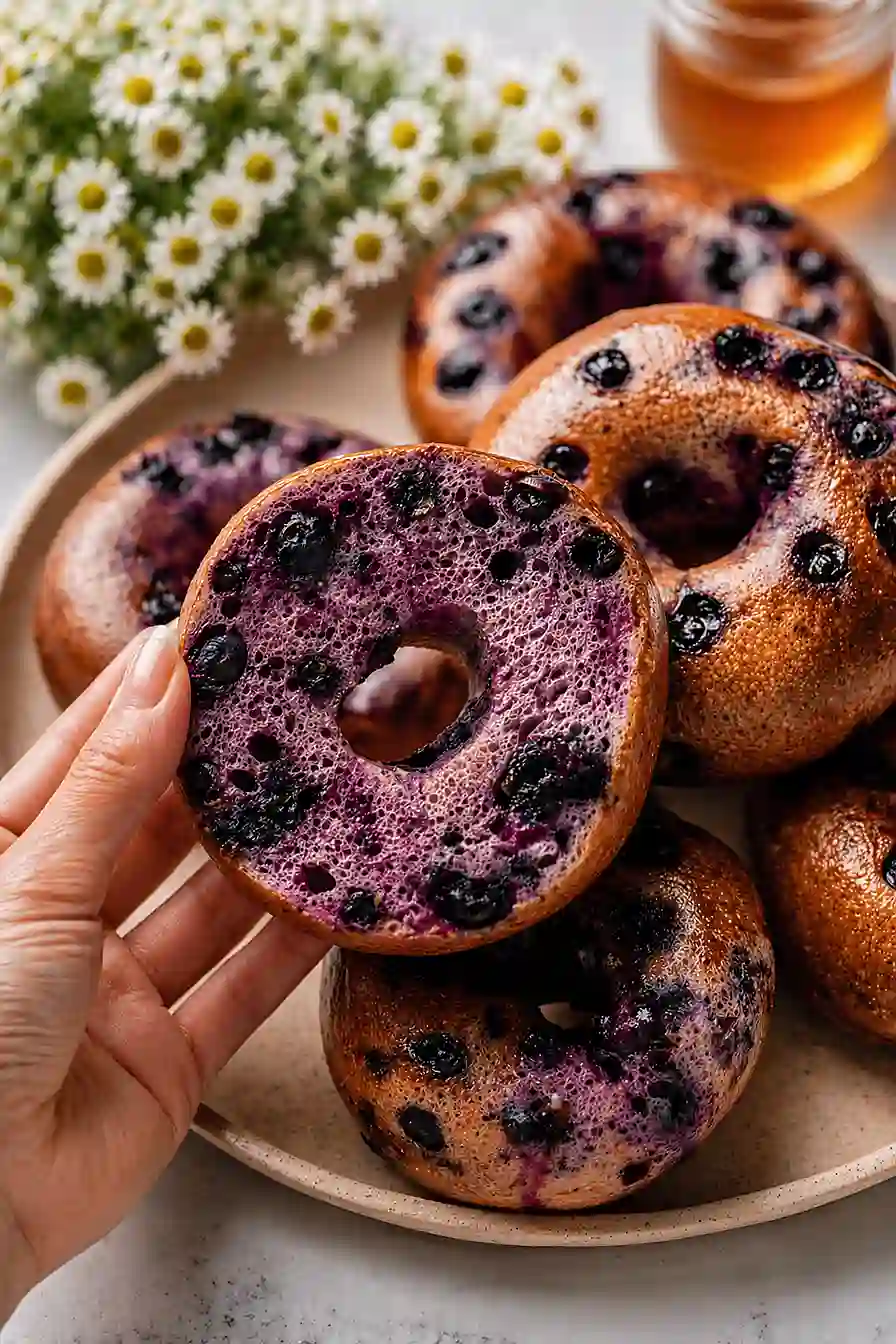
Both fresh and frozen blueberries work great for this recipe, so use whatever you have on hand. If you’re using frozen blueberries, there’s no need to thaw them first – just toss them in as is. Fresh blueberries will give you a slightly brighter flavor, but frozen ones are often more budget-friendly and available year-round. The recipe also calls for dried blueberries, which add little pockets of concentrated sweetness throughout the bagel, so don’t skip those if you can help it. Just make sure your fresh or frozen berries aren’t too mushy or overly ripe, as that can add extra moisture to your dough.
Options for Substitutions
While bagels are pretty specific in their requirements, there’s still some room to play around with a few ingredients:
- Fresh or frozen blueberries: Either fresh or frozen blueberries work great here. If using frozen, don’t thaw them first – just toss them in as is to prevent excess moisture and color bleeding.
- Dried blueberries: Can’t find dried blueberries? Try dried cranberries, raisins, or even chopped dried cherries. You could also leave them out entirely for a lighter blueberry flavor.
- Bread flour: Bread flour is really important for bagels since it creates that chewy texture we all love. All-purpose flour will work in a pinch, but your bagels might turn out a bit softer and less chewy.
- Honey or barley malt syrup: These both add flavor and help create that shiny crust. If you don’t have either, you can use brown sugar or regular granulated sugar instead – about 2 tablespoons mixed into the boiling water.
- Instant or active dry yeast: Both types work fine. Just remember that if you’re using active dry yeast, you’ll need to let it proof in the warm water for about 5 minutes before adding the other ingredients.
- Egg wash: The egg wash gives bagels their golden shine, but you can brush them with milk or melted butter instead if needed.
Watch Out for These Mistakes While Baking
The biggest mistake when making blueberry bagels is adding the blueberry sauce when it’s too hot, which can kill the yeast and prevent your dough from rising – always let it cool to around 110°F before mixing it in.
Skipping the boiling step might seem like a time-saver, but it’s what gives bagels their signature chewy crust, so don’t be tempted to skip straight to baking.
When shaping your bagels, make the hole larger than you think it needs to be (about 2 inches wide) because the dough will puff up during boiling and baking, and you don’t want to end up with rolls instead of bagels.
If you’re using frozen blueberries for the sauce, don’t thaw them first – cook them straight from frozen to avoid excess water that can make your dough too sticky.
What to Serve With Blueberry Bagels?
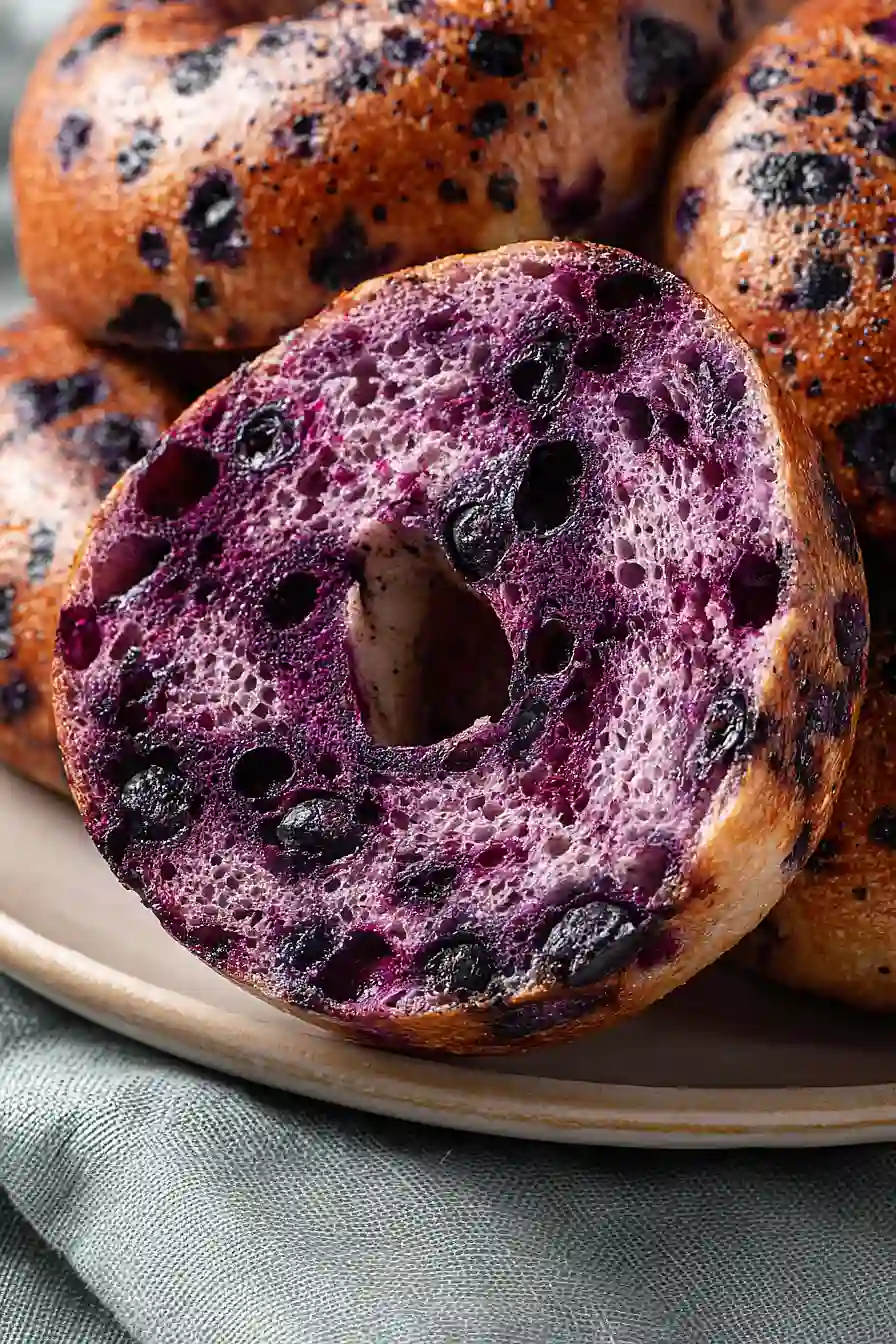
These blueberry bagels are perfect for breakfast or brunch with a generous smear of cream cheese – plain, vanilla, or even lemon cream cheese all work great with the sweet blueberry flavor. I love toasting mine and spreading on some butter or almond butter for a simple but satisfying breakfast. If you’re feeling fancy, try them with ricotta cheese and a drizzle of honey, or make them into a breakfast sandwich with scrambled eggs and a slice of cheese. They’re also really good on their own alongside a hot cup of coffee or tea for an easy morning treat.
Storage Instructions
Store: Keep your blueberry bagels in an airtight container or zip-top bag at room temperature for up to 2 days. After that, they’re best stored in the fridge for up to a week, though they might lose a bit of their chewiness.
Freeze: Bagels are perfect for freezing! Once they’re completely cool, slice them in half and freeze in a freezer bag for up to 3 months. This way you can just grab one whenever you want and pop it straight in the toaster.
Toast: For the best texture, toast your bagels before eating, especially if they’ve been stored for a day or two. Frozen bagels can go straight from the freezer to the toaster without thawing. Just toast them a bit longer than you would fresh ones until they’re warm and crispy on the outside.
| Preparation Time | 90-110 minutes |
| Cooking Time | 25-30 minutes |
| Total Time | 115-140 minutes |
| Level of Difficulty | Medium |
| Servings | 8 bagels |
Estimated Nutrition
Estimated nutrition for the whole recipe (without optional ingredients):
- Calories: 2100-2250
- Protein: 50-55 g
- Fat: 6-9 g
- Carbohydrates: 445-465 g
Ingredients
For the blueberry sauce:
- 1.5 cups blueberries (fresh or frozen)
- 2 tablespoons granulated sugar
- 1/2 teaspoon lemon zest
For the dough:
- 1 cup warm water (105°F-110°F)
- 2 1/4 teaspoons active dry yeast
- 3 tablespoons granulated sugar
- 1.5 teaspoons vanilla extract
- 3/4 cup dried blueberries
- 4 cups bread flour (plus extra for dusting)
- 2.5 teaspoons salt
- 2 teaspoons melted butter
- 1/2 teaspoon ground cinnamon
For the water bath and egg wash:
- 2 quarts water
- 1/3 cup honey or barley malt syrup
- 1 large egg white
- 1 tablespoon water
Step 1: Prepare the Blueberry Sauce and Activate the Yeast
- 1.5 cups blueberries
- 2 tablespoons granulated sugar
- 1/2 teaspoon lemon zest
- 1 cup warm water
- 2 1/4 teaspoons active dry yeast
- 3 tablespoons granulated sugar
In a small saucepan, combine the fresh or frozen blueberries with 2 tablespoons of granulated sugar and lemon zest.
Cook over medium heat for about 10 minutes, stirring occasionally, until the blueberries break down and release their juices into a sauce-like consistency.
Remove from heat and let cool to 110°F (about 5-10 minutes).
While the blueberry sauce cools, pour the warm water (105°F-110°F) into a large mixing bowl and add the remaining 3 tablespoons of granulated sugar.
Sprinkle the active dry yeast over the water and sugar, stir gently, and let it sit for 5-10 minutes until foamy—this bloom confirms your yeast is active and ready to go.
Step 2: Mix the Dough Base with Blueberry Flavor
- 1/2 cup blueberry sauce from Step 1
- 1.5 teaspoons vanilla extract
- 3/4 cup dried blueberries
- 4 cups bread flour
- 2.5 teaspoons salt
To the foamy yeast mixture, add 1/2 cup of the cooled blueberry sauce from Step 1 (reserve any remaining sauce for serving), vanilla extract, dried blueberries, and 1 cup of bread flour along with the salt.
Stir this mixture together until combined, then gradually add the remaining 3 cups of bread flour, 1/2 cup at a time, mixing with a sturdy spoon or wooden spoon until the dough becomes shaggy and pulls away from the sides of the bowl—this should take about 2 minutes.
I like to reserve a pinch of flour nearby to dust my hands as I transition to kneading, which prevents sticking without overworking the dough.
Step 3: Knead the Dough and First Rise
- dough from Step 2
- extra flour for dusting
Turn the dough from Step 2 onto a lightly floured work surface and knead for 6-8 minutes until smooth and elastic, occasionally dusting with flour if needed.
The dough should be slightly tacky but not sticky—resist adding too much flour as bagel dough should be firmer than sandwich bread.
Once kneaded, place the dough in a lightly oiled bowl, cover with a damp kitchen towel or plastic wrap, and let it rise in a warm, draft-free spot for about 2 hours until doubled in size.
I find that turning off the oven light and closing the oven door creates the perfect warm environment for rising without any draft.
Step 4: Shape the Bagels
- risen dough from Step 3
After the dough has risen, gently turn it out onto a clean work surface and divide it into 8 equal pieces using a bench scraper or knife.
Roll each piece into a tight ball, then use your thumb or fingers to poke a hole in the center of each ball, gently stretching and widening the hole until you have a bagel shape with a 2-3 inch hole in the center—the hole should be large enough that it won’t close up during boiling and baking.
Place each shaped bagel on a parchment-lined baking sheet, cover loosely with a towel, and let them rest for 5-10 minutes to relax the gluten before boiling.
Step 5: Preheat Oven and Prepare the Boiling Water
- 2 quarts water
- 1/3 cup honey or barley malt syrup
- 1 large egg white
- 1 tablespoon water
While the bagels are resting, preheat your oven to 425°F and prepare your boiling station.
In a large pot, bring 2 quarts of water to a rolling boil, then stir in the honey or barley malt syrup until fully dissolved—the malt adds a subtle sweetness and helps develop the chewy bagel crust.
In a small bowl, whisk together the egg white with 1 tablespoon of water to create your egg wash, and have it ready near your oven for brushing after boiling.
Step 6: Boil and Egg Wash the Bagels
- shaped bagels from Step 4
- boiling water mixture from Step 5
- egg wash from Step 5
Working in batches to avoid overcrowding, gently place each bagel into the boiling water and boil for exactly 1 minute per side (flip halfway through)—this boiling creates the chewy, dense interior that defines a bagel while keeping the exterior from being too tough.
Using a slotted spoon, remove each bagel and place it back on the parchment-lined baking sheet.
Once all bagels are boiled and arranged on the sheet, brush the top of each bagel with the egg wash from Step 5 for a shiny, golden finish.
Step 7: Bake and Cool the Bagels
- egg-washed bagels from Step 6
- 1/2 teaspoon ground cinnamon
Transfer the baking sheet with the egg-washed bagels to the preheated 425°F oven and bake for 26-30 minutes until the bagels are golden brown on top and sound hollow when tapped on the bottom.
Remove from the oven and let the bagels cool on the baking sheet for at least 20 minutes before transferring to a wire rack or serving—this cooling time allows the interior to set properly and makes them easier to handle.
For a finishing touch, I like to dust the warm bagels with a light sprinkle of cinnamon mixed with a bit of sugar if serving them as a sweet treat.
Best Blueberry Bagels
Ingredients
Method
- In a small saucepan, combine the fresh or frozen blueberries with 2 tablespoons of granulated sugar and lemon zest. Cook over medium heat for about 10 minutes, stirring occasionally, until the blueberries break down and release their juices into a sauce-like consistency. Remove from heat and let cool to 110°F (about 5-10 minutes). While the blueberry sauce cools, pour the warm water (105°F-110°F) into a large mixing bowl and add the remaining 3 tablespoons of granulated sugar. Sprinkle the active dry yeast over the water and sugar, stir gently, and let it sit for 5-10 minutes until foamy—this bloom confirms your yeast is active and ready to go.
- To the foamy yeast mixture, add 1/2 cup of the cooled blueberry sauce from Step 1 (reserve any remaining sauce for serving), vanilla extract, dried blueberries, and 1 cup of bread flour along with the salt. Stir this mixture together until combined, then gradually add the remaining 3 cups of bread flour, 1/2 cup at a time, mixing with a sturdy spoon or wooden spoon until the dough becomes shaggy and pulls away from the sides of the bowl—this should take about 2 minutes. I like to reserve a pinch of flour nearby to dust my hands as I transition to kneading, which prevents sticking without overworking the dough.
- Turn the dough from Step 2 onto a lightly floured work surface and knead for 6-8 minutes until smooth and elastic, occasionally dusting with flour if needed. The dough should be slightly tacky but not sticky—resist adding too much flour as bagel dough should be firmer than sandwich bread. Once kneaded, place the dough in a lightly oiled bowl, cover with a damp kitchen towel or plastic wrap, and let it rise in a warm, draft-free spot for about 2 hours until doubled in size. I find that turning off the oven light and closing the oven door creates the perfect warm environment for rising without any draft.
- After the dough has risen, gently turn it out onto a clean work surface and divide it into 8 equal pieces using a bench scraper or knife. Roll each piece into a tight ball, then use your thumb or fingers to poke a hole in the center of each ball, gently stretching and widening the hole until you have a bagel shape with a 2-3 inch hole in the center—the hole should be large enough that it won't close up during boiling and baking. Place each shaped bagel on a parchment-lined baking sheet, cover loosely with a towel, and let them rest for 5-10 minutes to relax the gluten before boiling.
- While the bagels are resting, preheat your oven to 425°F and prepare your boiling station. In a large pot, bring 2 quarts of water to a rolling boil, then stir in the honey or barley malt syrup until fully dissolved—the malt adds a subtle sweetness and helps develop the chewy bagel crust. In a small bowl, whisk together the egg white with 1 tablespoon of water to create your egg wash, and have it ready near your oven for brushing after boiling.
- Working in batches to avoid overcrowding, gently place each bagel into the boiling water and boil for exactly 1 minute per side (flip halfway through)—this boiling creates the chewy, dense interior that defines a bagel while keeping the exterior from being too tough. Using a slotted spoon, remove each bagel and place it back on the parchment-lined baking sheet. Once all bagels are boiled and arranged on the sheet, brush the top of each bagel with the egg wash from Step 5 for a shiny, golden finish.
- Transfer the baking sheet with the egg-washed bagels to the preheated 425°F oven and bake for 26-30 minutes until the bagels are golden brown on top and sound hollow when tapped on the bottom. Remove from the oven and let the bagels cool on the baking sheet for at least 20 minutes before transferring to a wire rack or serving—this cooling time allows the interior to set properly and makes them easier to handle. For a finishing touch, I like to dust the warm bagels with a light sprinkle of cinnamon mixed with a bit of sugar if serving them as a sweet treat.