Preheat your oven to 180°C (350°F). Butter a 9-inch springform pan and line the bottom with parchment paper. Crush the digestive biscuits into fine crumbs (you should have about 1 cup), then mix with the melted butter until the mixture resembles wet sand. Press this mixture firmly into the prepared pan, creating an even layer on the bottom. Chill in the refrigerator while you prepare the other components—this helps the crust set and prevents it from becoming soggy.
Combine the trimmed rhubarb pieces with 2.1 oz golden caster sugar and grenadine in a saucepan over medium heat. Cook for about 12 minutes, stirring occasionally, until the rhubarb is completely soft and broken down. Blend the mixture into a smooth puree using an immersion blender or regular blender, then return it to the pan. Mix the cornstarch with a few tablespoons of the puree to create a slurry, then stir it back into the pan and bring to a boil for 1 minute to thicken. Remove from heat and taste—add more sugar if needed for balance. I like to let this cool slightly while I prepare the cheesecake filling, as this helps it set to the right consistency for swirling.
In a separate bowl, whisk together the 4 egg yolks with 1 tbsp butter and 1 tsp lemon juice until well combined. Fold in the rhubarb curd from Step 2 gently but thoroughly, mixing until no streaks remain. Set this mixture aside to cool to room temperature—this prevents the eggs from scrambling when added to the warm cheesecake filling.
Using an electric mixer or by hand, beat the mascarpone and cream cheese together for about 2 minutes until completely smooth and creamy—this is important for a silky texture. Add the 5.3 oz sugar and whisk for another 2 minutes until well incorporated. Gently fold in the finely zested lemon zest and vanilla extract, then add the flour, whole eggs, and sour cream, mixing until just combined and no flour streaks remain. Be careful not to overmix at this stage, as this can incorporate too much air and cause cracks. I prefer to use room-temperature cream cheese because it blends much more smoothly without lumps.
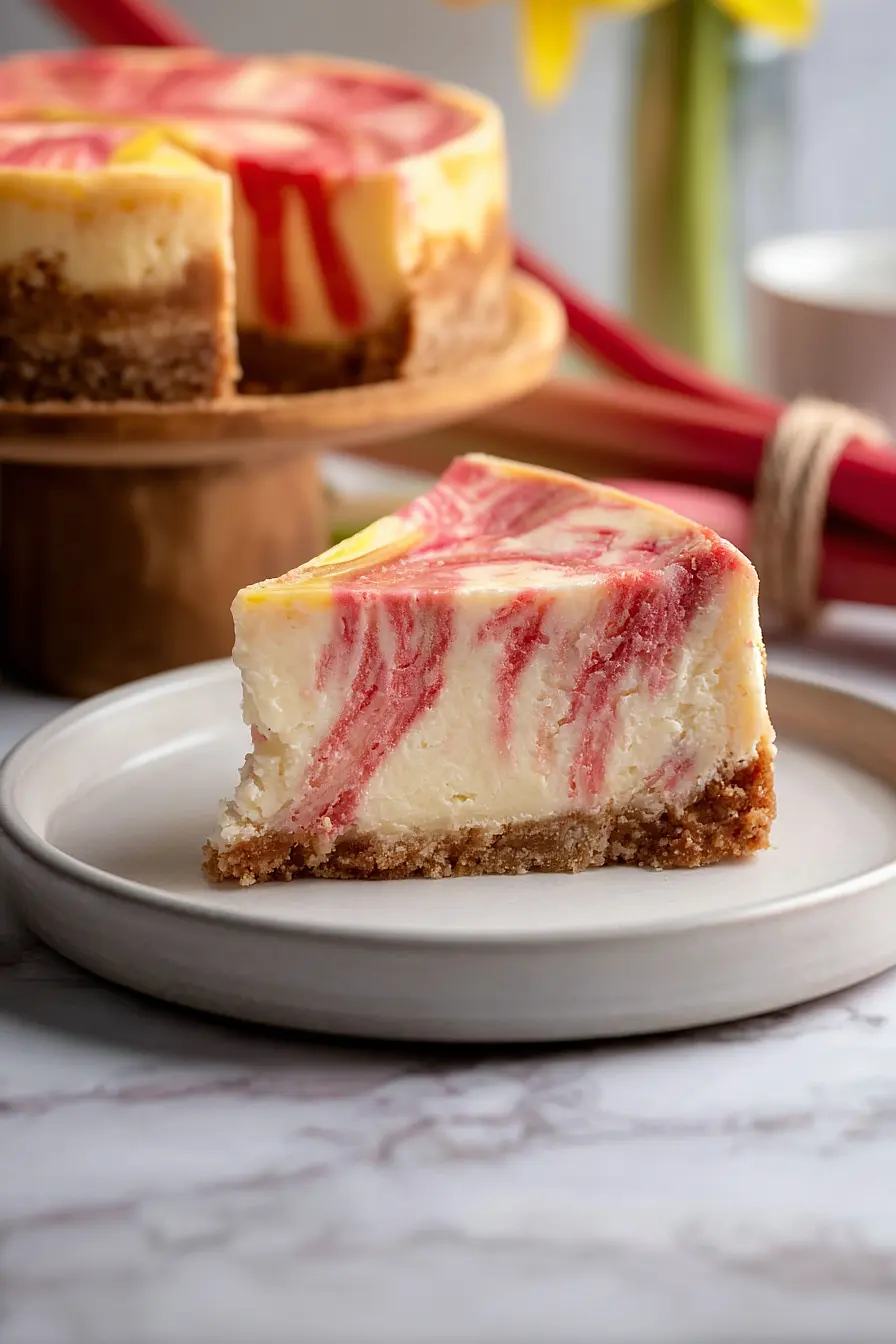
Remove the chilled crust from the refrigerator and pour about two-thirds of the cheesecake filling from Step 4 into the pan, spreading it evenly. Dollop the cooled rhubarb-egg mixture from Step 3 randomly across the surface, then pour the remaining cheesecake filling over top. Using a knife or skewer, gently swirl through the layers to create a marbled effect, but don't overwork it—a few dramatic swirls look better than a fully blended surface. Bake for 50 minutes, until the edges are set but the center still has a slight jiggle when you gently shake the pan.
Turn off the oven and crack the door open slightly, leaving the cheesecake inside for at least 1 hour to cool gradually. This gentle cooling process helps prevent the dreaded cracks that can form when cheesecake cools too quickly. After the hour, remove the cake from the oven and let it cool completely at room temperature, then refrigerate for at least 4 hours (or overnight) before serving.