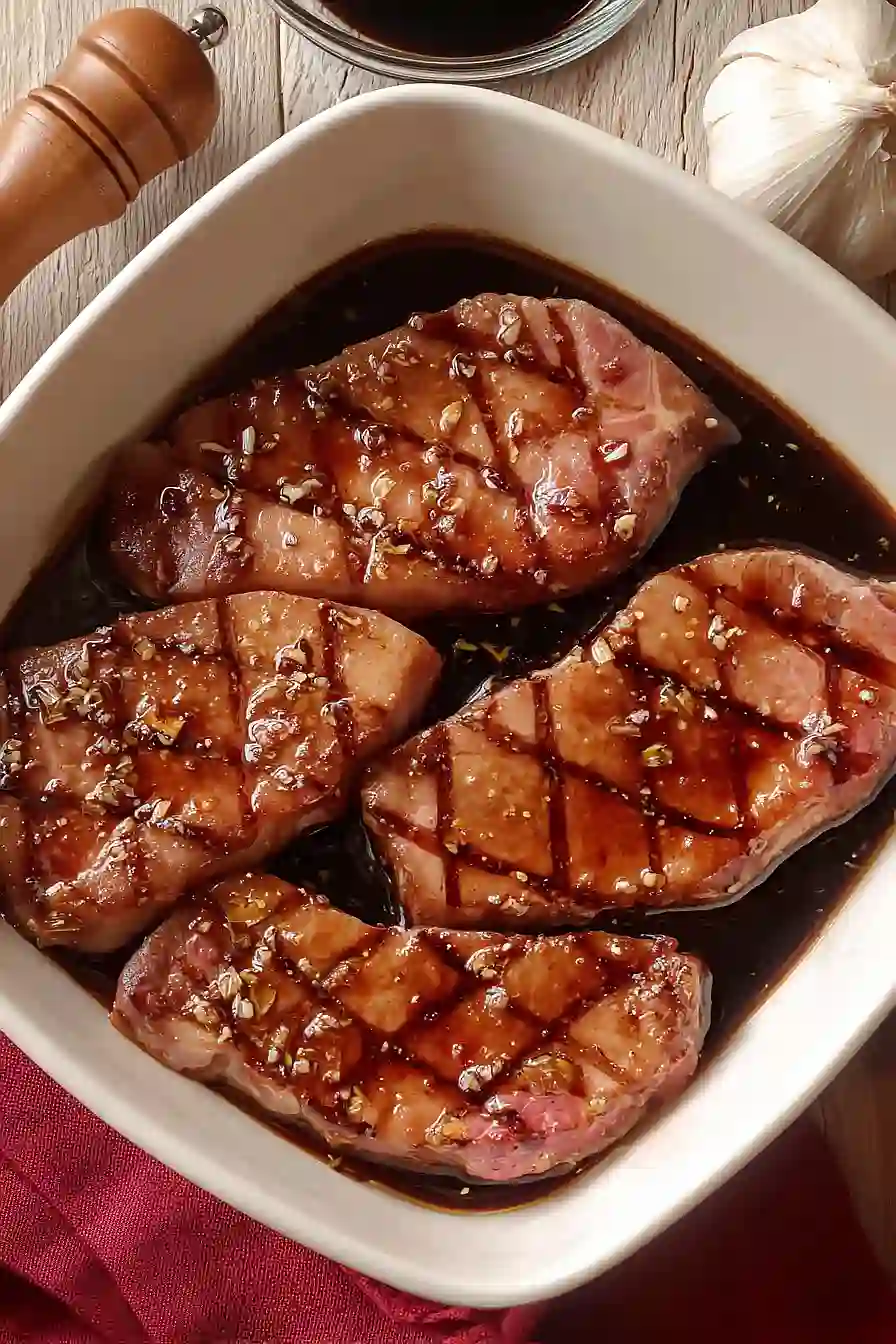
Pat the pork chops dry with paper towels and use a sharp knife to score the surface of each chop with shallow, crosshatch slits—this helps the marinade penetrate the meat and creates more surface area for browning. While the pork sits, combine the soy sauce, brown sugar, rice vinegar, minced garlic, grated ginger, five spice powder, black pepper, sesame oil, and red pepper flakes in a bowl, stirring well until the sugar completely dissolves. This flavorful base is what will season and tenderize the meat over time.
Place the scored pork chops into a shallow dish or large zip-top bag and pour the marinade mixture from Step 1 over them, making sure the chops are submerged or well-coated. Place them scored-side down and refrigerate for 3 hours to allow the flavors to develop and the meat to become tender. After 3 hours, flip the chops over so the other side can marinate, then refrigerate for an additional hour. I find that this two-stage marinating approach ensures even flavor distribution throughout the thick-cut meat.
Remove the pork chops from the refrigerator and pat them thoroughly dry with paper towels—this is crucial for achieving a good crust. Reserve the marinade for basting. Heat 3 tablespoons of neutral oil in a large cast iron or heavy-bottomed skillet over medium-high heat until shimmering. Once the oil is hot, carefully place the chops in the pan and sear them undisturbed for 8 minutes on the first side until a golden-brown crust forms. Flip the chops and cook for another 8 minutes on the second side, then stand them upright on their fatty edges for 1-2 minutes to render the fat and create a flavorful crust.
Transfer the seared pork chops to a serving plate and tent loosely with aluminum foil, allowing them to rest for 10 minutes. This resting period is essential—it redistributes the juices throughout the meat, keeping it tender and moist when you bite into it. For extra flavor, I like to brush a little of the reserved marinade on top during the rest if you'd like, though the chops are delicious on their own. Serve warm alongside rice, roasted vegetables, or noodles.