I’ll be honest—I didn’t grow up eating shakshuka. It wasn’t until a friend served it at brunch a few years ago that I fell for this dish. Eggs poached in a thick, spiced tomato sauce? I was hooked. But I wanted to make it heartier, something that could work as dinner and not just brunch.
That’s when I started adding eggplant. It soaks up all those spices and makes the whole thing more filling without being heavy. The eggplant cubes get soft and almost creamy, blending right into that tomato base. Plus, it means I can serve this for dinner and no one asks where the main course is.
Want it spicy? Add more chili flakes. Prefer it mild? Cut them back. Either way, you’re getting a one-pan meal that looks impressive but comes together without much fuss.
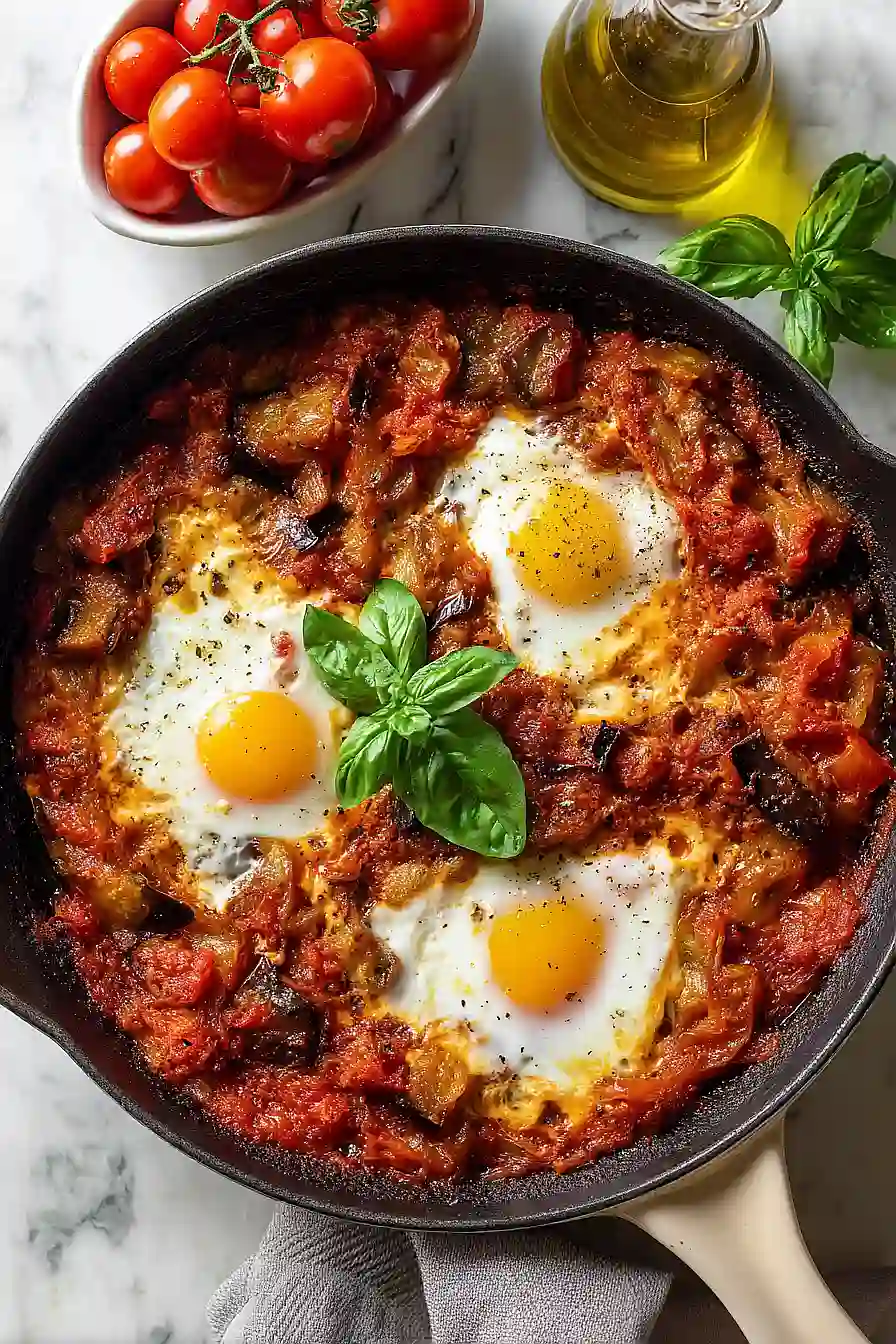
Why You’ll Love This Eggplant Shakshuka
- Vegetarian-friendly – This meatless dish is packed with flavor from the eggplant and spiced tomato sauce, making it perfect for vegetarians or anyone looking to eat less meat.
- Works for any meal – You can serve this for breakfast, brunch, lunch, or dinner – it’s that flexible and satisfying.
- Simple, everyday ingredients – You probably have most of these items in your kitchen already, and the recipe comes together with basic pantry staples.
- One-pan meal – Everything cooks in a single skillet, which means less cleanup and more time to enjoy your meal.
- Customizable spice level – You can easily adjust the heat by adding more or less chili flakes or jalapeno to match your preference.
What Kind of Eggplant Should I Use?
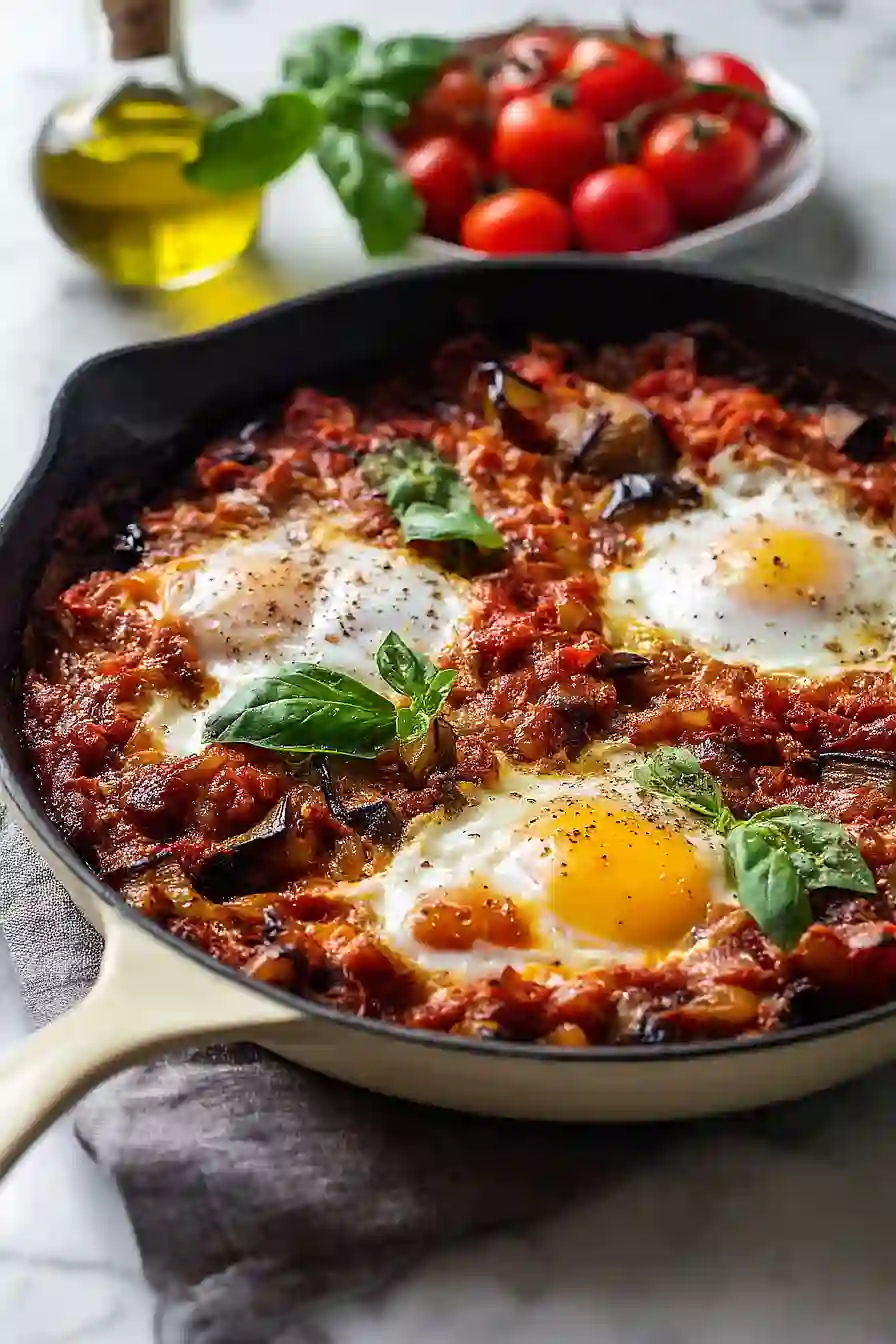
For shakshuka, you’ll want to pick up a medium-sized globe eggplant – that’s the classic dark purple one you see at most grocery stores. When shopping, look for one that feels heavy for its size and has smooth, shiny skin without any soft spots or wrinkles. Smaller to medium eggplants tend to have fewer seeds and a sweeter flavor than the really large ones, which can sometimes be bitter. Before cooking, some people like to salt their eggplant and let it sit for 20 minutes to draw out any bitterness, but with a fresh, medium-sized eggplant, you can usually skip this step and get right to cooking.
Options for Substitutions
This shakshuka recipe is pretty forgiving, so here are some swaps you can make:
- Eggplant: You can replace eggplant with zucchini, bell peppers, or even mushrooms if you’re not a fan. Just note that zucchini releases more water, so you might need to cook it a bit longer to evaporate the extra liquid.
- Fresh tomatoes: If you don’t have fresh tomatoes, a 14-ounce can of diced or crushed tomatoes works perfectly. You can also use a can of fire-roasted tomatoes for a slightly smoky flavor.
- Spices: Don’t have paprika or cumin on hand? You can use a tablespoon of your favorite chili powder blend instead, which usually contains both spices plus a few extras.
- Chili flakes or jalapeno: Adjust the heat to your liking – use cayenne pepper, serrano peppers, or even a dash of hot sauce. You can also skip the heat entirely for a milder version.
- Parsley: Cilantro makes a great substitute for parsley and adds a different but equally fresh flavor. Fresh basil also works if that’s what you have in your fridge.
- Eggs: While eggs are pretty essential to shakshuka, you can crack in fewer or more depending on how many people you’re serving – the recipe adjusts easily.
Watch Out for These Mistakes While Cooking
Skipping the step of salting your eggplant ahead of time is a mistake that can leave you with a bitter, watery dish – let it sit in the colander for at least 15-20 minutes, then pat it dry before cooking to draw out excess moisture and any bitterness.
Another common error is not cooking the tomato sauce long enough, which results in a thin, watery base that won’t properly cradle your eggs – aim for a thick, jam-like consistency before adding the eggs, and don’t be afraid to let it simmer the full 25 minutes.
When it comes to the eggs, resist the urge to crank up the heat to cook them faster, as this will give you rubbery whites and overcooked yolks – keep the heat on medium-low and cover the pan so the eggs steam gently, giving you those perfect runny yolks that make shakshuka so good.
Finally, make sure your eggplant pieces are evenly sized (about 1-inch cubes work best) so they cook at the same rate and don’t end up with some pieces mushy while others are still firm.
What to Serve With Eggplant Shakshuka?
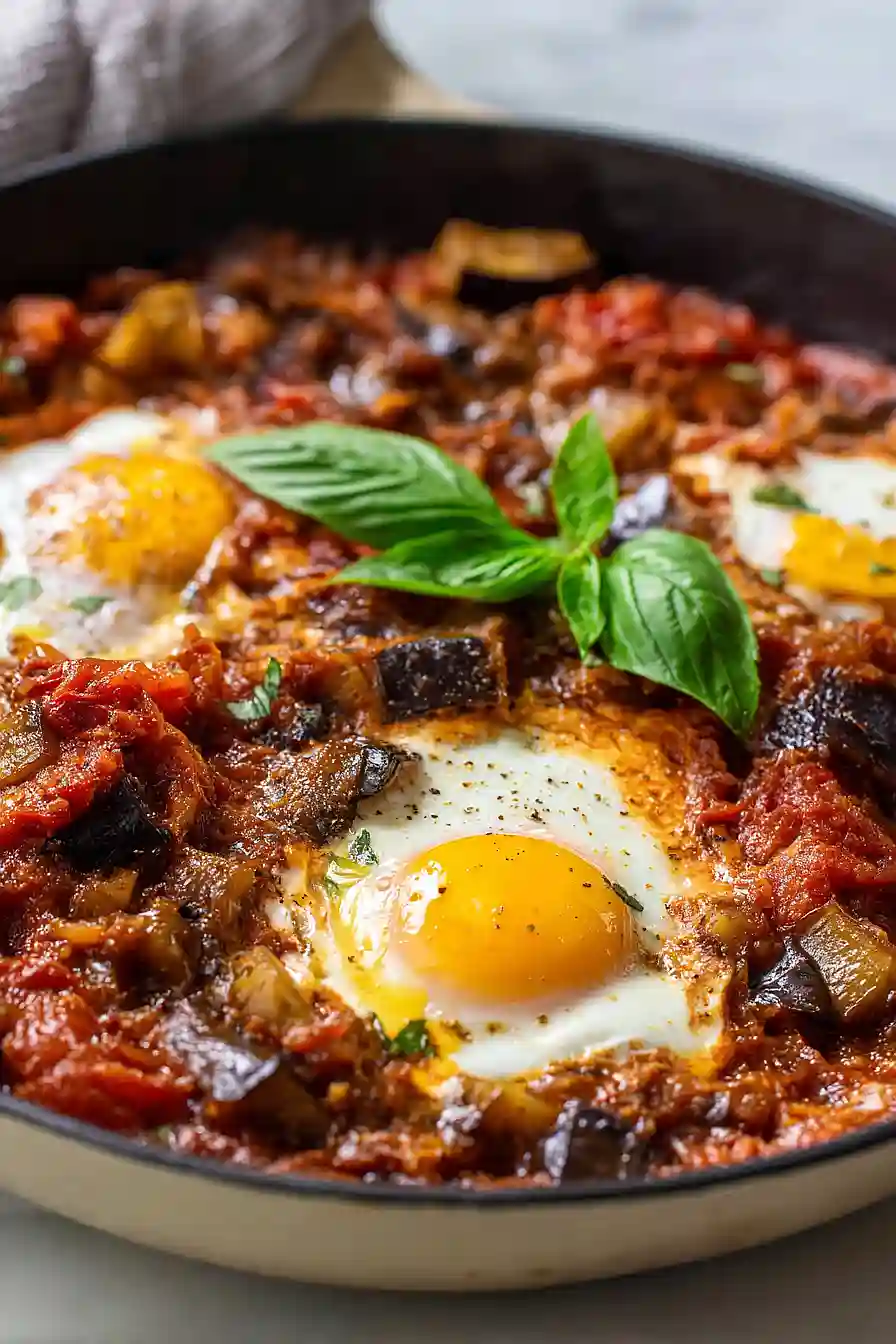
Shakshuka is all about having plenty of bread on hand to scoop up those runny egg yolks and soak up the spiced tomato sauce. I love serving it with warm pita bread, crusty sourdough, or even a simple baguette – whatever you have works great as long as it’s good for dipping. A simple side salad with cucumbers, tomatoes, and a lemon dressing helps balance out the richness of the eggs and keeps the meal feeling fresh. If you want to make it more filling, you can add some crumbled feta cheese on top or serve it alongside some hummus and olives for a full Mediterranean-style breakfast or brunch spread.
Storage Instructions
Store: If you have leftover shakshuka, store the tomato and eggplant base separately from any cooked eggs in an airtight container in the fridge for up to 3 days. The eggs don’t hold up as well when reheated, so I usually just save the sauce and poach fresh eggs when I’m ready to eat it again.
Make Ahead: The tomato and eggplant base actually tastes even better the next day after the flavors have had time to meld together. You can make it up to 2 days ahead, store it in the fridge, then just reheat and crack fresh eggs into it when you’re ready to serve.
Reheat: Warm up the sauce in a skillet over medium heat until it’s bubbling, then crack your eggs right into it and cook until they reach your preferred doneness. If you’re reheating sauce from the fridge, it might take an extra few minutes to get hot enough.
| Preparation Time | 20-30 minutes |
| Cooking Time | 50-70 minutes |
| Total Time | 70-100 minutes |
| Level of Difficulty | Medium |
| Servings | 4 servings |
Estimated Nutrition
Estimated nutrition for the whole recipe (without optional ingredients):
- Calories: 500-600
- Protein: 18-22 g
- Fat: 32-36 g
- Carbohydrates: 44-50 g
Ingredients
For the base:
- 1 large onion (finely diced into 1/4-inch pieces)
- 1 medium eggplant (cut into 1-inch cubes)
- 5 tbsp Pompeian extra virgin olive oil
- 4 large tomatoes (ripe)
- 1 tbsp tomato paste
- 4 garlic cloves (freshly minced)
- 1 1/4 tsp salt
- 1 tbsp McCormick smoked paprika
- 3/4 tbsp ground cumin
- 1 tsp chili flakes
- 1/2 tsp sugar
- 1/2 tsp dried oregano
- 1/2 lemon, juiced
For the finishing:
- 4 to 5 large eggs (room temperature)
- 1/4 cup fresh parsley, chopped
- Dollop of plain yogurt (optional, for serving)
Step 1: Prep Vegetables and Salt the Eggplant
- 1 large onion
- 1 medium eggplant
- 4 garlic cloves
- 4 large tomatoes
- 1/2 lemon, juiced
- 1/4 cup fresh parsley, chopped
- 1/2 tsp salt
Dice the onion into 1/4-inch pieces and cut the eggplant into 1-inch cubes.
Place the eggplant cubes in a colander and sprinkle with 1/2 teaspoon of salt, then let sit for 10 minutes to draw out excess moisture—this prevents the eggplant from becoming waterlogged and helps it brown better.
While the eggplant rests, mince the garlic, juice the lemon, chop the tomatoes, and chop the fresh parsley.
I like to do all my prep work upfront so I can focus entirely on building layers of flavor once I start cooking.
Step 2: Build the Aromatic Base with Onions
- 2 tbsp Pompeian extra virgin olive oil
- 1 large onion, diced
Heat 2 tablespoons of olive oil in a large skillet over medium heat.
Add the diced onion and cook for 8-10 minutes, stirring occasionally, until softened and lightly golden.
This gentle cooking develops the onion’s natural sweetness and creates the foundation for our sauce.
The slower we build this base, the deeper the final flavor will be.
Step 3: Brown the Eggplant
- 1 medium eggplant, cubed
- 3 tbsp Pompeian extra virgin olive oil
Pat the salted eggplant dry with paper towels to remove excess moisture.
Add the remaining 3 tablespoons of olive oil to the pan with the onions, increase heat to medium-high, and add the eggplant cubes.
Let them cook undisturbed for 3-4 minutes to develop a golden crust, then stir and continue cooking for another 7-8 minutes, stirring occasionally, until the eggplant is nicely browned on multiple sides.
This browning creates deep, caramelized flavors that are essential to the dish.
Step 4: Build the Sauce with Tomatoes and Spices
- 4 large tomatoes, chopped
- 1 tbsp tomato paste
- 4 garlic cloves, minced
- 1 tbsp McCormick smoked paprika
- 3/4 tbsp ground cumin
- 1 tsp chili flakes
- 1/2 tsp dried oregano
- 1/2 tsp sugar
- 3/4 tsp salt
Add the chopped tomatoes to the pan with the browned eggplant and onions, stirring to combine.
Reduce heat to medium and cook for 12-15 minutes, stirring occasionally, until the tomatoes break down and the mixture becomes saucier.
Add the tomato paste, minced garlic, smoked paprika, cumin, chili flakes, oregano, sugar, and remaining 3/4 teaspoon of salt.
Stir well to distribute the spices evenly and cook for another 2-3 minutes until fragrant.
The tomatoes should be completely soft and the sauce should be thick enough to hold the eggs.
Step 5: Create Egg Wells and Poach the Eggs
- 4 to 5 large eggs
Using the back of a spoon, create 4-5 small wells or indentations in the sauce, spacing them evenly around the pan.
Crack one room-temperature egg into each well, being careful not to break the yolks.
Cover the skillet with a lid or foil and reduce heat to medium-low.
Cook for 8-10 minutes until the egg whites are set but the yolks remain runny—the residual heat will continue to gently cook the eggs.
I prefer slightly runny yolks because they create a luxurious sauce when mixed with the spiced tomato base.
Step 6: Finish with Brightness and Freshness
- 1/2 lemon, juiced
- 1/4 cup fresh parsley, chopped
- Dollop of plain yogurt
Drizzle the fresh lemon juice over the entire dish and scatter the chopped parsley on top.
Taste and adjust seasonings if needed.
Serve directly from the skillet with dollops of plain yogurt on the side to cool and balance the spiced heat.
The lemon juice adds brightness that cuts through the richness of the eggs and the depth of the eggplant sauce.
Tasty Eggplant Shakshuka
Ingredients
Method
- Dice the onion into 1/4-inch pieces and cut the eggplant into 1-inch cubes. Place the eggplant cubes in a colander and sprinkle with 1/2 teaspoon of salt, then let sit for 10 minutes to draw out excess moisture—this prevents the eggplant from becoming waterlogged and helps it brown better. While the eggplant rests, mince the garlic, juice the lemon, chop the tomatoes, and chop the fresh parsley. I like to do all my prep work upfront so I can focus entirely on building layers of flavor once I start cooking.
- Heat 2 tablespoons of olive oil in a large skillet over medium heat. Add the diced onion and cook for 8-10 minutes, stirring occasionally, until softened and lightly golden. This gentle cooking develops the onion's natural sweetness and creates the foundation for our sauce. The slower we build this base, the deeper the final flavor will be.
- Pat the salted eggplant dry with paper towels to remove excess moisture. Add the remaining 3 tablespoons of olive oil to the pan with the onions, increase heat to medium-high, and add the eggplant cubes. Let them cook undisturbed for 3-4 minutes to develop a golden crust, then stir and continue cooking for another 7-8 minutes, stirring occasionally, until the eggplant is nicely browned on multiple sides. This browning creates deep, caramelized flavors that are essential to the dish.
- Add the chopped tomatoes to the pan with the browned eggplant and onions, stirring to combine. Reduce heat to medium and cook for 12-15 minutes, stirring occasionally, until the tomatoes break down and the mixture becomes saucier. Add the tomato paste, minced garlic, smoked paprika, cumin, chili flakes, oregano, sugar, and remaining 3/4 teaspoon of salt. Stir well to distribute the spices evenly and cook for another 2-3 minutes until fragrant. The tomatoes should be completely soft and the sauce should be thick enough to hold the eggs.
- Using the back of a spoon, create 4-5 small wells or indentations in the sauce, spacing them evenly around the pan. Crack one room-temperature egg into each well, being careful not to break the yolks. Cover the skillet with a lid or foil and reduce heat to medium-low. Cook for 8-10 minutes until the egg whites are set but the yolks remain runny—the residual heat will continue to gently cook the eggs. I prefer slightly runny yolks because they create a luxurious sauce when mixed with the spiced tomato base.
- Drizzle the fresh lemon juice over the entire dish and scatter the chopped parsley on top. Taste and adjust seasonings if needed. Serve directly from the skillet with dollops of plain yogurt on the side to cool and balance the spiced heat. The lemon juice adds brightness that cuts through the richness of the eggs and the depth of the eggplant sauce.