If you ask me, galettes are one of the best ways to show off spring rhubarb.
This rustic free-form tart brings together tart rhubarb and sweet black currants with a smooth, lemony custard. The gluten-free crust is made with almond meal and rice flours, creating a tender base that holds everything together.
It’s finished with warm cinnamon and a hint of ginger in the pastry. The filling stays creamy while the fruit softens and releases its juices, creating little pockets of tangy sweetness.
It’s a dessert that feels special but comes together without much fuss, perfect for a weekend baking project.
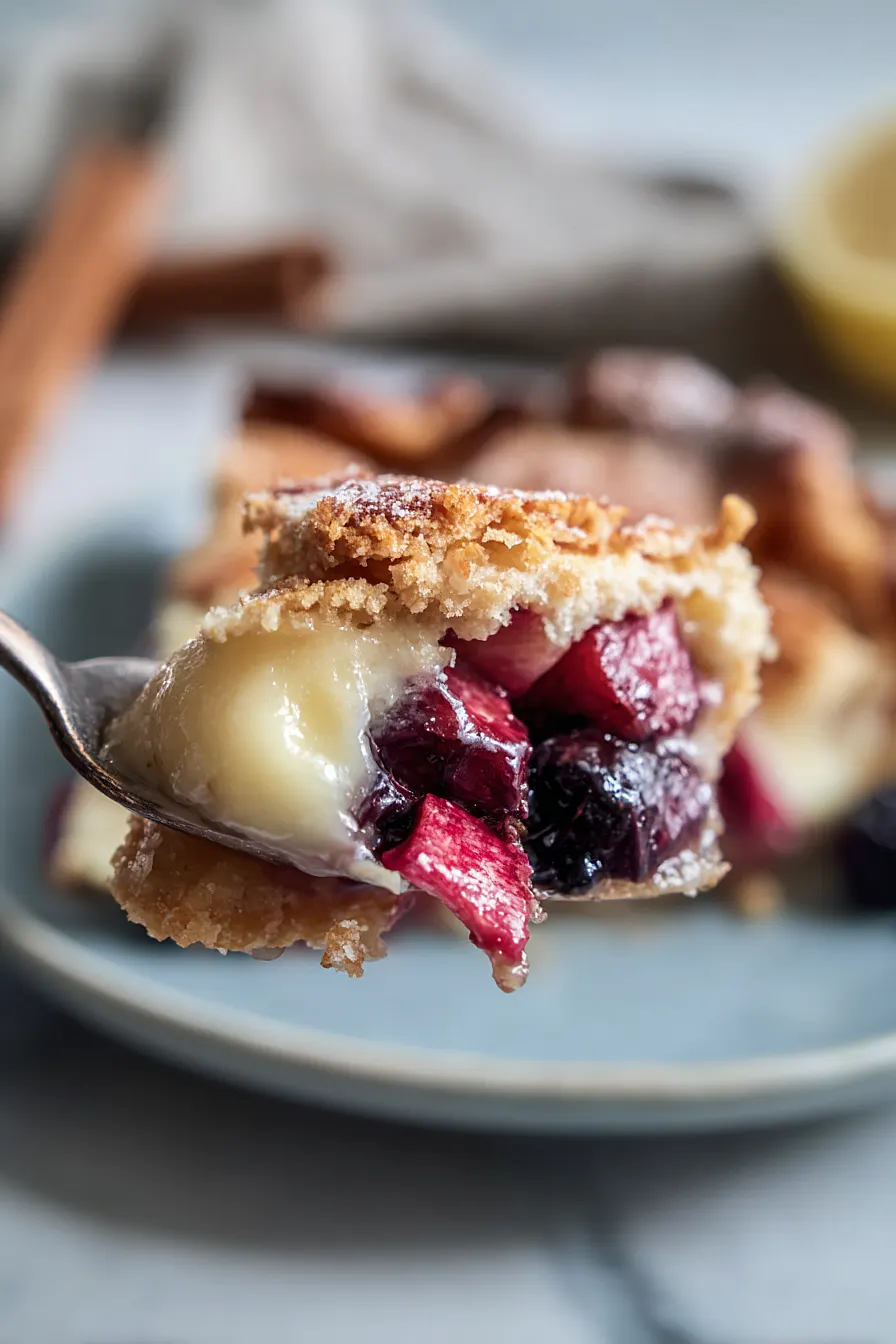
Why You’ll Love This Rhubarb Custard Galette
- Gluten-free and dairy-free friendly – Made with rice flour, almond meal, and lactose-free ingredients, this galette works perfectly for those with dietary restrictions without sacrificing flavor.
- Beautiful rustic presentation – The free-form galette shape means you don’t need to worry about perfect crimping or fancy techniques—it’s supposed to look homemade and charming.
- Seasonal spring flavor – The tart rhubarb paired with sweet custard and black currants creates a balanced dessert that celebrates the best of spring produce.
- Impressive yet approachable – This galette looks like something from a bakery but comes together with straightforward steps, making it perfect for weekend baking or special occasions.
What Kind of Rhubarb Should I Use?
Fresh rhubarb is your best bet for this galette, and you’ll find it in grocery stores during spring and early summer when it’s in season. Look for stalks that are firm and crisp with a bright color – they can range from pink to deep red, and both will work just fine (the red ones tend to be slightly sweeter, but the difference is minimal). Avoid any stalks that look wilted or have brown spots, as these are past their prime. If you can only find frozen rhubarb, make sure to thaw it completely and drain off any excess liquid before using it in the recipe, otherwise your galette might end up soggy.

Options for Substitutions
This gluten-free galette has some room for swaps, though a few ingredients are pretty important to keep:
- Tapioca and potato starch: These starches are key for the gluten-free structure, so I’d recommend keeping them as is. If you’re not gluten-free, you can replace all the flours and starches with 200g of regular all-purpose flour and skip the xanthan gum.
- Xylitol: You can swap xylitol with regular white sugar, coconut sugar, or even honey (though honey will add a bit of moisture, so reduce the milk slightly).
- Vegetable milk: Any plant-based milk works here – almond, soy, or regular dairy milk if you’re not avoiding lactose.
- Lactose-free creme fraiche: Regular creme fraiche, sour cream, or even Greek yogurt can step in here. If using yogurt, strain it first to remove excess liquid.
- Ghee butter: Regular butter works perfectly fine, or use coconut oil for a dairy-free option. Just make sure it’s cold when mixing the dough.
- Rhubarb: Fresh or frozen rhubarb both work. If using frozen, don’t thaw it first – just pat it dry before using.
- Black currant: Swap these with blueberries, raspberries, or strawberries if black currants are hard to find.
- Xanthan gum: This helps bind gluten-free dough together, so keep it if you’re staying gluten-free. If making a regular version, you won’t need it.
Watch Out for These Mistakes While Baking
The biggest mistake with galette dough is overworking it, which develops too much gluten and makes the crust tough instead of flaky – mix just until the dough comes together, and if it feels warm, pop it back in the fridge for a few minutes.
Another common issue is adding too much custard or fruit filling, which can leak out during baking and create a soggy bottom – leave about a 2-inch border and don’t overfill the center, even if it looks like there’s room.
Since rhubarb releases a lot of liquid when it bakes, make sure your custard is thick enough to hold its shape (it should coat the back of a spoon), and consider cutting the rhubarb into uniform pieces so everything cooks evenly.
Finally, resist the urge to skip chilling the dough, as this step helps the butter firm up and prevents your galette from spreading too much in the oven.
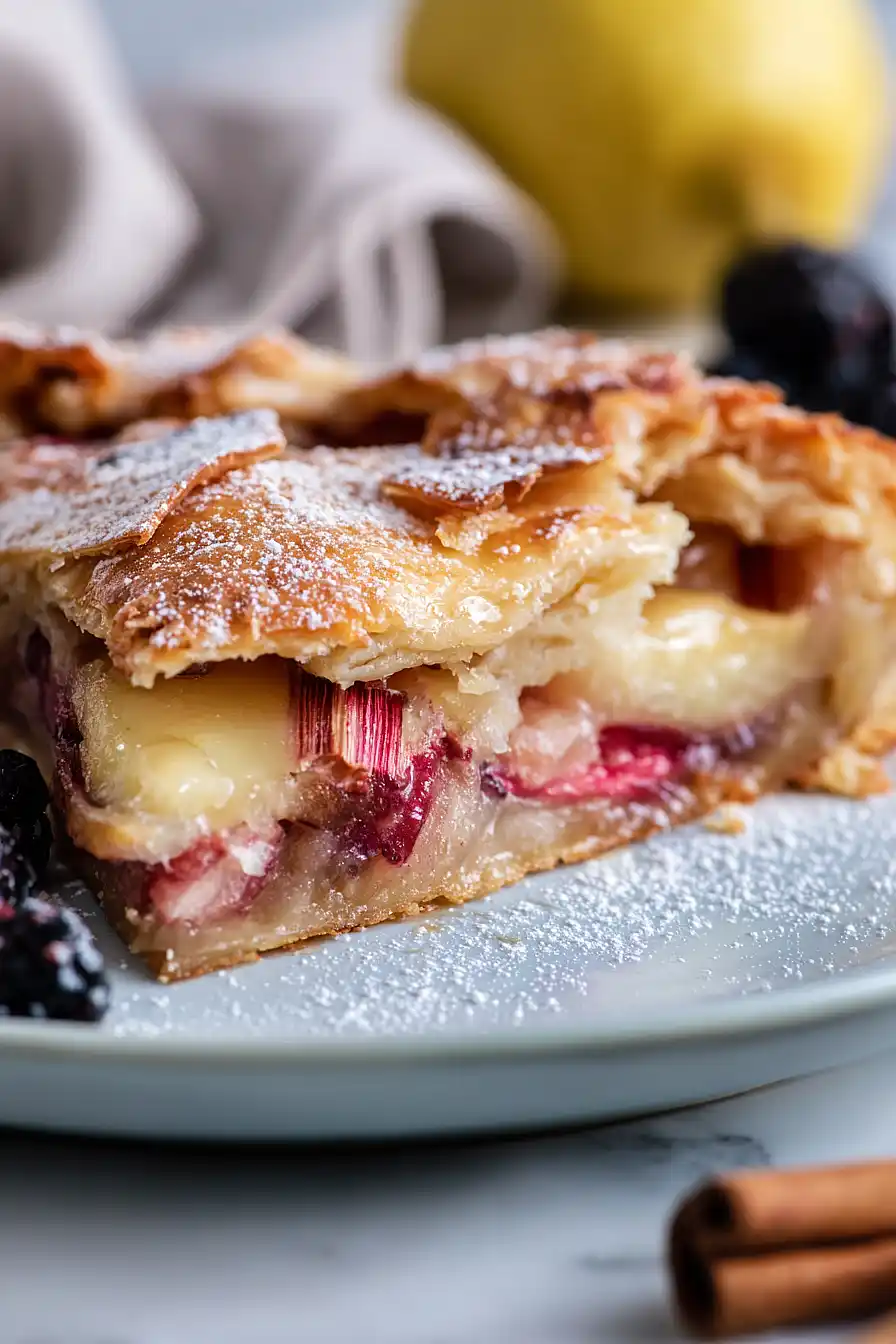
What to Serve With Rhubarb Custard Galette?
This galette is pretty rich and sweet on its own, so I like to keep things simple when serving it. A dollop of whipped cream or a scoop of vanilla ice cream on the side is always a good call, especially if you’re serving it warm from the oven. If you want to balance out the tartness of the rhubarb, try pairing it with a cup of coffee or black tea for an afternoon treat. You could also serve it alongside some fresh berries like strawberries or raspberries, which complement the rhubarb and black currant flavors really nicely.
Storage Instructions
Store: Keep your galette covered loosely with foil or plastic wrap at room temperature for up to 2 days if you want to maintain that crispy crust. For longer storage, pop it in the fridge in an airtight container for up to 4 days, though the crust might soften a bit.
Freeze: You can freeze slices of the galette for up to 2 months. Wrap individual pieces in plastic wrap, then place them in a freezer bag. The custard filling freezes surprisingly well, making this a great make-ahead dessert.
Serve: For the best texture, warm up refrigerated or frozen slices in a 350°F oven for about 10-15 minutes to crisp up the crust again. You can also enjoy it cold straight from the fridge, which is actually really refreshing on a warm day.
| Preparation Time | 60-70 minutes |
| Cooking Time | 25-30 minutes |
| Total Time | 85-100 minutes |
| Level of Difficulty | Medium |
| Servings | 4 galettes |
Estimated Nutrition
Estimated nutrition for the whole recipe (without optional ingredients):
- Calories: 1450-1600
- Protein: 22-26 g
- Fat: 73-83 g
- Carbohydrates: 170-190 g
Ingredients
For the custard:
- 1 tbsp tapioca
- 1 tbsp potato starch
- 35g xylitol
- 2/3 cup coconut milk (I use Savoy for a richer consistency)
- 3 egg yolks (room temperature, about 70°F)
- 1 tbsp lemon juice
- 1/2 lemon peel
For the pastry dough:
- 75g almond meal
- 55g brown rice flour
- 40g white rice flour
- 55g tapioca
- 20g potato starch
- 50g coconut sugar
- 1/2 tsp baking powder
- 3/4 tsp xanthan gum
- 1/4 tsp ground ginger
- 1/2 tsp salt
- 1 tsp vanilla essence
- 1 egg
- 65g lactose free cream
- 90g ghee (cold and cubed into 1/2-inch pieces)
For the fruit filling:
- 3 rhubarb stalks (sliced into 1/2-inch thick pieces)
- 60g black currant
- 1.5 tbsp xylitol
- 1 tsp cinnamon
- 1 tsp fresh lemon zest
Step 1: Prepare the Custard Filling
- 1 tbsp tapioca
- 1 tbsp potato starch
- 35g xylitol
- 2/3 cup coconut milk
- 3 egg yolks
- 1 tbsp lemon juice
- 1/2 lemon peel
Heat the coconut milk with the lemon peel in a small saucepan over medium heat until it just begins to simmer, then remove from heat and let it steep for 10 minutes to infuse the lemon flavor.
While the milk infuses, whisk together the 1 tbsp tapioca, 1 tbsp potato starch, 35g xylitol, and room temperature egg yolks in a bowl until smooth and pale.
Slowly whisk the hot lemon-infused milk into the egg mixture, then return everything to the saucepan over low heat.
Cook for 3-4 minutes, stirring constantly, until the custard thickens enough to coat the back of a spoon.
Remove from heat, strain out the lemon peel, stir in the lemon juice, and transfer to a bowl to cool while you prepare the dough.
I like to chill the custard in an ice bath for a few minutes to speed up cooling—it helps you move faster through the recipe.
Step 2: Mix and Chill the Galette Dough
- 75g almond meal
- 55g brown rice flour
- 40g white rice flour
- 55g tapioca
- 20g potato starch
- 50g coconut sugar
- 1/2 tsp baking powder
- 3/4 tsp xanthan gum
- 1/4 tsp ground ginger
- 1/2 tsp salt
- 90g ghee
- 1 egg
- 1 tsp vanilla essence
- 65g lactose-free cream
In a large bowl, whisk together the 75g almond meal, 55g brown rice flour, 40g white rice flour, 55g tapioca, 20g potato starch, 50g coconut sugar, 1/2 tsp baking powder, 3/4 tsp xanthan gum, 1/4 tsp ground ginger, and 1/2 tsp salt.
Add the cold cubed ghee and, using your fingertips or a pastry cutter, work it into the flour mixture until it resembles coarse breadcrumbs—this creates the flaky texture we want.
In a small bowl, whisk together the egg, 1 tsp vanilla essence, and 65g lactose-free cream, then pour into the dry mixture.
Gently knead until the dough just comes together without overworking it.
Wrap the dough in plastic and refrigerate for 30 minutes while you preheat the oven and prepare the fruit filling.
I find that chilling the dough prevents it from shrinking too much during baking.
Step 3: Prepare the Fruit Filling and Preheat Oven
- 3 rhubarb stalks
- 60g black currant
- 1.5 tbsp xylitol
- 1 tsp cinnamon
- 1 tsp fresh lemon zest
Preheat your oven to 180°C (350°F).
In a bowl, combine the rhubarb stalks (sliced into 1/2-inch thick pieces), black currants, 1.5 tbsp xylitol, 1 tsp cinnamon, and 1 tsp fresh lemon zest.
Toss gently to coat the fruit evenly with the spices and sweetener.
Set aside while the dough finishes chilling.
Step 4: Assemble and Shape the Galettes
- chilled dough from Step 2
- cooled custard from Step 1
- fruit filling from Step 3
Remove the chilled dough from the refrigerator and divide it into 4 equal portions.
Working with one portion at a time, place the dough between two sheets of parchment paper and roll it out into a thin circle about 6-7 inches in diameter.
Transfer the circle (still on parchment) to a baking sheet.
Spoon about 2 tablespoons of the cooled custard from Step 1 into the center of each dough circle, leaving a 1.5-inch border.
Top the custard with a spoonful of the fruit mixture from Step 3.
Fold the edges of the dough up and over the filling, creating a rustic galette shape with the center slightly exposed—it’s okay if it looks imperfect, that’s part of the charm of a galette.
Step 5: Finish and Bake the Galettes
- assembled galettes from Step 4
Brush the folded dough edges of each galette lightly with water or a bit of beaten egg to help them brown.
Bake at 180°C for 24-26 minutes, until the pastry is golden brown and the fruit is bubbling slightly at the edges.
Remove from the oven and allow the galettes to cool for 10 minutes on the baking sheet before serving.
I’ve found that letting them rest briefly makes them hold together better when you plate them.
Simple Rhubarb Custard Galette
Ingredients
Method
- Heat the coconut milk with the lemon peel in a small saucepan over medium heat until it just begins to simmer, then remove from heat and let it steep for 10 minutes to infuse the lemon flavor. While the milk infuses, whisk together the 1 tbsp tapioca, 1 tbsp potato starch, 35g xylitol, and room temperature egg yolks in a bowl until smooth and pale. Slowly whisk the hot lemon-infused milk into the egg mixture, then return everything to the saucepan over low heat. Cook for 3-4 minutes, stirring constantly, until the custard thickens enough to coat the back of a spoon. Remove from heat, strain out the lemon peel, stir in the lemon juice, and transfer to a bowl to cool while you prepare the dough. I like to chill the custard in an ice bath for a few minutes to speed up cooling—it helps you move faster through the recipe.
- In a large bowl, whisk together the 75g almond meal, 55g brown rice flour, 40g white rice flour, 55g tapioca, 20g potato starch, 50g coconut sugar, 1/2 tsp baking powder, 3/4 tsp xanthan gum, 1/4 tsp ground ginger, and 1/2 tsp salt. Add the cold cubed ghee and, using your fingertips or a pastry cutter, work it into the flour mixture until it resembles coarse breadcrumbs—this creates the flaky texture we want. In a small bowl, whisk together the egg, 1 tsp vanilla essence, and 65g lactose-free cream, then pour into the dry mixture. Gently knead until the dough just comes together without overworking it. Wrap the dough in plastic and refrigerate for 30 minutes while you preheat the oven and prepare the fruit filling. I find that chilling the dough prevents it from shrinking too much during baking.
- Preheat your oven to 180°C (350°F). In a bowl, combine the rhubarb stalks (sliced into 1/2-inch thick pieces), black currants, 1.5 tbsp xylitol, 1 tsp cinnamon, and 1 tsp fresh lemon zest. Toss gently to coat the fruit evenly with the spices and sweetener. Set aside while the dough finishes chilling.
- Remove the chilled dough from the refrigerator and divide it into 4 equal portions. Working with one portion at a time, place the dough between two sheets of parchment paper and roll it out into a thin circle about 6-7 inches in diameter. Transfer the circle (still on parchment) to a baking sheet. Spoon about 2 tablespoons of the cooled custard from Step 1 into the center of each dough circle, leaving a 1.5-inch border. Top the custard with a spoonful of the fruit mixture from Step 3. Fold the edges of the dough up and over the filling, creating a rustic galette shape with the center slightly exposed—it's okay if it looks imperfect, that's part of the charm of a galette.
- Brush the folded dough edges of each galette lightly with water or a bit of beaten egg to help them brown. Bake at 180°C for 24-26 minutes, until the pastry is golden brown and the fruit is bubbling slightly at the edges. Remove from the oven and allow the galettes to cool for 10 minutes on the baking sheet before serving. I've found that letting them rest briefly makes them hold together better when you plate them.