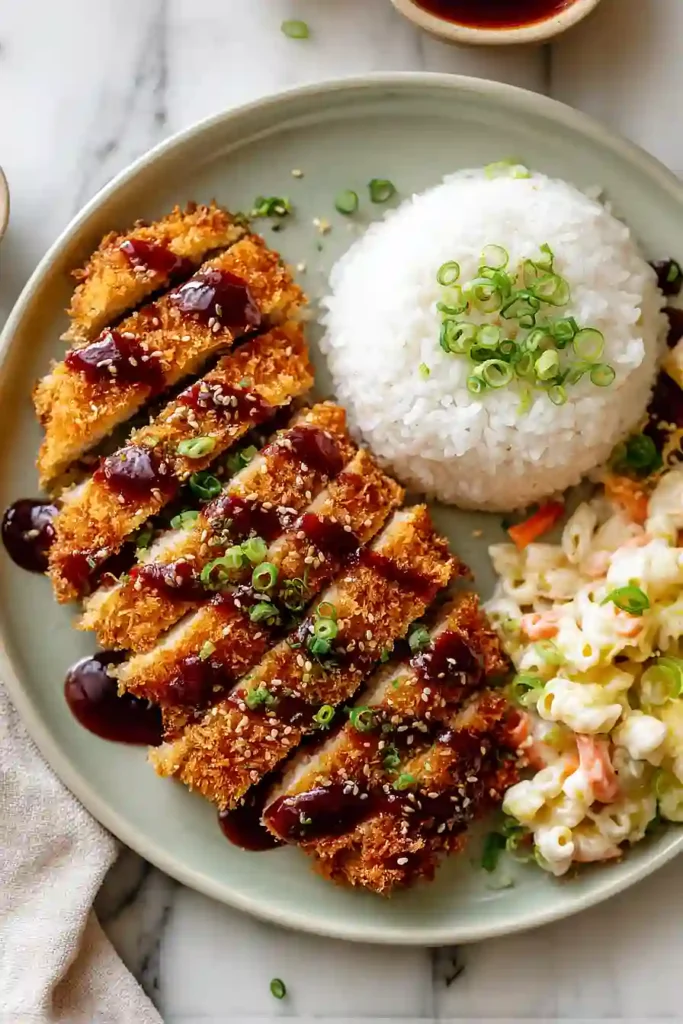
Furikake in the panko is doing something completely unhinged and I am not mad about it. Salty, crunchy, a little toasty, and it turns plain chicken katsu into something that feels like a $24 restaurant plate.
The sauce is four pantry staples whisked together, the rice is fluffy, and the kimchi on the side is the move. The tang cuts right through all that fried richness. Cost? Maybe ten bucks. Time? Thirty minutes. Looks like takeout? Absolutely.
What Is Furikake (and Where to Find It)?
Furikake is a Japanese rice seasoning blend, usually loaded with toasted sesame seeds, dried seaweed (nori), salt, and sometimes bonito flakes or dried egg. It brings a salty, savory, slightly oceanic punch that absolutely CRANKS UP the panko coating on this katsu. Don’t skip it.
Look for furikake in the international aisle of well-stocked grocery stores, Asian markets, or Japanese specialty shops. The bottles are usually small and come in tons of flavor varieties (wasabi, shiso, kimchi, plain). For this recipe, the classic nori-sesame version is your best bet.
Online retailers like Amazon carry dozens of brands if local options fall short. Check the ingredient list to avoid ones loaded with MSG if that’s a concern. Once opened, store the bottle in a cool, dry place where it stays fresh for months….ready whenever your katsu craving hits!
How to Get an Extra Crispy Katsu Crust
Step 1: Pat the chicken BONE-DRY before anything else. Surface moisture equals sad soggy crust!
Step 2: Pound each piece to a uniform 1/2-inch thickness. Uneven chicken fries unevenly (so annoying).
Step 3: After breading, let the chicken REST for 10 minutes. The coating hydrates and grips tighter.
Step 4: Heat oil to a steady 350°F. Thermometer mandatory…. Guessing equals disaster?
Step 5: Press panko firmly onto both sides, then press AGAIN right before the pan.
Step 6: Fry in batches! Crowding drops oil temp and steams your beautiful crust.
Step 7: Drain on a wire rack, not paper towels. Steam underneath equals soggy regret.
Crispy katsu is mostly about PATIENCE and respecting the oil temperature. Nail those two and the crunch practically announces itself at the dinner table.
The Hawaiian Katsu Sauce Explained
- KETCHUP is the backbone here, so use a quality brand you actually like on fries…. the sauce tastes like its base, no hiding it.
- WORCESTERSHIRE adds the umami punch. Don’t skip it or substitute, the fermented depth matters.
- Light brown sugar dissolves fastest. Pack it tight when measuring, then whisk until you see zero grit.
- Sriracha is your heat dial. Two teaspoons gives mild warmth; push to a tablespoon if you want it loud.
- Ground ginger works better than fresh for this sauce (fresh adds moisture and a sharp raw bite).
- MAKE IT AHEAD. The sauce gets better after 30 minutes in the fridge as the sugar fully dissolves and flavors marry.
- Too thick? Thin with a teaspoon of water. Too sweet? A splash more worcestershire cuts it.
Best Oil & Temperature for Frying
CANOLA OIL is the move here (high smoke point, neutral flavor that won’t fight the chicken). Heat it to exactly 350°F…. no guessing! Drop a stray panko crumb in; an immediate sizzle means you’re ready to fry.
Don’t crowd that pan! Packing pieces in drops the temp fast and gives you greasy, limp katsu. Cook in batches, let the oil bounce back between rounds, and flip just ONCE at the 4-5 minute mark.
Storing and Reheating Leftover Katsu
- Store leftover katsu in an AIRTIGHT container in the fridge for up to 3 days. Keep the katsu sauce separate in a small jar (mixing it in early makes the crust soggy, nobody wants that).
- Skip the microwave! Reheat in a 375°F oven or toaster oven for 8-10 minutes on a wire rack. The rack lets hot air circulate underneath so the bottom gets crispy too (not just the top).
- Air fryer works beautifully if you have one. 360°F for 5-6 minutes, flipping halfway. Sliced pieces heat faster than whole cutlets, so keep an eye on them.
- Freeze uncooked breaded cutlets between parchment sheets for up to 1 month. Fry straight from frozen, just add 1-2 extra minutes per side.
- Fresh rice? Sprinkle a few drops of water on leftover rice before microwaving (60 seconds covered). Fluff with a fork. Done.
You May Also Like
- Tasty Hawaiian Huli Huli Chicken
- Simple Hawaiian Macaroni Salad
- Delicious Hawaiian Chicken Sloppy Joes
- Instant Pot Hawaiian Chicken
- Zesty Hawaiian Chicken Tacos with Jalapeño Pineapple Salsa
- Creamy Hawaiian Pasta Salad with Ham
Estimated Nutrition
Estimated nutrition for the whole recipe (without optional ingredients):
- Calories: 1700-1900
- Protein: 90-110 g
- Fat: 50-60 g
- Carbohydrates: 210-230 g
Ingredients
For the chicken:
- 2 lb chicken breasts (halved lengthwise and pounded to 1/2-inch thickness)
- 1 cup all-purpose flour
- 1 1/2 tsp garlic powder
- 1 1/4 tsp salt
- 1/2 tsp black pepper
- 3 eggs (beaten until no streaks remain)
- 3 tbsp soy sauce
- 1 tsp toasted sesame oil
- 1 dash hot sauce
- 2 1/4 cups panko breadcrumbs
- 1/2 cup furikake
- 1 1/2 cups canola oil for frying
For the katsu sauce:
- 1/4 cup ketchup
- 1 tbsp worcestershire sauce
- 1 1/2 tbsp brown sugar
- 2 tsp sriracha
- 1/4 tsp ground ginger
For serving:
- 3 cups steamed Calrose rice
- 1 bunch chives, finely chopped
- 1/2 cup kimchi
Step 1: Prep and Pound Chicken
- 2 lb chicken breasts
- 1 cup all-purpose flour
- 1 1/2 tsp garlic powder
- 1 1/4 tsp salt
- 1/2 tsp black pepper
- 3 eggs
- 3 tbsp soy sauce
- 1 tsp toasted sesame oil
- 1 dash hot sauce
- 2 1/4 cups panko breadcrumbs
- 1/2 cup furikake
Pat the chicken breasts dry with paper towels, then slice each one in half lengthwise to create thinner pieces.
Place each piece between plastic wrap and pound to an even 1/2-inch thickness using a meat mallet—this ensures even cooking and a tender result.
Set up three shallow bowls for breading: in the first bowl, whisk together flour, garlic powder, salt, and black pepper; in the second bowl, combine beaten eggs, soy sauce, toasted sesame oil, and hot sauce until well blended; in the third bowl, mix panko breadcrumbs with furikake until evenly distributed.
Arrange these bowls in a line for efficient assembly-line breading.
Step 2: Coat with Furikake Panko
- breaded chicken pieces from Step 1
Working with one piece at a time, coat the chicken thoroughly in the flour mixture, shaking off excess.
Dip it into the egg mixture, letting excess drip off, then press it into the panko-furikake mixture, coating both sides evenly and pressing gently so the coating adheres.
Place breaded chicken on a clean plate or parchment paper.
I like to let the breaded chicken sit for 5-10 minutes before frying—this helps the coating stick better and creates a crispier crust.
Step 3: Whisk the Sweet-Savory Sauce
- 1/4 cup ketchup
- 1 tbsp worcestershire sauce
- 1 1/2 tbsp brown sugar
- 2 tsp sriracha
- 1/4 tsp ground ginger
While the chicken rests, combine ketchup, worcestershire sauce, brown sugar, sriracha, and ground ginger in a small bowl, stirring until the brown sugar dissolves completely and the sauce is smooth.
Taste and adjust seasonings if needed—the sauce should balance sweet, savory, and a touch of heat.
Set aside until ready to serve.
Step 4: Pan-Fry Until Golden Brown
- 1 1/2 cups canola oil for frying
- breaded chicken from Step 2
Heat canola oil to 350°F in a large skillet over medium-high heat.
Once the oil reaches temperature, carefully place breaded chicken pieces into the hot oil, working in batches to avoid overcrowding the pan.
Fry for 4-5 minutes on the first side until golden brown, then flip and fry for another 4-5 minutes until the second side is equally golden and the internal temperature reaches 165°F.
Transfer cooked chicken to a paper towel-lined plate to drain excess oil.
Step 5: Slice, Plate, and Garnish
- fried chicken from Step 4
- 3 cups steamed Calrose rice
- Hawaiian sauce from Step 3
- 1 bunch chives, finely chopped
- 1/2 cup kimchi
Slice the fried chicken into strips.
Divide steamed rice among serving plates and top with chicken strips.
Drizzle the Hawaiian sauce from Step 3 over the chicken, then sprinkle with chopped chives.
Serve with kimchi on the side for a bright, tangy contrast to the rich, crispy katsu.
I find that a generous dollop of kimchi on each bite cuts through the fried richness perfectly.
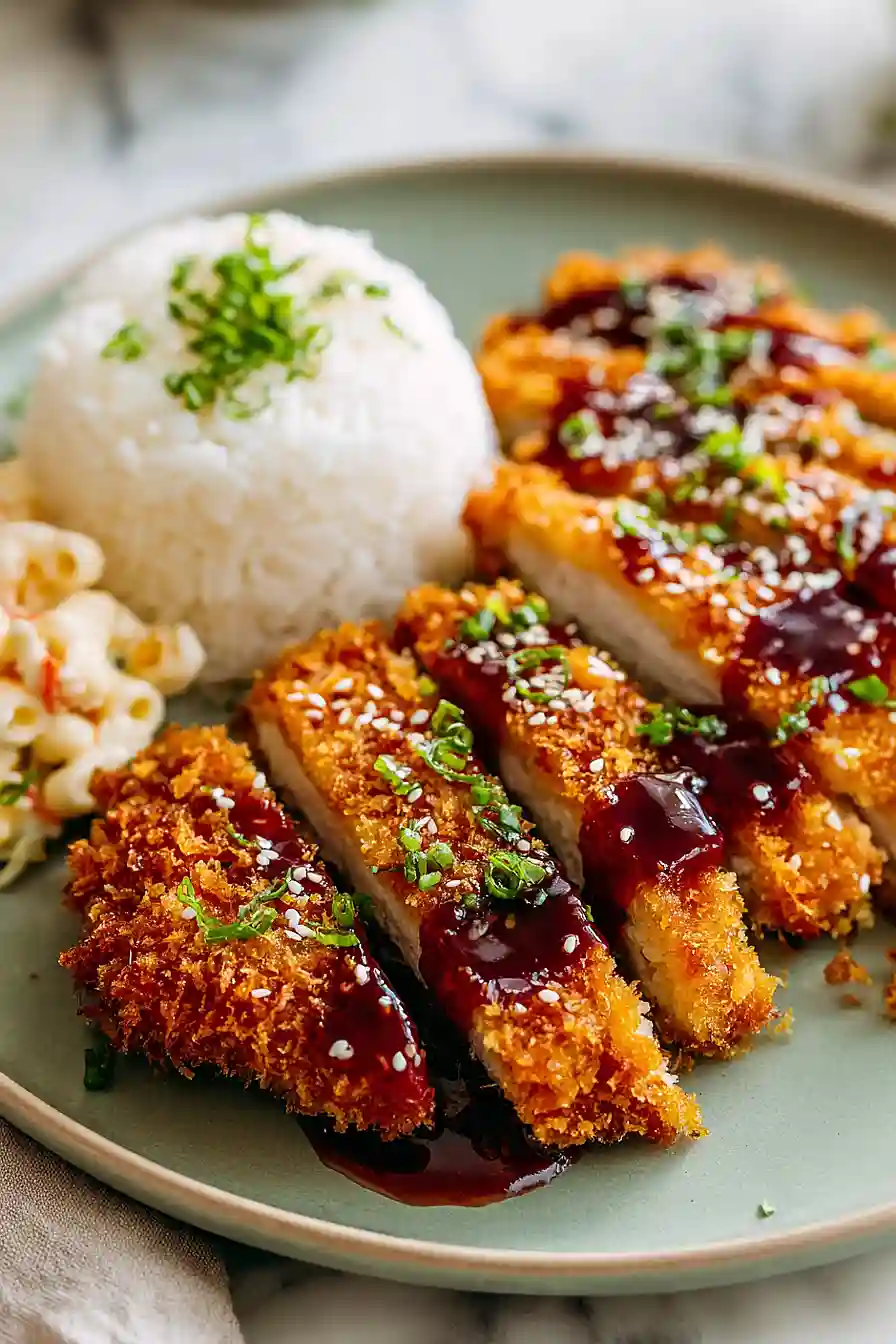
Juicy Hawaiian Chicken Katsu
Ingredients
Method
- Pat the chicken breasts dry with paper towels, then slice each one in half lengthwise to create thinner pieces. Place each piece between plastic wrap and pound to an even 1/2-inch thickness using a meat mallet—this ensures even cooking and a tender result. Set up three shallow bowls for breading: in the first bowl, whisk together flour, garlic powder, salt, and black pepper; in the second bowl, combine beaten eggs, soy sauce, toasted sesame oil, and hot sauce until well blended; in the third bowl, mix panko breadcrumbs with furikake until evenly distributed. Arrange these bowls in a line for efficient assembly-line breading.
- Working with one piece at a time, coat the chicken thoroughly in the flour mixture, shaking off excess. Dip it into the egg mixture, letting excess drip off, then press it into the panko-furikake mixture, coating both sides evenly and pressing gently so the coating adheres. Place breaded chicken on a clean plate or parchment paper. I like to let the breaded chicken sit for 5-10 minutes before frying—this helps the coating stick better and creates a crispier crust.
- While the chicken rests, combine ketchup, worcestershire sauce, brown sugar, sriracha, and ground ginger in a small bowl, stirring until the brown sugar dissolves completely and the sauce is smooth. Taste and adjust seasonings if needed—the sauce should balance sweet, savory, and a touch of heat. Set aside until ready to serve.
- Heat canola oil to 350°F in a large skillet over medium-high heat. Once the oil reaches temperature, carefully place breaded chicken pieces into the hot oil, working in batches to avoid overcrowding the pan. Fry for 4-5 minutes on the first side until golden brown, then flip and fry for another 4-5 minutes until the second side is equally golden and the internal temperature reaches 165°F. Transfer cooked chicken to a paper towel-lined plate to drain excess oil.
- Slice the fried chicken into strips. Divide steamed rice among serving plates and top with chicken strips. Drizzle the Hawaiian sauce from Step 3 over the chicken, then sprinkle with chopped chives. Serve with kimchi on the side for a bright, tangy contrast to the rich, crispy katsu. I find that a generous dollop of kimchi on each bite cuts through the fried richness perfectly.