If you ask me, bread machines are one of the best kitchen tools you can own.
This garlic bread recipe takes all the work out of making homemade bread while filling your house with that amazing bakery smell. The dough gets flavored with garlic powder, rosemary, thyme, and basil for a savory kick.
A bit of Parmesan cheese gets mixed right into the dough, giving you little pockets of salty, cheesy goodness throughout. The bread machine does all the kneading and rising for you, so you just dump everything in and walk away.
It’s a simple recipe that tastes like you spent hours in the kitchen, perfect for weeknight dinners or weekend sandwiches.

Why You’ll Love This Garlic Bread
- Effortless bread making – Your bread machine does all the hard work of kneading and rising, so you can enjoy fresh homemade garlic bread without the usual effort.
- Amazing aroma – The combination of garlic, rosemary, thyme, and basil fills your kitchen with an incredible smell that makes store-bought garlic bread seem boring.
- Simple pantry ingredients – You probably already have most of these basic ingredients in your kitchen, making this an easy recipe to whip up anytime.
- Perfect side dish – This garlic bread pairs wonderfully with pasta, soups, or salads, and it’s way better than anything you’d buy at the grocery store.
What Kind of Bread Flour Should I Use?
For bread machine recipes, you’ll want to stick with actual bread flour rather than all-purpose flour. Bread flour has a higher protein content, which means more gluten development and a better rise – this is especially important when you’re relying on a machine to do the kneading for you. Most major brands like King Arthur or Gold Medal will work great, and you don’t need to spring for anything fancy. Just make sure your flour is fresh and hasn’t been sitting in the pantry for years, as older flour can affect how well your bread rises and the overall texture of your loaf.

Options for Substitutions
This garlic bread recipe is pretty forgiving, so here are some swaps you can make:
- Garlic powder: Fresh garlic gives you a stronger, more authentic flavor. If using fresh cloves, crush them well before adding. You can also use garlic paste – about 1 teaspoon should do it.
- Bread flour: All-purpose flour works in a pinch, though your bread might be slightly less chewy. Use the same amount and don’t worry about adjusting anything else.
- Dried herbs: Feel free to mix up the herbs based on what you have. Italian seasoning is a great substitute for the rosemary, thyme, and basil combo. Use about 3/4 teaspoon total.
- Olive oil: Any neutral oil like vegetable or canola oil works fine. Melted butter adds a richer flavor if you prefer.
- Instant yeast: If you only have active dry yeast, use the same amount but dissolve it in the warm water first and let it sit for 5 minutes before adding to the bread machine.
- Sugar: Honey or maple syrup can replace the sugar – just use the same amount. The bread will have a slightly different flavor but will still turn out great.
Watch Out for These Mistakes While Baking
The biggest mistake when making bread machine garlic bread is adding ingredients in the wrong order, which can prevent the yeast from activating properly – always keep the yeast away from the liquid by creating that flour well, especially if you’re using a delayed start function.
Another common error is opening the lid too often during the kneading cycle to check on things, as this releases heat and can affect how your dough rises.
Using all-purpose flour instead of bread flour will give you a denser, less airy loaf since bread flour has more protein that helps create that nice chewy texture.
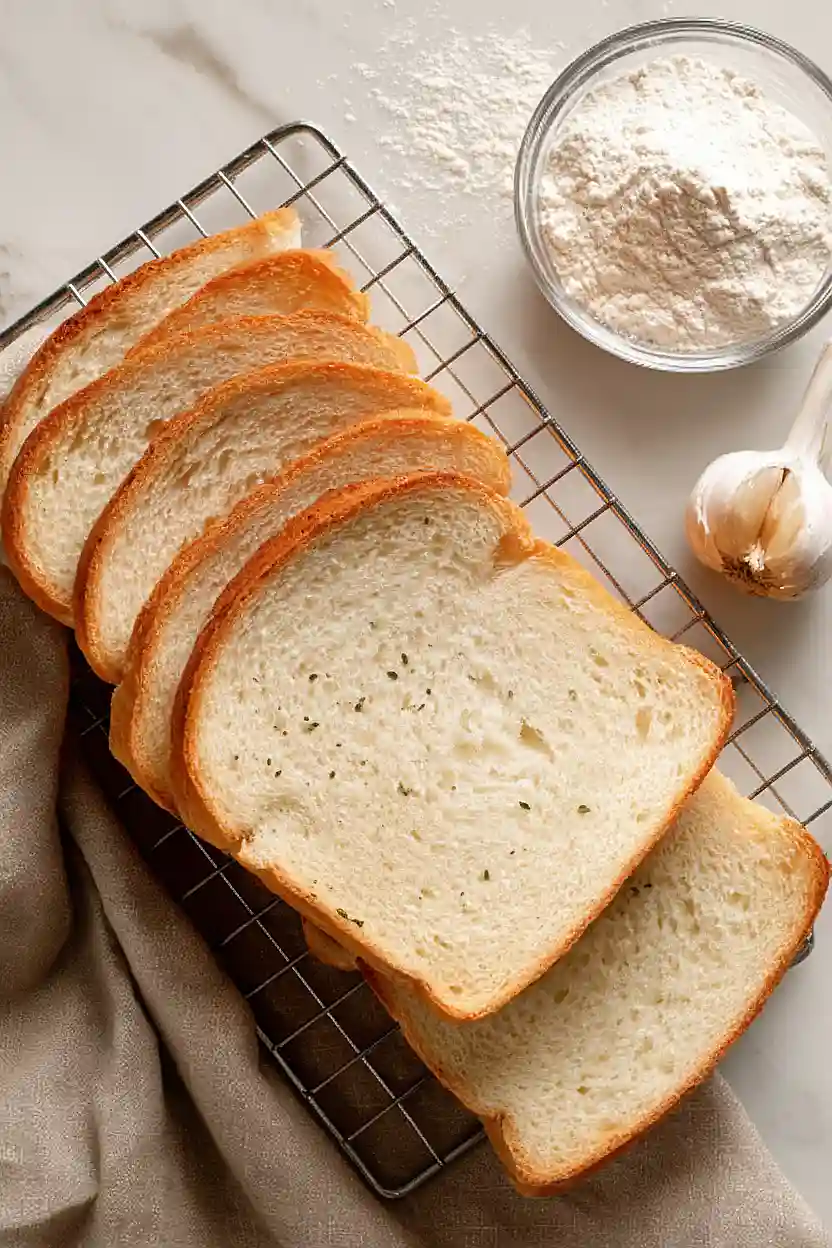
Finally, resist the urge to slice into the bread right when it comes out – cutting too early releases all the steam and can make the inside gummy, so give it at least 5-10 minutes to set up on a cooling rack.
What to Serve With Garlic Bread?
Garlic bread is one of those sides that goes with just about anything, but it really shines when you pair it with pasta dishes like spaghetti and meatballs, fettuccine alfredo, or baked ziti. It’s also perfect for soaking up the sauce from Italian soups like minestrone or creamy tomato soup. If you’re going for a lighter meal, serve it alongside a big Caesar salad or caprese salad with fresh mozzarella and tomatoes. You can even use slices of this homemade garlic bread to make sandwiches or paninis loaded with deli meats and cheese.
Storage Instructions
Store: Keep your garlic bread fresh by wrapping it tightly in plastic wrap or aluminum foil once it’s completely cooled. It’ll stay soft at room temperature for about 2-3 days, or you can refrigerate it for up to a week if your kitchen is warm.
Freeze: This bread freezes really well for up to 3 months. Slice it first if you want to grab individual pieces later, then wrap it tightly in foil and place in a freezer bag. I like to slice mine before freezing so I can toast just what I need for sandwiches or alongside pasta.
Refresh: To bring back that fresh-baked taste, wrap the bread in foil and warm it in a 350°F oven for about 10 minutes. If you’re working with frozen slices, just pop them straight into the toaster. A quick brush of melted butter with extra garlic powder makes it taste like it just came out of the bread machine!
| Preparation Time | 5-10 minutes |
| Cooking Time | 180-240 minutes |
| Total Time | 185-250 minutes |
| Level of Difficulty | Easy |
| Servings | 14 slices |
Estimated Nutrition
Estimated nutrition for the whole recipe (without optional ingredients):
- Calories: 1200-1300
- Protein: 36-40 g
- Fat: 18-22 g
- Carbohydrates: 240-260 g
Ingredients
- 1 1/8 cups water (lukewarm, about 105°F to 110°F)
- 1 tbsp olive oil
- 2 tbsp sugar
- 1 1/2 tsp salt
- 1 tsp garlic powder
- 1/2 tsp rosemary (crushed between fingers to release oils)
- 1/4 tsp thyme
- 1/4 tsp basil
- 2 tbsp grated Parmesan cheese
- 3 1/4 cups bread flour
- 1 1/2 tsp yeast
Step 1: Prepare Mise en Place and Activate Yeast Environment
- 1 1/8 cups water
- 1 tbsp olive oil
Measure out the lukewarm water (105°F to 110°F is ideal—too hot kills the yeast, too cold slows fermentation) and pour it into the bread machine pan.
Add the olive oil to the water.
The warm liquid will activate the yeast and help develop the dough’s structure, so getting this temperature right is essential for a proper rise.
Step 2: Layer Dry Ingredients and Build Flavor Base
- 2 tbsp sugar
- 1 1/2 tsp salt
- 3 1/4 cups bread flour
- 1 tsp garlic powder
- 1/2 tsp rosemary
- 1/4 tsp thyme
- 1/4 tsp basil
- 2 tbsp grated Parmesan cheese
Sprinkle the sugar, salt, and bread flour evenly over the water and oil mixture in the pan.
In a small bowl, combine the garlic powder, crushed rosemary, thyme, basil, and grated Parmesan cheese—I like to crush the rosemary between my fingers first to release its essential oils and intensify the flavor.
This releases much more aroma and flavor than using it whole.
Sprinkle this herb and cheese mixture over the flour layer.
This layering ensures the seasonings distribute evenly throughout the dough rather than clumping together.
Step 3: Create Yeast Well and Start the Machine
- 1 1/2 tsp yeast
Using your finger or a small spoon, make a small well or indentation in the center of the flour mixture, being careful not to let it touch the water below.
Place the yeast in this well—this delays yeast activation until the machine begins mixing, ensuring it doesn’t activate prematurely and lose potency.
Close the bread machine lid and select the basic/white bread cycle, set the crust color to your preference, and select the 1.5 lb loaf size.
Press start and let the machine do its work.
Step 4: Cool and Serve
When the cycle completes, carefully remove the bread pan from the machine and turn the loaf out onto a wire rack or cutting board.
Let it cool for 5-10 minutes before slicing—I find this resting time allows the crumb to set slightly, making cleaner slices and helping the bread stay moist inside.
The warm garlic and herb flavors will be most fragrant during this cooling period.
Irresistible Bread Machine Garlic Bread
Ingredients
Method
- Measure out the lukewarm water (105°F to 110°F is ideal—too hot kills the yeast, too cold slows fermentation) and pour it into the bread machine pan. Add the olive oil to the water. The warm liquid will activate the yeast and help develop the dough's structure, so getting this temperature right is essential for a proper rise.
- Sprinkle the sugar, salt, and bread flour evenly over the water and oil mixture in the pan. In a small bowl, combine the garlic powder, crushed rosemary, thyme, basil, and grated Parmesan cheese—I like to crush the rosemary between my fingers first to release its essential oils and intensify the flavor. This releases much more aroma and flavor than using it whole. Sprinkle this herb and cheese mixture over the flour layer. This layering ensures the seasonings distribute evenly throughout the dough rather than clumping together.
- Using your finger or a small spoon, make a small well or indentation in the center of the flour mixture, being careful not to let it touch the water below. Place the yeast in this well—this delays yeast activation until the machine begins mixing, ensuring it doesn't activate prematurely and lose potency. Close the bread machine lid and select the basic/white bread cycle, set the crust color to your preference, and select the 1.5 lb loaf size. Press start and let the machine do its work.
- When the cycle completes, carefully remove the bread pan from the machine and turn the loaf out onto a wire rack or cutting board. Let it cool for 5-10 minutes before slicing—I find this resting time allows the crumb to set slightly, making cleaner slices and helping the bread stay moist inside. The warm garlic and herb flavors will be most fragrant during this cooling period.