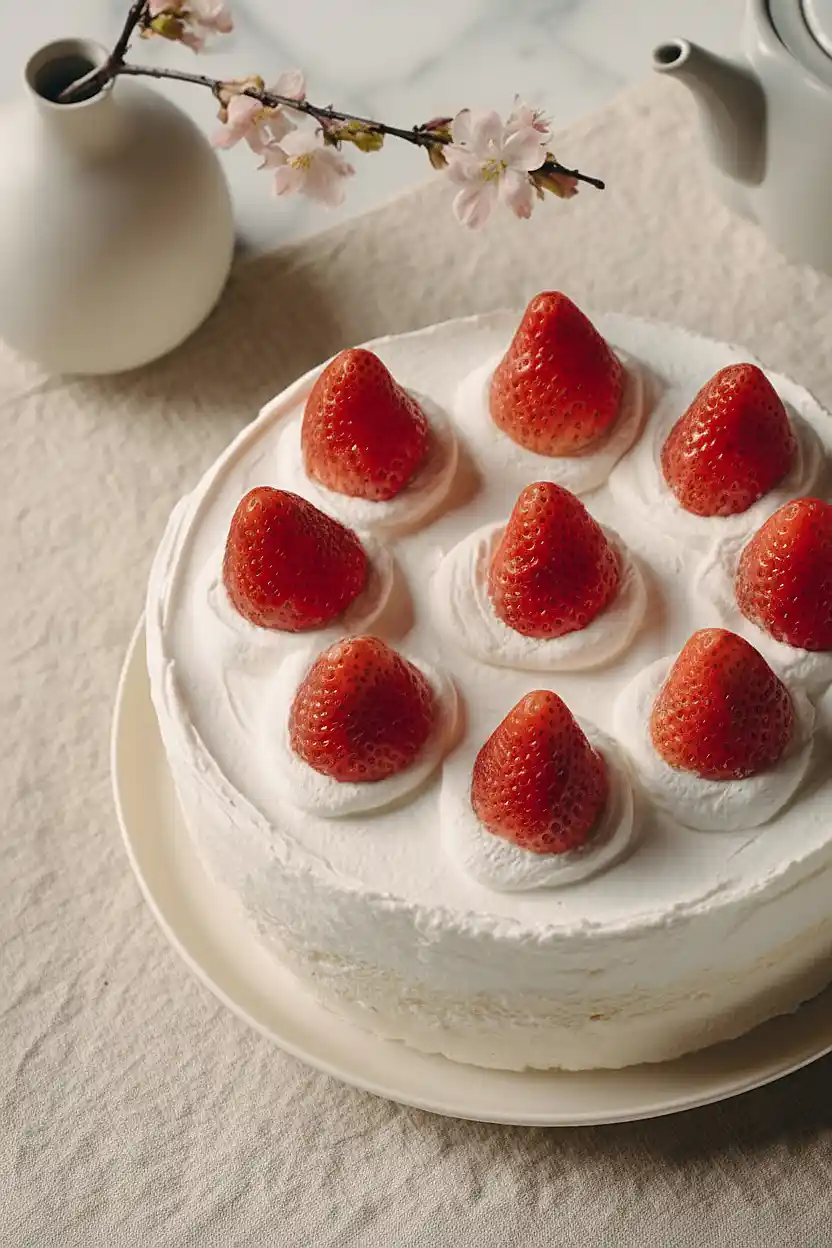
Here is my favorite Japanese strawberry cake recipe, with a light and fluffy sponge cake, fresh strawberries, and clouds of sweetened whipped cream that holds its shape beautifully.
This strawberry cake is what I make for every birthday in our house. My kids request it year after year, and I love how the layers of cream and berries make it feel special without being too complicated. Plus, any excuse to eat cake is a good one in my book!
Why You’ll Love This Japanese Strawberry Cake
- Light and fluffy texture – This cake uses a classic Japanese sponge cake method that creates an airy, cloud-like base that’s way lighter than traditional American cakes.
- Fresh strawberries throughout – With a full pound of strawberries, you get fresh fruit flavor in every bite, making it feel less heavy and more refreshing than your typical frosted cake.
- Impressive presentation – The whipped cream frosting and strawberry layers make this cake look like it came from a fancy bakery, perfect for birthdays or special occasions.
- Not overly sweet – Japanese cakes are known for being less sugary than Western desserts, so you can actually taste the strawberries and cream without the sugar overload.
What Kind of Strawberries Should I Use?
Fresh strawberries are really the star of this Japanese strawberry cake, so you’ll want to pick the best ones you can find. Look for berries that are bright red all the way through with no white or green spots near the stem, and make sure they’re firm to the touch without any soft or mushy areas. Smaller to medium-sized strawberries actually work better for this cake since they’re easier to arrange and slice through when serving. If you can only find larger strawberries, that’s totally fine – just plan to slice them in half or quarters so they fit nicely in your cake layers.

Options for Substitutions
This delicate Japanese cake allows for a few ingredient swaps if you need them:
- Cake flour: Don’t have cake flour? You can make your own by measuring 75 g of all-purpose flour, removing 1 tablespoon, and replacing it with 1 tablespoon of cornstarch. Sift it together a few times to get that fine texture.
- Butter: You can swap butter with a neutral oil like vegetable or canola oil if needed. Use the same amount and the cake will still turn out moist and tender.
- Milk: Any milk works here – whole milk, 2%, or even plant-based alternatives like almond or oat milk will do the job.
- Gelatin: If you’re vegetarian or don’t have gelatin, you can use agar powder instead. Use about half the amount (½ teaspoon) and follow the package instructions for blooming.
- Strawberries: While strawberries are traditional for this cake, you can use other fresh berries like raspberries or sliced peaches when strawberries aren’t in season. Just avoid fruits that are too watery.
- Heavy cream: Make sure to use heavy whipping cream with at least 35% fat content – it’s essential for getting that stable, fluffy whipped cream that holds the cake together.
Watch Out for These Mistakes While Baking
The biggest mistake with Japanese strawberry cake is opening the oven door during baking, which causes the delicate cake to collapse – resist the urge to peek and trust the process for the full 90 minutes.
Another common error is overbeating the egg whites or being too rough when folding them into the yolk mixture, which deflates the batter and results in a dense cake instead of the signature fluffy texture.
Make sure your water bath actually has water in it throughout baking by checking halfway through and adding more hot water if needed, as this steam creates the moist, tender crumb that makes this cake special.
When assembling, don’t skip the resting time for the strawberries or rush the syrup brushing step – these details keep your cake from being dry and add that extra layer of flavor that makes each bite worth it.
What to Serve With Japanese Strawberry Cake?
This light and fluffy cake is pretty much a showstopper on its own, but a cup of green tea or hot matcha makes a perfect pairing if you’re going for the full Japanese experience. I also love serving it with a simple fruit salad on the side – think sliced kiwi, mandarin oranges, or fresh berries to keep things light and refreshing. If you want to make it feel more like a special occasion, add a scoop of vanilla ice cream or a dollop of whipped cream on the side. Since this cake is already sweet and creamy, you really don’t need much else – just let those fresh strawberries shine!
Storage Instructions
Store: This cake is best enjoyed fresh, but you can keep it in the fridge for up to 2 days in an airtight container or covered with plastic wrap. The whipped cream and strawberries stay pretty good, though the cake might lose a tiny bit of its fluffiness over time.
Serve: Always serve this cake cold straight from the fridge – that’s when the cream is at its best and the strawberries taste amazing. Let it sit out for about 5 minutes before slicing if you want cleaner cuts, but don’t leave it at room temperature for too long or the cream will start to soften.
Make Ahead: You can bake the cake layers a day ahead and wrap them tightly in plastic wrap at room temperature. Just wait to assemble with the cream and strawberries until a few hours before serving so everything stays fresh and the cake doesn’t get soggy from the fruit.
| Preparation Time | 60-75 minutes |
| Cooking Time | 90-120 minutes |
| Total Time | 150-195 minutes |
| Level of Difficulty | Hard |
| Servings | 8 slices |
Estimated Nutrition
Estimated nutrition for the whole recipe (without optional ingredients):
- Calories: 1650-1800
- Protein: 30-36 g
- Fat: 100-115 g
- Carbohydrates: 165-185 g
Ingredients
For the sponge cake:
- 3 fl oz milk
- 2 oz unsalted butter (I like Kerrygold for its higher fat content and rich yellow color)
- 2/3 cup cake flour (I always use King Arthur to ensure a delicate crumb structure)
- 4 egg yolks
- 4 egg whites (room temperature, about 70°F, to help create a stable meringue)
- 1/2 cup sugar
For the strawberry layer:
- 1 lb fresh strawberries (hulled and sliced into 1/4-inch thick pieces)
- 3 tsp sugar
For the whipped cream:
- 1.3 cups heavy cream (must be very cold to whip properly and hold its shape)
- 2 tbsp sugar
- 1/2 tsp vanilla extract
- 1 tsp gelatin
- 2 tbsp cold water
For the cake syrup:
- 2 tbsp sugar
- 3 tbsp hot water
Step 1: Prepare the Pan and Oven Setup
Line a 8×8 inch square baking pan with parchment paper, then wrap the outside completely with foil to prevent water from seeping in during the water bath.
Preheat your oven to 325°F and position a rack in the lower third of the oven.
Fill a larger roasting pan with about 1 inch of hot water and place it in the oven—this water bath will gently cook the delicate cake and keep it moist.
Step 2: Make the Cake Batter Base
- 3 fl oz milk
- 2 oz unsalted butter
- 2/3 cup cake flour
- 4 egg yolks
Combine the milk and unsalted butter in a microwave-safe bowl and heat in 30-second intervals, stirring between each, until the butter is fully melted—this should take about 1 minute total.
Whisk in the cake flour until smooth with no lumps, then add the egg yolks one at a time, stirring gently after each addition to create a thick, pale base.
Set this mixture aside while you prepare the meringue.
Step 3: Whip the Meringue and Fold into Batter
- 4 egg whites
- 1/2 cup sugar
- yolk mixture from Step 2
In a clean, dry bowl, beat the room-temperature egg whites on medium-high speed until foamy, then gradually add the 1/2 cup sugar while continuing to beat.
Once the whites reach stiff, glossy peaks (this indicates a stable meringue that will add lift and structure to the cake), gently fold about 1/4 of this meringue into the yolk mixture to lighten it.
Then carefully fold this yolk mixture back into the remaining meringue using a spatula, making broad strokes from bottom to top to preserve the airiness—I like to fold just until no white streaks remain to maintain maximum volume.
Step 4: Bake the Cake in Water Bath
- batter from Step 3
Pour the batter from Step 3 into the prepared pan and tap it twice on the counter to release any large air bubbles.
Place the pan into the hot water bath in the oven and bake for 1 hour 30 minutes, until the top is lightly golden and a cake tester inserted near the center comes out with just a few moist crumbs.
Let the cake cool in the pan for 15 minutes, then turn it out onto a wire rack to cool completely—this cooling step is crucial before moving to assembly.
Step 5: Macerate Strawberries and Prepare Glazing Syrup
- 1 lb fresh strawberries
- 3 tsp sugar
- 2 tbsp sugar
- 3 tbsp hot water
- 2 tbsp cold water
While the cake bakes, hull and slice the fresh strawberries into 1/4-inch thick pieces, then toss them with 3 teaspoons of sugar in a bowl.
Let them sit for 1 hour to release their juices—this creates a beautiful syrup for brushing on the cake layers.
In a separate bowl, combine the 2 tablespoons sugar with 3 tablespoons of hot water and stir until dissolved, then add the 2 tablespoons of cold water and the strained liquid from the macerated strawberries.
Set this glazing syrup aside to cool.
Step 6: Prepare the Whipped Cream Filling
- 1 tsp gelatin
- 2 tbsp cold water
- 1.3 cups heavy cream
- 2 tbsp sugar
- 1/2 tsp vanilla extract
Bloom the gelatin by sprinkling it over 2 tablespoons of cold water and letting it sit for 2 minutes until spongy.
Place the very cold heavy cream in a chilled bowl and begin whipping on medium-high speed until it reaches soft peaks.
Microwave the bloomed gelatin for about 15 seconds until melted and clear, then slowly drizzle it into the whipping cream while continuing to beat.
Add 2 tablespoons of sugar and the vanilla extract, then continue beating until stiff peaks form—I find that adding gelatin stabilizes the cream so it holds its shape beautifully for hours without weeping.
Step 7: Assemble and Decorate the Cake
- cooled cake from Step 4
- glazing syrup from Step 5
- macerated strawberries from Step 5
- whipped cream from Step 6
Once the cooled cake is completely cool, carefully slice it horizontally into two even layers using a long serrated knife or a cake leveler.
Using a paring knife or vegetable peeler, gently scrape away the thin crispy top skin from each layer (this is a Japanese technique that gives a cleaner appearance).
Brush both cut surfaces generously with the glazing syrup from Step 5 to add moisture and flavor.
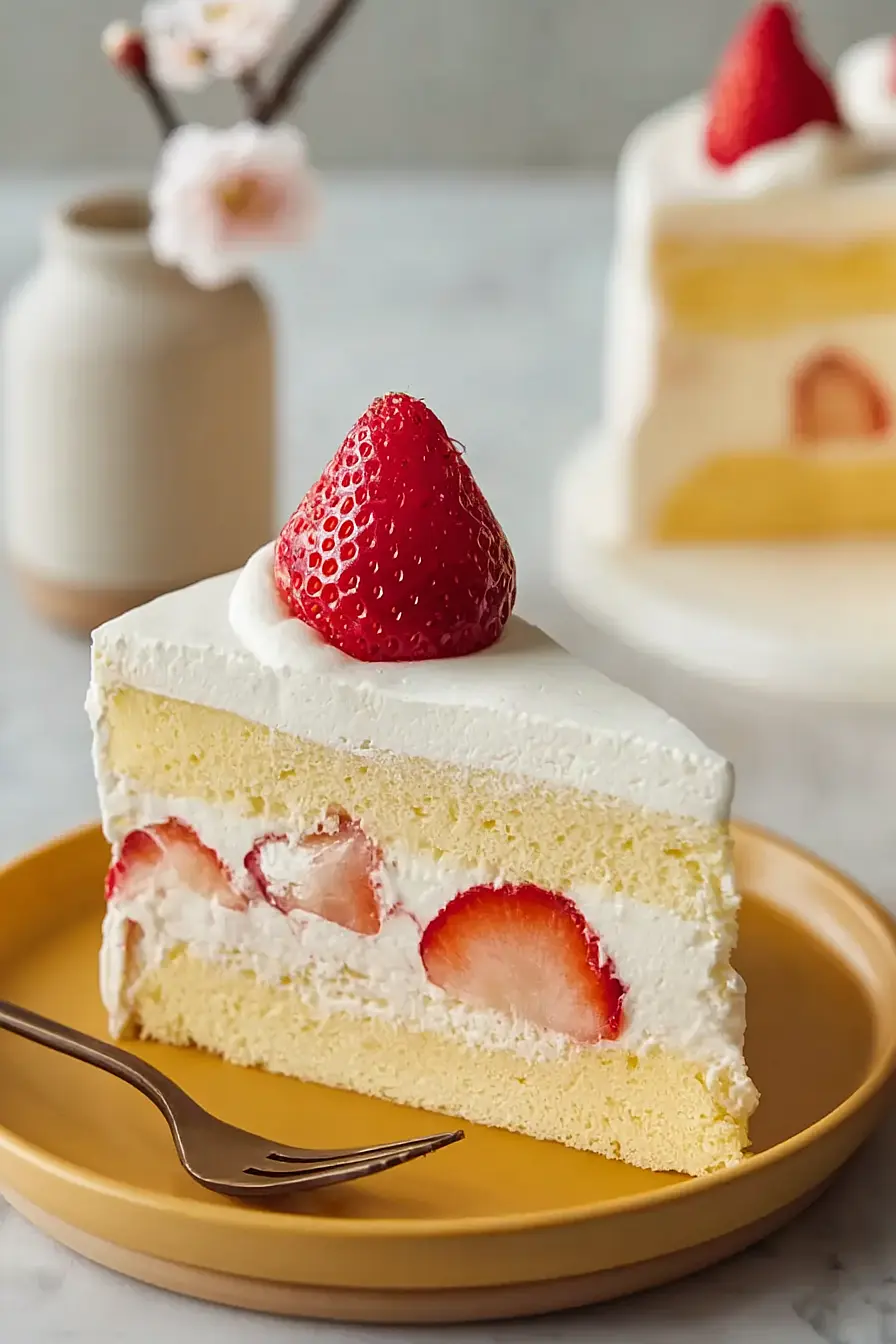
Spread a layer of the stabilized whipped cream from Step 6 on the bottom cake layer, arrange some of the macerated strawberries on top, then add another layer of cream.
Place the top cake layer on the stack and spread the remaining cream over the top and sides, using an offset spatula or the back of a spoon for a light, rustic finish.
Arrange whole or halved strawberries artfully on top of the cake for a stunning presentation.
Classic Japanese Strawberry Cake
Ingredients
Method
- Line a 8x8 inch square baking pan with parchment paper, then wrap the outside completely with foil to prevent water from seeping in during the water bath. Preheat your oven to 325°F and position a rack in the lower third of the oven. Fill a larger roasting pan with about 1 inch of hot water and place it in the oven—this water bath will gently cook the delicate cake and keep it moist.
- Combine the milk and unsalted butter in a microwave-safe bowl and heat in 30-second intervals, stirring between each, until the butter is fully melted—this should take about 1 minute total. Whisk in the cake flour until smooth with no lumps, then add the egg yolks one at a time, stirring gently after each addition to create a thick, pale base. Set this mixture aside while you prepare the meringue.
- In a clean, dry bowl, beat the room-temperature egg whites on medium-high speed until foamy, then gradually add the 1/2 cup sugar while continuing to beat. Once the whites reach stiff, glossy peaks (this indicates a stable meringue that will add lift and structure to the cake), gently fold about 1/4 of this meringue into the yolk mixture to lighten it. Then carefully fold this yolk mixture back into the remaining meringue using a spatula, making broad strokes from bottom to top to preserve the airiness—I like to fold just until no white streaks remain to maintain maximum volume.
- Pour the batter from Step 3 into the prepared pan and tap it twice on the counter to release any large air bubbles. Place the pan into the hot water bath in the oven and bake for 1 hour 30 minutes, until the top is lightly golden and a cake tester inserted near the center comes out with just a few moist crumbs. Let the cake cool in the pan for 15 minutes, then turn it out onto a wire rack to cool completely—this cooling step is crucial before moving to assembly.
- While the cake bakes, hull and slice the fresh strawberries into 1/4-inch thick pieces, then toss them with 3 teaspoons of sugar in a bowl. Let them sit for 1 hour to release their juices—this creates a beautiful syrup for brushing on the cake layers. In a separate bowl, combine the 2 tablespoons sugar with 3 tablespoons of hot water and stir until dissolved, then add the 2 tablespoons of cold water and the strained liquid from the macerated strawberries. Set this glazing syrup aside to cool.
- Bloom the gelatin by sprinkling it over 2 tablespoons of cold water and letting it sit for 2 minutes until spongy. Place the very cold heavy cream in a chilled bowl and begin whipping on medium-high speed until it reaches soft peaks. Microwave the bloomed gelatin for about 15 seconds until melted and clear, then slowly drizzle it into the whipping cream while continuing to beat. Add 2 tablespoons of sugar and the vanilla extract, then continue beating until stiff peaks form—I find that adding gelatin stabilizes the cream so it holds its shape beautifully for hours without weeping.
- Once the cooled cake is completely cool, carefully slice it horizontally into two even layers using a long serrated knife or a cake leveler. Using a paring knife or vegetable peeler, gently scrape away the thin crispy top skin from each layer (this is a Japanese technique that gives a cleaner appearance). Brush both cut surfaces generously with the glazing syrup from Step 5 to add moisture and flavor. Spread a layer of the stabilized whipped cream from Step 6 on the bottom cake layer, arrange some of the macerated strawberries on top, then add another layer of cream. Place the top cake layer on the stack and spread the remaining cream over the top and sides, using an offset spatula or the back of a spoon for a light, rustic finish. Arrange whole or halved strawberries artfully on top of the cake for a stunning presentation.