Two things I underestimated for WAY too long: homemade falafel (dried chickpeas only!! no cans, trust me) and the power of pickled cabbage in a wrap. Crispy, herby, tangy, creamy, CRUNCHY in every bite. Made them on a whim last weekend, now I’m making them weekly. You will too.
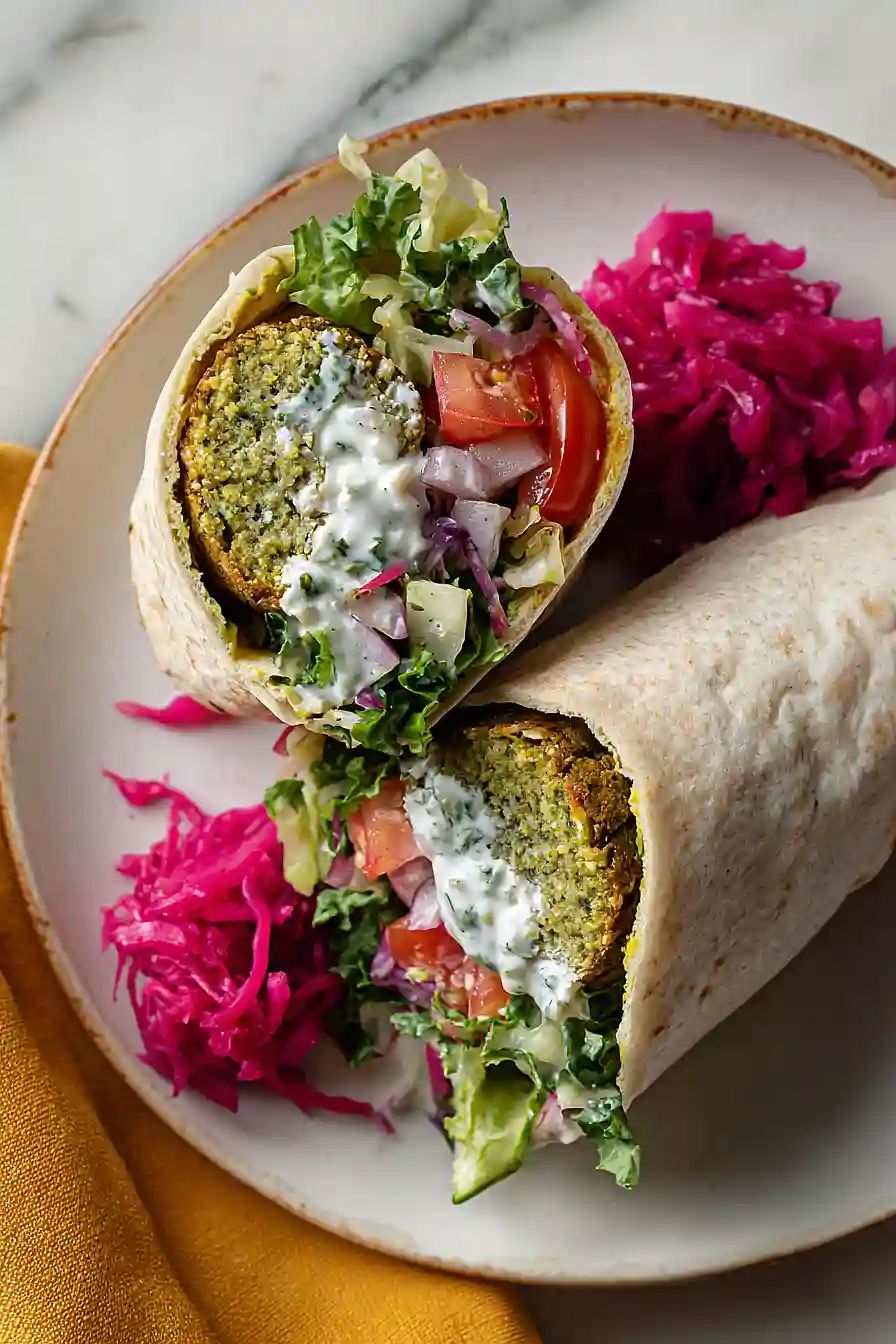
Why Dried Chickpeas Are Non-Negotiable
- DRIED chickpeas are essential. Canned ones are too soft and will cause your falafel to fall apart during frying. Texture is everything.
- Soak dried chickpeas in cold water overnight (12-16 hours). They’ll double in size. Drain and rinse thoroughly before use.
- Process until the mixture resembles coarse breadcrumbs. Over-processing creates a paste that results in dense, heavy falafel.
- The mixture should hold together when squeezed but still be crumbly. This balance is key for crispy falafel.
- Don’t skip the soak. Under-soaked chickpeas won’t blend well and can cause falafel to be gritty and fall apart.
Using dried chickpeas properly ensures your falafel has the ideal texture: crunchy outside, fluffy inside, and sturdy enough for wraps. It’s worth the effort for falafel that impresses.
How to Keep Falafel from Falling Apart
Skip the canned chickpeas. Seriously, don’t. Dried chickpeas soaked overnight give you the texture you NEED… soft enough to bind, firm enough to hold. Pulse until the mix resembles coarse breadcrumbs, never a paste.
Chill for at LEAST one hour before shaping. Roll firmly with damp hands (water beats extra flour). Fry at 350°F without crowding, and you’ll get crispy spheres that actually STAY together.
How to Make a Lump-Free Tzatziki
- Salt the grated cucumber and let it drain in a fine-mesh strainer 10-15 minutes. Press HARD with the back of a spoon (watery cucumber equals runny tzatziki…. pass).
- FINELY mince the garlic clove, no big chunks allowed!
- Whisk yogurt, garlic, olive oil, vinegar, salt, and dill until smooth. Use thick Greek yogurt (Fage Total 5%) because thin yogurt separates.
- GENTLY fold in the drained cucumber, no aggressive stirring.
- Chill 30 minutes minimum before serving.
Smooth, creamy, zero lumps in sight…. perfect on every wrap!
How to Roll a Tight Wrap
WARM the tortilla first! Cold wraps crack and tear. Twenty to thirty seconds per side over a flame or in a dry skillet makes it pliable, and pliable means rollable (this step is non-negotiable, sorry).
Lay it flat. Spread tzatziki across the CENTER, leaving a 2-inch border top and bottom. Layer lettuce first (it blocks moisture from soggy-ing out the wrap), then onion, pickled cabbage, 3-4 falafel balls, and tomato halves. Add another dollop of tzatziki on top. Don’t overstuff…. the wrap will explode. Trust.
Fold LEFT and RIGHT sides inward about 2 inches. Pull the BOTTOM edge up and TUCK it tightly over the filling, rolling away from you with firm pressure. Keep the filling COMPACT! A loose roll is a sad roll. Slice diagonally and serve IMMEDIATELY while warm so everything holds its shape.
More From the Kitchen
- Grilled Vegetable Hummus Wraps
- Tasty Greek Salad Pita Pockets
- Delicious Greek Chicken Hummus Bowl
- Watermelon Feta Mint Salad
- Greek Salad with Salmon
- Greek Quinoa Salad
Estimated Nutrition
Estimated nutrition for the whole recipe (without optional ingredients):
- Calories: 2100-2400
- Protein: 70-85 g
- Fat: 85-100 g
- Carbohydrates: 260-310 g
Ingredients
For the tzatziki:
- 1/2 cucumber (grated and squeezed dry to prevent a watery sauce)
- 1 1/2 cups yogurt (I prefer Fage Total 5% for a thick and creamy texture)
- 1 garlic clove, finely minced
- 2 tbsp olive oil
- 1 tbsp white wine vinegar
- 1/2 tsp salt
- 1 tbsp fresh dill, chopped
- 1/2 tsp dried oregano
For the falafel:
- 1 cup chickpeas (use dried chickpeas soaked overnight; never use canned for this)
- 1/2 red onion, roughly chopped
- 4 garlic cloves
- 1 tsp ground cumin
- 1/2 tsp lemon juice
- 1/2 tsp paprika
- 1 handful parsley
- 1/2 handful fresh cilantro
- 1 1/4 tsp salt
- 1/2 tsp black pepper
- 4 tbsp King Arthur all-purpose flour
- 1 tsp baking powder
- 1 tbsp sesame seeds
- canola oil for frying
For assembly:
- tortilla wraps
- lettuce (shredded into thin ribbons for easier rolling)
- red onion, thinly sliced
- pickled red cabbage
- cherry tomatoes (halved lengthwise for better coverage)
Step 1: Whisk the Cool Cucumber Sauce
- 1/2 cucumber, grated and squeezed dry
- 1 1/2 cups yogurt
- 1 garlic clove, finely minced
- 2 tbsp olive oil
- 1 tbsp white wine vinegar
- 1/2 tsp salt
- 1 tbsp fresh dill, chopped
Grate the cucumber and immediately salt it generously, then let it sit in a fine-mesh strainer for 10-15 minutes while you prepare other components.
Press the cucumber with the back of a spoon to extract as much liquid as possible—this prevents a watery sauce.
In a bowl, combine the yogurt, minced garlic, olive oil, white wine vinegar, salt, and fresh dill.
Fold in the drained cucumber and set aside to chill.
I prefer using thick Greek yogurt like Fage Total because it creates a luxurious, creamy base that holds up better when spooned onto the wraps.
Step 2: Process the Herbaceous Chickpea Mixture
- 1 cup chickpeas
- 1/2 red onion, roughly chopped
- 4 garlic cloves
- 1 tsp ground cumin
- 1/2 tsp lemon juice
- 1/2 tsp paprika
- 1 handful parsley
- 1/2 handful fresh cilantro
- 1 1/4 tsp salt
- 1/2 tsp black pepper
- 4 tbsp all-purpose flour
- 1 tsp baking powder
- 1 tbsp sesame seeds
Add the soaked dried chickpeas, roughly chopped red onion, garlic cloves, ground cumin, lemon juice, paprika, parsley, cilantro, salt, and black pepper to a food processor.
Pulse until the mixture resembles coarse breadcrumbs with some texture remaining—it should hold together when squeezed but not be a smooth paste.
Transfer to a bowl and immediately stir in the flour, baking powder, and sesame seeds until evenly distributed.
The chickpeas must be dried and soaked overnight rather than canned; canned chickpeas are too soft and will create mushy falafel that falls apart during frying.
Step 3: Refrigerate and Form Compact Balls
- falafel mixture from Step 2
Refrigerate the falafel mixture from Step 2 for at least 1 hour—this chilling time helps the mixture hold together better and prevents the balls from spreading during frying.
Once chilled, scoop the mixture with a small ice cream scoop or spoon (about 1 tablespoon portions) and roll into compact balls between the palms of your hands.
Work quickly and gently; if the mixture feels too sticky, dampen your hands slightly rather than adding more flour.
I find that making the balls just before frying, while the oil is heating, keeps them from drying out.
Step 4: Deep Fry Until Golden Brown
- canola oil for frying
- falafel balls from Step 3
Heat canola oil in a deep pot or heavy-bottomed saucepan to 350°F (175°C).
Working in batches to avoid crowding, carefully add the falafel balls and fry for 2-3 minutes, stirring occasionally, until deep golden brown on all sides.
Use a slotted spoon to transfer the fried falafel to a paper towel-lined plate to drain excess oil.
Keep the oil temperature consistent throughout frying—if it drops too much, the falafel will absorb excess oil and become greasy.
Step 5: Chop and Warm the Fillings
- tortilla wraps
- lettuce, shredded into thin ribbons
- red onion, thinly sliced
- cherry tomatoes, halved lengthwise
While the falafel is frying, prepare your wrap assembly station.
Shred the lettuce into thin ribbons and thinly slice the red onion so both ingredients roll easily without bunching.
Halve the cherry tomatoes lengthwise to maximize surface coverage.
Warm the tortilla wraps one at a time over a gas flame or in a dry skillet for 20-30 seconds per side until pliable and warm—warm tortillas are less likely to tear and create a better texture.
Step 6: Layer and Secure Every Tortilla
- warm tortilla wraps
- tzatziki sauce from Step 1
- shredded lettuce from Step 5
- sliced red onion from Step 5
- pickled red cabbage
- fried falafel from Step 4
- halved cherry tomatoes from Step 5
- 1/2 tsp dried oregano
Lay a warm tortilla on a flat surface and spread a thin layer of tzatziki from Step 1 across the center.
Arrange a small handful of shredded lettuce, followed by a few slices of red onion, a spoonful of pickled red cabbage, 3-4 fried falafel balls from Step 4, and a few tomato halves.
Top with a dollop of tzatziki, then fold in the sides of the tortilla and roll tightly from bottom to top, keeping the filling compact.
Serve immediately while the falafel is still warm and the wraps are pliable.
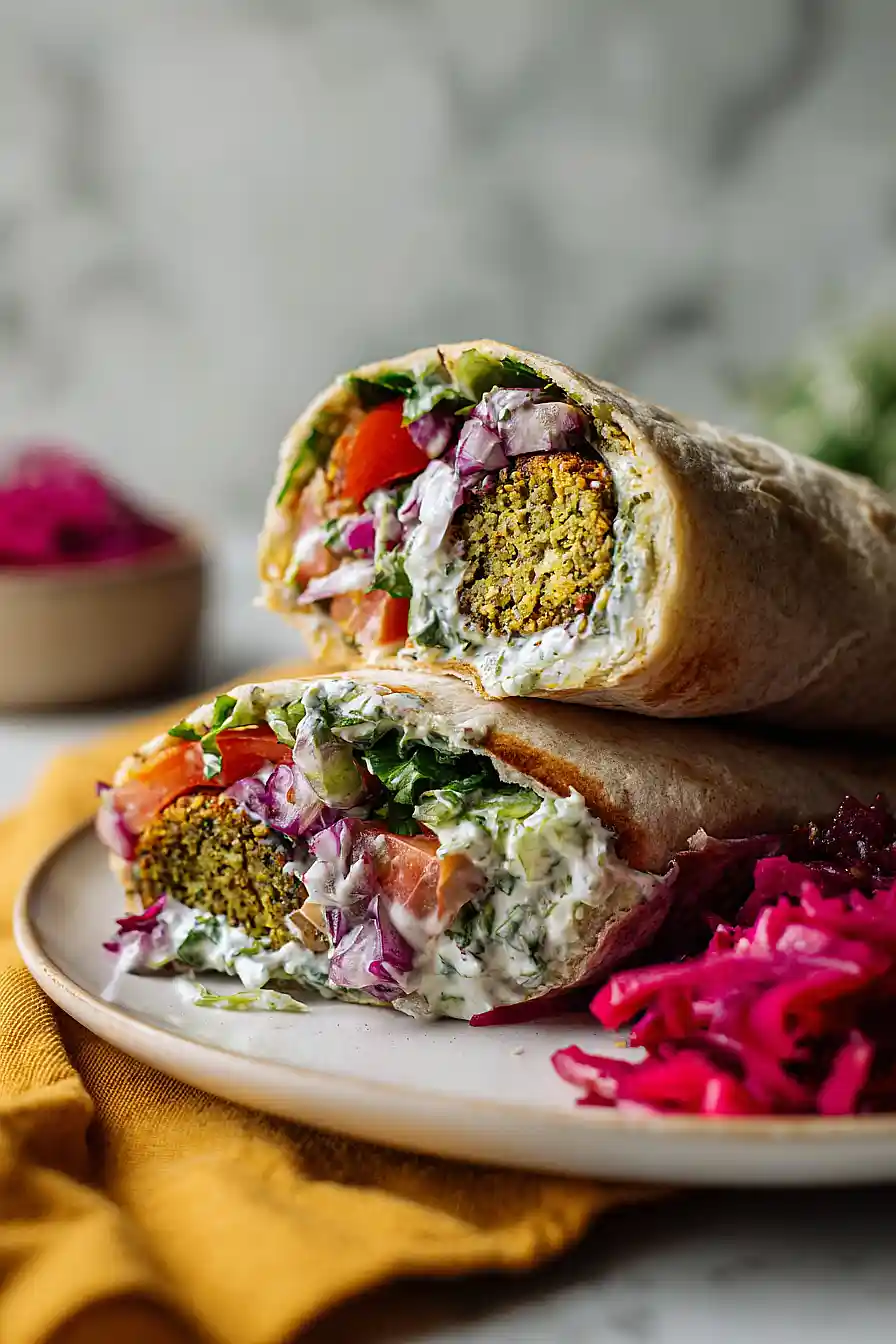
Classic Falafel Wraps with Tzatziki
Ingredients
Method
- Grate the cucumber and immediately salt it generously, then let it sit in a fine-mesh strainer for 10-15 minutes while you prepare other components. Press the cucumber with the back of a spoon to extract as much liquid as possible—this prevents a watery sauce. In a bowl, combine the yogurt, minced garlic, olive oil, white wine vinegar, salt, and fresh dill. Fold in the drained cucumber and set aside to chill. I prefer using thick Greek yogurt like Fage Total because it creates a luxurious, creamy base that holds up better when spooned onto the wraps.
- Add the soaked dried chickpeas, roughly chopped red onion, garlic cloves, ground cumin, lemon juice, paprika, parsley, cilantro, salt, and black pepper to a food processor. Pulse until the mixture resembles coarse breadcrumbs with some texture remaining—it should hold together when squeezed but not be a smooth paste. Transfer to a bowl and immediately stir in the flour, baking powder, and sesame seeds until evenly distributed. The chickpeas must be dried and soaked overnight rather than canned; canned chickpeas are too soft and will create mushy falafel that falls apart during frying.
- Refrigerate the falafel mixture from Step 2 for at least 1 hour—this chilling time helps the mixture hold together better and prevents the balls from spreading during frying. Once chilled, scoop the mixture with a small ice cream scoop or spoon (about 1 tablespoon portions) and roll into compact balls between the palms of your hands. Work quickly and gently; if the mixture feels too sticky, dampen your hands slightly rather than adding more flour. I find that making the balls just before frying, while the oil is heating, keeps them from drying out.
- Heat canola oil in a deep pot or heavy-bottomed saucepan to 350°F (175°C). Working in batches to avoid crowding, carefully add the falafel balls and fry for 2-3 minutes, stirring occasionally, until deep golden brown on all sides. Use a slotted spoon to transfer the fried falafel to a paper towel-lined plate to drain excess oil. Keep the oil temperature consistent throughout frying—if it drops too much, the falafel will absorb excess oil and become greasy.
- While the falafel is frying, prepare your wrap assembly station. Shred the lettuce into thin ribbons and thinly slice the red onion so both ingredients roll easily without bunching. Halve the cherry tomatoes lengthwise to maximize surface coverage. Warm the tortilla wraps one at a time over a gas flame or in a dry skillet for 20-30 seconds per side until pliable and warm—warm tortillas are less likely to tear and create a better texture.
- Lay a warm tortilla on a flat surface and spread a thin layer of tzatziki from Step 1 across the center. Arrange a small handful of shredded lettuce, followed by a few slices of red onion, a spoonful of pickled red cabbage, 3-4 fried falafel balls from Step 4, and a few tomato halves. Top with a dollop of tzatziki, then fold in the sides of the tortilla and roll tightly from bottom to top, keeping the filling compact. Serve immediately while the falafel is still warm and the wraps are pliable.