If you ask me, lemon poppy seed cookies are an underrated classic.
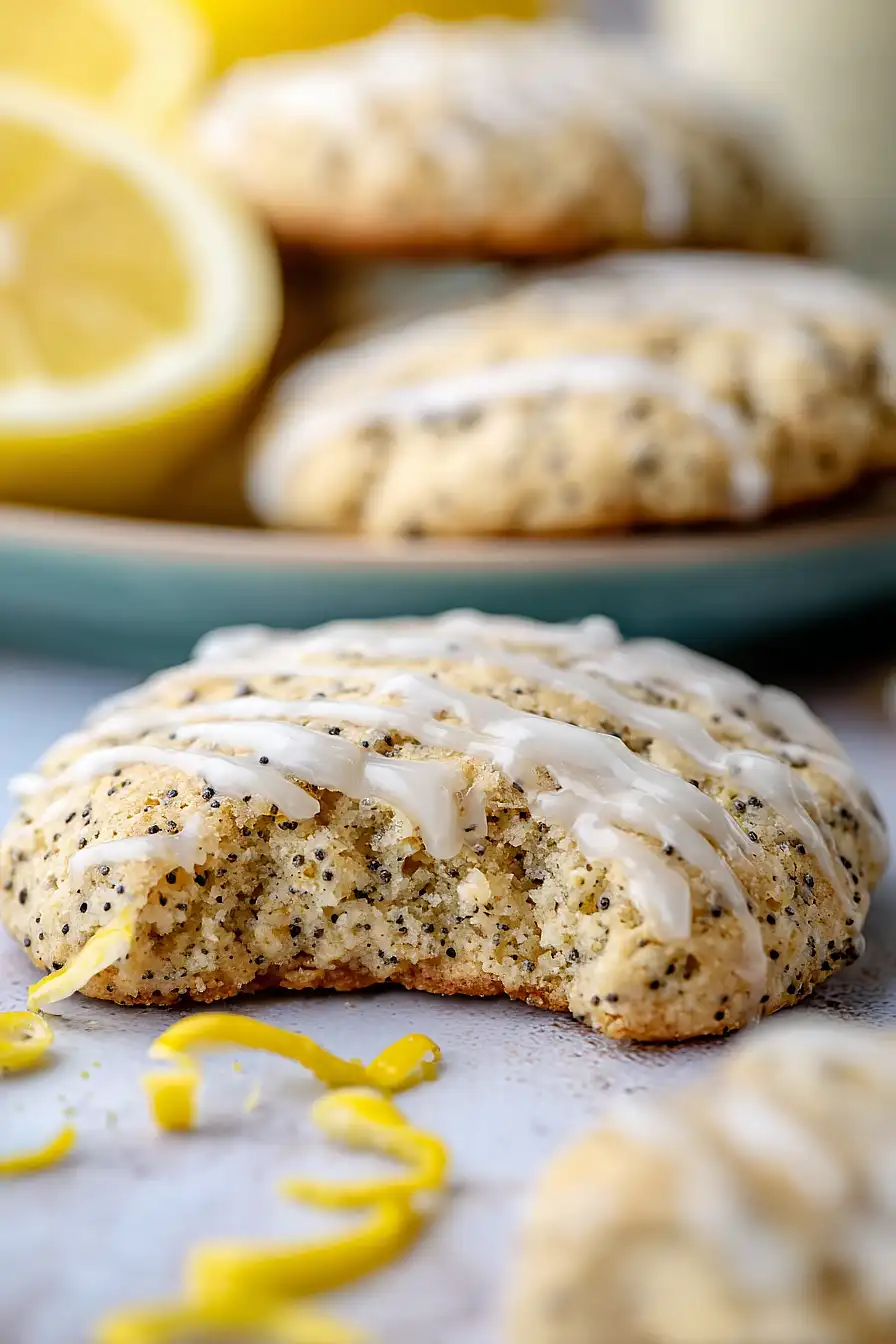
These gluten-free cookies bring together bright citrus and buttery sweetness in every bite. Fresh lemon juice and zest give them a tangy kick, while poppy seeds add little pops of crunch throughout.
They’re made with a simple gluten-free flour blend and topped with a honey-kissed lemon glaze. Soft in the center with slightly crisp edges, they balance sweet and tart just right.
They’re a go-to treat when you want something that feels special but comes together without much fuss.

Why You’ll Love These Gluten Free Lemon Poppy Seed Cookies
- Gluten-free friendly – These cookies let you enjoy a classic treat without worrying about gluten, making them perfect for anyone with dietary restrictions or sensitivities.
- Quick and easy – Ready in under 45 minutes, these cookies are perfect when you need a homemade dessert without spending hours in the kitchen.
- Bright, fresh flavor – The combination of lemon juice and zest gives these cookies a refreshing citrus taste that’s not too sweet, making them great for spring and summer.
- Simple ingredients – You probably already have most of these basic baking staples in your pantry, so you can whip up a batch whenever the craving hits.
What Kind of Flour Should I Use?
Since these are gluten-free cookies, you’ll want to use a good quality gluten-free all-purpose flour blend for the best results. Most store-bought blends like Bob’s Red Mill 1-to-1 or King Arthur Measure for Measure work great because they’re designed to substitute directly for regular flour. Make sure your blend contains xanthan gum or another binder – this helps hold the cookies together and gives them a better texture. If your blend doesn’t include a binder, you’ll want to add about 1/2 teaspoon of xanthan gum to prevent your cookies from crumbling apart.

Options for Substitutions
These cookies are pretty forgiving when it comes to swaps, so here are some options if you need them:
- Gluten-free flour: Stick with a good quality gluten-free flour blend that includes xanthan gum for the best results. If your blend doesn’t have xanthan gum, add 1/2 teaspoon to help bind the cookies. Don’t substitute with regular all-purpose flour if you need these to stay gluten-free.
- Butter: You can use vegan butter or margarine as a dairy-free option. Just make sure it’s at room temperature so it creams properly with the sugar.
- Egg: For an egg-free version, try using a flax egg (1 tablespoon ground flaxseed mixed with 3 tablespoons water, let sit for 5 minutes) or 1/4 cup unsweetened applesauce.
- Fresh lemon juice and zest: Fresh is really best here for that bright lemon flavor, but if you’re in a bind, bottled lemon juice works. You’ll need about the same amount, though the flavor won’t be quite as punchy.
- Poppy seeds: If you don’t have poppy seeds or just don’t like them, you can leave them out completely or swap in chia seeds for a similar look and a bit of crunch.
Watch Out for These Mistakes While Baking
The biggest mistake when making gluten-free lemon poppy seed cookies is overbaking them, which turns these naturally crumbly treats into dry, hard pucks – pull them from the oven when the edges are just set but the centers still look slightly underbaked, as they’ll continue cooking on the baking sheet.
Another common error is skipping the cooling time on the sheet, since gluten-free cookies are more fragile than regular ones and need those 10 minutes to firm up before you move them to a rack.
Make sure your butter is softened to room temperature (not melted) before mixing, as this helps create the right cookie texture, and don’t forget to zest your lemon before juicing it – it’s much easier that way.
For the glaze, add the lemon juice slowly to the powdered sugar until you get a thick but pourable consistency, because too much liquid will make it run right off the cookies instead of creating that nice coating.
What to Serve With Lemon Poppy Seed Cookies?
These cookies are perfect alongside a hot cup of tea or coffee for an afternoon pick-me-up. I love serving them with a glass of cold milk or even iced tea on warmer days, since the bright lemon flavor is really refreshing. They also make a great addition to a brunch spread next to fresh fruit and yogurt, or you can pack them up as a sweet treat in lunchboxes. If you’re hosting, try arranging them on a platter with other light desserts like shortbread or sugar cookies for a nice variety.
Storage Instructions
Store: Keep these lemon poppy seed cookies in an airtight container at room temperature for up to 5 days. They’ll stay soft and chewy if you toss a piece of bread in the container with them, which helps maintain moisture.
Freeze: These cookies freeze really well for up to 3 months. Layer them between sheets of parchment paper in a freezer-safe container to prevent sticking. You can also freeze the dough as balls before baking, then bake them straight from frozen by adding a couple extra minutes to the baking time.
Enjoy: Thaw frozen cookies at room temperature for about 30 minutes before eating. The lemon glaze might look a little cloudy after freezing, but the flavor is still great. If you want to freshen them up, a quick 10 seconds in the microwave brings back that just-baked softness.
| Preparation Time | 20-30 minutes |
| Cooking Time | 10-15 minutes |
| Total Time | 30-45 minutes |
| Level of Difficulty | Medium |
| Servings | 24 cookies |
Estimated Nutrition
Estimated nutrition for the whole recipe (without optional ingredients):
- Calories: 1900-2100
- Protein: 20-25 g
- Fat: 75-85 g
- Carbohydrates: 285-310 g
Ingredients
For the dough:
- 1/2 cup + 2 tbsp butter (I like Kerrygold unsalted for a richer flavor)
- 3/4 cup sugar
- 1 egg (room temperature, about 70°F)
- 1 tsp vanilla
- 2 tbsp lemon juice (freshly squeezed for best acidity)
- 1 1/2 tbsp lemon zest
- 1 7/8 cups flour (I always use King Arthur Measure for Measure)
- 1 tsp baking powder
- 1/2 tsp baking soda
- 1/4 tsp salt
- 1 tbsp poppy seeds
For the glaze:
- 1/2 cup powdered sugar (sifted to remove lumps)
- 1 tbsp lemon juice
- 1/2 tsp honey
Step 1: Prepare Mise en Place and Preheat
- 2 tablespoons lemon juice
- 1 tablespoon lemon juice
- 1 1/2 tablespoons lemon zest
- 1/2 cup powdered sugar
Preheat your oven to 350°F and line a baking sheet with parchment paper.
While the oven heats, ensure your egg is at room temperature (this helps it emulsify better with the butter), juice your lemon to get 2 tablespoons plus 1 tablespoon for the glaze, and zest the lemon to get 1 1/2 tablespoons.
Sift the powdered sugar for the glaze to remove any lumps so it combines smoothly.
I always measure my gluten-free flour by spooning it into the measuring cup and leveling it off—this prevents compacting and gives you the right amount every time.
Step 2: Cream Butter and Sugar
- 1/2 cup + 2 tablespoons butter
- 3/4 cup sugar
In a medium bowl, beat the softened butter and sugar together for 2-3 minutes until the mixture is pale, fluffy, and noticeably lighter in color.
This creaming process incorporates air into the batter, which helps the cookies rise and become tender.
Make sure your butter is soft enough to blend easily but not melted.
Step 3: Build Wet Ingredients with Citrus Flavor
- butter-sugar mixture from Step 2
- 1 egg
- 1 teaspoon vanilla
- 2 tablespoons lemon juice
- 1 1/2 tablespoons lemon zest
Add the room-temperature egg, vanilla, 2 tablespoons of fresh lemon juice, and lemon zest to the butter-sugar mixture from Step 2.
Mix on medium speed for about 1 minute until everything is well combined and the batter looks smooth and cohesive.
The fresh lemon juice and zest will start building the bright flavor at this stage, and the egg acts as a binder for your gluten-free dough.
Step 4: Combine Dry Ingredients and Form Dough
- wet ingredient mixture from Step 3
- 1 7/8 cups gluten-free flour
- 1 teaspoon baking powder
- 1/2 teaspoon baking soda
- 1/4 teaspoon salt
- 1 tablespoon poppy seeds
In a separate small bowl, whisk together the gluten-free flour, baking powder, baking soda, and salt.
Add the dry mixture to your wet ingredients from Step 3 and mix on low speed until just combined—the dough should come together without any visible streaks of flour.
Don’t overmix, as this can make gluten-free cookies tough.
Fold in the poppy seeds by hand using a spatula until evenly distributed throughout the dough.
Step 5: Scoop and Bake Cookies
- cookie dough from Step 4
Using a cookie scoop or rounded tablespoon, portion the dough from Step 4 onto your prepared baking sheet, spacing them about 2 inches apart.
Bake for 10-12 minutes until the edges are lightly golden but the centers still look slightly underbaked—this is key for tender cookies.
I prefer cookies that are just set on top but still have a tiny bit of give in the center, so I err toward the 10-minute mark.
Step 6: Cool and Prepare for Glazing
- baked cookies from Step 5
Let the baked cookies cool on the baking sheet for 10 minutes—this allows them to set up enough to move without breaking but stay warm enough for the glaze to adhere.
After 10 minutes, transfer them to a wire cooling rack to cool completely before glazing.
Step 7: Glaze and Finish
- cooled cookies from Step 6
- sifted powdered sugar from Step 1
- 1 tablespoon lemon juice
- 1/2 teaspoon honey
While the cookies cool, whisk together the sifted powdered sugar from Step 1, 1 tablespoon of fresh lemon juice, and honey in a small bowl until you have a smooth, drizzleable glaze.
Once the cookies are completely cool, drizzle or spread the glaze generously over each cookie.
The honey adds just a touch of richness and helps the glaze set nicely without becoming rock-hard.
Let the glaze set for a few minutes before serving.
Buttery Gluten Free Lemon Poppy Seed Cookies
Ingredients
Method
- Preheat your oven to 350°F and line a baking sheet with parchment paper. While the oven heats, ensure your egg is at room temperature (this helps it emulsify better with the butter), juice your lemon to get 2 tablespoons plus 1 tablespoon for the glaze, and zest the lemon to get 1 1/2 tablespoons. Sift the powdered sugar for the glaze to remove any lumps so it combines smoothly. I always measure my gluten-free flour by spooning it into the measuring cup and leveling it off—this prevents compacting and gives you the right amount every time.
- In a medium bowl, beat the softened butter and sugar together for 2-3 minutes until the mixture is pale, fluffy, and noticeably lighter in color. This creaming process incorporates air into the batter, which helps the cookies rise and become tender. Make sure your butter is soft enough to blend easily but not melted.
- Add the room-temperature egg, vanilla, 2 tablespoons of fresh lemon juice, and lemon zest to the butter-sugar mixture from Step 2. Mix on medium speed for about 1 minute until everything is well combined and the batter looks smooth and cohesive. The fresh lemon juice and zest will start building the bright flavor at this stage, and the egg acts as a binder for your gluten-free dough.
- In a separate small bowl, whisk together the gluten-free flour, baking powder, baking soda, and salt. Add the dry mixture to your wet ingredients from Step 3 and mix on low speed until just combined—the dough should come together without any visible streaks of flour. Don't overmix, as this can make gluten-free cookies tough. Fold in the poppy seeds by hand using a spatula until evenly distributed throughout the dough.
- Using a cookie scoop or rounded tablespoon, portion the dough from Step 4 onto your prepared baking sheet, spacing them about 2 inches apart. Bake for 10-12 minutes until the edges are lightly golden but the centers still look slightly underbaked—this is key for tender cookies. I prefer cookies that are just set on top but still have a tiny bit of give in the center, so I err toward the 10-minute mark.
- Let the baked cookies cool on the baking sheet for 10 minutes—this allows them to set up enough to move without breaking but stay warm enough for the glaze to adhere. After 10 minutes, transfer them to a wire cooling rack to cool completely before glazing.
- While the cookies cool, whisk together the sifted powdered sugar from Step 1, 1 tablespoon of fresh lemon juice, and honey in a small bowl until you have a smooth, drizzleable glaze. Once the cookies are completely cool, drizzle or spread the glaze generously over each cookie. The honey adds just a touch of richness and helps the glaze set nicely without becoming rock-hard. Let the glaze set for a few minutes before serving.