I used to think risotto was one of those fancy restaurant dishes that regular people couldn’t make at home. Too complicated, too much stirring, too easy to mess up. Then I realized it’s actually just rice cooked slowly with liquid—nothing scary about that.
The key is being patient and adding your stock a little at a time. Sure, you’ll be standing at the stove for about twenty minutes, but that’s it. And when you throw shrimp and asparagus into the mix, you’ve got a complete meal that tastes like it came from a nice Italian place. Except you made it yourself, and you didn’t have to change out of your sweatpants.
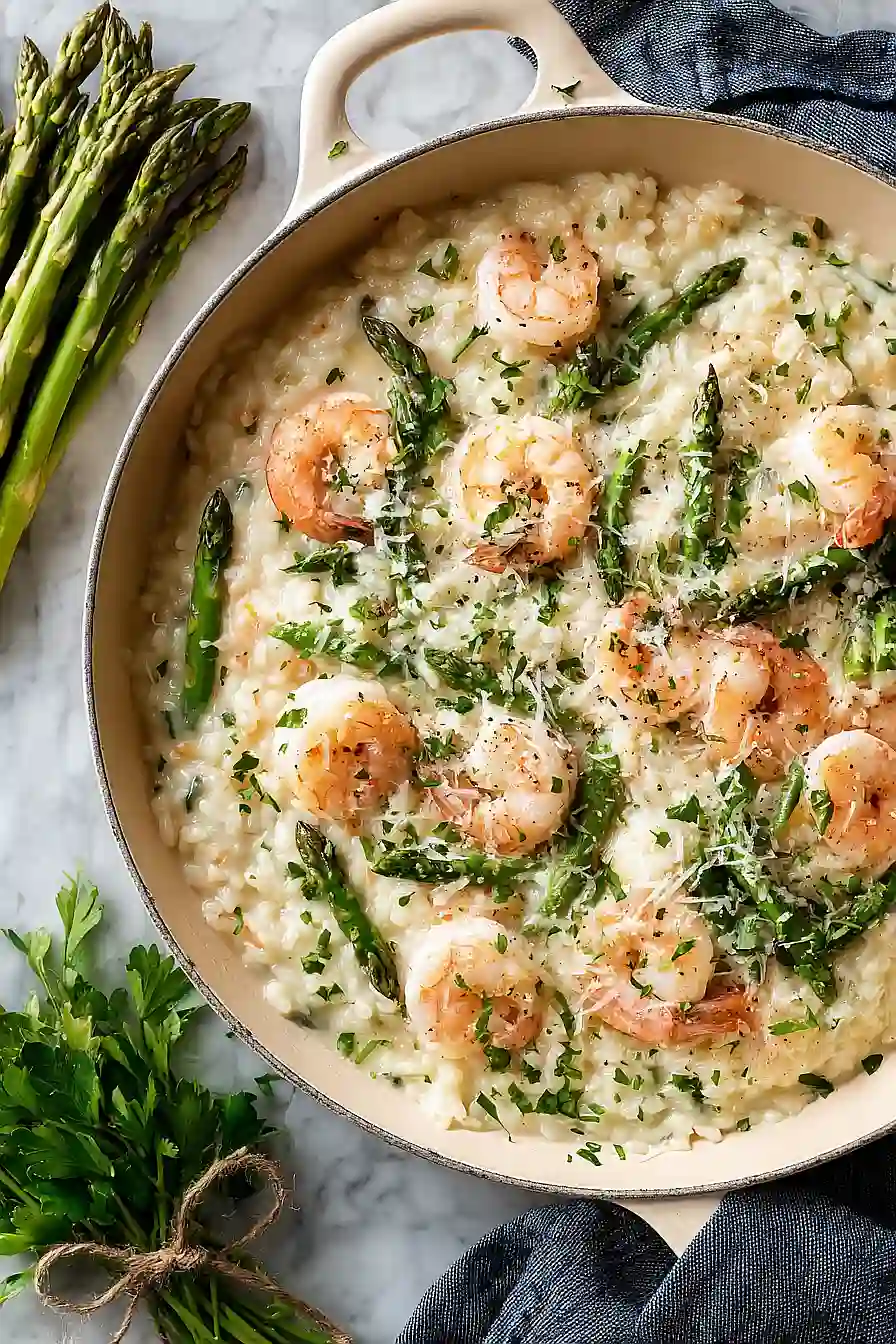
Why You’ll Love This Shrimp and Asparagus Risotto
- Restaurant-quality meal at home – This creamy risotto tastes like something you’d order at a fancy Italian restaurant, but you can make it in your own kitchen for a fraction of the price.
- Simple ingredients – You probably have most of these staples in your pantry already, and the fresh shrimp and asparagus are easy to find at any grocery store.
- Ready in under an hour – At just 45-55 minutes from start to finish, this impressive dish is perfect for weeknight dinners or when you want to treat yourself without spending all evening in the kitchen.
- Naturally gluten-free – This risotto works great for anyone avoiding gluten, making it an easy option when cooking for guests with dietary restrictions.
- Light yet satisfying – The combination of tender shrimp, crisp asparagus, and creamy rice gives you a filling meal that doesn’t feel heavy, making it ideal for spring and summer dinners.
What Kind of Rice Should I Use?
For risotto, you’ll want to use a short-grain Italian rice variety like Arborio, Carnaroli, or Vialone Nano. Arborio is the most common and easiest to find at your local grocery store, and it works great for this recipe. These types of rice have a high starch content that gets released during cooking, which is what gives risotto that signature creamy texture. Don’t try to substitute long-grain rice like basmati or jasmine – they won’t give you the same results since they don’t release enough starch. You’ll usually find Arborio rice in the pasta or international foods aisle, and a standard 16-ounce box will give you plenty for this recipe with some left over.
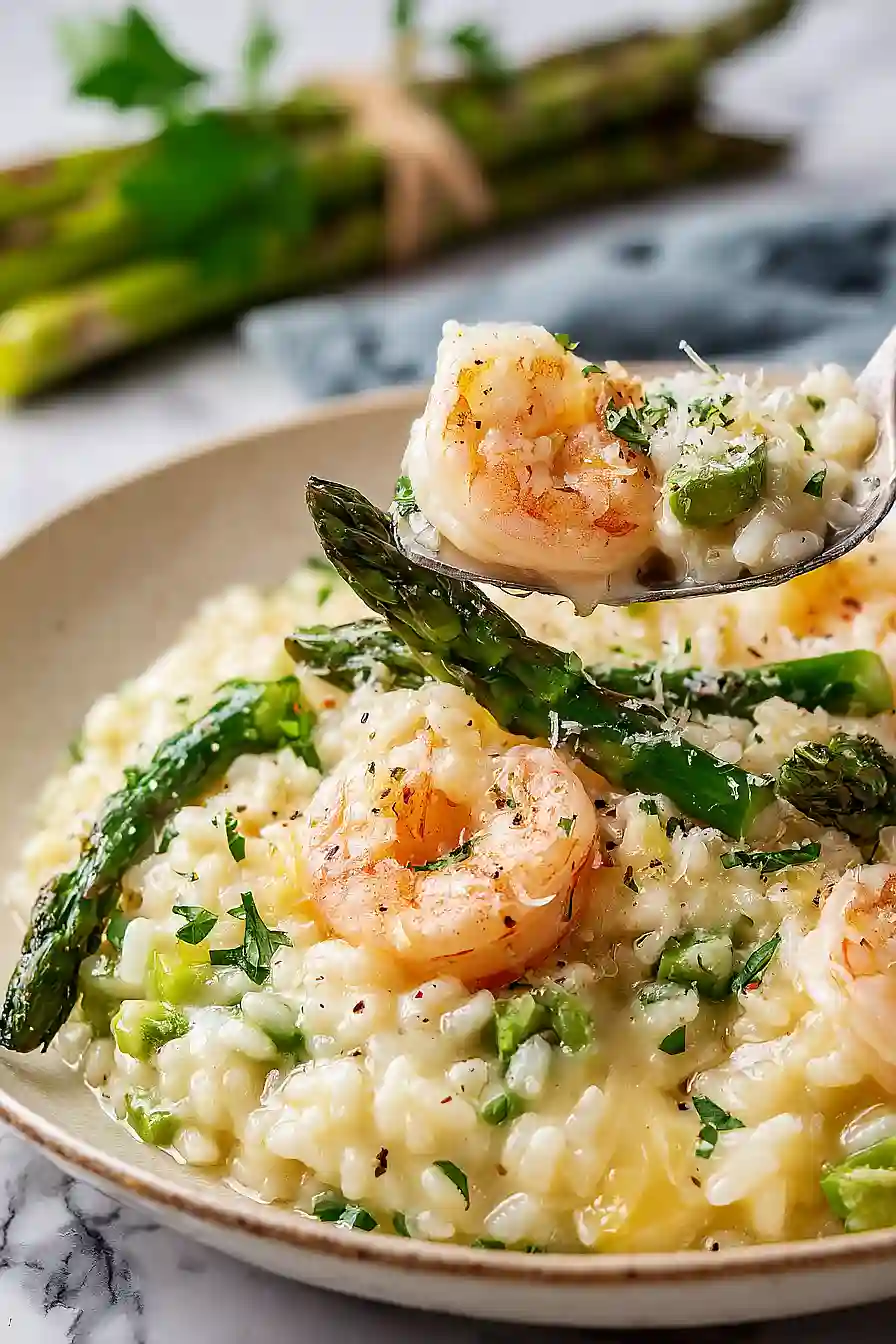
Options for Substitutions
Here are some swaps you can make while keeping this risotto delicious:
- Arborio rice: Don’t substitute the rice in this recipe – arborio, carnaroli, or vialone nano are essential for getting that creamy risotto texture. Regular long-grain rice just won’t work the same way.
- Stock: Chicken, vegetable, or seafood stock all work great here. If you only have chicken stock on hand, that’s totally fine and won’t take away from the shrimp flavor.
- Shrimp: You can swap shrimp for scallops, chunks of white fish like cod or halibut, or even lobster if you’re feeling fancy. Just adjust cooking times – fish will need less time than shrimp.
- Asparagus: Try using fresh or frozen peas, green beans, or broccoli florets instead. Just make sure to cut harder vegetables like broccoli into small pieces so they cook through.
- White wine: If you don’t have wine, use an extra ½ cup of stock with a squeeze of lemon juice to add that bright, acidic note.
- Shallot: A small yellow or white onion works just as well – use about ½ cup finely chopped.
- Parmesan: Pecorino Romano or Grana Padano make good substitutes, though they’ll give a slightly sharper flavor than parmesan.
Watch Out for These Mistakes While Cooking
The biggest mistake when making risotto is adding all the stock at once instead of gradually, which prevents the rice from releasing its starch and creating that signature creamy texture – patience is key here, so add the stock half a cup at a time and stir frequently until each addition is absorbed.
Overcooking your shrimp is another common error that leads to rubbery, tough bites, so watch for them to turn pink and curl slightly (this only takes 2-3 minutes), and remember they’ll continue cooking from the residual heat even after you remove the pan from the stove.
Don’t forget to keep your stock hot throughout the cooking process – adding cold stock to the rice will lower the temperature and interrupt the cooking, making your risotto take longer and potentially turn out gummy.
Finally, serve risotto right away since it continues to thicken as it sits, and if you need to wait, you can loosen it up by stirring in a splash of warm stock just before serving.
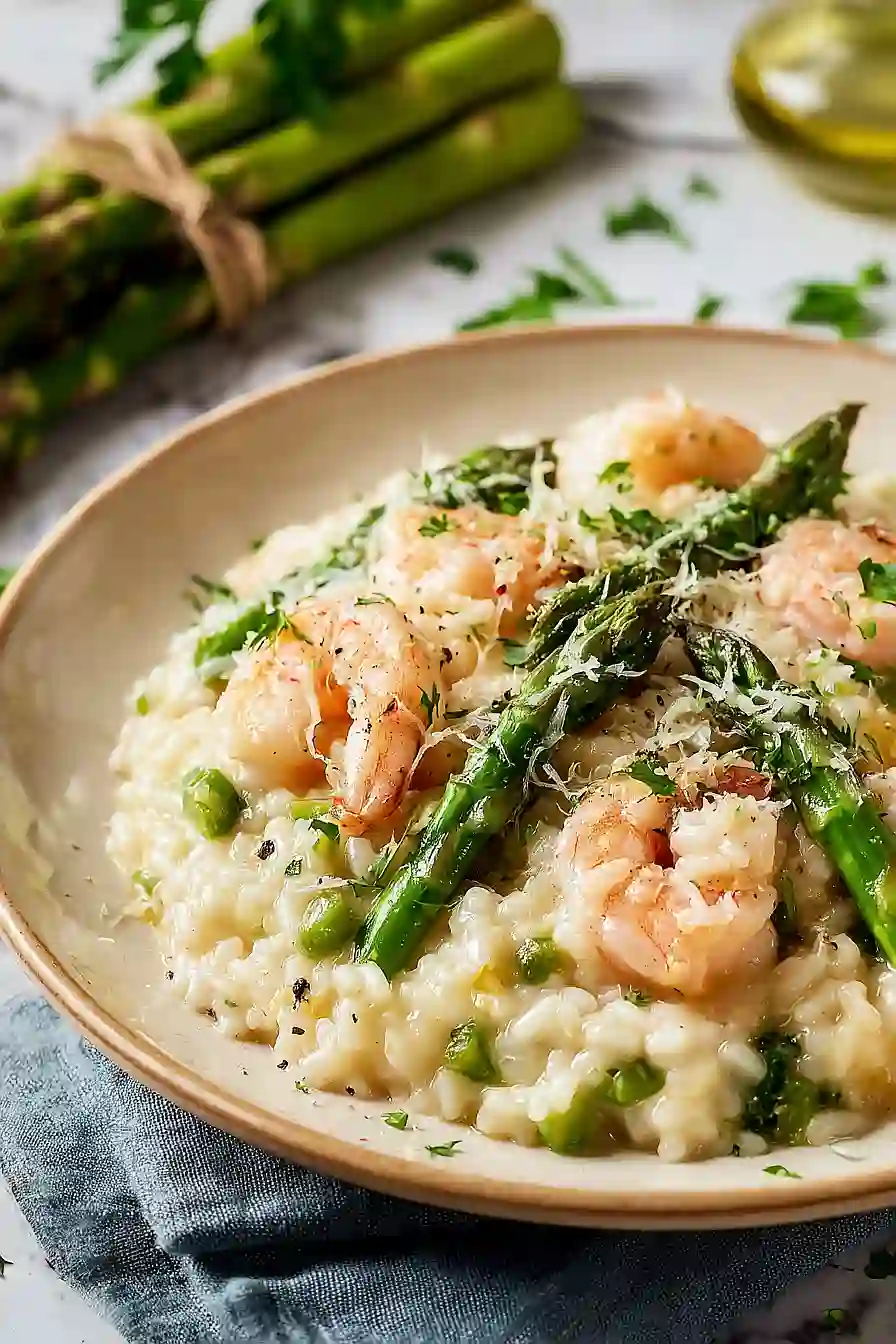
What to Serve With Shrimp and Asparagus Risotto?
Since risotto is pretty rich and filling on its own, I like to keep the sides simple and fresh. A crisp arugula salad with lemon vinaigrette is perfect for cutting through the creaminess, and the peppery greens pair really nicely with the shrimp. Crusty bread is always a good call for scooping up any extra risotto from your bowl, and it’s great for soaking up all those buttery, garlicky flavors. If you want to add a little more to the meal, roasted cherry tomatoes or a side of sautéed green beans with garlic work well without overwhelming the dish.
Storage Instructions
Store: Risotto is best enjoyed fresh, but you can store leftovers in an airtight container in the fridge for up to 3 days. It will thicken up quite a bit as it sits, so don’t worry if it looks a little different than when you first made it.
Freeze: I don’t recommend freezing this shrimp and asparagus risotto since the seafood and vegetables don’t hold up well in the freezer. The texture of the shrimp can get rubbery and the asparagus gets mushy, so it’s better to just make what you’ll eat within a few days.
Reheat: Warm up your leftover risotto in a pan over medium-low heat with a splash of stock or water to loosen it back up. Stir frequently until it’s heated through and creamy again. You can also microwave it, but add a little liquid and stir every 30 seconds to keep it from drying out.
| Preparation Time | 10-15 minutes |
| Cooking Time | 35-40 minutes |
| Total Time | 45-55 minutes |
| Level of Difficulty | Medium |
| Servings | 4 servings |
Estimated Nutrition
Estimated nutrition for the whole recipe (without optional ingredients):
- Calories: 1850-2050
- Protein: 100-115 g
- Fat: 60-70 g
- Carbohydrates: 190-210 g
Ingredients
- 6.5 cups chicken stock
- 5 tbsp butter
- 1 large shallot
- 5 cloves garlic
- 1.5 cups rice (Arborio recommended)
- 0.5 cup dry white wine
- 1 cup asparagus (cut into 1-inch diagonal pieces)
- 1 lb shrimp
- 1 cup freshly grated parmesan cheese
- 1/4 cup fresh parsley, chopped
- salt to taste
- freshly ground black pepper to taste
Step 1: Prep Ingredients and Heat Stock
- 6.5 cups chicken stock
- 1 large shallot, minced
- 5 cloves garlic, minced
- 1 cup asparagus, cut into 1-inch diagonal pieces
- 1 lb shrimp, patted dry
While you’re gathering ingredients, bring the chicken stock to a boil in a separate pot, then reduce heat to low and cover to keep it hot throughout cooking—this ensures each addition of stock will be absorbed quickly into the rice without cooling it down.
Finely mince the shallot and garlic, cut the asparagus into 1-inch diagonal pieces, and pat the shrimp dry with paper towels.
Having everything prepped and ready (mise en place) makes the risotto process smooth and prevents the rice from overcooking while you’re still chopping.
Step 2: Build the Flavor Base with Aromatics
- 3 tablespoons butter
- 1 large shallot, minced
- 5 cloves garlic, minced
Melt 3 tablespoons of butter in a large, heavy-bottomed pan over medium heat.
Add the minced shallot and cook for 2-3 minutes, stirring occasionally, until it becomes soft and translucent.
Add the minced garlic and cook for another minute until fragrant.
This slow, gentle cooking of aromatics in butter creates the foundation for the risotto’s flavor—rushing this step will result in harsh, raw garlic notes.
Step 3: Toast the Rice and Deglaze with Wine
- 1.5 cups rice
- 0.5 cup dry white wine
Add the Arborio rice to the pan and stir constantly for about 1 minute.
This toasting step coats each grain with butter and helps them maintain their structure during cooking.
Pour in the dry white wine and stir frequently until it’s mostly absorbed by the rice, about 1-2 minutes.
You’ll notice the rice beginning to look slightly translucent at the edges—this is exactly what you want.
Step 4: Build the Risotto with Gradual Stock Additions
- hot chicken stock from Step 1
Begin adding the hot stock from Step 1 in ½-cup increments, stirring frequently (about every 30 seconds) after each addition.
Wait until the liquid is mostly absorbed before adding the next portion—you should see the rice beginning to peek through the surface.
This gradual process, which takes about 18-20 minutes for roughly 5-6 stock additions, allows the rice to release its natural starches, creating that signature creamy risotto texture.
I find that constant but not obsessive stirring (you don’t need to stir every second, but check in regularly) gives the best results without overdeveloping gluten.
Step 5: Add Asparagus and Continue Cooking
- 1 cup asparagus from Step 1
- remaining hot chicken stock
When you have approximately 1 cup of stock remaining (this means you’ve made about 4-5 stock additions), add the asparagus pieces from Step 1 and stir to combine.
Continue adding stock in ½-cup increments as before, stirring frequently.
The asparagus will soften slightly while maintaining a pleasant tender-crisp texture—approximately 8-10 minutes of cooking time.
Step 6: Finish with Shrimp and Final Stock Addition
- 1 lb shrimp from Step 1
- final hot chicken stock
When only about ½ cup of stock remains, add the patted-dry shrimp from Step 1 and stir gently to distribute them throughout the risotto.
Add the final stock addition and continue stirring until the rice is creamy and tender and the shrimp are pink and cooked through, about 3-4 minutes.
The shrimp cook quickly, so don’t walk away—you want them just cooked through, not rubbery.
I like to add the shrimp at this late stage so they stay tender and don’t overcook in the residual heat.
Step 7: Finish and Serve
- 2 tablespoons butter
- 1 cup freshly grated parmesan cheese
- salt to taste
- freshly ground black pepper to taste
- 1/4 cup fresh parsley, chopped
Remove the pan from heat and immediately stir in the remaining 2 tablespoons of butter and the grated parmesan cheese until fully incorporated and creamy.
Taste and season with salt and freshly ground black pepper as needed.
Divide among serving bowls and garnish with fresh parsley.
Serve immediately while the risotto is hot and creamy—risotto waits for no one!
Parmesan Shrimp and Asparagus Risotto
Ingredients
Method
- While you're gathering ingredients, bring the chicken stock to a boil in a separate pot, then reduce heat to low and cover to keep it hot throughout cooking—this ensures each addition of stock will be absorbed quickly into the rice without cooling it down. Finely mince the shallot and garlic, cut the asparagus into 1-inch diagonal pieces, and pat the shrimp dry with paper towels. Having everything prepped and ready (mise en place) makes the risotto process smooth and prevents the rice from overcooking while you're still chopping.
- Melt 3 tablespoons of butter in a large, heavy-bottomed pan over medium heat. Add the minced shallot and cook for 2-3 minutes, stirring occasionally, until it becomes soft and translucent. Add the minced garlic and cook for another minute until fragrant. This slow, gentle cooking of aromatics in butter creates the foundation for the risotto's flavor—rushing this step will result in harsh, raw garlic notes.
- Add the Arborio rice to the pan and stir constantly for about 1 minute. This toasting step coats each grain with butter and helps them maintain their structure during cooking. Pour in the dry white wine and stir frequently until it's mostly absorbed by the rice, about 1-2 minutes. You'll notice the rice beginning to look slightly translucent at the edges—this is exactly what you want.
- Begin adding the hot stock from Step 1 in ½-cup increments, stirring frequently (about every 30 seconds) after each addition. Wait until the liquid is mostly absorbed before adding the next portion—you should see the rice beginning to peek through the surface. This gradual process, which takes about 18-20 minutes for roughly 5-6 stock additions, allows the rice to release its natural starches, creating that signature creamy risotto texture. I find that constant but not obsessive stirring (you don't need to stir every second, but check in regularly) gives the best results without overdeveloping gluten.
- When you have approximately 1 cup of stock remaining (this means you've made about 4-5 stock additions), add the asparagus pieces from Step 1 and stir to combine. Continue adding stock in ½-cup increments as before, stirring frequently. The asparagus will soften slightly while maintaining a pleasant tender-crisp texture—approximately 8-10 minutes of cooking time.
- When only about ½ cup of stock remains, add the patted-dry shrimp from Step 1 and stir gently to distribute them throughout the risotto. Add the final stock addition and continue stirring until the rice is creamy and tender and the shrimp are pink and cooked through, about 3-4 minutes. The shrimp cook quickly, so don't walk away—you want them just cooked through, not rubbery. I like to add the shrimp at this late stage so they stay tender and don't overcook in the residual heat.
- Remove the pan from heat and immediately stir in the remaining 2 tablespoons of butter and the grated parmesan cheese until fully incorporated and creamy. Taste and season with salt and freshly ground black pepper as needed. Divide among serving bowls and garnish with fresh parsley. Serve immediately while the risotto is hot and creamy—risotto waits for no one!