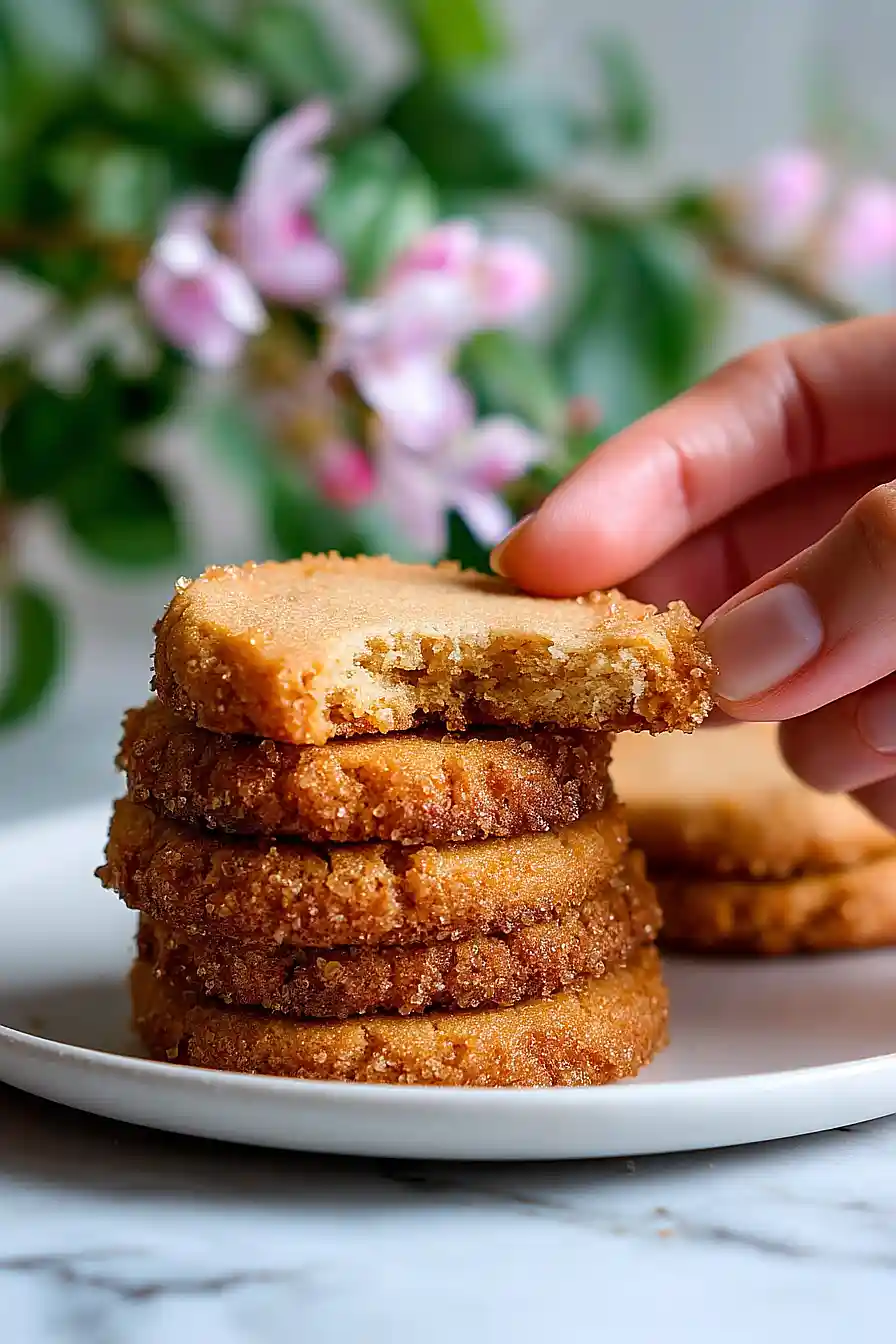
Here is my favorite brown sugar shortbread cookie recipe, with rich butter, packed brown sugar, and a coarse sugar topping that gives every bite a sweet crunch.
These cookies are so simple to make, but they taste like you spent hours in the kitchen. The brown sugar gives them a deeper, more caramel-like flavor than regular shortbread, and my kids love helping me sprinkle the sugar on top before baking.
Why You’ll Love These Brown Sugar Shortbread Cookies
- Rich, caramel-like flavor – The brown sugar gives these shortbread cookies a deeper, more complex taste than traditional versions, with hints of molasses that make them extra special.
- Simple ingredients – You probably have everything you need in your pantry already – just butter, brown sugar, flour, and a few other basics.
- Buttery, melt-in-your-mouth texture – These cookies have that classic shortbread crumble that’s so satisfying, and the coarse sugar on top adds a nice crunch.
- Perfect for gifting – They look impressive and keep well, making them ideal for cookie exchanges, holiday gifts, or bringing to parties.
- Make-ahead friendly – The dough can be prepared in advance and chilled until you’re ready to bake, so you can have fresh cookies whenever you want them.
What Kind of Brown Sugar Should I Use?
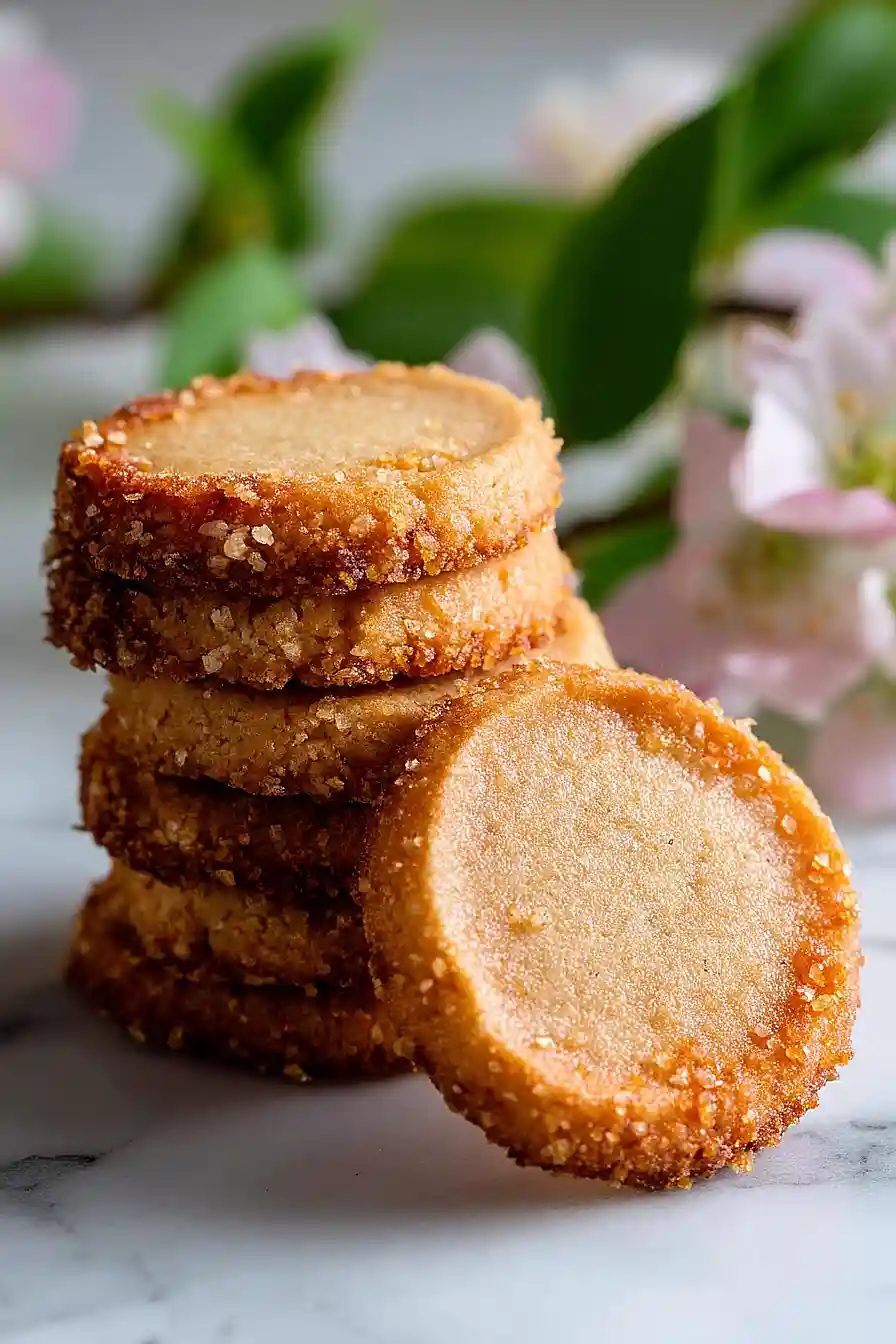
Both light and dark brown sugar will work great in these shortbread cookies, so feel free to use whichever you have on hand. Light brown sugar has a milder molasses flavor and will give you a slightly more subtle taste, while dark brown sugar packs a deeper, more caramel-like flavor that really comes through in the finished cookies. If you’re not sure which to pick, light brown sugar is a safe bet for most people, but if you love that rich molasses taste, go for the dark. Just make sure to pack your brown sugar firmly into the measuring cup when measuring it out, and if it’s gotten hard or clumpy in your pantry, you can soften it in the microwave for a few seconds or store it with a slice of bread overnight.
Options for Substitutions
These cookies are pretty forgiving, so here are some swaps you can make if you need to:
- Unsalted butter: You can use salted butter if that’s what you have – just skip the added salt in the recipe. For a dairy-free version, try using plant-based butter sticks (not the spreadable kind), though the texture might be slightly different.
- Brown sugar: Light and dark brown sugar work equally well here. Dark brown sugar will give you a deeper molasses flavor. In a pinch, you can make your own by mixing 1 cup white sugar with 1 tablespoon of molasses.
- All-purpose flour: This is one ingredient you’ll want to stick with – shortbread really needs all-purpose flour for that classic crumbly texture. Other flours will change the consistency too much.
- Coarse sugar: If you don’t have coarse sugar, regular granulated sugar works fine for rolling. You can also skip the sugar coating entirely or use cinnamon sugar for a different twist.
- Vanilla extract: Vanilla paste or vanilla bean seeds make great substitutes at a 1:1 ratio. Almond extract also works if you want a nutty flavor, but use only 1/2 teaspoon as it’s stronger.
Watch Out for These Mistakes While Baking
The biggest mistake with shortbread cookies is overworking the dough after adding the flour, which develops too much gluten and creates tough, hard cookies instead of the tender, crumbly texture you’re after – mix just until the flour disappears and stop.
Another common error is skipping the chilling step, but cold dough is essential here since it prevents the cookies from spreading too much in the oven and helps them hold their shape beautifully.
Watch your baking time carefully and pull the cookies when the edges are just set but the centers still look slightly underdone, as they’ll continue baking on the hot pan and can quickly go from perfect to overdone.
Finally, make sure your butter is truly softened to room temperature (not melted or too cold), which ensures it creams properly with the brown sugar and gives you that classic shortbread texture.
What to Serve With Brown Sugar Shortbread Cookies?
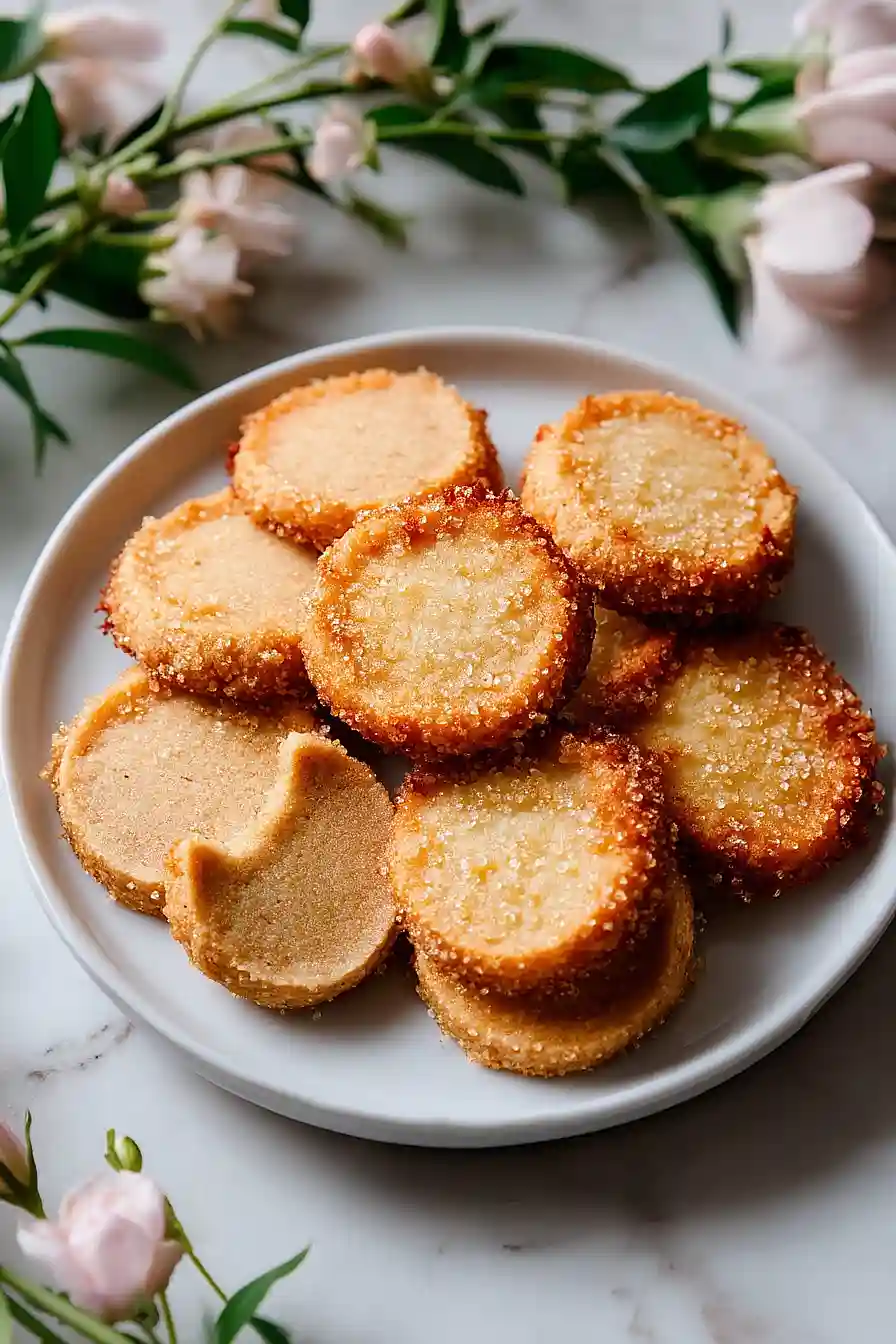
These cookies are perfect alongside a hot cup of coffee or tea in the afternoon, especially when you need a little pick-me-up. I love serving them with a glass of cold milk for dunking, which brings out the buttery brown sugar flavor even more. They also make a great addition to an ice cream sundae – just crumble them on top or serve them on the side for scooping. If you’re putting together a dessert spread, these shortbread cookies pair nicely with fresh berries and whipped cream, or you can enjoy them plain as a simple after-dinner treat.
Storage Instructions
Store: These brown sugar shortbread cookies stay fresh in an airtight container at room temperature for up to 1 week. I like to tuck a piece of parchment paper between layers to keep them from sticking together, especially if you used that coarse sugar on top.
Freeze: You can freeze the baked cookies for up to 3 months in a freezer-safe container or bag. Just let them thaw at room temperature for about 30 minutes before eating. If you want to get ahead, you can also freeze the dough logs wrapped tightly in plastic wrap, then slice and bake whenever a cookie craving hits.
| Preparation Time | 15-20 minutes |
| Cooking Time | 14-16 minutes |
| Total Time | 4 hours 29 minutes – 5 days |
| Level of Difficulty | Medium |
Estimated Nutrition
Estimated nutrition for the whole recipe (without optional ingredients):
- Calories: 2900-3100
- Protein: 16-20 g
- Fat: 160-180 g
- Carbohydrates: 350-375 g
Ingredients
- 1.5 tsp vanilla extract (pure vanilla preferred)
- 2.25 cups all-purpose flour (I like King Arthur all-purpose)
- 3/4 cup unsalted butter (I use Kerrygold for rich flavor)
- 1/2 cup coarse sugar (for topping, gives a sweet crunch)
- 1 cup packed brown sugar (light or dark, firmly packed)
- 1/4 tsp salt
Step 1: Cream Butter and Brown Sugar
- 3/4 cup unsalted butter
- 1 cup packed brown sugar
Cut the unsalted butter into small cubes and let it sit at room temperature for about 15 minutes until it’s slightly softened but still cool—this helps it incorporate air more effectively.
Using an electric mixer on medium speed, beat the butter and packed brown sugar together for 3–4 minutes until the mixture is light, fluffy, and pale in color.
This creaming process is crucial because it incorporates air into the dough, which creates the tender, melt-in-your-mouth texture these cookies are known for.
I like to use Kerrygold butter because its higher fat content makes the shortbread extra rich and flavorful.
Step 2: Add Vanilla and Combine Dry Ingredients
- 1.5 tsp vanilla extract
- 2.25 cups all-purpose flour
- 1/4 tsp salt
While the mixer is still running on medium speed, pour in the vanilla extract and beat for another 30 seconds until fully incorporated.
In a separate small bowl, whisk together the flour and salt.
This ensures the salt is evenly distributed throughout the dough, preventing any salty pockets in your finished cookies.
Step 3: Mix Dough and Shape into Logs
- creamed butter mixture from Step 1
- dry ingredient mixture from Step 2
Reduce the mixer speed to low and gradually add the dry ingredient mixture from Step 2, mixing just until the dough comes together.
Don’t overmix—stop as soon as no flour streaks remain.
Divide the dough in half, then roll each half into an 8-inch log about 1.5 inches in diameter using your hands or a flat work surface.
The logs should be relatively uniform so they bake evenly.
Step 4: Coat with Coarse Sugar and Chill
- 1/2 cup coarse sugar
- shaped dough logs from Step 3
Pour the coarse sugar onto a shallow plate or small baking sheet.
Roll each dough log in the coarse sugar, pressing gently so it adheres to the outside of the dough.
The sugar will give the cookies a beautiful sparkly texture and sweet crunch when you bite into them.
Wrap each log tightly in plastic wrap and refrigerate for at least 4 hours, or up to 24 hours.
This chilling time is essential—it prevents the dough from spreading too much during baking and helps develop the cookies’ flavor.
Step 5: Prepare and Bake the Cookies
- chilled dough logs from Step 4
Preheat your oven to 350°F and line two baking sheets with parchment paper.
Remove the chilled dough logs from the refrigerator and, using a sharp knife, slice each log into 12 equal pieces (about 2/3 inch thick).
Arrange the sliced cookies on the prepared baking sheets, leaving about 2 inches between each cookie to allow for slight spreading.
I like to score my logs with small notches before chilling so I know exactly where to cut for uniform cookies.
Bake for 14–16 minutes until the edges are lightly golden brown but the centers still look slightly underdone—they’ll continue to cook slightly on the pan after removal.
Step 6: Cool and Finish
- baked cookies from Step 5
Remove the baking sheets from the oven and let the cookies cool directly on the pan for 5 minutes—this allows them to set up just enough to be handled without breaking.
Transfer the cookies to a cooling rack to cool completely.
They’ll firm up as they cool and develop their characteristic shortbread crispness.
Mouthwatering Brown Sugar Shortbread Cookies
Ingredients
Method
- Cut the unsalted butter into small cubes and let it sit at room temperature for about 15 minutes until it's slightly softened but still cool—this helps it incorporate air more effectively. Using an electric mixer on medium speed, beat the butter and packed brown sugar together for 3–4 minutes until the mixture is light, fluffy, and pale in color. This creaming process is crucial because it incorporates air into the dough, which creates the tender, melt-in-your-mouth texture these cookies are known for. I like to use Kerrygold butter because its higher fat content makes the shortbread extra rich and flavorful.
- While the mixer is still running on medium speed, pour in the vanilla extract and beat for another 30 seconds until fully incorporated. In a separate small bowl, whisk together the flour and salt. This ensures the salt is evenly distributed throughout the dough, preventing any salty pockets in your finished cookies.
- Reduce the mixer speed to low and gradually add the dry ingredient mixture from Step 2, mixing just until the dough comes together. Don't overmix—stop as soon as no flour streaks remain. Divide the dough in half, then roll each half into an 8-inch log about 1.5 inches in diameter using your hands or a flat work surface. The logs should be relatively uniform so they bake evenly.
- Pour the coarse sugar onto a shallow plate or small baking sheet. Roll each dough log in the coarse sugar, pressing gently so it adheres to the outside of the dough. The sugar will give the cookies a beautiful sparkly texture and sweet crunch when you bite into them. Wrap each log tightly in plastic wrap and refrigerate for at least 4 hours, or up to 24 hours. This chilling time is essential—it prevents the dough from spreading too much during baking and helps develop the cookies' flavor.
- Preheat your oven to 350°F and line two baking sheets with parchment paper. Remove the chilled dough logs from the refrigerator and, using a sharp knife, slice each log into 12 equal pieces (about 2/3 inch thick). Arrange the sliced cookies on the prepared baking sheets, leaving about 2 inches between each cookie to allow for slight spreading. I like to score my logs with small notches before chilling so I know exactly where to cut for uniform cookies. Bake for 14–16 minutes until the edges are lightly golden brown but the centers still look slightly underdone—they'll continue to cook slightly on the pan after removal.
- Remove the baking sheets from the oven and let the cookies cool directly on the pan for 5 minutes—this allows them to set up just enough to be handled without breaking. Transfer the cookies to a cooling rack to cool completely. They'll firm up as they cool and develop their characteristic shortbread crispness.