If you ask me, a good piece of grilled salmon is one of life’s simple pleasures.
This Japanese-style recipe takes just a handful of ingredients and turns them into something really special. The sake and mirin add a slightly sweet, savory flavor that soaks right into the fish.
A sprinkle of sea salt and a touch of toasted sesame oil keep things simple but tasty. The salmon gets a nice char on the outside while staying tender inside.
It’s a weeknight-friendly dinner that feels a bit fancy, perfect when you want something quick but satisfying.
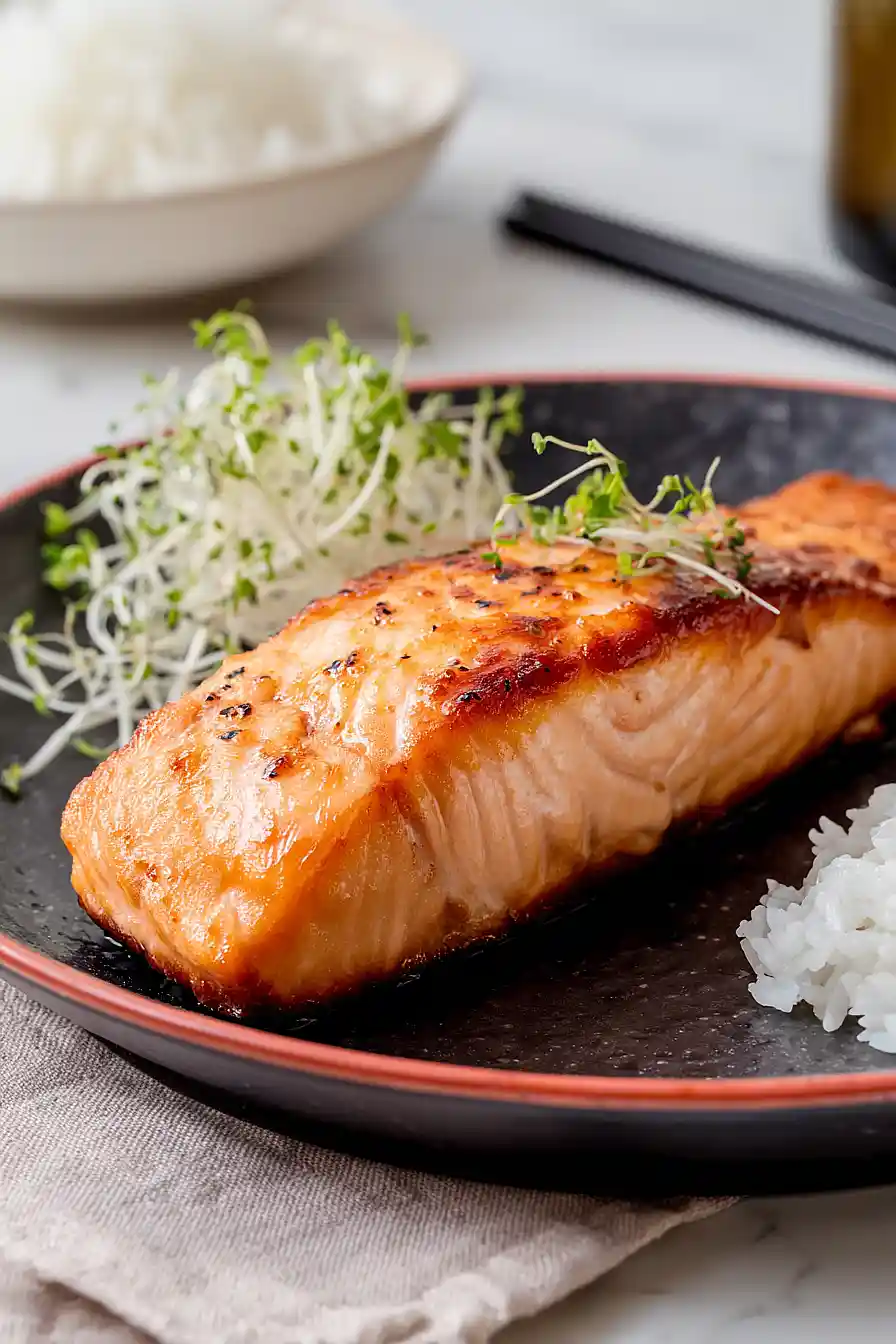
Why You’ll Love This Japanese Style Grilled Salmon
- Minimal ingredients – With just salmon, salt, and sake, this recipe proves you don’t need a long list of ingredients to create something delicious.
- Authentic Japanese flavor – The traditional salt-curing method brings out the natural sweetness of the salmon while giving it that classic Japanese taste you’d find in a good izakaya.
- Simple preparation – Most of the time is hands-off curing in the fridge, and the actual cooking takes just minutes.
- Healthy protein – Salmon is packed with omega-3s and protein, making this a nutritious choice for lunch or dinner without any heavy sauces or added fats.
What Kind of Salmon Should I Use?
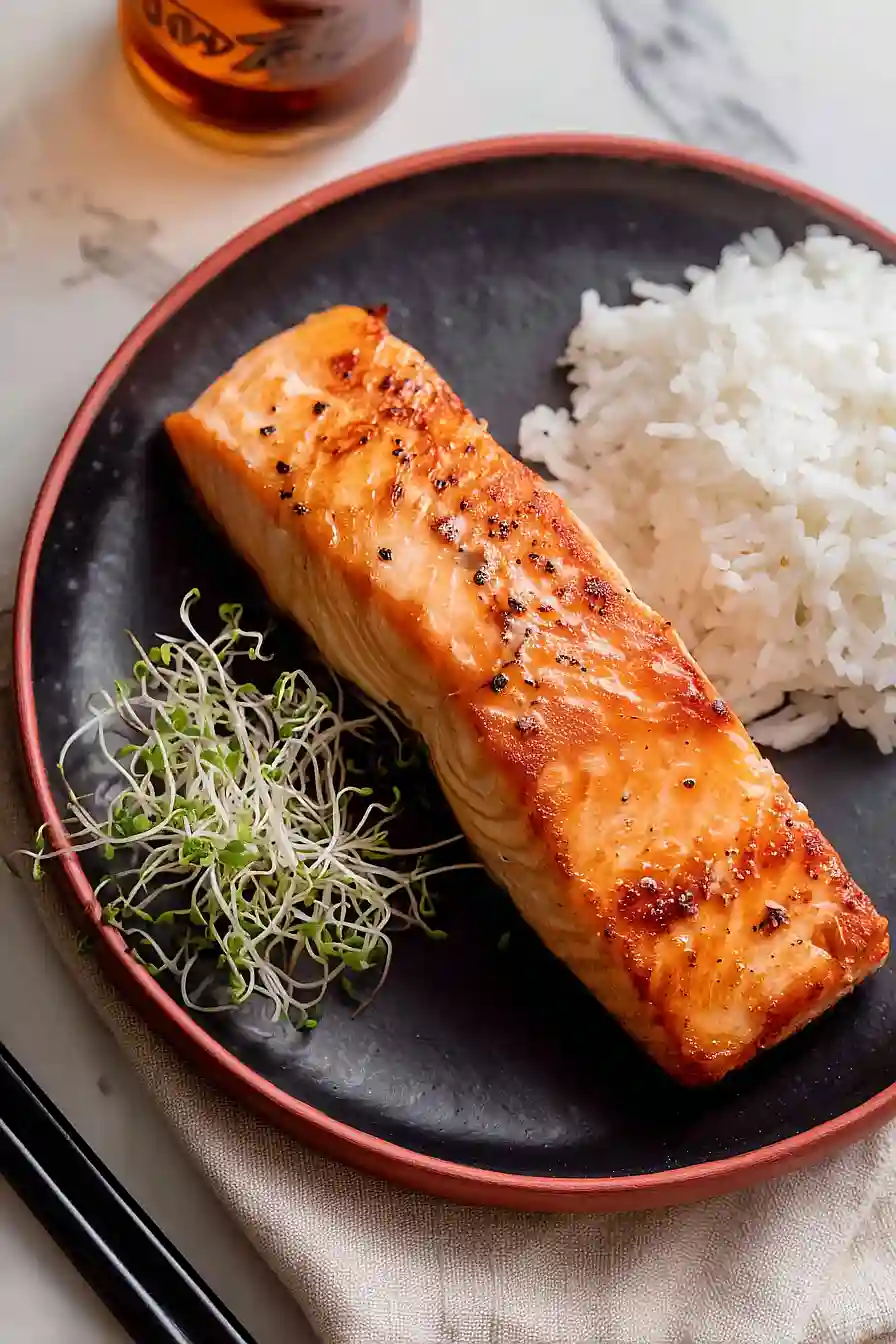
You can choose farm-raised or wild for this recipe, both will work great. If all you have access to is frozen salmon, don’t worry – it’ll still turn out delicious. In fact, most fresh salmon at the supermarket has been previously frozen right off the boat, so just check that it was handled properly by looking for any visible ice crystals or signs of freezer burn. For Japanese-style grilled salmon, skin-on fillets are actually preferred since the skin gets nice and crispy when grilled, adding extra flavor and texture to the dish.
Options for Substitutions
This simple Japanese recipe has room for a few substitutions if you need them:
- Salmon fillets: Other fatty fish work well with this preparation method. Try mackerel, trout, or yellowtail if salmon isn’t available. Just keep the cooking time similar for fillets of the same thickness.
- Sake: If you don’t have sake on hand, you can use dry white wine or mirin as a substitute. Mirin will add a touch more sweetness, so you might want to use a bit less salt to balance it out.
- Salt: The salt ratio here is important for the traditional Japanese salting technique, so stick with regular table salt or sea salt. Don’t skip this step – it helps draw out moisture and concentrates the flavor of the fish.
Watch Out for These Mistakes While Grilling
The biggest mistake when making Japanese-style grilled salmon is not drying the fillets thoroughly before salting – any surface moisture will prevent the salt from properly curing the fish and can lead to a watery, less flavorful result.
Another common error is skipping the chilling time or cutting it short, as those 7-8 hours are essential for the salt and sake to work their magic, drawing out excess moisture and concentrating the salmon’s natural flavor.
When it comes to cooking, resist the urge to flip the salmon multiple times or press down on it with a spatula, which can cause the delicate fish to break apart and lose its juices.
Finally, watch your oven temperature carefully – if your salmon looks like it’s browning too quickly on top, tent it loosely with foil for the last few minutes to prevent drying out while the inside finishes cooking.
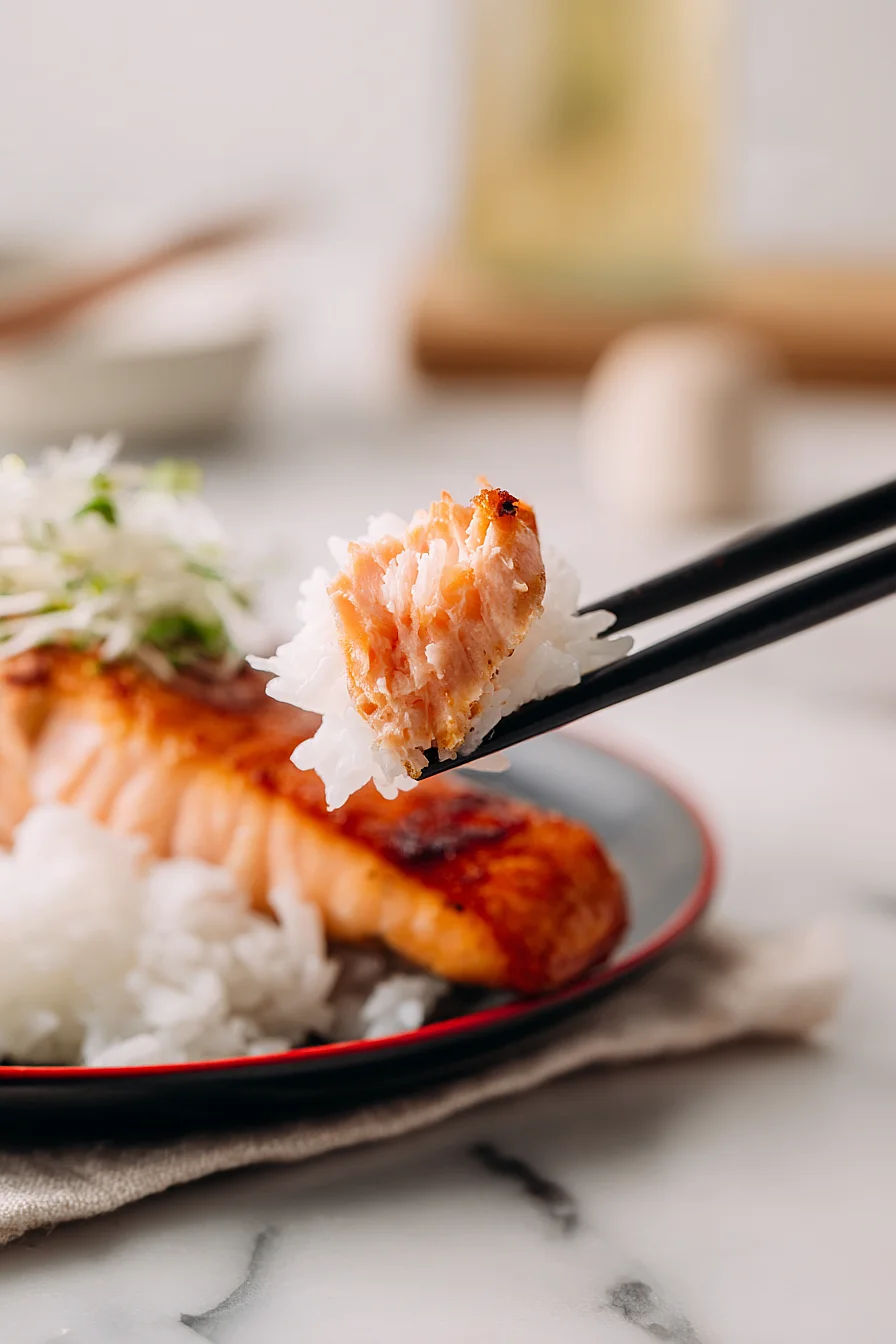
What to Serve With Japanese Style Grilled Salmon?
This grilled salmon is perfect over a bowl of steamed white rice or brown rice, which soaks up all those delicious juices. I like to add a side of miso soup and some quick pickled cucumbers or store-bought tsukemono (Japanese pickles) to round out the meal. A simple side of sautéed bok choy or steamed edamame works great too, keeping things light and letting the salmon be the star. If you want to make it more filling, try serving it with a cucumber salad dressed in rice vinegar and sesame oil, or even some cold soba noodles on the side.
Storage Instructions
Store: Keep any leftover grilled salmon in an airtight container in the fridge for up to 3 days. It’s great to have on hand for quick lunches – I love flaking it over rice bowls or adding it to salads throughout the week.
Freeze: You can freeze the cooked salmon for up to 2 months in a freezer-safe container or wrapped tightly in plastic wrap and foil. Just make sure it’s completely cooled first to keep the texture as good as possible.
Serve: For the best flavor, enjoy the salmon at room temperature or gently warmed. If reheating from the fridge, use low heat in the microwave or oven to avoid drying it out. From frozen, thaw it overnight in the fridge before warming.
| Preparation Time | 10-15 minutes |
| Cooking Time | 5-10 minutes |
| Total Time | 8-9 hours |
| Level of Difficulty | Easy |
| Servings | 2 servings |
Estimated Nutrition
Estimated nutrition for the whole recipe (without optional ingredients):
- Calories: 500-570
- Protein: 48-55 g
- Fat: 30-36 g
- Carbohydrates: 0-1 g
Ingredients
- 10 oz King Salmon fillets
- 0.4 oz sea salt
- 1.5 tbsp Gekkeikan Sake (rice wine)
- 1 tsp mirin
- 1/2 tsp toasted sesame oil
Step 1: Prepare and Cure the Salmon
- 10 oz King Salmon fillets
- 0.4 oz sea salt
- 1.5 tbsp Gekkeikan Sake
- 1 tsp mirin
Pat the salmon fillets completely dry with paper towels—this is essential for proper flavor absorption and preventing the fish from steaming during cooking.
Place the dried salmon skin-side down on a clean plate or cutting board.
In a small bowl, combine the sea salt, sake, and mirin, stirring until the salt begins to dissolve.
Rub this mixture evenly over both sides of the salmon, making sure to coat thoroughly.
Wrap the salmon tightly in plastic wrap or place it in a covered container, then refrigerate for 7-8 hours.
I find that this curing process not only seasons the fish deeply but also firms up the texture slightly, making it cook more evenly.
Step 2: Prepare and Grill the Salmon
- cured salmon from Step 1
- 0.5 tsp toasted sesame oil
Remove the cured salmon from the refrigerator and let it sit at room temperature for 10-15 minutes before cooking.
Preheat your grill or broiler to medium-high heat (around 200°C/400°F).
Lightly brush the sesame oil onto the salmon fillets—this adds a subtle nutty flavor and helps prevent sticking.
Place the salmon skin-side up on the grill grates or a lined baking sheet, and cook for 7-8 minutes until the flesh is opaque and flakes easily with a fork.
The skin will char slightly and crisp up beautifully, which is exactly what you want.
Step 3: Serve
- grilled salmon from Step 2
Transfer the grilled salmon to serving plates and enjoy immediately while the fish is still warm and the skin is crispy.
Serve alongside steamed rice or your preferred accompaniments for an authentic Japanese-style meal.
Juicy Japanese Style Grilled Salmon
Ingredients
Method
- Pat the salmon fillets completely dry with paper towels—this is essential for proper flavor absorption and preventing the fish from steaming during cooking. Place the dried salmon skin-side down on a clean plate or cutting board. In a small bowl, combine the sea salt, sake, and mirin, stirring until the salt begins to dissolve. Rub this mixture evenly over both sides of the salmon, making sure to coat thoroughly. Wrap the salmon tightly in plastic wrap or place it in a covered container, then refrigerate for 7-8 hours. I find that this curing process not only seasons the fish deeply but also firms up the texture slightly, making it cook more evenly.
- Remove the cured salmon from the refrigerator and let it sit at room temperature for 10-15 minutes before cooking. Preheat your grill or broiler to medium-high heat (around 200°C/400°F). Lightly brush the sesame oil onto the salmon fillets—this adds a subtle nutty flavor and helps prevent sticking. Place the salmon skin-side up on the grill grates or a lined baking sheet, and cook for 7-8 minutes until the flesh is opaque and flakes easily with a fork. The skin will char slightly and crisp up beautifully, which is exactly what you want.
- Transfer the grilled salmon to serving plates and enjoy immediately while the fish is still warm and the skin is crispy. Serve alongside steamed rice or your preferred accompaniments for an authentic Japanese-style meal.