If you ask me, risotto is one of those dishes that sounds fancy but really isn’t that hard to make.
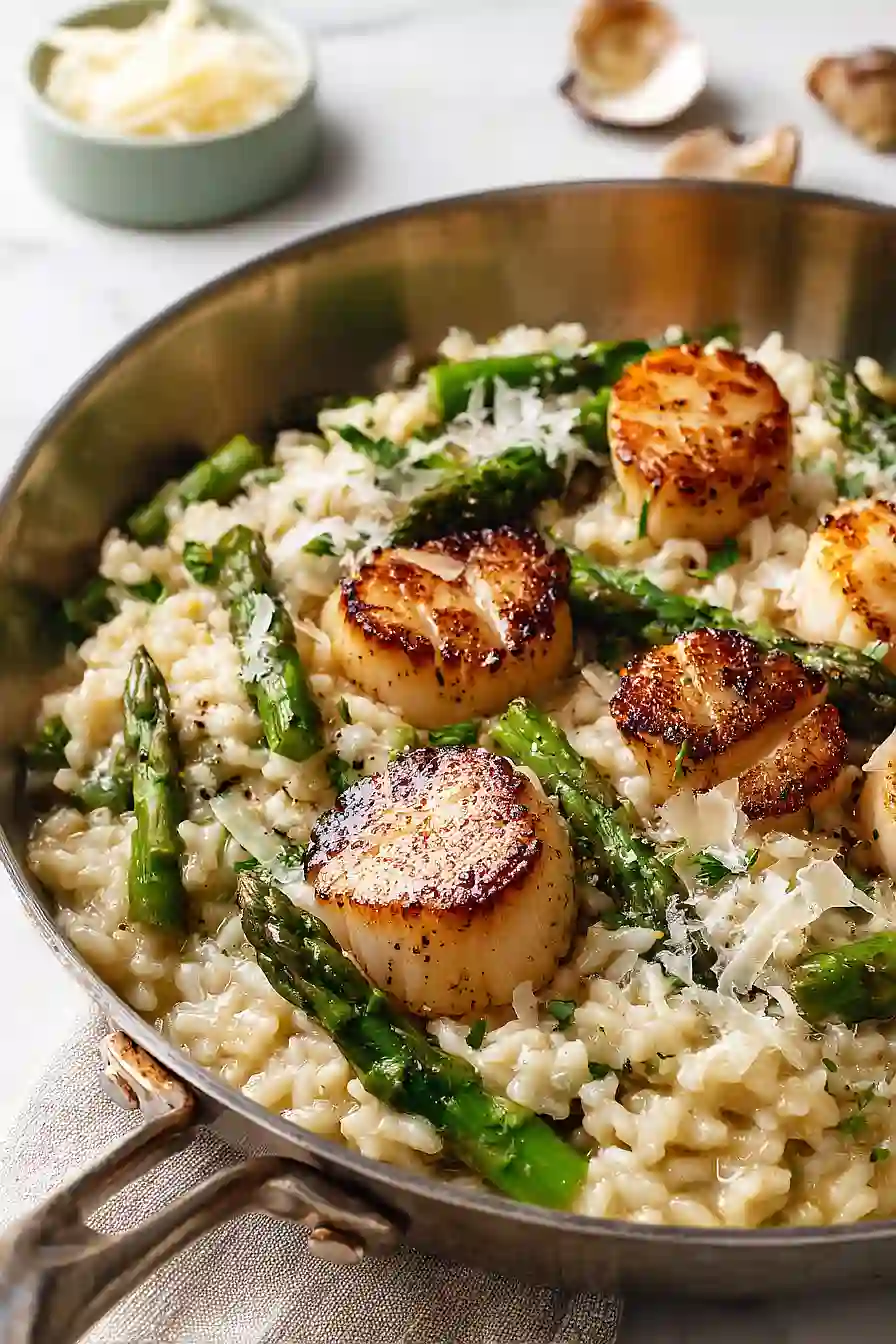
This creamy asparagus risotto gets topped with seared scallops for a restaurant-quality dinner you can pull off at home. The rice cooks low and slow in fish stock and white wine, while fresh asparagus adds a nice spring touch.
The scallops get a quick sear in a hot pan until they’re golden on the outside and tender inside. A sprinkle of Parmesan, fresh lemon, and herbs brings everything together.
It’s the kind of meal that feels special enough for date night but won’t leave you stressed in the kitchen.

Why You’ll Love This Asparagus Risotto with Scallops
- Restaurant-quality meal at home – This dish looks and tastes like something you’d order at a fancy restaurant, but you can make it in your own kitchen for a fraction of the price.
- Ready in under an hour – Despite its elegant appearance, this risotto comes together in just 40-55 minutes, making it perfect for weeknight dinners or special occasions.
- Simple ingredients – You don’t need any hard-to-find items—just fresh asparagus, scallops, arborio rice, and pantry staples you probably already have.
- Light and fresh – The bright lemon and tender asparagus keep this risotto from feeling heavy, while the scallops add a touch of sweetness that balances everything perfectly.
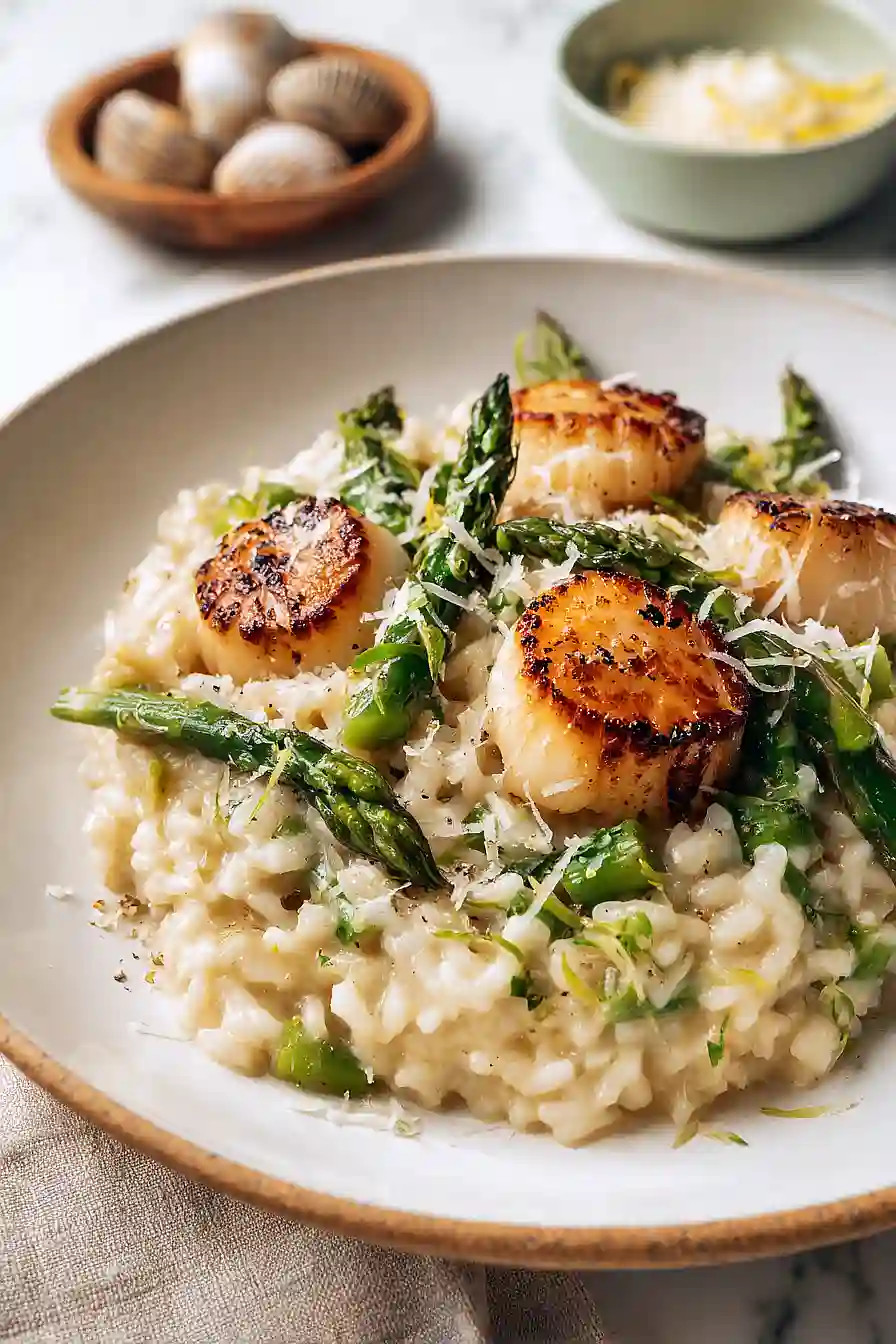
- Impressive presentation – The golden scallops sitting on top of creamy risotto make this dish look stunning on the plate, ideal for date nights or when you want to wow your guests.
What Kind of Scallops Should I Use?
For this risotto, you’ll want to look for dry-packed scallops rather than wet-packed ones. Dry-packed scallops haven’t been treated with any chemicals or preservatives, which means they’ll sear better and develop that nice golden crust we’re after. You can usually tell the difference because wet-packed scallops look milky white and are sitting in liquid, while dry-packed ones have a more natural ivory or slightly pink color. Size-wise, large sea scallops work perfectly here since they’re easier to sear and make a beautiful presentation on top of the risotto. If your scallops have a small side muscle attached (it looks like a little rectangular tag), just peel it off before cooking since it can be a bit tough.
Options for Substitutions
This recipe has some flexibility, though a few ingredients are essential to get it right:
- Arborio rice: Don’t substitute this one – arborio rice is what gives risotto its signature creamy texture. Other short-grain rice varieties like carnaroli or vialone nano work, but regular long-grain rice won’t give you the same results.
- Fish stock: If you can’t find fish stock, chicken or vegetable stock works well. The flavor will be slightly different but still tasty. You can also use half clam juice and half water for a seafood-forward taste.
- Scallops: Shrimp makes a great swap if scallops aren’t available or are too pricey. You can also use chunks of firm white fish like halibut or cod, though you’ll want to add them gently so they don’t break apart.
- White wine: In a pinch, you can skip the wine and use extra stock plus a tablespoon of lemon juice to add that acidic brightness.
- Asparagus: Fresh or frozen peas, green beans, or even broccoli florets can replace asparagus. Just adjust cooking times – peas need less time while broccoli might need a bit more.
- Shallot: A small yellow onion or the white parts of 2-3 green onions work just fine if you don’t have shallots on hand.
Watch Out for These Mistakes While Cooking
The biggest mistake when making risotto is adding all the stock at once instead of gradually, which prevents the rice from releasing its starch and creating that signature creamy texture – patience is key here, so add the stock slowly and stir frequently.
Overcooking scallops is another common error that turns them rubbery and tough, so aim for just 2-3 minutes per side until they develop a golden crust but remain translucent in the center.
Before cooking your scallops, make sure to pat them completely dry with paper towels and ensure your pan is smoking hot – any moisture will cause them to steam instead of sear, and you’ll miss out on that beautiful caramelized exterior.
Adding the asparagus too early is a final pitfall to avoid, as it can become mushy and lose its bright color, so stir it in at the very end when you remove the risotto from heat so it stays crisp-tender.
What to Serve With Asparagus Risotto with Scallops?
This dish is pretty filling on its own, but I love serving it with a simple arugula salad dressed with lemon vinaigrette to cut through the richness of the risotto. A crusty baguette or ciabatta on the side is perfect for scooping up any leftover creamy rice from your bowl. If you want to add more vegetables to the meal, roasted cherry tomatoes or sautéed green beans work really well alongside the asparagus that’s already in the dish. For a fancier dinner party, you could start with a light appetizer like bruschetta or a seafood cocktail to complement the scallops.
Storage Instructions
Store: Risotto is best enjoyed fresh, but you can store leftovers in an airtight container in the fridge for up to 2 days. Keep the scallops separate if possible, as they don’t hold up as well when reheated. The risotto will thicken up quite a bit as it sits, so you’ll need to add some extra stock or water when warming it back up.
Reheat: Warm the risotto gently in a pan over low heat, stirring in a splash of fish stock or water until it reaches a creamy consistency again. For the scallops, it’s honestly better to sear fresh ones if you have them, but if you need to reheat, do it quickly in a hot pan for just 30 seconds per side to avoid overcooking.
Make Ahead: You can prep the asparagus and chop your shallot ahead of time, but risotto really needs to be made fresh for the best texture. If you’re short on time, you can cook the risotto about halfway through, then finish it off right before serving by continuing to add stock until it’s creamy and tender.
| Preparation Time | 15-20 minutes |
| Cooking Time | 25-35 minutes |
| Total Time | 40-55 minutes |
| Level of Difficulty | Medium |
| Servings | 4 servings |
Estimated Nutrition
Estimated nutrition for the whole recipe (without optional ingredients):
- Calories: 1300-1450
- Protein: 55-65 g
- Fat: 60-70 g
- Carbohydrates: 130-145 g
Ingredients
For the risotto:
- 6.5 cups fish stock (I use Kitchen Basics for a deep, rich flavor)
- 1.5 tbsp olive oil
- 3.5 tbsp butter (I prefer Kerrygold unsalted butter for this)
- 1 shallot
- 1 clove garlic, minced
- 1 cup arborio rice
- 1/2 cup white wine
- 10 oz asparagus (trimmed and cut into 1-inch diagonal pieces)
- 1/3 cup Parmesan
- 1 lemon zest
- 1 lemon juice
- salt
- pepper
For the scallops:
- 12 scallops (patted dry with a paper towel for a better sear)
- 2 tbsp olive oil (I like Bertolli extra light for high-heat searing)
- 2 tbsp chives
- 1 tbsp fresh parsley, chopped
- salt
- pepper
Step 1: Prepare Mise en Place and Start the Stock
- 10 oz asparagus
- 1 clove garlic, minced
- 1 shallot, diced
- 1 lemon, zested and juiced
- 2 tbsp chives, chopped
- 1 tbsp fresh parsley, chopped
- 12 scallops, patted dry
- 6.5 cups fish stock
Trim the asparagus and cut into 1-inch diagonal pieces, then set aside.
Mince the garlic, finely dice the shallot, zest the lemon, juice the lemon, and chop the fresh parsley and chives.
Pat the scallops completely dry with paper towels—this is crucial for achieving a golden crust when searing.
Pour the fish stock into a pot and bring it to a gentle simmer over medium heat; keep it warm throughout the cooking process.
Step 2: Build the Risotto Base with Aromatics and Rice
- 1.5 tbsp olive oil
- 1 tbsp butter
- 1 shallot, diced
- salt
- 1 cup arborio rice
- 1/2 cup white wine
Heat 1.5 tablespoons olive oil and 1 tablespoon butter in a large pot over medium heat.
Add the diced shallot with a pinch of salt and cook for about 1 minute until softened and fragrant.
Add the arborio rice and stir constantly for 1 minute to lightly toast the grains—this toasting helps the rice maintain its structure while developing deeper flavor.
Pour in the white wine and stir continuously for about 1 minute until the liquid is nearly absorbed.
I like to toast the rice this way because it adds a subtle nutty flavor that enhances the delicate taste of the scallops.
Step 3: Build Creaminess with Gradual Stock Addition
- 6.5 cups warm fish stock from Step 1
Begin adding the warm stock from Step 1 about 1/4 cup at a time, stirring frequently.
Wait until each addition is mostly absorbed before adding more stock—this gradual process, which takes about 18 minutes total, allows the rice to release its starches and create the signature creamy texture of risotto.
Stir regularly but not constantly; you’re looking for a gentle, rhythmic stirring that encourages creaminess without breaking down the rice grains.
Toward the end of cooking, taste the rice; it should be tender but still have a slight firmness (al dente) when you bite it.
Step 4: Finish the Risotto with Asparagus and Bright Flavors
- asparagus from Step 1
- 2.5 tbsp butter
- 1/3 cup Parmesan
- 1 lemon zest and juice from Step 1
- salt
- pepper
Remove the risotto from heat and immediately stir in the asparagus pieces from Step 1, the remaining 2.5 tablespoons butter, the Parmesan cheese, lemon zest, and lemon juice.
The residual heat will gently warm the asparagus while keeping it slightly crisp.
Season with salt and pepper to taste.
I find that finishing with lemon juice and zest gives the risotto a beautiful brightness that perfectly complements the richness of both the butter and the scallops.
Step 5: Sear the Scallops Until Golden
- 2 tbsp olive oil
- 12 scallops from Step 1, patted dry
- salt
- pepper
While the risotto is finishing (during Step 4), heat 2 tablespoons of olive oil in a large skillet over medium-high heat until it just begins to shimmer.
Season the patted-dry scallops from Step 1 with salt and pepper on both sides.
Carefully place them in the hot oil and resist the urge to move them—let them sit undisturbed for 2 to 3 minutes per side to develop a beautiful golden crust.
The scallops will release naturally when they’re ready to flip.
Each side should take about the same time and will be opaque and tender when cooked through.
Step 6: Plate and Serve
- risotto from Step 4
- seared scallops from Step 5
- 2 tbsp chives from Step 1
- 1 tbsp fresh parsley from Step 1
Divide the creamy asparagus risotto from Step 4 among serving bowls or plates.
Arrange 2 seared scallops from Step 5 on top of each portion.
Garnish with the chopped chives and fresh parsley from Step 1.
Add a final sprinkle of Parmesan if desired, and serve immediately while the risotto is creamy and the scallops are still warm.
Creamy Asparagus Risotto with Scallops
Ingredients
Method
- Trim the asparagus and cut into 1-inch diagonal pieces, then set aside. Mince the garlic, finely dice the shallot, zest the lemon, juice the lemon, and chop the fresh parsley and chives. Pat the scallops completely dry with paper towels—this is crucial for achieving a golden crust when searing. Pour the fish stock into a pot and bring it to a gentle simmer over medium heat; keep it warm throughout the cooking process.
- Heat 1.5 tablespoons olive oil and 1 tablespoon butter in a large pot over medium heat. Add the diced shallot with a pinch of salt and cook for about 1 minute until softened and fragrant. Add the arborio rice and stir constantly for 1 minute to lightly toast the grains—this toasting helps the rice maintain its structure while developing deeper flavor. Pour in the white wine and stir continuously for about 1 minute until the liquid is nearly absorbed. I like to toast the rice this way because it adds a subtle nutty flavor that enhances the delicate taste of the scallops.
- Begin adding the warm stock from Step 1 about 1/4 cup at a time, stirring frequently. Wait until each addition is mostly absorbed before adding more stock—this gradual process, which takes about 18 minutes total, allows the rice to release its starches and create the signature creamy texture of risotto. Stir regularly but not constantly; you're looking for a gentle, rhythmic stirring that encourages creaminess without breaking down the rice grains. Toward the end of cooking, taste the rice; it should be tender but still have a slight firmness (al dente) when you bite it.
- Remove the risotto from heat and immediately stir in the asparagus pieces from Step 1, the remaining 2.5 tablespoons butter, the Parmesan cheese, lemon zest, and lemon juice. The residual heat will gently warm the asparagus while keeping it slightly crisp. Season with salt and pepper to taste. I find that finishing with lemon juice and zest gives the risotto a beautiful brightness that perfectly complements the richness of both the butter and the scallops.
- While the risotto is finishing (during Step 4), heat 2 tablespoons of olive oil in a large skillet over medium-high heat until it just begins to shimmer. Season the patted-dry scallops from Step 1 with salt and pepper on both sides. Carefully place them in the hot oil and resist the urge to move them—let them sit undisturbed for 2 to 3 minutes per side to develop a beautiful golden crust. The scallops will release naturally when they're ready to flip. Each side should take about the same time and will be opaque and tender when cooked through.
- Divide the creamy asparagus risotto from Step 4 among serving bowls or plates. Arrange 2 seared scallops from Step 5 on top of each portion. Garnish with the chopped chives and fresh parsley from Step 1. Add a final sprinkle of Parmesan if desired, and serve immediately while the risotto is creamy and the scallops are still warm.