I’ve been to my fair share of summer cookouts, and I can tell you that potato salad is always the first dish to disappear. But here’s the thing—most potato salads are so heavy with mayo that you feel like you need a nap after one serving. I wanted something lighter that could feed a crowd without weighing everyone down.
That’s why I created this mustard potato salad. The tangy dijon dressing keeps things bright and fresh, while a little yogurt adds just enough creaminess without going overboard. I make this the night before any gathering, which means one less thing to stress about when people start arriving.
Heading to a potluck? This is your recipe. Hosting a backyard barbecue? Make a double batch. Trust me, people will be asking you for the recipe before they’ve finished their first plate.
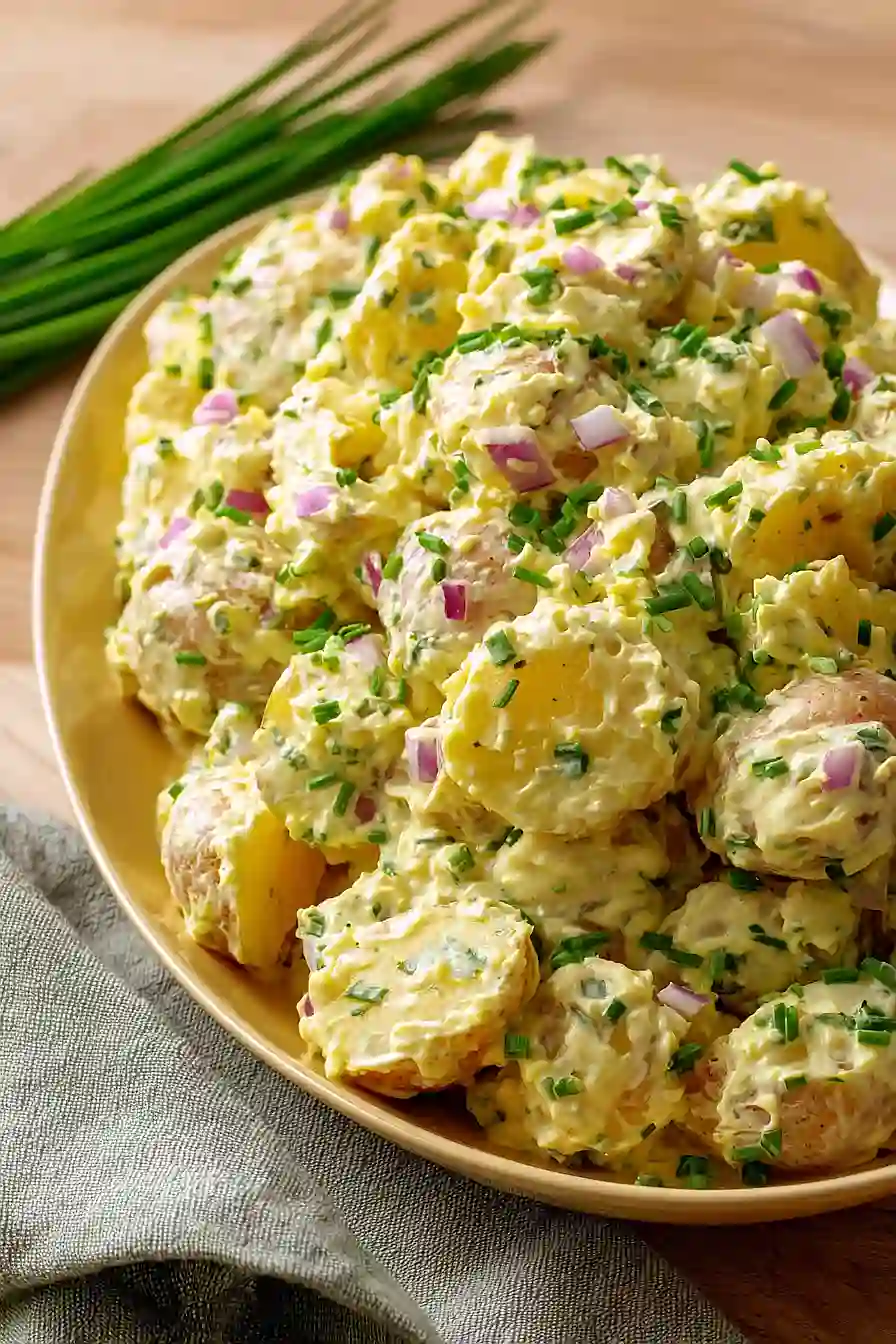
Why You’ll Love This Mustard Potato Salad
- Perfect for feeding a crowd – This recipe makes enough to serve at potlucks, barbecues, or family gatherings without having to double or triple anything.
- Tangy mustard flavor – The Dijon mustard and red wine vinegar give this potato salad a bright, zesty kick that’s way more interesting than mayo-based versions.
- Lighter and healthier – Using yogurt instead of all mayo cuts down on calories while still keeping the salad creamy and satisfying.
- Make-ahead friendly – This potato salad actually tastes better after sitting in the fridge for a few hours, so you can prep it the day before your event and have one less thing to worry about.
The Best Potatoes for Potato Salad
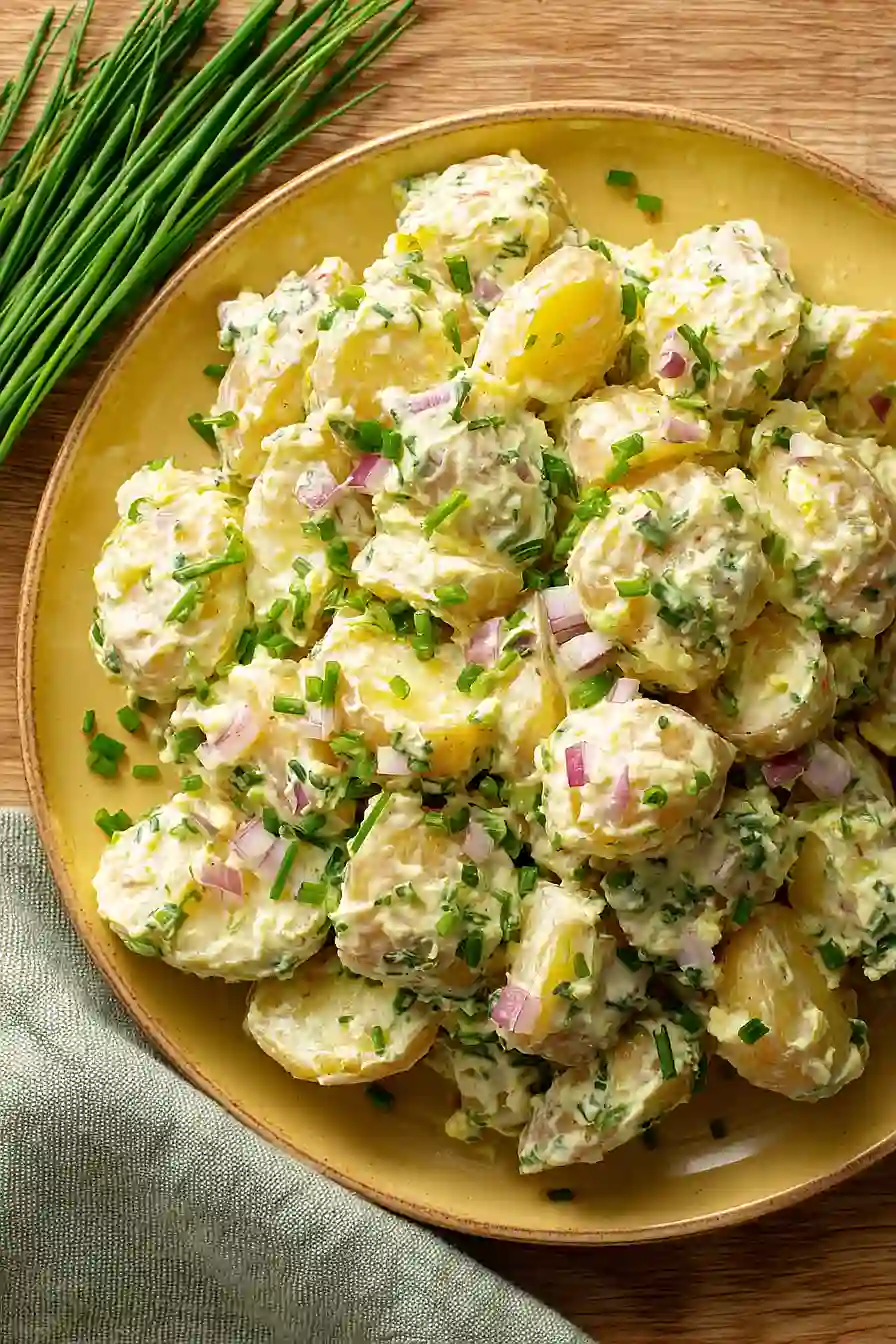
Waxy potatoes are the way to go here. Varieties like Yukon Gold, red potatoes, or new potatoes hold their shape much better after boiling and won’t turn mushy or fall apart when tossed with the dressing.
Yukon Golds are my personal favorite. They have a naturally buttery flavor and creamy texture that pairs perfectly with the tangy mustard dressing.
Russets can work in a pinch, but you’ll need to be extra careful not to overcook them and handle them gently when mixing to keep them from falling apart.
Swaps and Alternatives
Here are some ingredient alternatives that hold up well in this dish:
- Dijon mustard: Regular yellow mustard works fine if that’s what you have. You might want to add a tiny bit more honey since yellow mustard is a bit sharper.
- Yogurt: Sour cream or mayonnaise are great substitutes. If using mayo, you might want to add a squeeze of lemon juice to keep that tangy flavor.
- Red wine vinegar: Apple cider vinegar or white wine vinegar will give you the same acidic kick. Even plain white vinegar works in a pinch.
- Shallot: Red onion or even regular yellow onion can step in here. Just use about half of a small onion, finely chopped, since they’re stronger than shallots.
- Chives: Green onions are your best bet as a substitute. You can also use fresh parsley or dill if you want a different herb flavor.
Helpful Tips Before You Start
Potato salad has a few tricky spots that are easy to overlook, so here’s what to watch out for before you get started.
Don’t overcook your potatoes. You’re looking for fork-tender but still firm. Check them at the 10-minute mark rather than waiting the full 15 minutes to avoid mushy, falling-apart pieces.
Cut your potatoes into similar-sized pieces before boiling so everything cooks evenly. Uneven cuts mean some pieces turn to mush while others are still hard in the center.
Toss the dressing with warm potatoes, not cold ones. Warm potatoes absorb the mustard and vinegar much better, giving you a more flavorful salad overall.
Always taste and adjust the seasoning after chilling. Cold temperatures can dull flavors, so you’ll likely need an extra pinch of salt, a crack of pepper, or a small splash of vinegar right before serving.
What I Like to Serve Alongside This
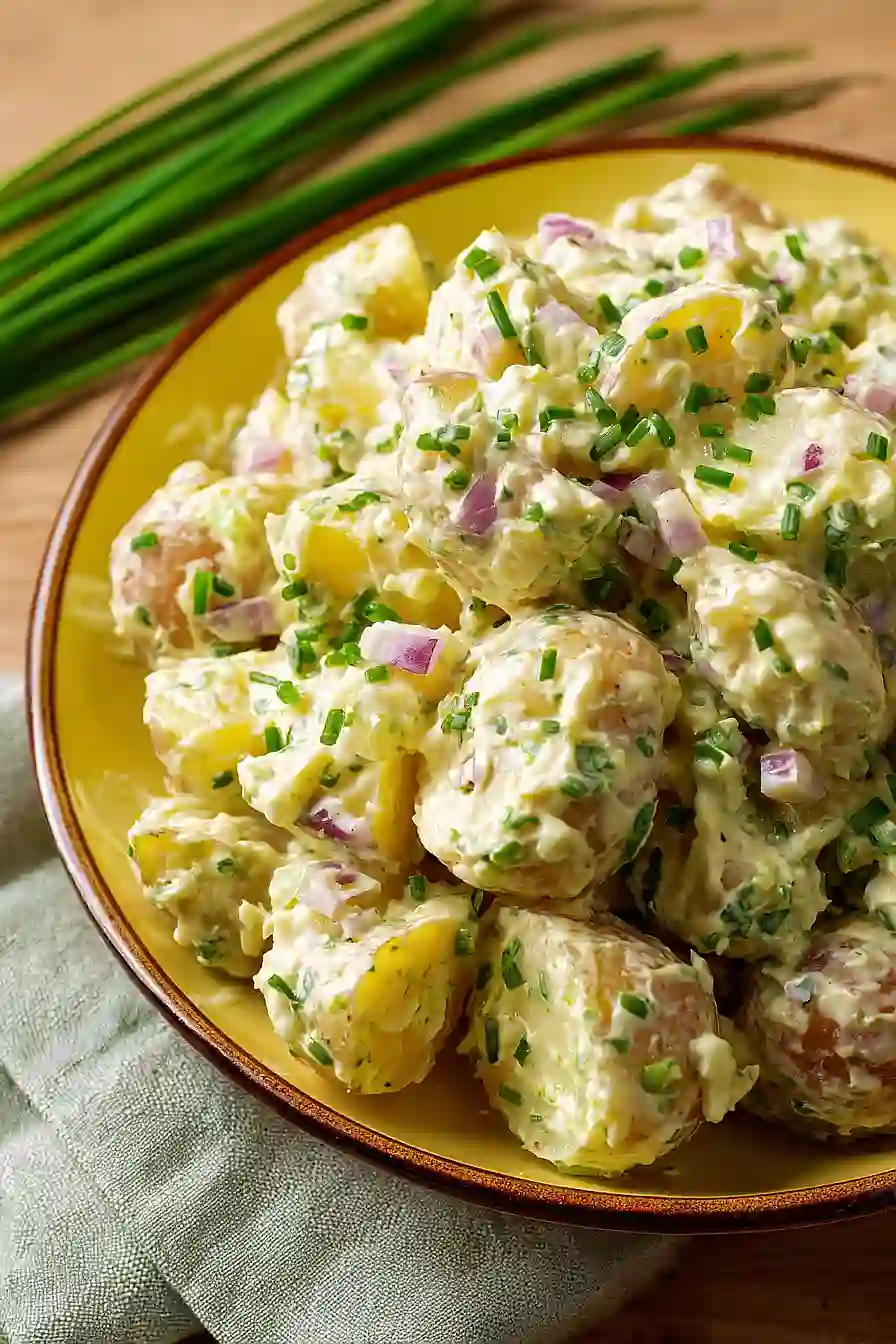
Grilled burgers, hot dogs, or barbecue chicken are a natural fit for a classic backyard barbecue setup. You can also round out a full summer cookout with corn on the cob, coleslaw, or baked beans on the side.
For a more casual spread, try it with pulled pork sandwiches or grilled sausages. The tangy mustard flavor cuts through the richness of the meat beautifully.
Prefer something lighter? Grilled fish or shrimp skewers with some fresh watermelon on the side make for a great pairing as well.
Storing This Potato Salad
Store: This potato salad actually tastes better the next day once all the flavors have had time to mingle! Keep it in an airtight container in the fridge for up to 4 days. Just give it a good stir before serving since the dressing might settle a bit at the bottom.
Make Ahead: You can totally prep this a day or two before your gathering. In fact, I recommend making it the night before so the potatoes can soak up all that tangy mustard dressing. Just wait to add the chives until right before serving to keep them looking fresh and green.
Serve: Take the potato salad out of the fridge about 20 minutes before serving to take the chill off. Cold potato salad straight from the fridge can taste a bit muted, but letting it sit at room temperature brings all those flavors back to life.
| Preparation Time | 10-15 minutes |
| Cooking Time | 20-25 minutes |
| Total Time | 90-100 minutes |
| Level of Difficulty | Easy |
| Servings | 10 servings |
Estimated Nutrition
Estimated nutrition for the whole recipe (without optional ingredients):
- Calories: 1700-1850
- Protein: 28-34 g
- Fat: 65-75 g
- Carbohydrates: 250-270 g
Ingredients
For the base:
- 3.5 lb potatoes (I prefer Yukon Gold for a creamier texture)
- 2.5 tsp salt
- 4 celery stalks (diced into 1/4-inch pieces for crunch)
- 1 shallot
- 1/3 cup chives
For the dressing:
- 2.5 tbsp dijon mustard (I use Maille for a sharp kick)
- 2 tbsp yogurt (I like Fage Greek yogurt for extra thickness)
- 2.5 tbsp red wine vinegar
- 1.5 tsp honey
- 1/2 tsp pepper
- 1/3 cup olive oil
- 2 tbsp fresh dill, chopped
Step 1: Prepare the Mise en Place and Start Cooking Potatoes
- 3.5 lb potatoes
- 2 tsp salt
- 4 celery stalks, diced
- 1 shallot, minced
- 1/3 cup chives, chopped
- 2 tbsp fresh dill, chopped
Dice the celery into 1/4-inch pieces and mince the shallot, then chop the chives and fresh dill—set all aside.
Cut potatoes into bite-sized chunks (about 1-1.5 inches), leaving the skin on for texture and nutrients.
Bring a large pot of salted water to a boil (using about 2 teaspoons of salt in the water), then add potatoes and cook for 10-15 minutes until just fork-tender but still holding their shape—you want them to absorb the dressing while warm, but not fall apart.
Step 2: Build the Mustard Vinaigrette
- 2.5 tbsp dijon mustard
- 2 tbsp yogurt
- 2.5 tbsp red wine vinegar
- 1.5 tsp honey
- 0.5 tsp salt
- 0.5 tsp pepper
- 1/3 cup olive oil
While potatoes cook, whisk together the Dijon mustard, Greek yogurt, red wine vinegar, honey, and remaining salt and pepper in a large bowl until smooth and well combined.
The yogurt adds creaminess while the mustard and vinegar provide bright, sharp flavor—this is your flavor foundation.
Slowly drizzle in the olive oil while whisking to emulsify the dressing, creating a cohesive sauce that will cling beautifully to the warm potatoes.
Step 3: Toss Warm Potatoes with Dressing
- cooked potatoes from Step 1
- mustard vinaigrette from Step 2
Drain the cooked potatoes well and immediately transfer them to the bowl with the mustard vinaigrette while they’re still warm—this is key, as warm potatoes absorb the dressing much better than cooled ones, resulting in more flavorful salad throughout.
Gently fold the potatoes into the dressing using a rubber spatula, being careful not to break them apart, until every piece is well coated.
Step 4: Add Vegetables and Fresh Herbs
- diced celery from Step 1
- minced shallot from Step 1
- chopped chives from Step 1
- chopped dill from Step 1
Fold in the diced celery, minced shallot, and chopped chives, distributing them evenly throughout the salad.
The celery adds a fresh crunch that contrasts beautifully with the creamy dressing, and the shallot gives it a subtle onion flavor without overpowering.
I like to add the dill at this point too so it stays vibrant and fragrant rather than getting buried and muted during chilling.
Step 5: Chill and Serve
Transfer the salad to a serving bowl and refrigerate for at least 1 hour before serving—this allows the flavors to meld and the texture to set.
The cold temperature mellows the mustard’s sharpness slightly while allowing the vinegar and dill to sing.
Taste and adjust seasoning with additional salt, pepper, or vinegar if needed before serving to a crowd.
Classic Mustard Potato Salad for a Crowd
Ingredients
Method
- Dice the celery into 1/4-inch pieces and mince the shallot, then chop the chives and fresh dill—set all aside. Cut potatoes into bite-sized chunks (about 1-1.5 inches), leaving the skin on for texture and nutrients. Bring a large pot of salted water to a boil (using about 2 teaspoons of salt in the water), then add potatoes and cook for 10-15 minutes until just fork-tender but still holding their shape—you want them to absorb the dressing while warm, but not fall apart.
- While potatoes cook, whisk together the Dijon mustard, Greek yogurt, red wine vinegar, honey, and remaining salt and pepper in a large bowl until smooth and well combined. The yogurt adds creaminess while the mustard and vinegar provide bright, sharp flavor—this is your flavor foundation. Slowly drizzle in the olive oil while whisking to emulsify the dressing, creating a cohesive sauce that will cling beautifully to the warm potatoes.
- Drain the cooked potatoes well and immediately transfer them to the bowl with the mustard vinaigrette while they’re still warm—this is key, as warm potatoes absorb the dressing much better than cooled ones, resulting in more flavorful salad throughout. Gently fold the potatoes into the dressing using a rubber spatula, being careful not to break them apart, until every piece is well coated.
- Fold in the diced celery, minced shallot, and chopped chives, distributing them evenly throughout the salad. The celery adds a fresh crunch that contrasts beautifully with the creamy dressing, and the shallot gives it a subtle onion flavor without overpowering. I like to add the dill at this point too so it stays vibrant and fragrant rather than getting buried and muted during chilling.
- Transfer the salad to a serving bowl and refrigerate for at least 1 hour before serving—this allows the flavors to meld and the texture to set. The cold temperature mellows the mustard’s sharpness slightly while allowing the vinegar and dill to sing. Taste and adjust seasoning with additional salt, pepper, or vinegar if needed before serving to a crowd.