Here is my favorite baked spaghetti squash recipe, with simple seasoning, a drizzle of olive oil, and tips for getting it perfectly tender every time.
This baked spaghetti squash is such a lifesaver on busy weeknights when I want something healthy but don’t have much time to cook. My kids actually ask for this now, which honestly surprises me since they usually turn their noses up at anything that looks like vegetables!
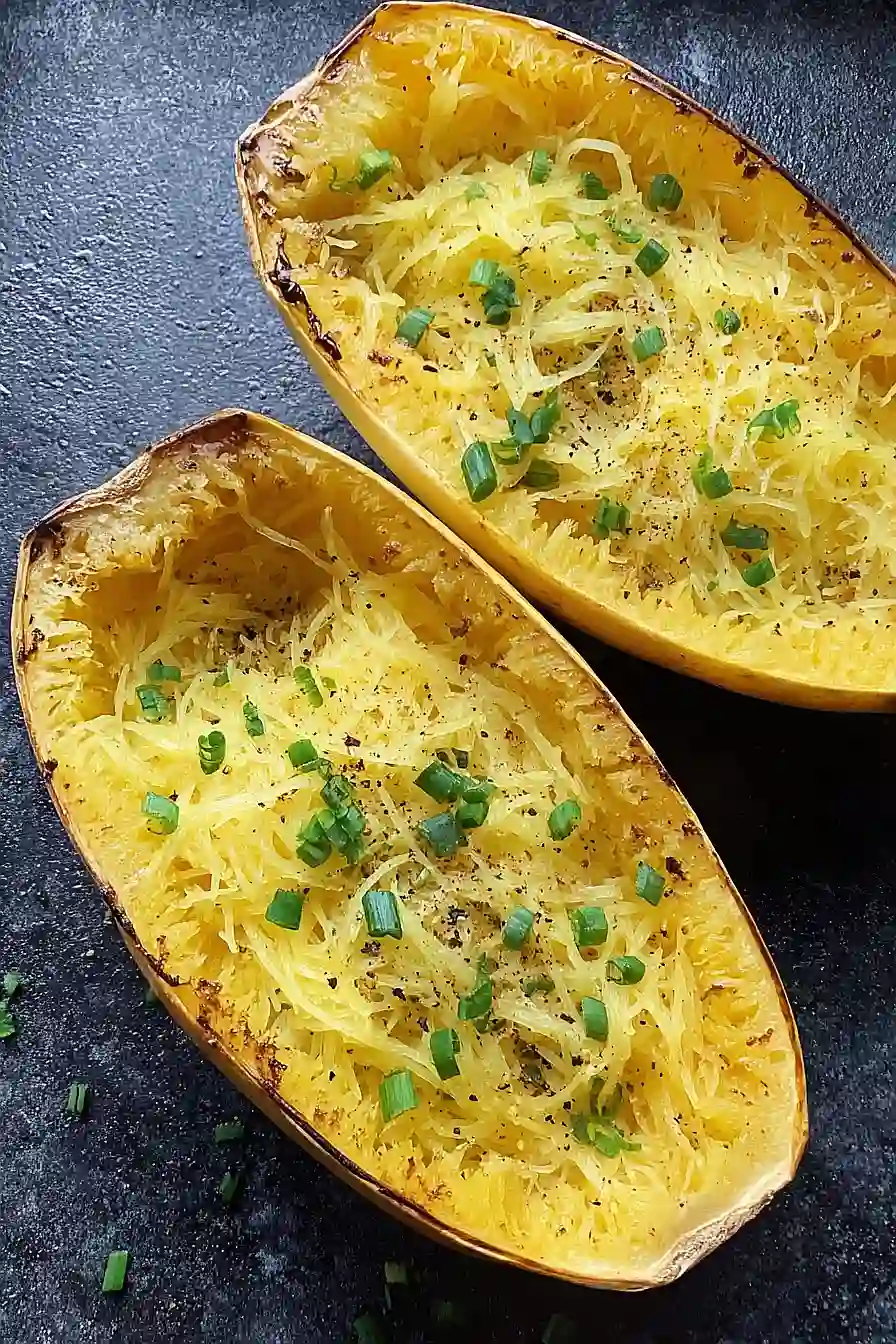
Why You’ll Love This Baked Spaghetti Squash
- Low-carb pasta alternative – This naturally gluten-free option gives you all the satisfaction of pasta with way fewer carbs, making it perfect for keto or healthy eating goals.
- Simple ingredients – You only need a handful of basic pantry staples like olive oil, garlic, and seasonings to create something delicious.
- Easy preparation – Just cut, season, and bake – no complicated techniques or special equipment needed to get perfectly tender strands every time.
- Naturally healthy – Packed with vitamins and fiber, this veggie-forward dish lets you feel good about what you’re eating without sacrificing flavor.
- Great base for toppings – The mild flavor pairs well with everything from marinara sauce to pesto, making it a blank canvas for your favorite pasta toppings.
What Kind of Spaghetti Squash Should I Use?
When picking out a spaghetti squash at the store, look for one that feels heavy for its size and has a firm, smooth skin without any soft spots or cracks. A medium-sized squash (around 2-3 pounds) is perfect for this recipe and will give you plenty of those signature spaghetti-like strands. The skin should have a nice golden yellow color – avoid any that are still green or have dark spots, as these aren’t fully ripe yet. If you can only find a larger squash, don’t worry – you’ll just have extra servings or leftovers for the next day.

Options for Substitutions
This simple spaghetti squash recipe is pretty straightforward, but here are some swaps you can make:
- Spaghetti squash: This is the star of the show, so I wouldn’t recommend substituting it. However, if you can’t find one, delicata squash can work in a pinch, though the texture will be different and less pasta-like.
- Extra virgin olive oil: Regular olive oil, avocado oil, or melted butter all work great here. Each will give a slightly different flavor, with butter adding richness.
- Fresh garlic: If you’re out of fresh garlic, use ½ teaspoon of garlic powder instead. Add it after cooking to prevent burning.
- Fresh herbs: Dried herbs work too – just use about 1 teaspoon instead of the fresh amount, and add them earlier in the cooking process. Italian seasoning is a good all-purpose option.
- Parmesan cheese: Romano, Pecorino, or even sharp cheddar can replace Parmesan. Nutritional yeast works for a dairy-free option, though you’ll need about twice as much for flavor.
Watch Out for These Mistakes While Baking
The biggest mistake people make with spaghetti squash is not cooking it long enough, which leaves you with crunchy, undercooked strands instead of tender, pasta-like threads – aim for 40-45 minutes at 400°F until the flesh easily shreds with a fork.
Another common error is cutting the squash lengthwise instead of crosswise, since cutting it the wrong way can make the strands shorter and less appealing.
To avoid a watery mess, always scoop out the seeds and pulp completely before baking, and let the cooked squash cool for a few minutes before scraping out the flesh so you don’t burn your hands.
For extra flavor, try roasting the squash cut-side down on the baking sheet, which helps caramelize the edges and prevents the flesh from drying out.

What to Serve With Baked Spaghetti Squash?
Baked spaghetti squash is like a blank canvas that pairs beautifully with so many different dishes! Since it has a mild, slightly sweet flavor, it works great alongside grilled chicken, baked salmon, or even some Italian sausage for a heartier meal. I love serving it with a simple marinara sauce and extra Parmesan cheese to make it feel more like traditional pasta, or you can top it with pesto and cherry tomatoes for a fresh twist. A crisp Caesar salad or some garlic bread on the side rounds out the meal perfectly and adds some nice texture contrast to the tender squash strands.
Storage Instructions
Refrigerate: Leftover baked spaghetti squash keeps really well in the fridge for up to 5 days. Just store it in an airtight container and it’s ready to use as a base for quick weeknight meals. I love having it prepped ahead because it saves so much time during busy weeks!
Freeze: You can freeze cooked spaghetti squash for up to 6 months, though the texture will be a bit softer after thawing. Spread the strands on a baking sheet to freeze individually first, then transfer to freezer bags. This way you can grab just the amount you need for recipes.
Warm Up: To enjoy your stored spaghetti squash, just heat it in the microwave for 1-2 minutes or sauté it in a pan with a little olive oil. It’s perfect for tossing with marinara sauce, adding to soups, or mixing into casseroles without any extra prep work.
| Preparation Time | 10-15 minutes |
| Cooking Time | 40 minutes |
| Total Time | 50-55 minutes |
| Level of Difficulty | Easy |
Estimated Nutrition
Estimated nutrition for the whole recipe (without optional ingredients):
- Calories: 220-280
- Protein: 4-6 g
- Fat: 14-18 g
- Carbohydrates: 26-34 g
Ingredients
- 1 medium spaghetti squash (2–3 lb)
- 2 tbsp extra-virgin olive oil
- Salt (to taste)
- Black pepper (to taste)
- 2 garlic cloves, finely chopped
- Chopped fresh parsley or basil, optional
- Grated parmesan cheese, optional for serving
Step 1: Prepare the Spaghetti Squash for Roasting
- 1 medium spaghetti squash (2–3 lb)
- 2 tbsp extra-virgin olive oil
- salt (to taste)
- black pepper (to taste)
- 2 garlic cloves, finely chopped
Preheat your oven to 400°F (200°C).
Carefully slice the spaghetti squash in half lengthwise and scoop out the seeds using a spoon.
Drizzle 1 tablespoon of extra-virgin olive oil onto the inside of each squash half, then sprinkle with salt and black pepper to taste.
Evenly distribute the finely chopped garlic between the halves, rubbing it gently into the flesh.
Step 2: Roast the Squash
- prepared squash halves from Step 1
Place the seasoned squash halves cut-side down on a baking sheet lined with parchment paper.
Slide the baking sheet into the preheated oven and roast for about 40 minutes, or until the squash flesh is very tender and shreds easily when scraped with a fork.
Step 3: Shred the Roasted Squash into Spaghetti Strands
- roasted squash halves from Step 2
Remove the roasted squash from the oven and flip the halves over to cool slightly.
Using a fork, carefully scrape the inside of each half to separate the flesh into spaghetti-like strands.
Transfer the strands to a large bowl.
Step 4: Toss, Garnish, and Serve
- cooked squash strands from Step 3
- extra-virgin olive oil (remaining from Step 1)
- chopped fresh parsley or basil, optional
- grated Parmesan cheese, optional for serving
Drizzle the remaining extra-virgin olive oil over the warm spaghetti squash strands and toss to combine.
At this point, you can garnish with chopped fresh parsley or basil, and top with grated Parmesan cheese if desired.
I like to add a generous sprinkle of Parmesan for extra savory flavor, but you can skip it for a vegan option.
Serve immediately.
Classic Baked Spaghetti Squash
Ingredients
Method
- Preheat your oven to 400°F (200°C). Carefully slice the spaghetti squash in half lengthwise and scoop out the seeds using a spoon. Drizzle 1 tablespoon of extra-virgin olive oil onto the inside of each squash half, then sprinkle with salt and black pepper to taste. Evenly distribute the finely chopped garlic between the halves, rubbing it gently into the flesh.
- Place the seasoned squash halves cut-side down on a baking sheet lined with parchment paper. Slide the baking sheet into the preheated oven and roast for about 40 minutes, or until the squash flesh is very tender and shreds easily when scraped with a fork.
- Remove the roasted squash from the oven and flip the halves over to cool slightly. Using a fork, carefully scrape the inside of each half to separate the flesh into spaghetti-like strands. Transfer the strands to a large bowl.
- Drizzle the remaining extra-virgin olive oil over the warm spaghetti squash strands and toss to combine. At this point, you can garnish with chopped fresh parsley or basil, and top with grated Parmesan cheese if desired. I like to add a generous sprinkle of Parmesan for extra savory flavor, but you can skip it for a vegan option. Serve immediately.