Pasta salad gets a bad reputation because of those sad deli versions sitting under fluorescent lights. But a good pasta salad? That’s something I actually crave. It’s the kind of thing I’ll make on Sunday and eat for lunch all week without getting bored.
This herbed pea and lemon pasta salad is what I reach for when I want something fresh and filling at the same time. The lemon keeps everything bright, and all those herbs make it taste like spring, even when it’s not. I like that it comes together in about thirty minutes, and most of that time is just waiting for the pasta water to boil.
The best part is how it actually gets better after sitting in the fridge for a day. The flavors blend together, and you’ve got an easy lunch or side dish ready to go. No reheating needed.
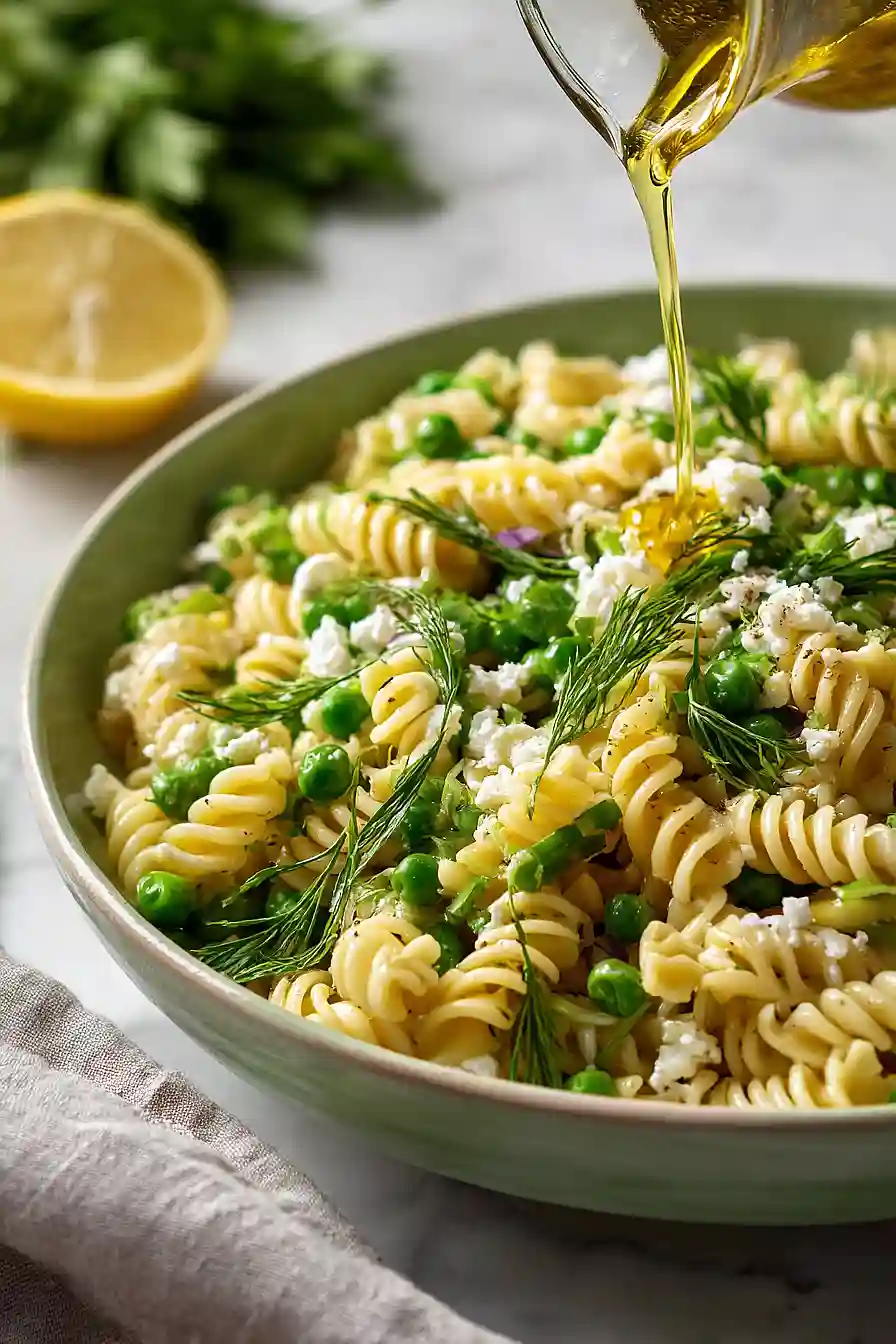
Why You’ll Love This Herbed Pea and Lemon Pasta Salad
- Quick and easy – This pasta salad comes together in just 25-35 minutes, making it perfect for busy weeknights or last-minute gatherings.
- Fresh and light – The bright lemon, fresh herbs, and sweet peas create a refreshing dish that’s ideal for spring and summer meals without feeling heavy.
- Great for meal prep – This salad tastes even better the next day as the flavors meld together, so you can make it ahead for lunches or potlucks throughout the week.
- Vegetarian-friendly – Packed with protein-rich peas and tons of fresh herbs, this dish works as a satisfying main course or side dish for vegetarians and meat-eaters alike.
- Impressive but simple – The truffle oil and pea shoots add a fancy touch that makes this look and taste gourmet, even though it’s made with straightforward ingredients and techniques.
What Kind of Peas Should I Use?
Fresh or frozen peas both work great for this pasta salad, so don’t stress if you can’t find fresh ones at the store. Frozen peas are actually picked and frozen at their peak, so they’re often just as sweet and tender as fresh. If you’re using fresh peas, you’ll need to shell them yourself, which takes a bit of time but gives you that satisfying pop of sweetness. For frozen peas, there’s no need to fully cook them – just blanch them quickly in boiling water for a minute or two, then drain and rinse with cold water to keep them bright green and crisp.
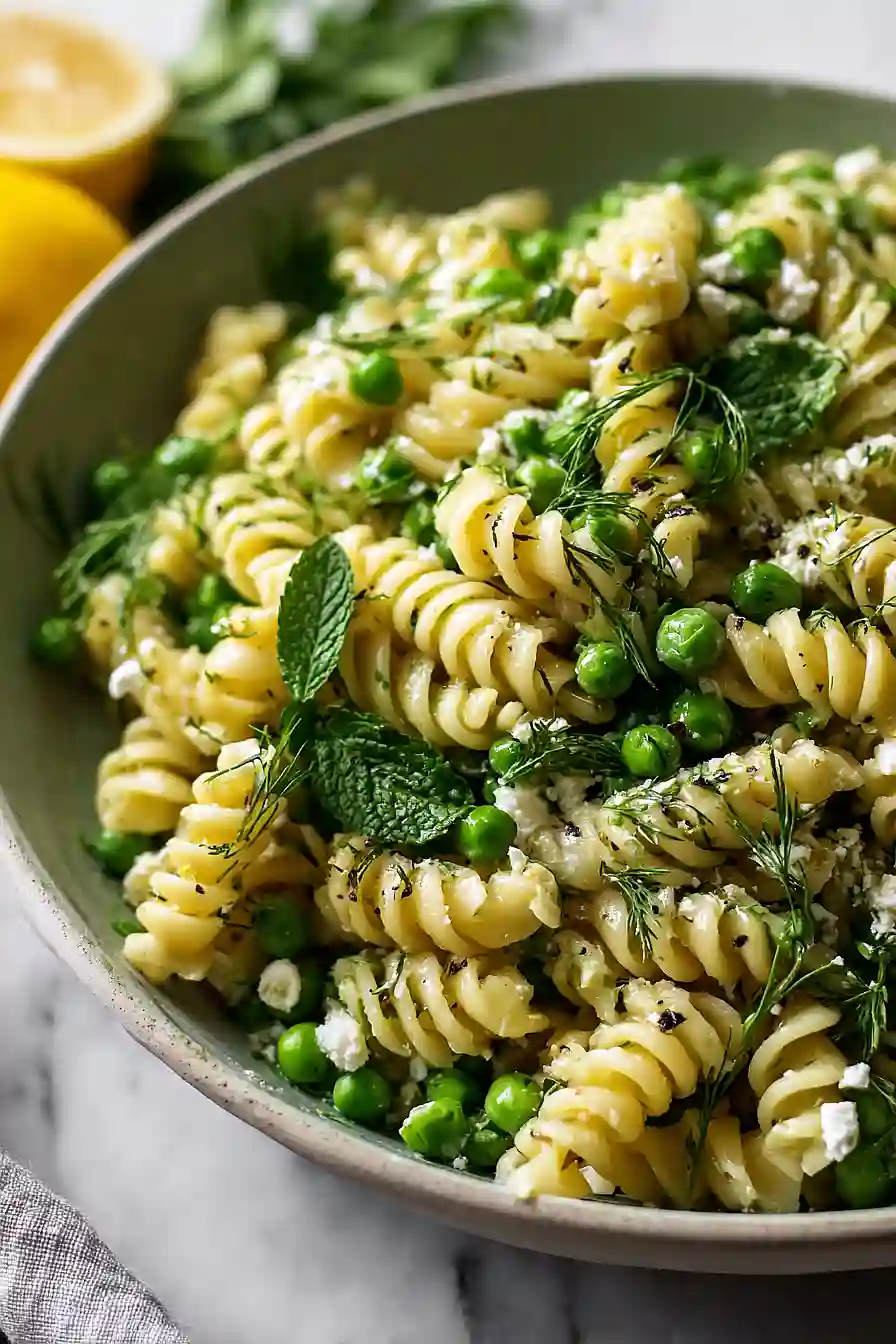
Options for Substitutions
This pasta salad is pretty forgiving when it comes to swapping ingredients:
- Pasta: Any short pasta shape works great here – try fusilli, farfalle, or orecchiette instead of whatever you’re using. They all hold the dressing nicely.
- Peas: Fresh or frozen peas both work fine. If you can’t find peas, edamame or fava beans make good substitutes, though you’ll want to shell them first.
- Pea shoots: These can be tricky to find, so feel free to use arugula, baby spinach, or even more fresh herbs instead. The flavor will be slightly different but still tasty.
- Mint and parsley: You can adjust the herb ratio based on what you have – use 1½ cups of one if you’re short on the other. Basil also works as a substitute for mint if needed.
- Scallions and shallot: If you don’t have shallots, use a small red onion instead. Green onions can replace scallions, or you can use all shallots (about 2-3 total) if that’s what you have.
- Truffle oil: This adds a nice earthy note, but it’s totally optional. Skip it if you don’t have it, or replace it with a bit more olive oil plus a pinch of garlic powder for extra flavor.
- White pepper: Regular black pepper works just fine here – the flavor difference is minimal in this dish.
Watch Out for These Mistakes While Cooking
The biggest mistake you can make with this pasta salad is overdressing it while it’s still hot – the warm pasta will absorb too much oil and lemon juice, leaving your salad dry and bland once it cools down, so hold back about a quarter of the dressing to add right before serving.
Another common error is adding the delicate herbs and pea shoots too early, which causes them to wilt and turn brown – always wait until the pasta has cooled to at least room temperature before stirring in the mint, parsley, and pea shoots to keep them fresh and green.
Don’t skip rinsing your pasta and peas under cold water after draining, as this stops the cooking process immediately and prevents mushy peas, plus it cools everything down faster so you can add those herbs sooner.
Finally, go easy on the truffle oil at first since it’s pretty strong – you can always drizzle more on top, but you can’t take it back once it’s mixed in and overpowers all those fresh, bright flavors.
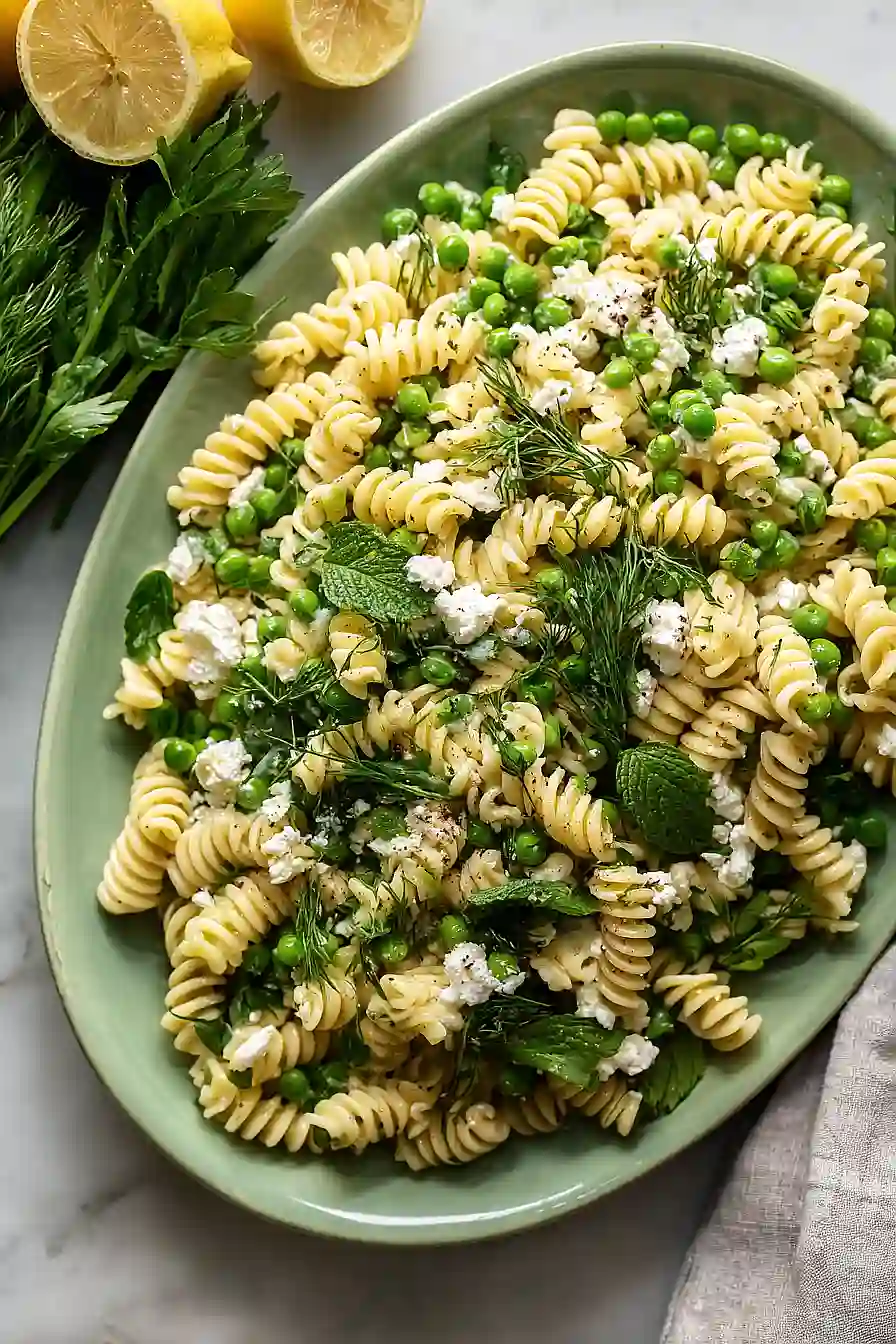
What to Serve With Pea and Lemon Pasta Salad?
This pasta salad is perfect for spring and summer gatherings, and it pairs really well with grilled chicken, salmon, or shrimp if you want to add some protein. I love serving it alongside other picnic favorites like caprese skewers or a simple cucumber and tomato salad for a complete spread. It’s also great as a side dish for barbecues – think grilled steaks, burgers, or even veggie kabobs. Since the pasta salad is already pretty filling with all those fresh herbs and peas, you really just need something simple on the side to round out the meal.
Storage Instructions
Store: This pasta salad actually gets better after sitting for a few hours as the flavors meld together. Keep it in an airtight container in the fridge for up to 3 days. The herbs might darken a bit, but the taste stays fresh and delicious.
Serve: I like to enjoy this cold straight from the fridge, but you can also let it sit at room temperature for about 20 minutes before serving if you prefer. Give it a good toss before eating, and add a drizzle of extra olive oil or lemon juice if it seems a bit dry after storing.
Make Ahead: You can prep this salad a day in advance, which makes it perfect for potlucks or meal prep. Just wait to add the pea shoots until right before serving so they stay crisp and fresh looking.
| Preparation Time | 15-20 minutes |
| Cooking Time | 10-15 minutes |
| Total Time | 25-35 minutes |
| Level of Difficulty | Easy |
| Servings | 6 servings |
Estimated Nutrition
Estimated nutrition for the whole recipe (without optional ingredients):
- Calories: 1850-2050
- Protein: 50-60 g
- Fat: 80-95 g
- Carbohydrates: 235-255 g
Ingredients
For the pasta and base:
- 12 oz pasta (I always use De Cecco fusilli for better sauce cling)
- 4.5 cups peas
- 2 cups pea shoots
For the dressing:
- 2/3 cup olive oil (I prefer Filippi Berio extra virgin for this)
- 1/3 cup lemon juice
- 1.5 tsp salt
- 3/4 tsp white pepper
For the aromatics and herbs:
- 5 scallions
- 1 shallot (finely minced, about 1/8-inch pieces)
- 1 cup mint
- 1 cup parsley
- 1/4 cup fresh dill
- 2 lemons (zest only, removed in long strips before juicing)
For the finish:
- 1 tbsp truffle oil (optional but recommended for extra richness)
Step 1: Prepare the Mise en Place and Dressing Base
- 1 shallot, finely minced
- 5 scallions
- 1 cup mint
- 1 cup parsley
- 1/4 cup fresh dill
- 2 lemons
- 2/3 cup olive oil
- 1/3 cup lemon juice
- 1.5 tsp salt
- 3/4 tsp white pepper
While waiting for water to boil, prepare all your ingredients so cooking flows smoothly.
Finely mince the shallot into small, uniform pieces (about 1/8-inch) and slice the scallions into thin rounds, keeping white and green parts separate.
Roughly chop the mint, parsley, and dill—don’t over-process them as you want visible herb pieces, not a paste.
Zest the lemons using a microplane or vegetable peeler to create long strips (these look beautiful in the final dish), then juice them to get 1/3 cup.
In a small bowl, whisk together the olive oil, lemon juice, salt, and white pepper to create your dressing base—this allows the flavors to marry while you cook the pasta.
Step 2: Cook the Pasta and Peas
- 12 oz pasta
- 4.5 cups peas
Bring a large pot of salted water to a rolling boil and add the pasta, stirring occasionally to prevent sticking.
Cook according to package directions until just al dente (usually 9-11 minutes depending on the shape).
During the last minute of cooking, add the peas to the same pot—they’ll warm through without becoming mushy.
Immediately drain everything in a colander; I recommend shaking it gently to remove excess water, which prevents the pasta from becoming waterlogged and diluting your dressing.
Step 3: Combine Warm Pasta with Dressing and Fresh Elements
- cooked pasta and peas from Step 2
- dressing base from Step 1
- 2 cups pea shoots
- scallions
- shallot from Step 1
- chopped herbs from Step 1
- lemon zest from Step 1
Transfer the hot drained pasta and peas directly into a large mixing bowl and immediately pour in the dressing base from Step 1, tossing gently but thoroughly to coat every piece.
The warm pasta will absorb the flavors more effectively than cold pasta would.
Now fold in the pea shoots, the white and light green parts of the scallions (reserve dark green tops for garnish), minced shallot, and all the chopped herbs.
Add the lemon zest strips last, folding them in gently so they stay visible.
Taste and adjust seasoning with additional salt or lemon juice if needed—this dish should be bright and herbaceous with a subtle lemon punch.
Step 4: Finish and Serve
- 1 tbsp truffle oil
- reserved scallion greens from Step 1
Transfer the pasta salad to a serving dish or plates.
Drizzle with truffle oil if using—I find just a light touch adds incredible depth without overwhelming the delicate pea and herb flavors.
Garnish with the reserved dark green scallion tops for a pop of color and fresh onion bite.
Serve immediately while the pasta is still slightly warm, as this is when the flavors are most vibrant and the herbs are at their freshest.
Easy Herbed Pea and Lemon Pasta Salad
Ingredients
Method
- While waiting for water to boil, prepare all your ingredients so cooking flows smoothly. Finely mince the shallot into small, uniform pieces (about 1/8-inch) and slice the scallions into thin rounds, keeping white and green parts separate. Roughly chop the mint, parsley, and dill—don't over-process them as you want visible herb pieces, not a paste. Zest the lemons using a microplane or vegetable peeler to create long strips (these look beautiful in the final dish), then juice them to get 1/3 cup. In a small bowl, whisk together the olive oil, lemon juice, salt, and white pepper to create your dressing base—this allows the flavors to marry while you cook the pasta.
- Bring a large pot of salted water to a rolling boil and add the pasta, stirring occasionally to prevent sticking. Cook according to package directions until just al dente (usually 9-11 minutes depending on the shape). During the last minute of cooking, add the peas to the same pot—they'll warm through without becoming mushy. Immediately drain everything in a colander; I recommend shaking it gently to remove excess water, which prevents the pasta from becoming waterlogged and diluting your dressing.
- Transfer the hot drained pasta and peas directly into a large mixing bowl and immediately pour in the dressing base from Step 1, tossing gently but thoroughly to coat every piece. The warm pasta will absorb the flavors more effectively than cold pasta would. Now fold in the pea shoots, the white and light green parts of the scallions (reserve dark green tops for garnish), minced shallot, and all the chopped herbs. Add the lemon zest strips last, folding them in gently so they stay visible. Taste and adjust seasoning with additional salt or lemon juice if needed—this dish should be bright and herbaceous with a subtle lemon punch.
- Transfer the pasta salad to a serving dish or plates. Drizzle with truffle oil if using—I find just a light touch adds incredible depth without overwhelming the delicate pea and herb flavors. Garnish with the reserved dark green scallion tops for a pop of color and fresh onion bite. Serve immediately while the pasta is still slightly warm, as this is when the flavors are most vibrant and the herbs are at their freshest.