If you ask me, oatmeal raisin cookies are one of life’s simple pleasures.
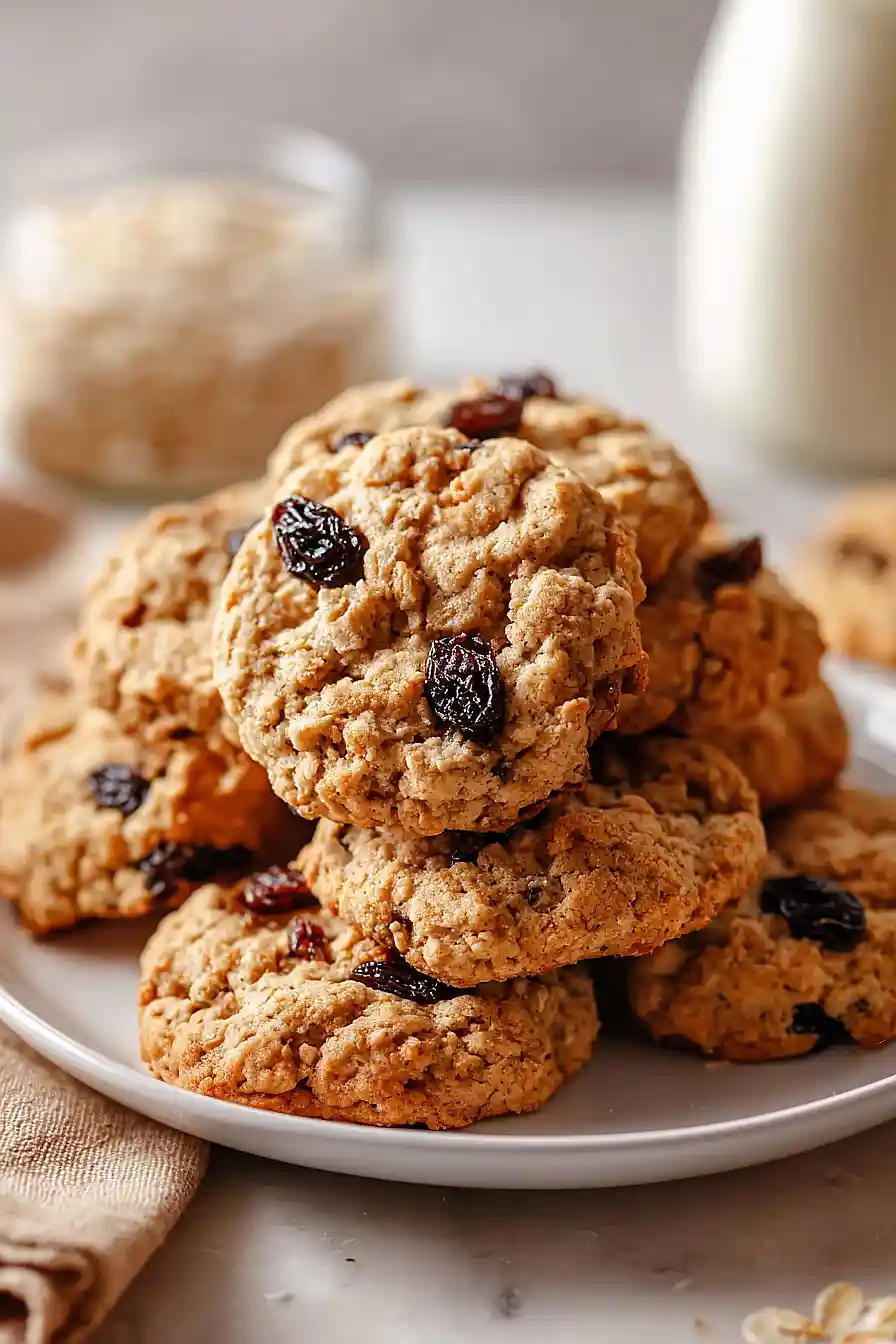
These classic cookies have earned their “vanishing” name for a reason—they disappear from the cookie jar faster than you can say seconds. Chewy oats and plump raisins meet warmly spiced cinnamon in every bite.
They’re made with good butter and a mix of brown and white sugar that creates the perfect balance of caramel notes and sweetness. A touch of cinnamon adds that cozy warmth we all crave.
They’re the kind of cookies that work for lunch boxes, afternoon snacks, or whenever you need something comforting straight from the oven.
Why You’ll Love These Oatmeal Raisin Cookies
- Quick and easy – These cookies come together in under 30 minutes, making them perfect for last-minute baking or when you need a sweet treat fast.
- Classic flavor everyone loves – The combination of chewy oats, sweet raisins, and warm cinnamon creates that nostalgic cookie taste that reminds you of home.
- Simple pantry ingredients – You probably have everything you need already sitting in your kitchen, so no special shopping trip required.
- Perfectly chewy texture – The oats give these cookies a satisfying chew that’s not too soft and not too crunchy, just right in the middle.
- Great for any occasion – Whether you’re packing lunch boxes, bringing treats to a gathering, or just want cookies with your afternoon coffee, these work every time.
What Kind of Oats Should I Use?
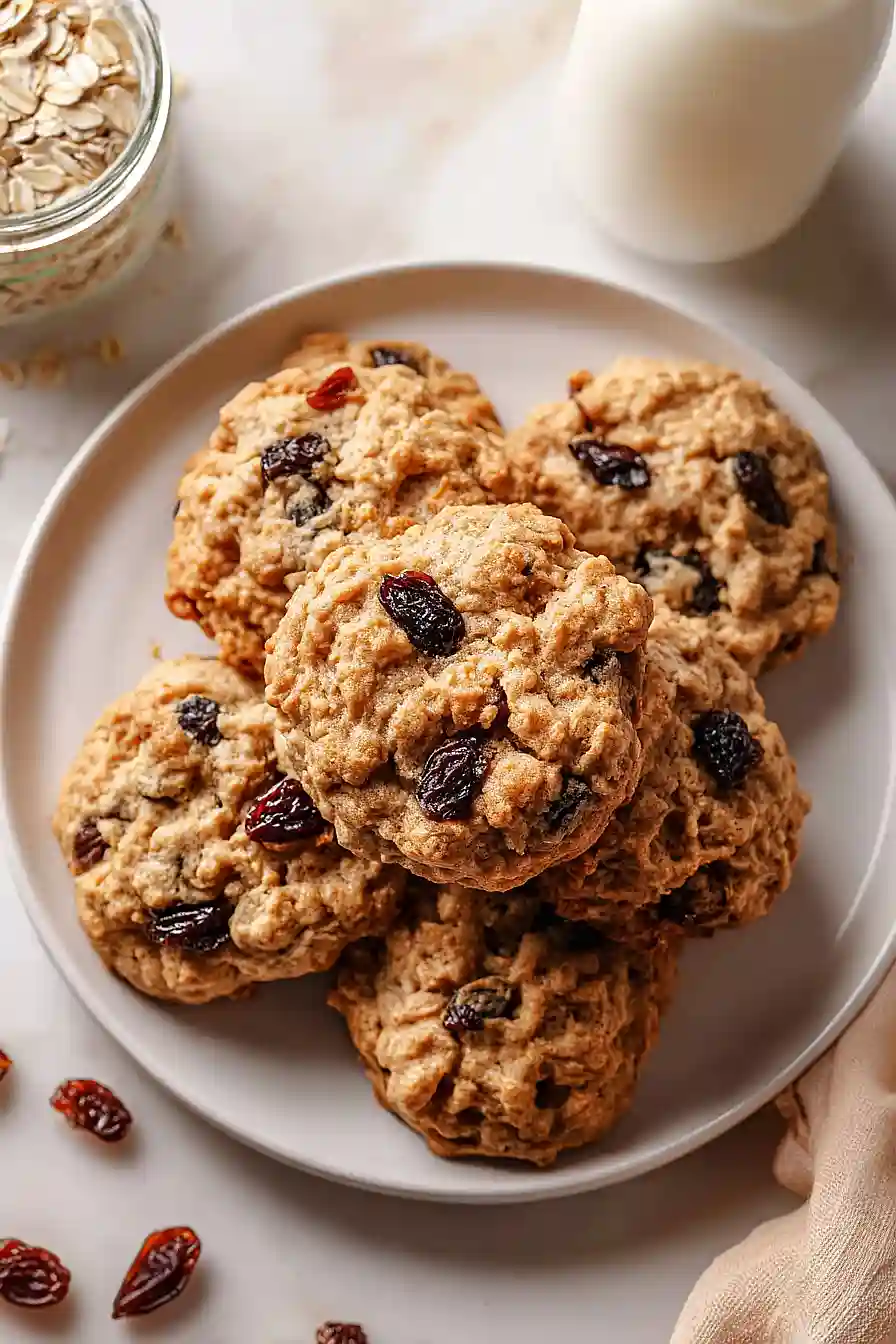
For this recipe, you can use either Quick Oats or Old Fashioned rolled oats – both work great and it really comes down to personal preference. Quick oats will give you a softer, more tender cookie with a finer texture, while Old Fashioned oats create a chewier cookie with more texture and bite. Whatever you do, don’t use instant oats (the kind that come in packets) since they’re too processed and will turn mushy in your cookies. Steel-cut oats are also a no-go here because they’re too hard and won’t soften enough during baking.
Options for Substitutions
These cookies are pretty forgiving when it comes to swaps, so feel free to get creative:
- Butter: You can use margarine or coconut oil in place of butter, though the flavor will be slightly different. If using coconut oil, make sure it’s softened to room temperature just like butter would be.
- Eggs: For each egg, you can substitute with 1/4 cup applesauce or mashed banana, though this will make the cookies a bit softer and cake-like. Flax eggs (1 tablespoon ground flaxseed mixed with 3 tablespoons water per egg) also work well.
- All-purpose flour: Whole wheat flour can replace half or all of the all-purpose flour for a heartier cookie. You can also use a 1-to-1 gluten-free flour blend if needed.
- Raisins: This is where you can really make the recipe your own! Try chocolate chips, dried cranberries, chopped dates, butterscotch chips, or even chopped walnuts or pecans. Mix and match to your taste.
- Quaker Oats: Both quick oats and old-fashioned oats work great here – quick oats give a softer texture while old-fashioned provide more chew. Don’t substitute with instant oatmeal packets, as they’re too fine and will make the cookies mushy.
- Brown sugar: In a pinch, you can make your own by mixing 1 cup granulated sugar with 1 tablespoon molasses for each cup of brown sugar needed.
Watch Out for These Mistakes While Baking
The biggest mistake people make with oatmeal raisin cookies is overmixing the dough after adding the flour, which develops too much gluten and leads to tough, dense cookies instead of chewy ones – mix just until the flour disappears.
Another common error is baking these cookies until they look completely done, but they’ll actually continue cooking on the hot baking sheet after you remove them from the oven, so pull them out when the edges are golden but the centers still look slightly underbaked.
To prevent flat, spread-out cookies, make sure your butter is softened but not melted (it should hold a fingerprint but not be greasy), and if your dough feels too warm or sticky, pop it in the fridge for 15-20 minutes before scooping.
Finally, give your raisins a quick soak in warm water for 5 minutes and pat them dry before adding to the dough – this keeps them plump and prevents them from stealing moisture from your cookies during baking.
What to Serve With Oatmeal Raisin Cookies?
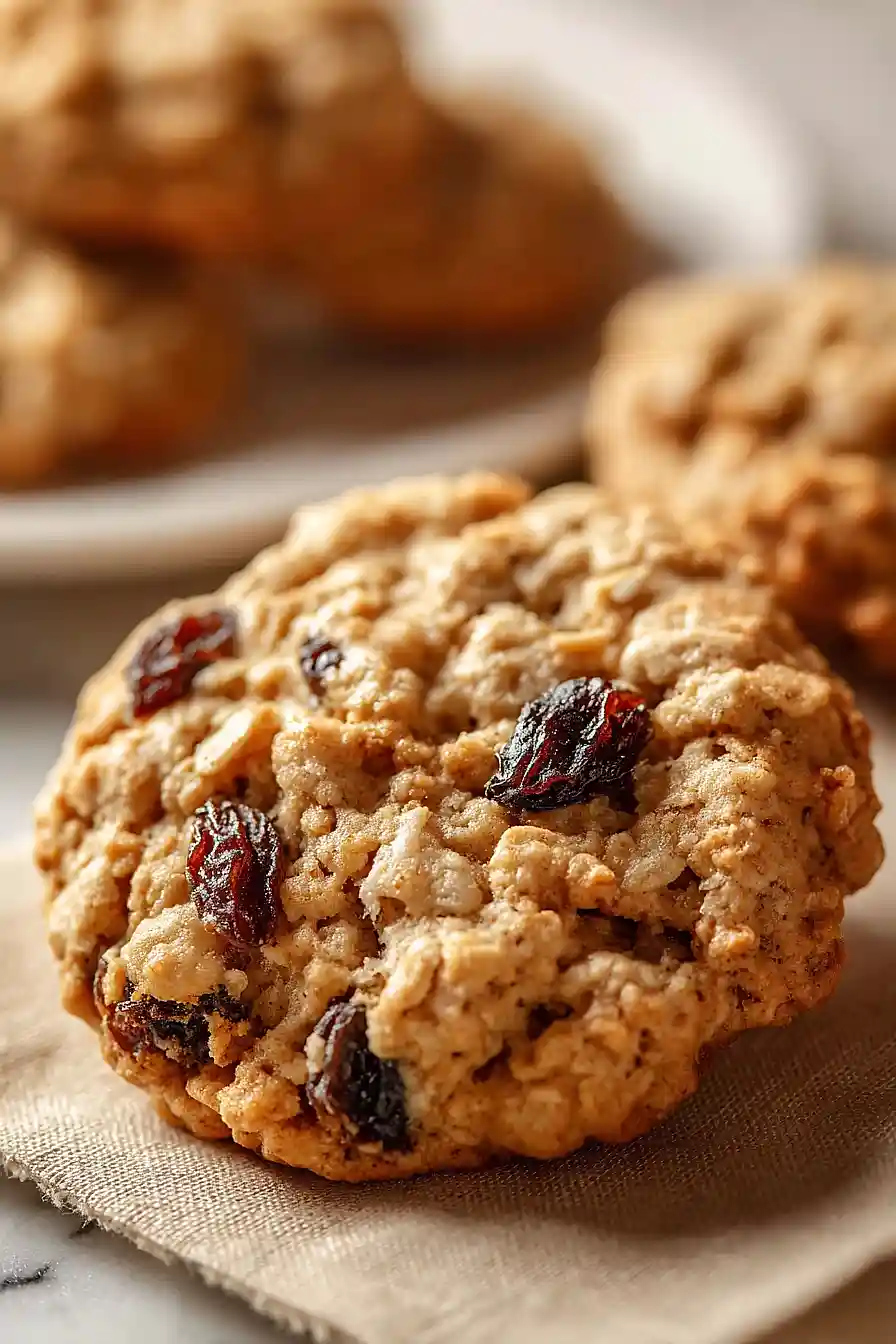
These cookies are perfect alongside a cold glass of milk for dunking, or pair them with hot coffee or tea for an afternoon snack. I love packing them in lunchboxes with some apple slices and cheese cubes for a balanced treat, or serving them as part of a cookie platter with chocolate chip and peanut butter cookies for variety. They also make a great dessert when served warm with a scoop of vanilla ice cream on the side, letting the ice cream melt slightly over the cookie.
Storage Instructions
Store: Keep these cookies in an airtight container at room temperature for up to a week. If you want them to stay extra soft, toss a slice of bread in the container with them – it really works! They’re perfect for grabbing as a quick snack or packing in lunchboxes.
Freeze: These cookies freeze really well, either baked or as dough. For baked cookies, layer them between parchment paper in a freezer bag for up to 3 months. You can also scoop the dough into balls, freeze them on a baking sheet, then transfer to a freezer bag and bake straight from frozen (just add a couple extra minutes to the baking time).
Enjoy: Frozen cookies thaw in about 15 minutes on the counter, or you can warm them in the microwave for 10-15 seconds for that fresh-baked feel. If you froze the dough, just bake as usual but give them an extra 2-3 minutes in the oven.
| Preparation Time | 15-20 minutes |
| Cooking Time | 8-10 minutes |
| Total Time | 23-30 minutes |
| Level of Difficulty | Easy |
Estimated Nutrition
Estimated nutrition for the whole recipe (without optional ingredients):
- Calories: 3500-3700
- Protein: 40-45 g
- Fat: 170-180 g
- Carbohydrates: 480-500 g
Ingredients
- 1/2 tsp salt
- 1.5 cups all-purpose flour (I use King Arthur all-purpose flour)
- 1 tsp baking soda
- 3 cups oats (old-fashioned rolled oats)
- 1 tsp ground cinnamon (freshly ground preferred)
- 14 tbsp softened butter (I use Kerrygold unsalted butter)
- 2 eggs (room temperature)
- 3/4 cup brown sugar (packed)
- 1 tsp vanilla extract
- 1/2 cup granulated sugar
- 1 cup raisins (plump and moist)
Step 1: Prepare Mise en Place and Preheat Oven
- 1.5 cups all-purpose flour
- 1 tsp baking soda
- 1 tsp ground cinnamon
- 1/2 tsp salt
- 3 cups oats
- 1 cup raisins
Preheat your oven to 350°F and position racks in the upper and lower thirds so you can bake two sheets simultaneously.
While the oven heats, measure out all your dry ingredients—flour, baking soda, cinnamon, and salt—into one bowl and whisk them together to distribute the leavening agents evenly.
Measure your oats and raisins into separate small bowls.
Having everything measured and ready before you start mixing ensures the dough comes together quickly and prevents overmixing.
Step 2: Cream Butter and Sugars Until Light and Fluffy
- 14 tbsp softened butter
- 3/4 cup brown sugar
- 1/2 cup granulated sugar
In a large bowl, beat the softened butter with both the brown sugar and granulated sugar for 2-3 minutes until the mixture is noticeably lighter in color and fluffy.
This creaming process incorporates air into the dough, which helps the cookies rise slightly and creates a tender crumb.
I prefer using Kerrygold butter here because its rich flavor really shines in these cookies and makes them taste homemade in the best way.
Step 3: Incorporate Eggs and Vanilla
- 2 eggs
- 1 tsp vanilla extract
Add the room-temperature eggs one at a time, beating well after each addition, then add the vanilla extract and mix until fully combined.
Room-temperature eggs incorporate more smoothly into the butter mixture and create a more homogeneous dough.
The batter should look well-blended and slightly fluffy at this point.
Step 4: Add Dry Ingredients and Mix Until Just Combined
- dry ingredient mixture from Step 1
Add the dry ingredient mixture from Step 1 to the wet ingredients and stir with a wooden spoon or spatula until just combined—don’t overmix.
Overmixing develops too much gluten, which makes cookies tough instead of tender.
The dough should look slightly shaggy but hold together when you press it.
Step 5: Fold in Oats and Raisins
- oats and raisins from Step 1
Gently fold the oats and raisins from Step 1 into the dough using a spatula, stirring just until evenly distributed.
I like to slightly crush a handful of the oats before adding them—this helps the cookies bind together better and prevents them from being too crumbly.
The dough should be thick, chunky, and studded throughout with oats and raisins.
Step 6: Shape and Bake the Cookies
Drop rounded tablespoon-sized portions of dough onto ungreased baking sheets, spacing them about 2 inches apart since they’ll spread slightly.
Bake for 8-10 minutes until the edges are set but the centers still look slightly soft—they’ll finish cooking as they cool.
The cookies should be golden brown around the edges but still pale in the center for optimal texture.
Step 7: Cool and Transfer to Wire Rack
Let the cookies cool on the baking sheet for 1 minute (this allows them to set slightly and firm up for easy transfer), then use a spatula to transfer them to a wire rack to cool completely.
This brief rest on the sheet prevents them from breaking apart while still allowing them to finish cooking gently from residual heat.
30-Minute Vanishing Oatmeal Raisin Cookies
Ingredients
Method
- Preheat your oven to 350°F and position racks in the upper and lower thirds so you can bake two sheets simultaneously. While the oven heats, measure out all your dry ingredients—flour, baking soda, cinnamon, and salt—into one bowl and whisk them together to distribute the leavening agents evenly. Measure your oats and raisins into separate small bowls. Having everything measured and ready before you start mixing ensures the dough comes together quickly and prevents overmixing.
- In a large bowl, beat the softened butter with both the brown sugar and granulated sugar for 2-3 minutes until the mixture is noticeably lighter in color and fluffy. This creaming process incorporates air into the dough, which helps the cookies rise slightly and creates a tender crumb. I prefer using Kerrygold butter here because its rich flavor really shines in these cookies and makes them taste homemade in the best way.
- Add the room-temperature eggs one at a time, beating well after each addition, then add the vanilla extract and mix until fully combined. Room-temperature eggs incorporate more smoothly into the butter mixture and create a more homogeneous dough. The batter should look well-blended and slightly fluffy at this point.
- Add the dry ingredient mixture from Step 1 to the wet ingredients and stir with a wooden spoon or spatula until just combined—don't overmix. Overmixing develops too much gluten, which makes cookies tough instead of tender. The dough should look slightly shaggy but hold together when you press it.
- Gently fold the oats and raisins from Step 1 into the dough using a spatula, stirring just until evenly distributed. I like to slightly crush a handful of the oats before adding them—this helps the cookies bind together better and prevents them from being too crumbly. The dough should be thick, chunky, and studded throughout with oats and raisins.
- Drop rounded tablespoon-sized portions of dough onto ungreased baking sheets, spacing them about 2 inches apart since they'll spread slightly. Bake for 8-10 minutes until the edges are set but the centers still look slightly soft—they'll finish cooking as they cool. The cookies should be golden brown around the edges but still pale in the center for optimal texture.
- Let the cookies cool on the baking sheet for 1 minute (this allows them to set slightly and firm up for easy transfer), then use a spatula to transfer them to a wire rack to cool completely. This brief rest on the sheet prevents them from breaking apart while still allowing them to finish cooking gently from residual heat.